

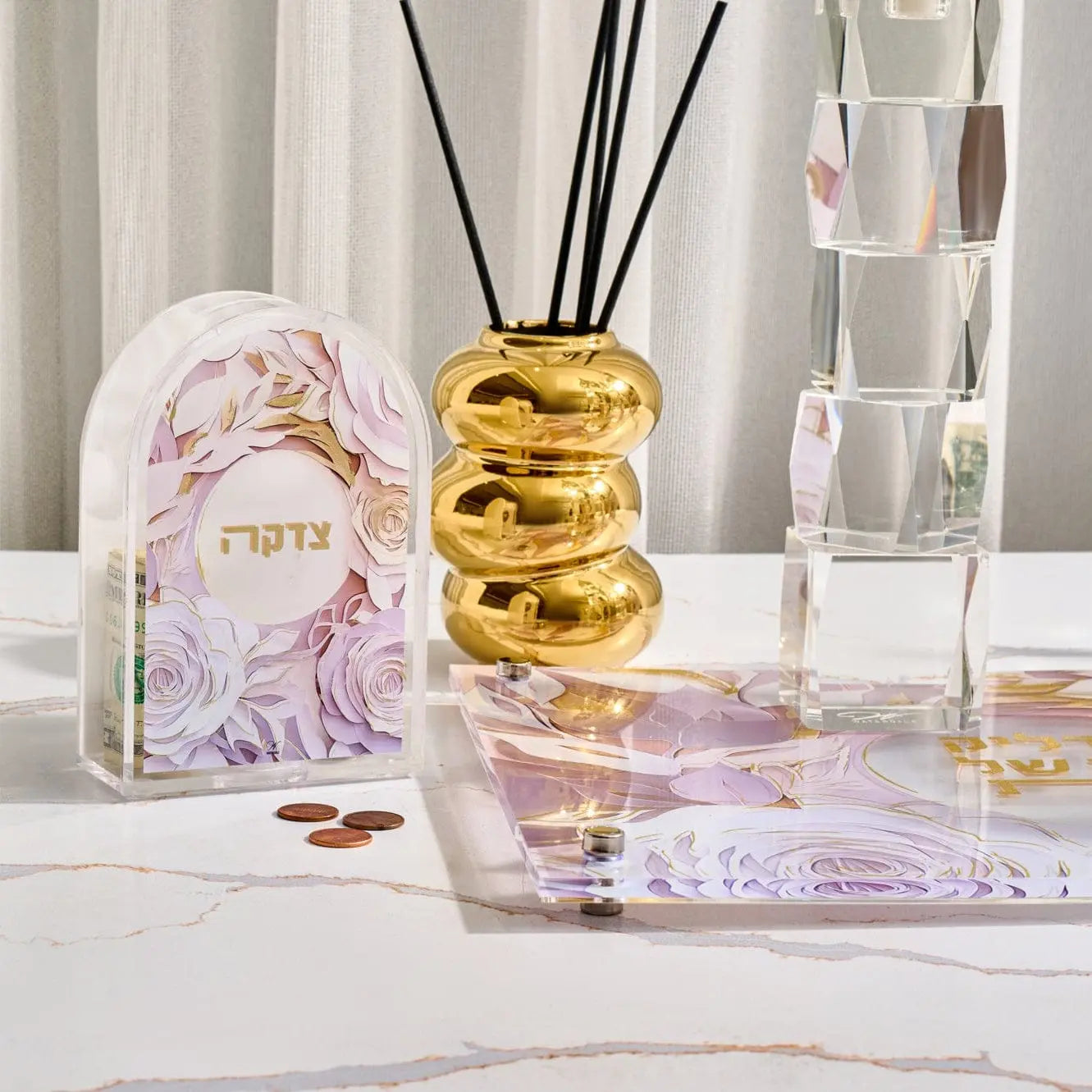



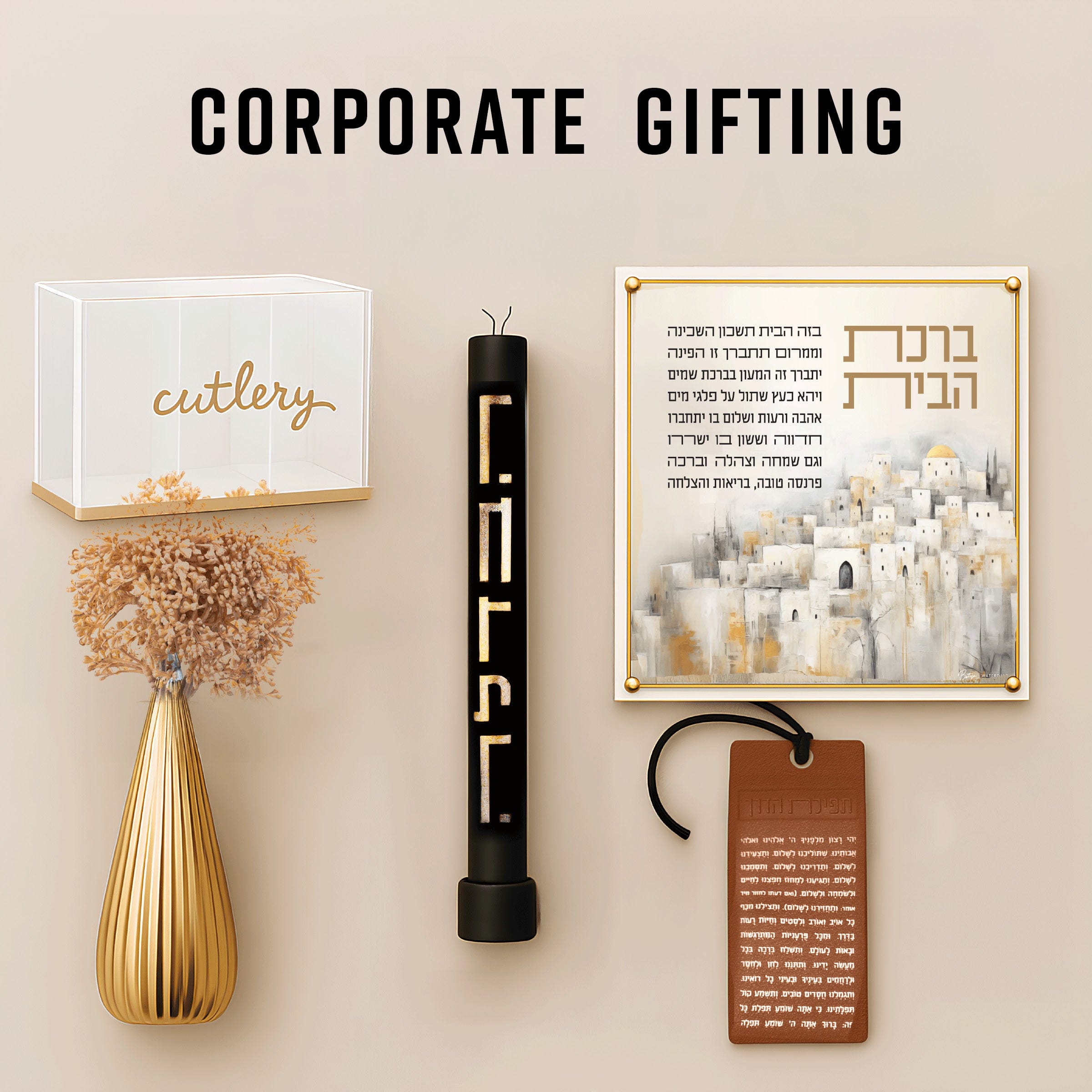
















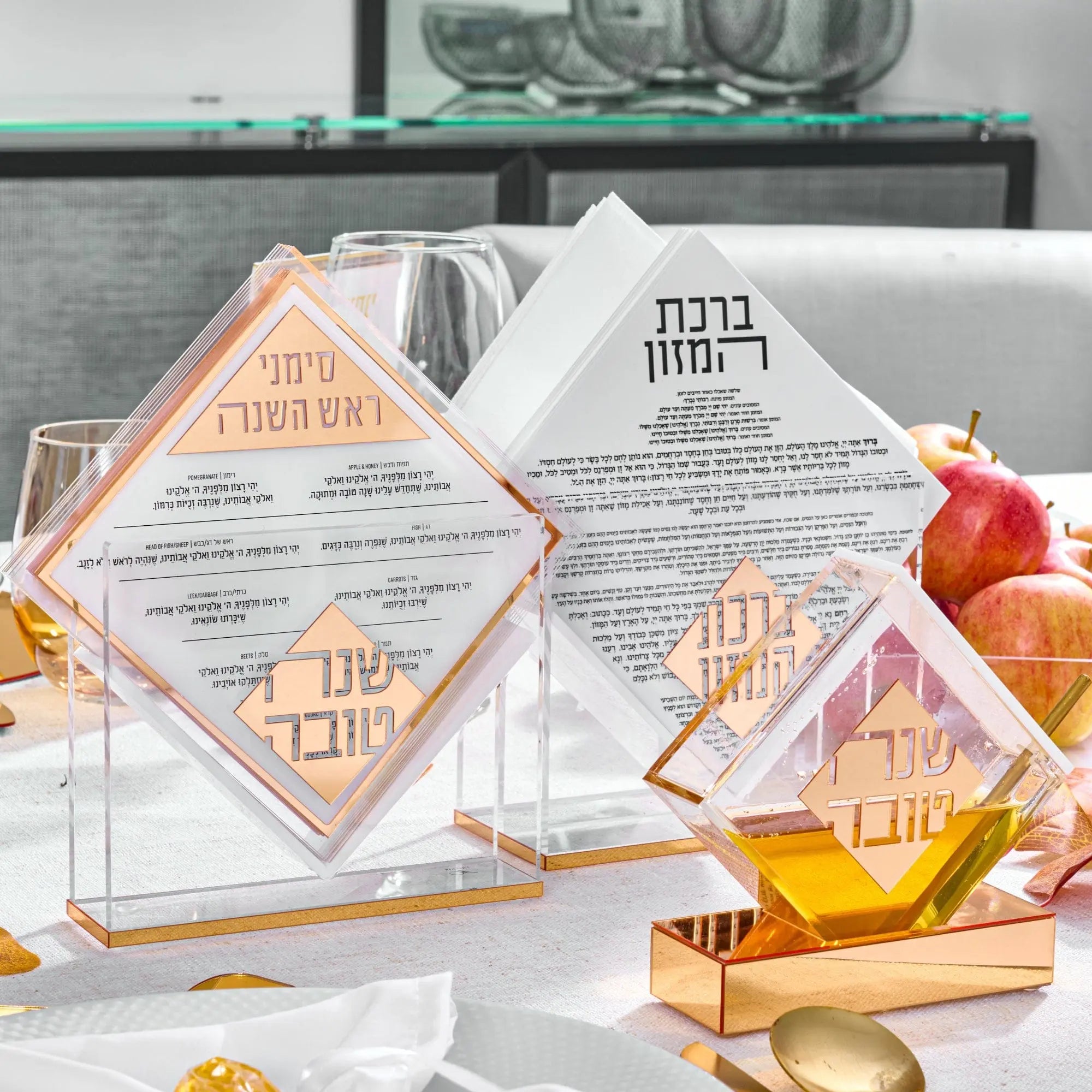
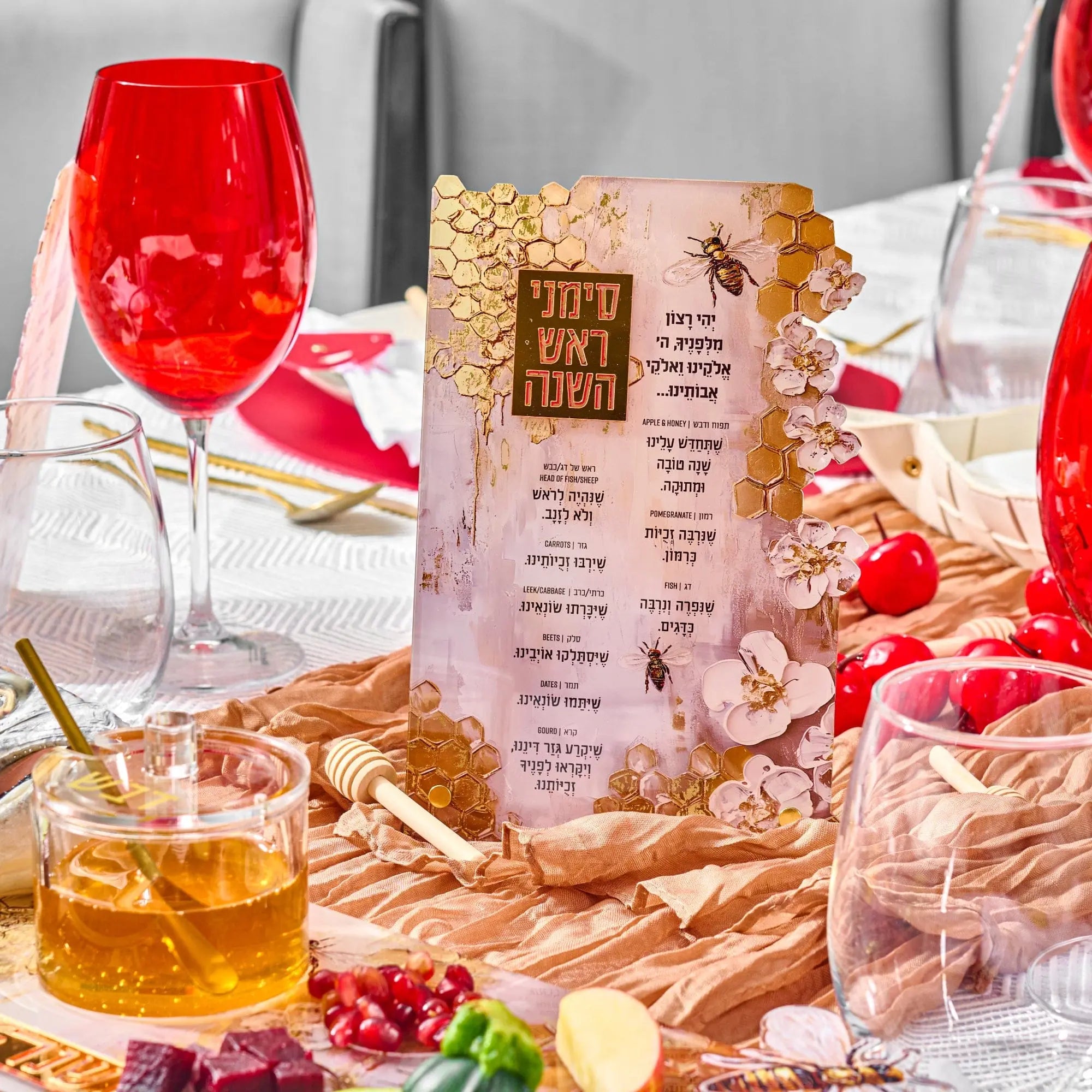
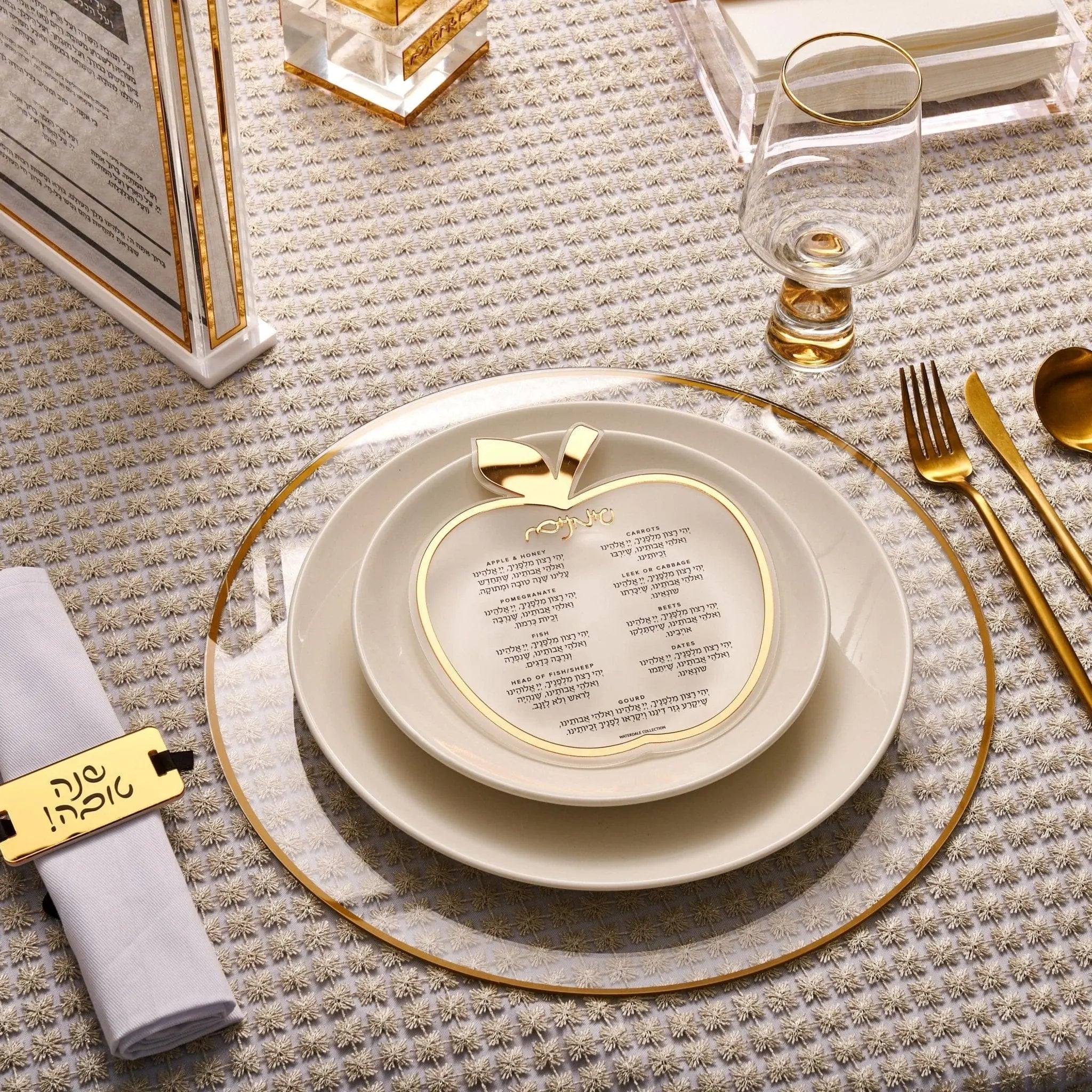



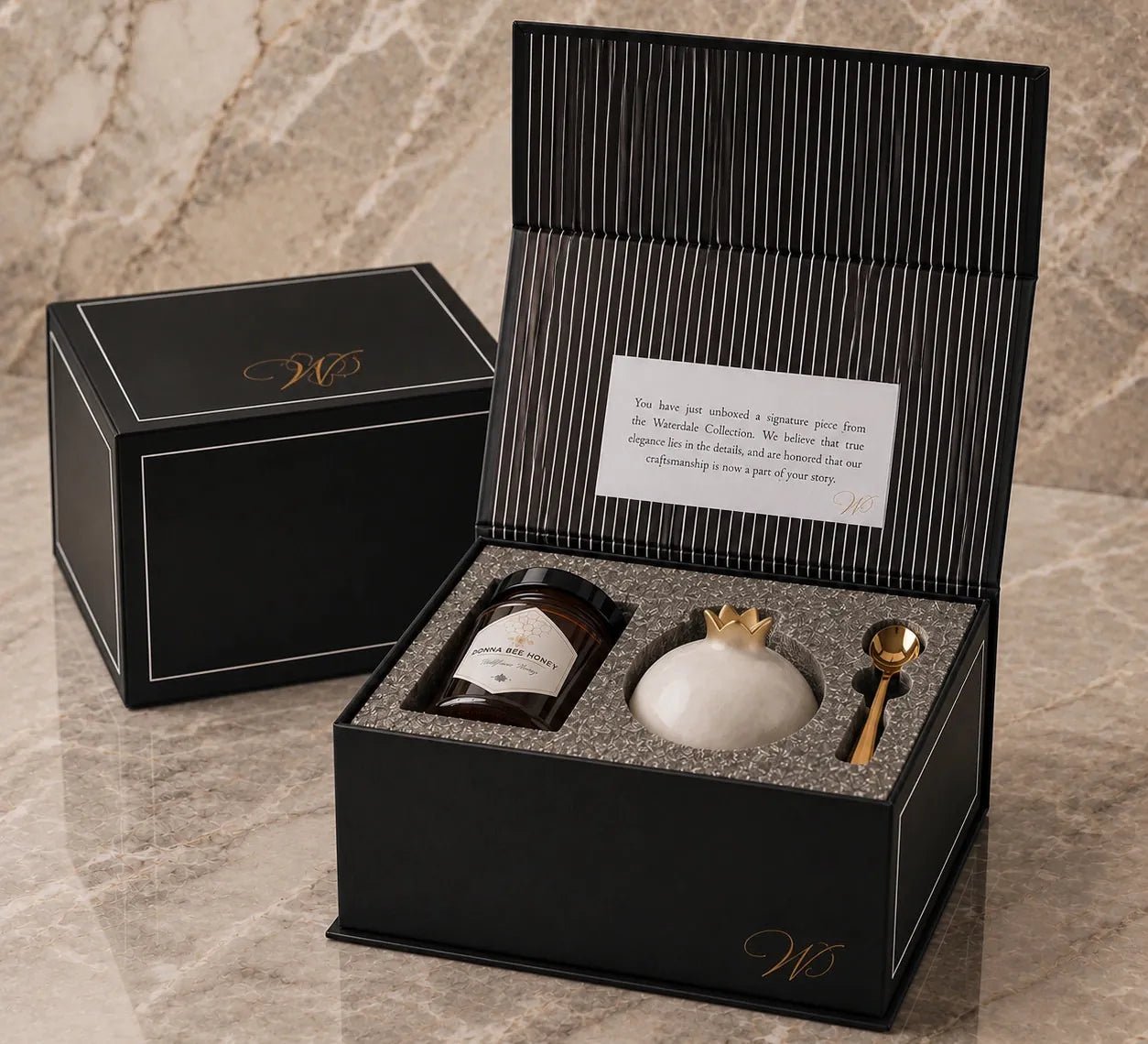
Corporate Gifting, Reimagined
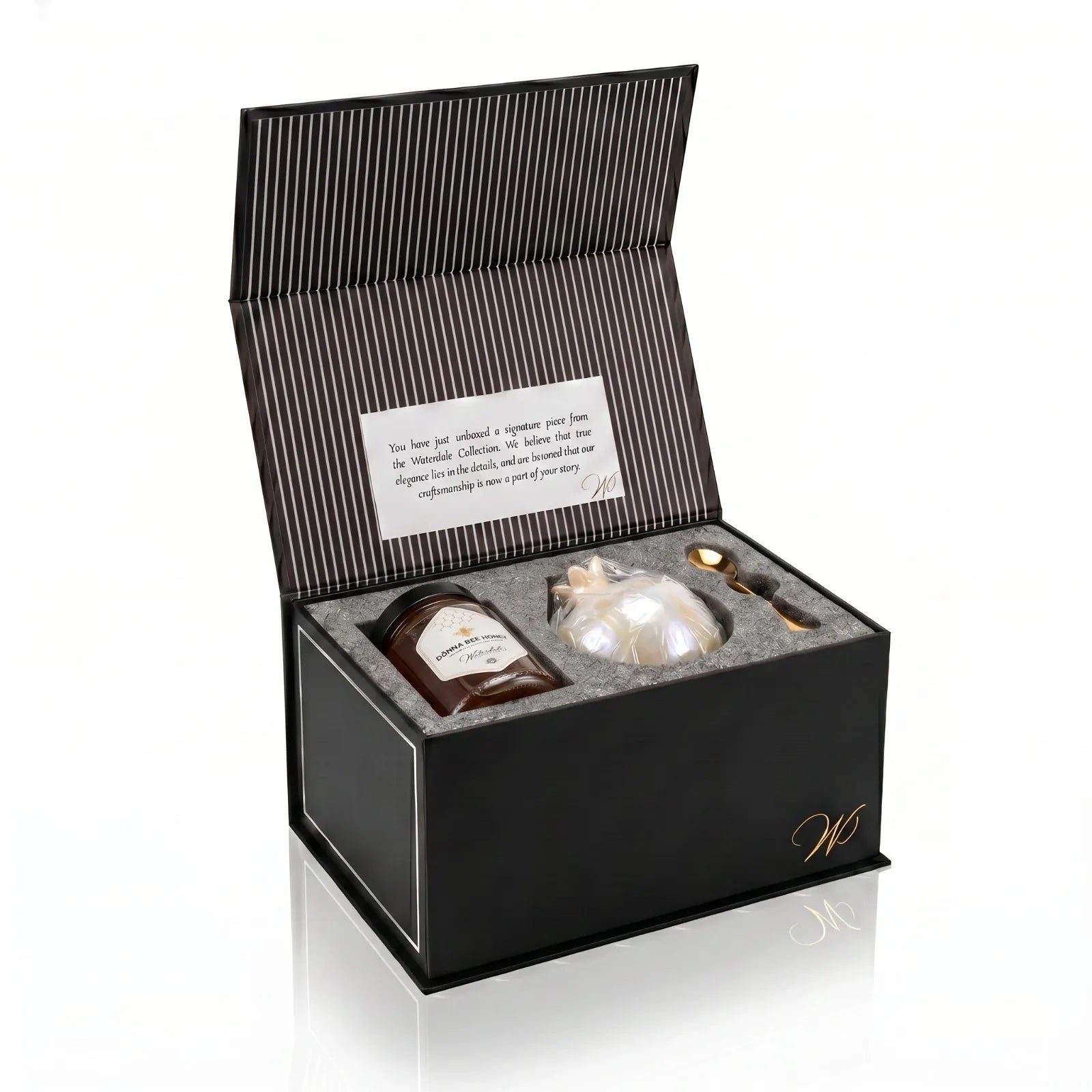
Beautifully packaged Rosh Hashanah gifts for your team or clients - include your logo or message for a personal touch.
Available directly online here.
For bulk & corporate
Email gitty@waterdalecollection.com to get started.


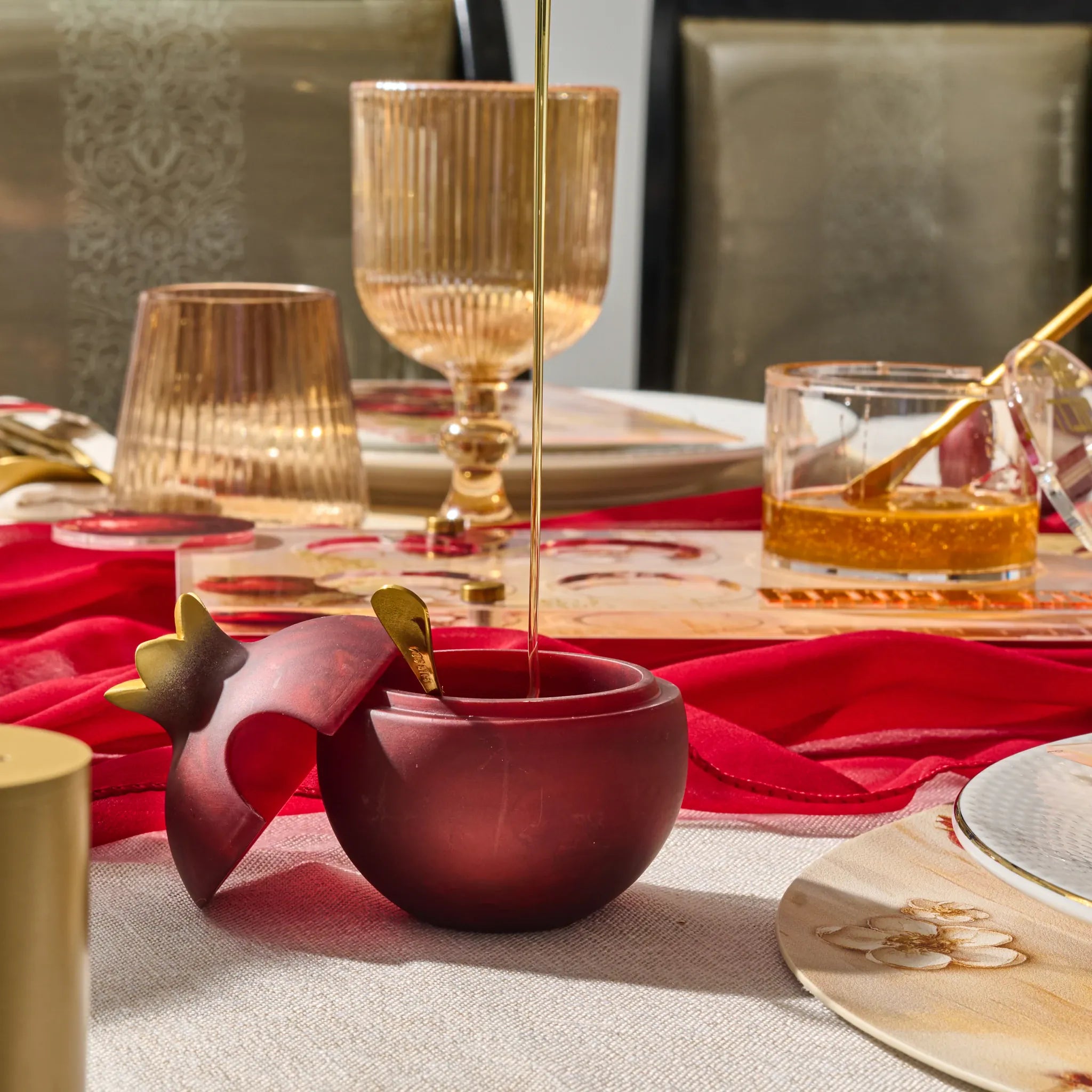
Shaped as a pomegranate — the siman for a year as full of merit as the fruit is of seeds — the Resin Pomegranate Honey Dish from the Waterdale Collection is cut in premium resin with metallic accents for a beautiful addition to your Rosh Hashanah (ראש השנה) table.
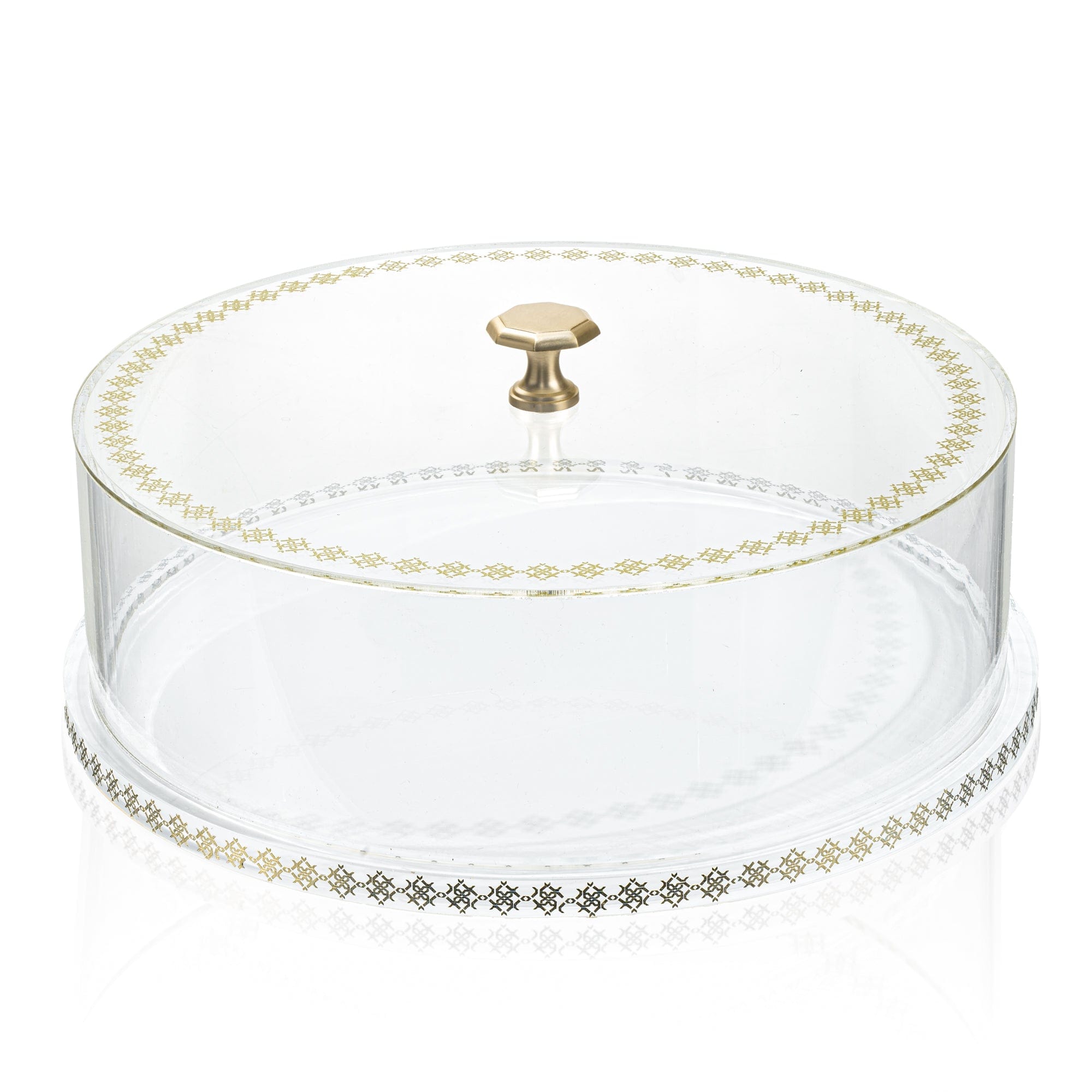
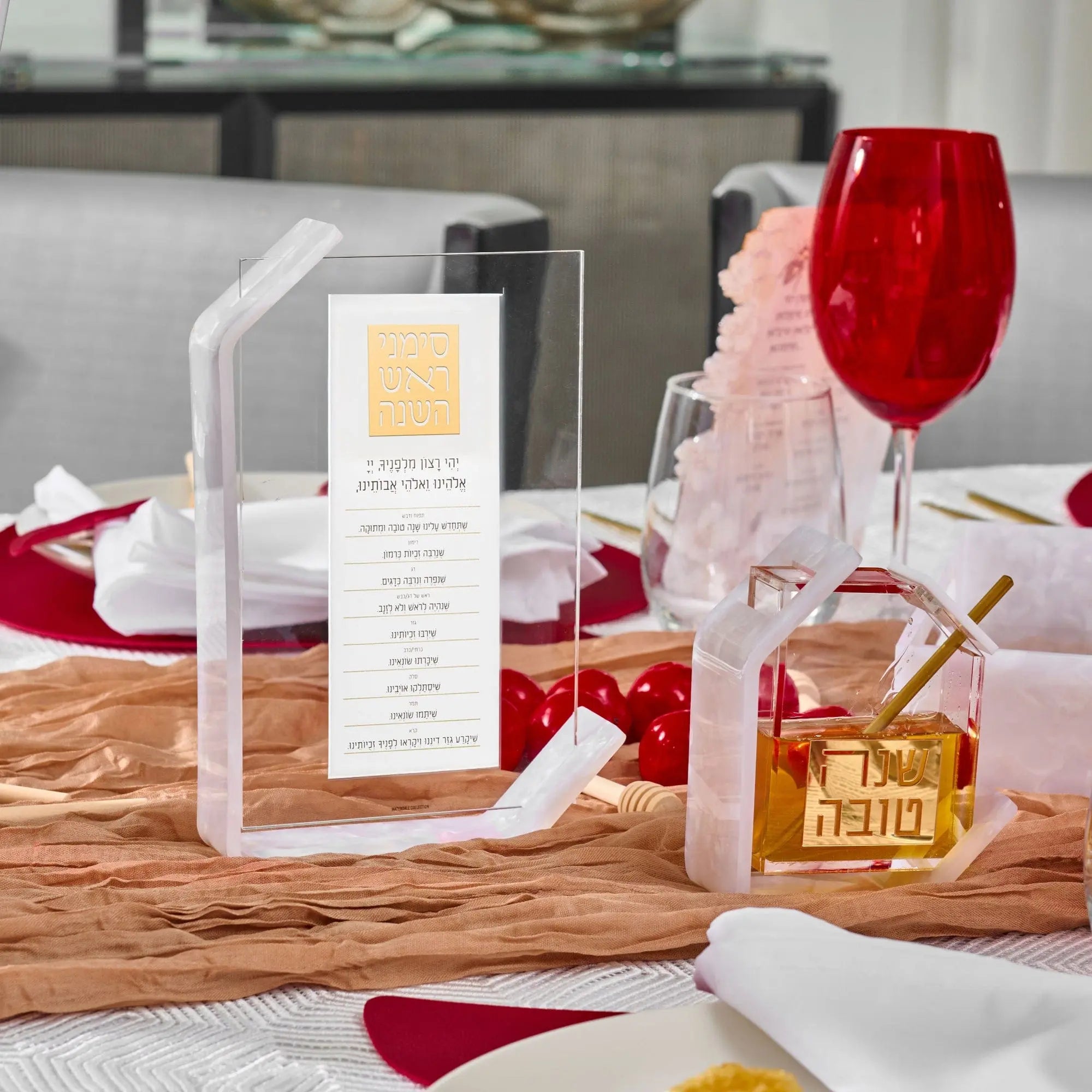
The honey dish has a removable lid and a matching spoon, making it easy to dip the apple and challah in honey to symbolize a sweet new year, and simple to refill when needed.
Available in gold, silver, deep red and marble, it's a versatile match for your Jewish New Year tablescape or as a holiday gift.
- DIMENSIONS: Base: 3" x 2" H | Cover: 3" x 1.5" H | Total 3x3.5"
- PRODUCT SPECS: Premium resin in a pomegranate shape with metallic accents, removable lid
- INCLUDES: Honey spoon
- OTHER INFO: Wipeable, honey-proof, and waterproof
Frequently Asked Questions About Rosh Hashanah Tableware & Gifts
What is a simanim plate, and do I need one for Rosh Hashana?
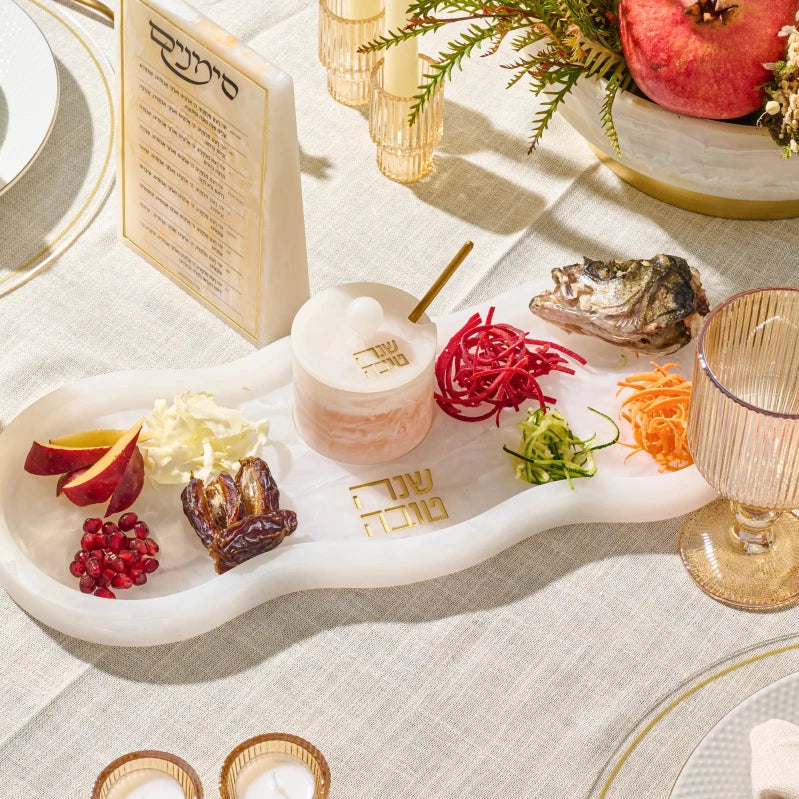
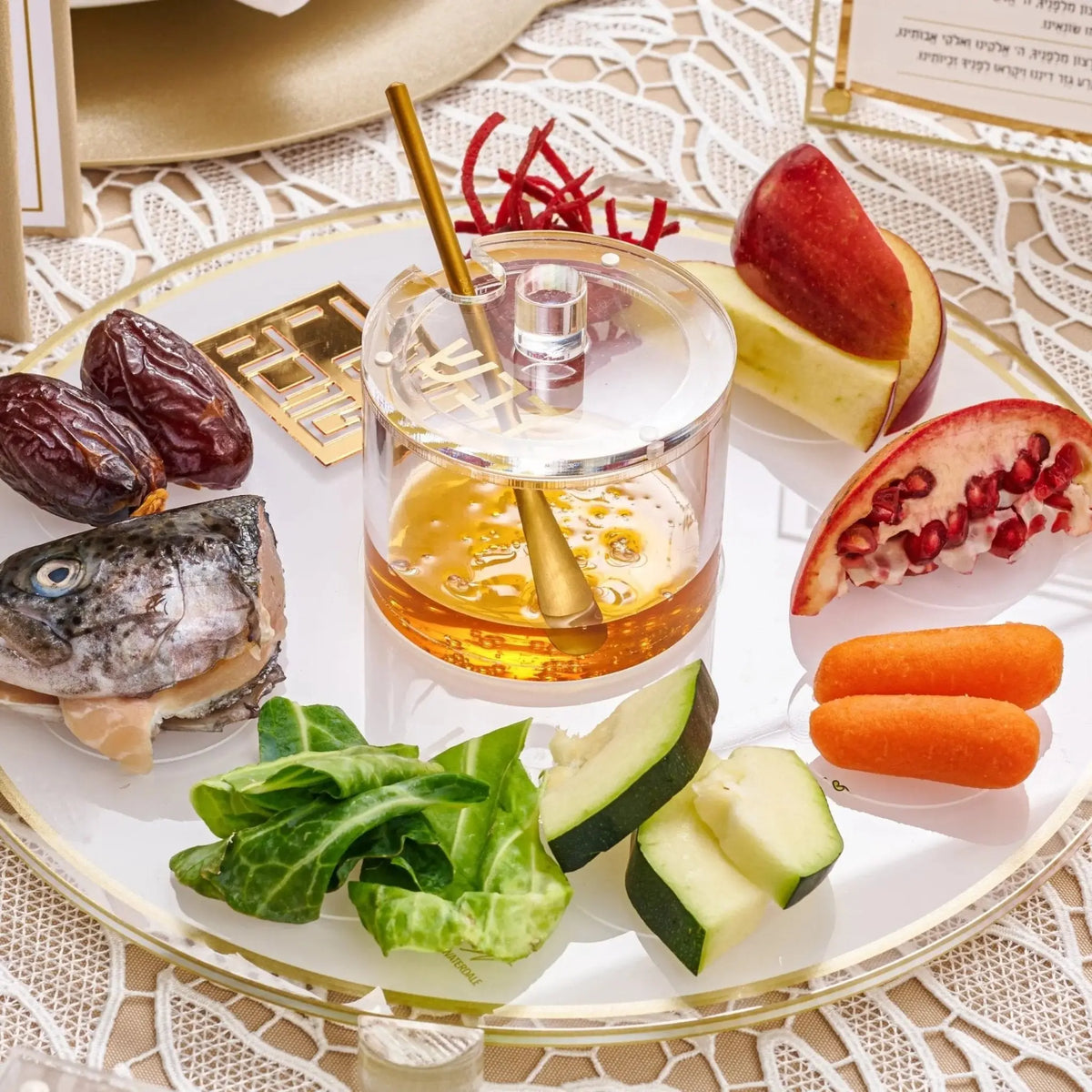
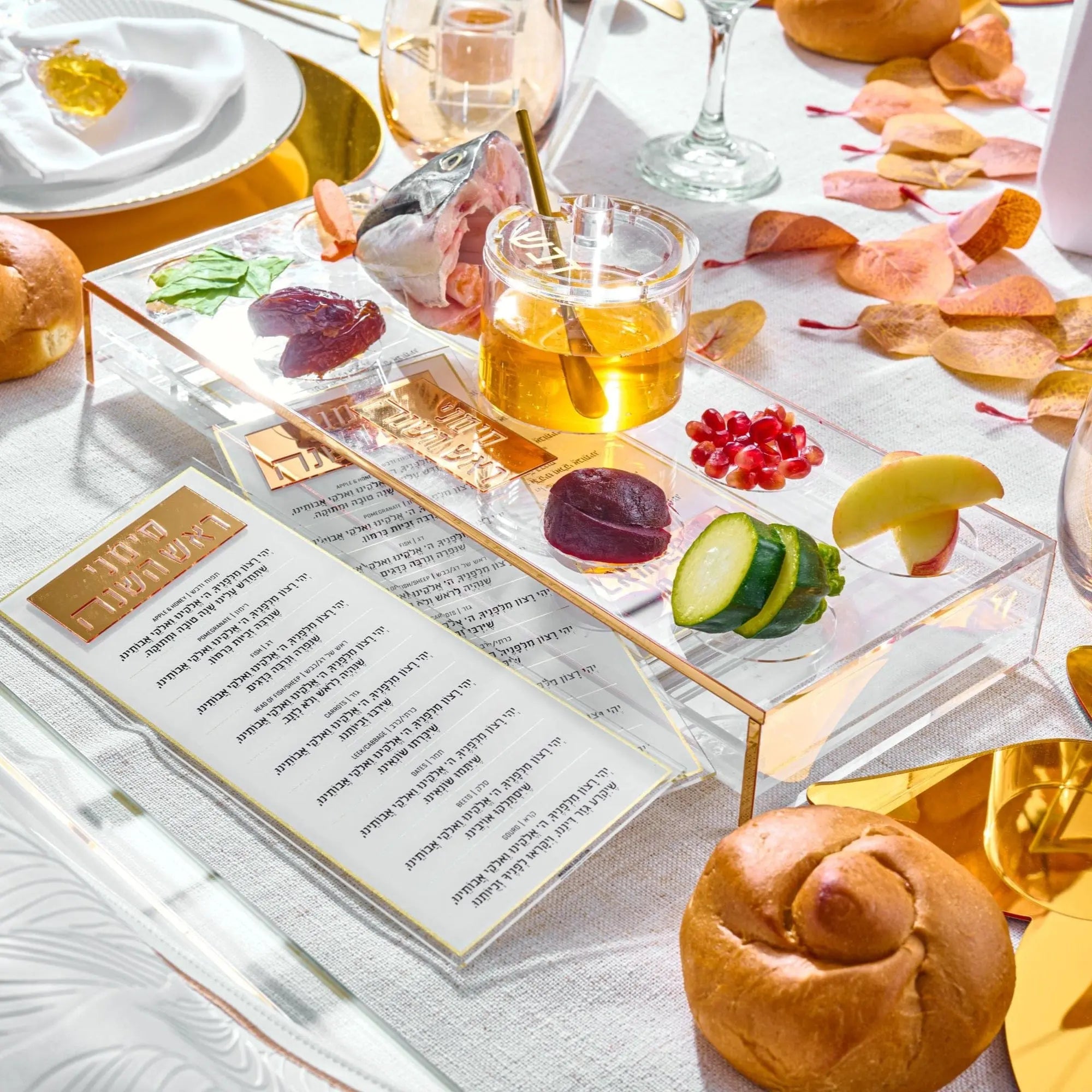
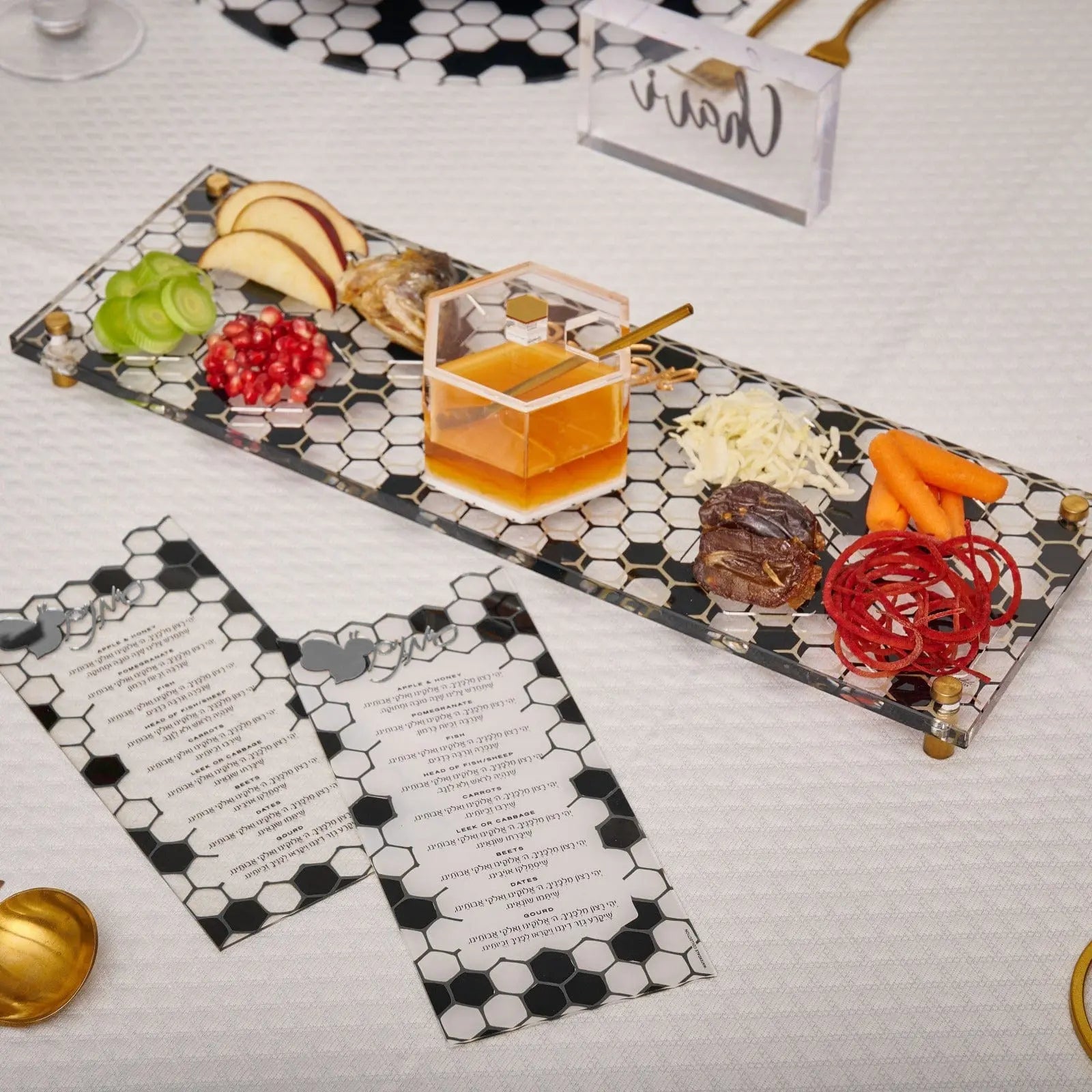
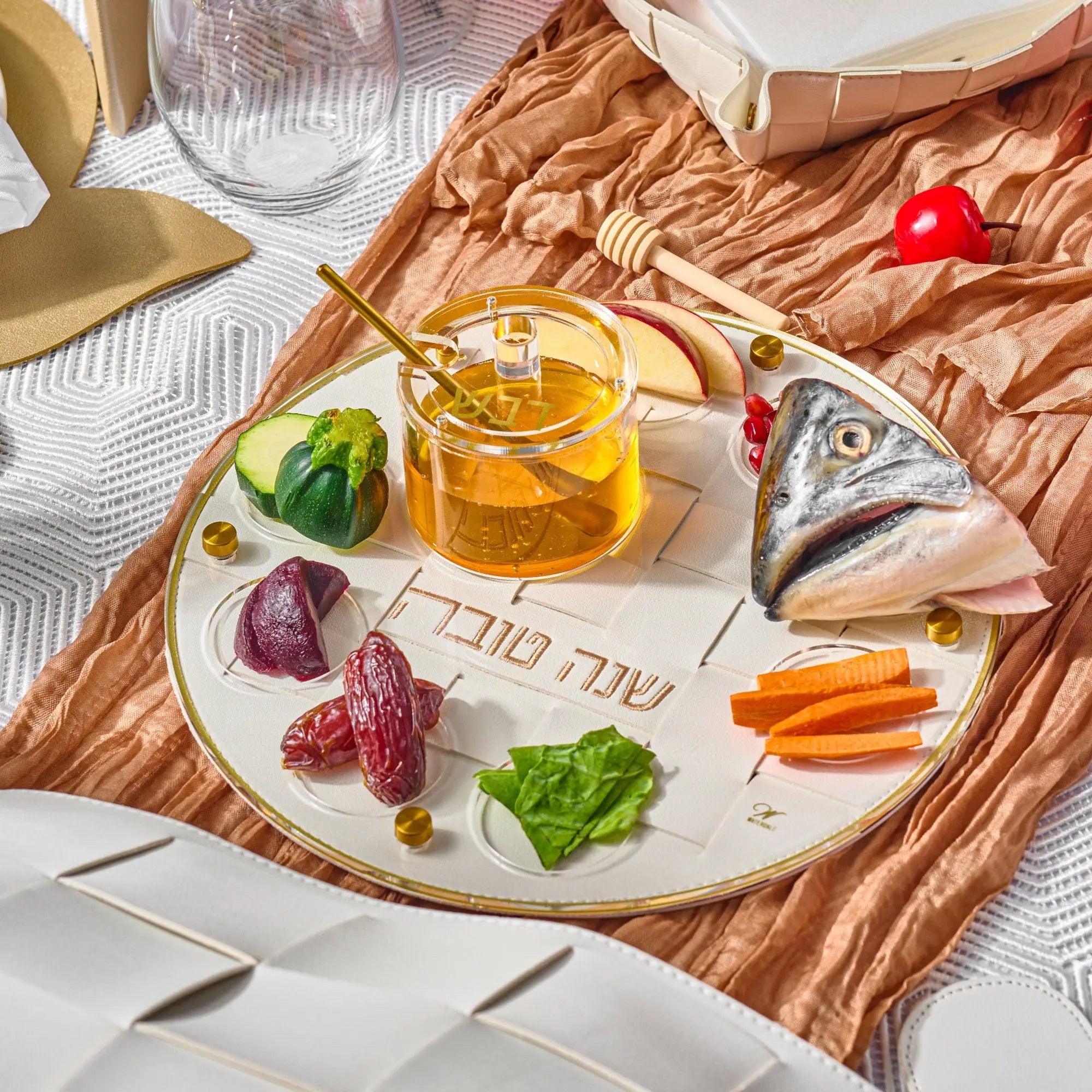
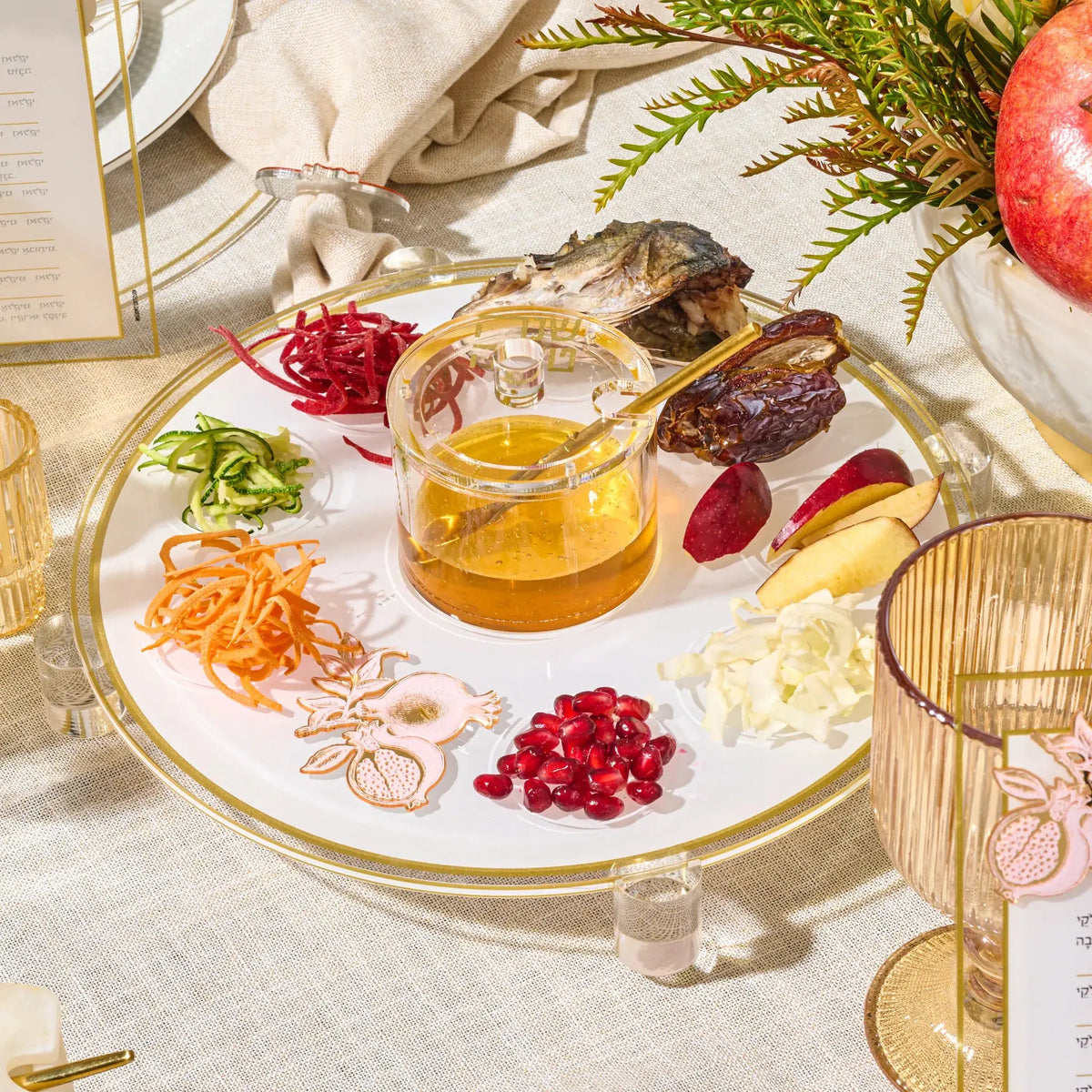
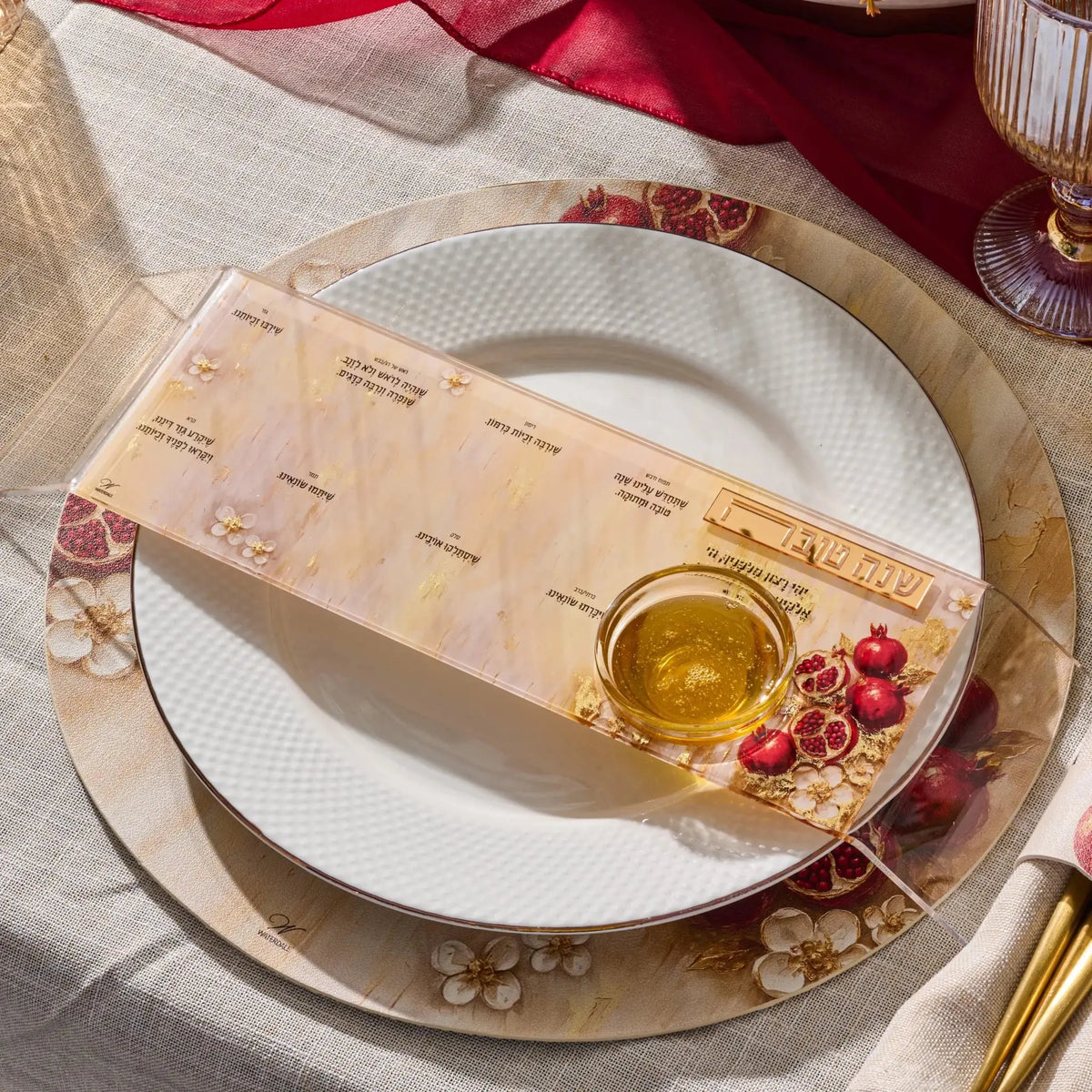
A simanim plate (also called a Rosh Hashanah seder plate or simanim tray) is a sectioned serving dish that holds the symbolic foods — apple, honey, dates, pomegranate, carrots, and more — eaten during the Rosh Hashanah meal.
You don't strictly need one, but it keeps the ritual organized and turns a simple tradition into a centerpiece-worthy part of your Jewish New Year table. It's also one of the most-gifted pieces in Rosh Hashanah gift baskets, especially paired with simanim cards listing the blessings.
What should a Rosh Hashanah table setting include?
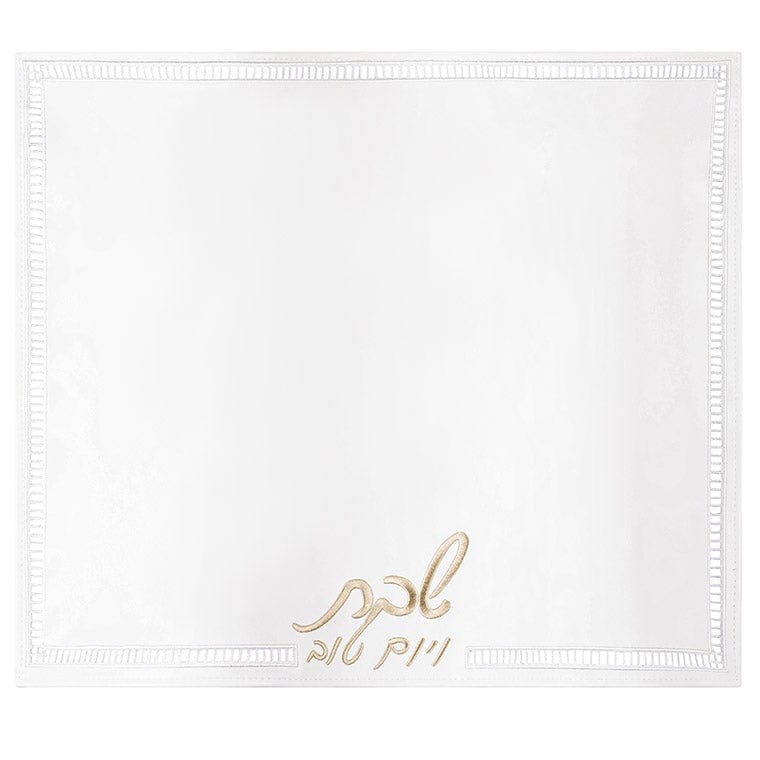
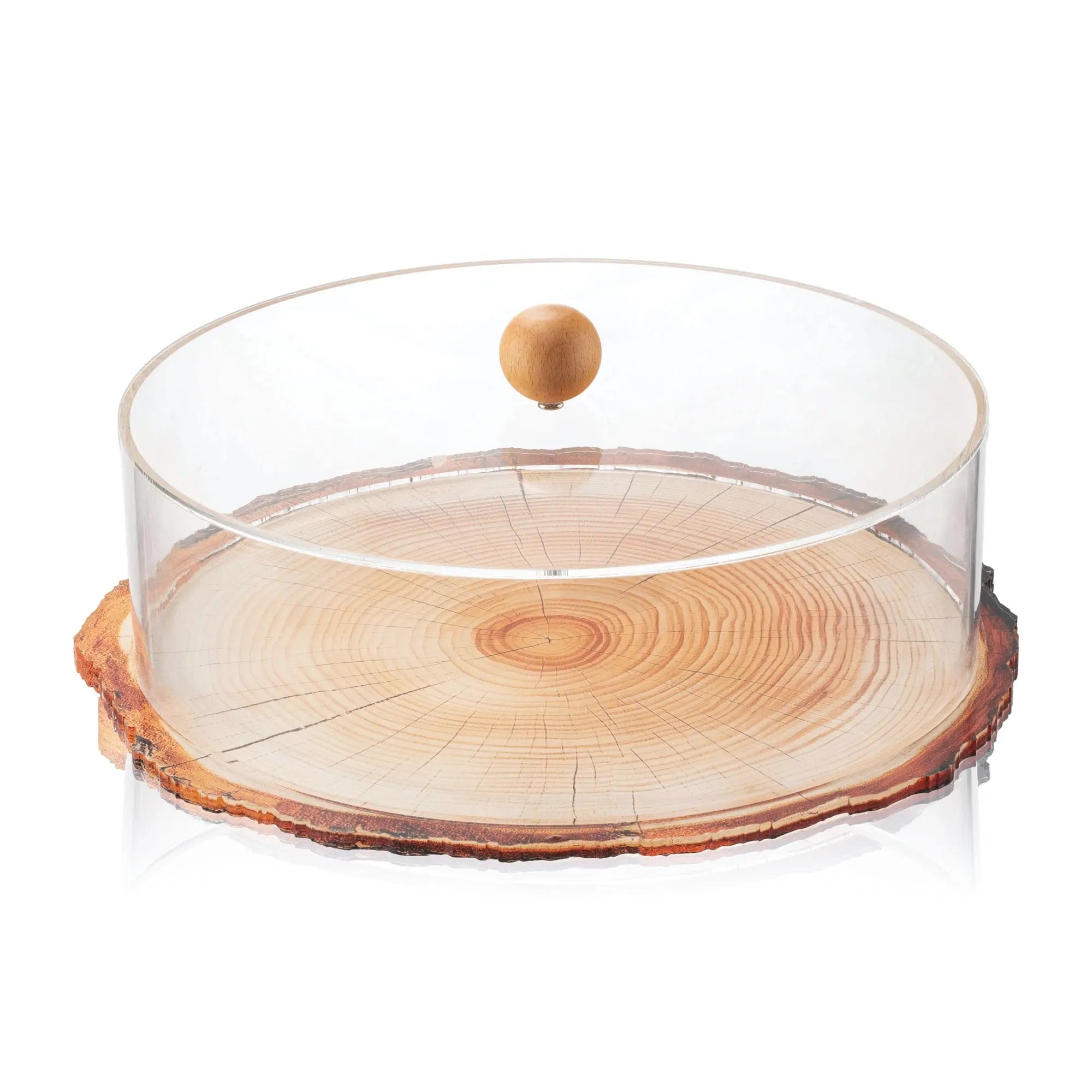
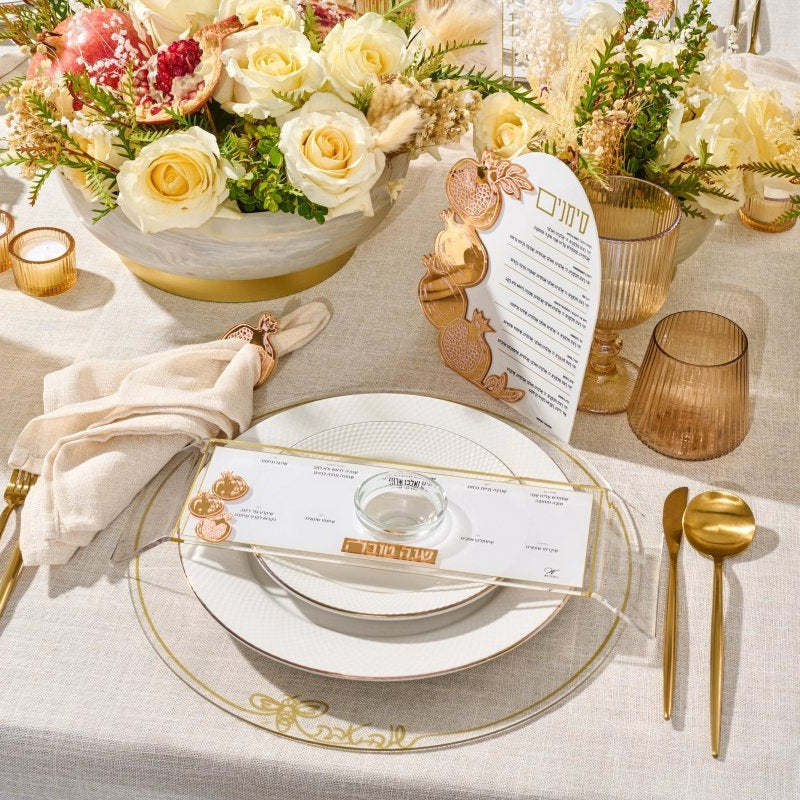
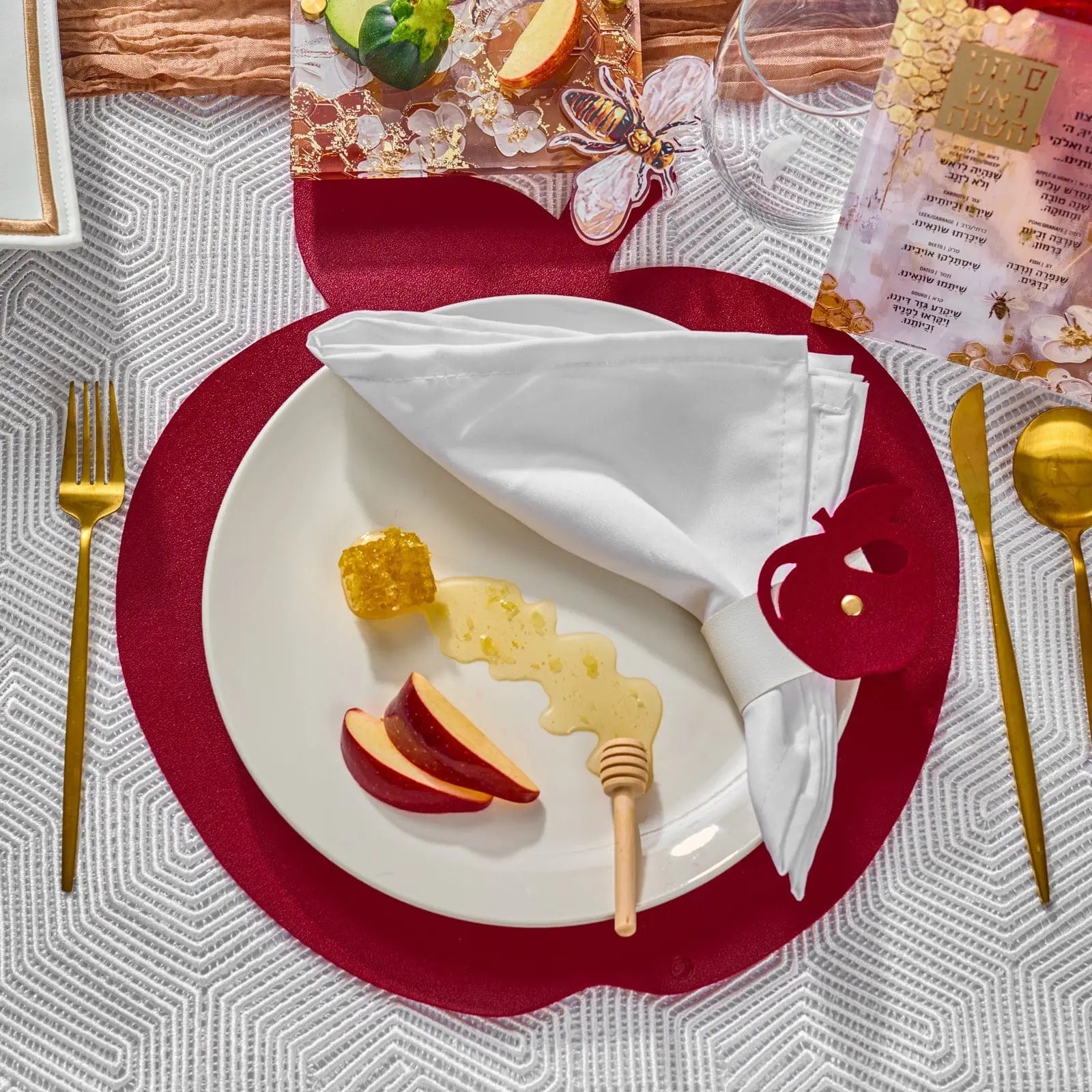
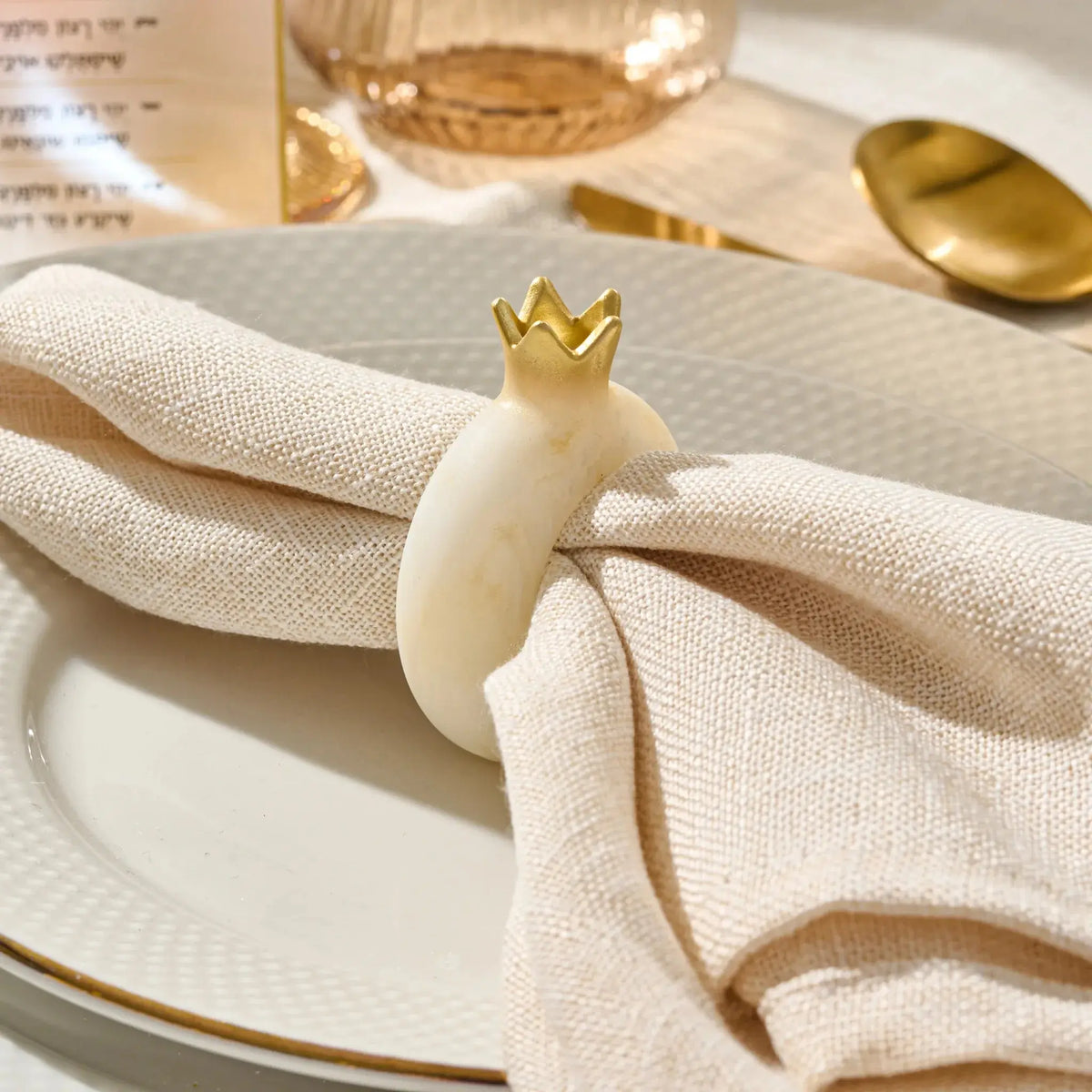
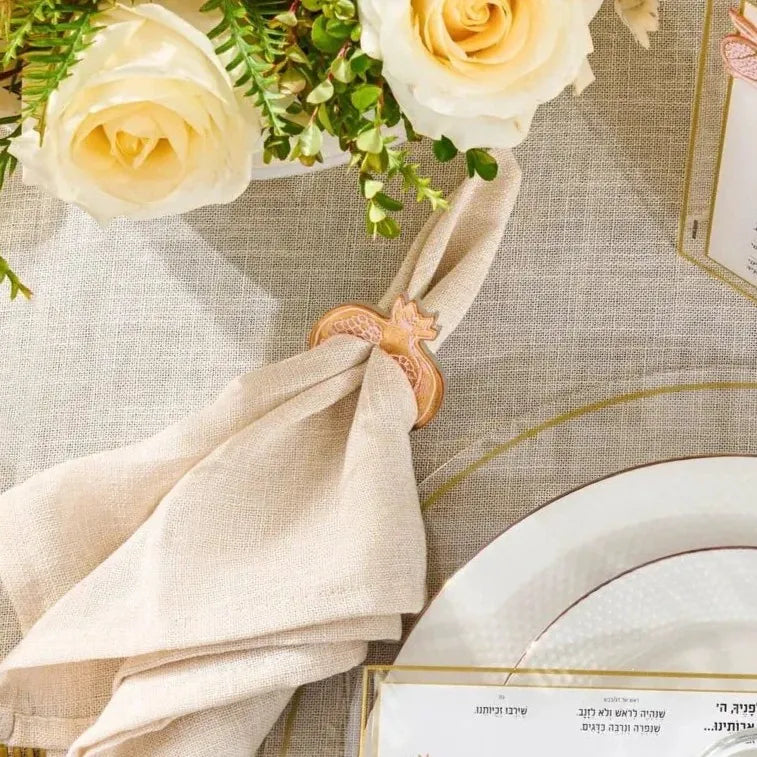
A complete Rosh Hashanah table typically includes a round challah board and cover, a honey dish with dipper, and a simanim plate or platter for the symbolic foods. Many hosts round it out with matching chargers, napkin rings, a Kiddush cup, and candlesticks for hadlokas neiros. These pieces are popular as Rosh Hashanah gifts for hosts, newlyweds, or anyone setting up their first Jewish New Year table.
Why is the challah round on Rosh Hashanah, and why is it dipped in honey instead of salt?
Round challah symbolizes the cyclical nature of the year and the hope for a complete, unbroken new beginning; it's also tied to the theme of coronating God as King during the High Holidays.
On Rosh Hashanah, challah is dipped in honey rather than the usual salt, which is exactly why a dedicated honey dish is considered a Rosh Hashanah table essential rather than an optional extra.
When is Rosh Hashanah 2026, and when should I order gifts and tableware?
Rosh Hashanah 5787 begins at sundown on Friday, September 11, 2026 and ends at nightfall on Sunday, September 13, 2026.
Because Judaica and gift orders spike in the weeks before Yom Tov, it's best to order Rosh Hashanah gifts, honey dishes, and tableware at least 2–3 weeks ahead, or sooner if you're personalizing a piece — check cutoff dates for guaranteed delivery before the holiday.
What makes a good Rosh Hashanah hostess or corporate gift?
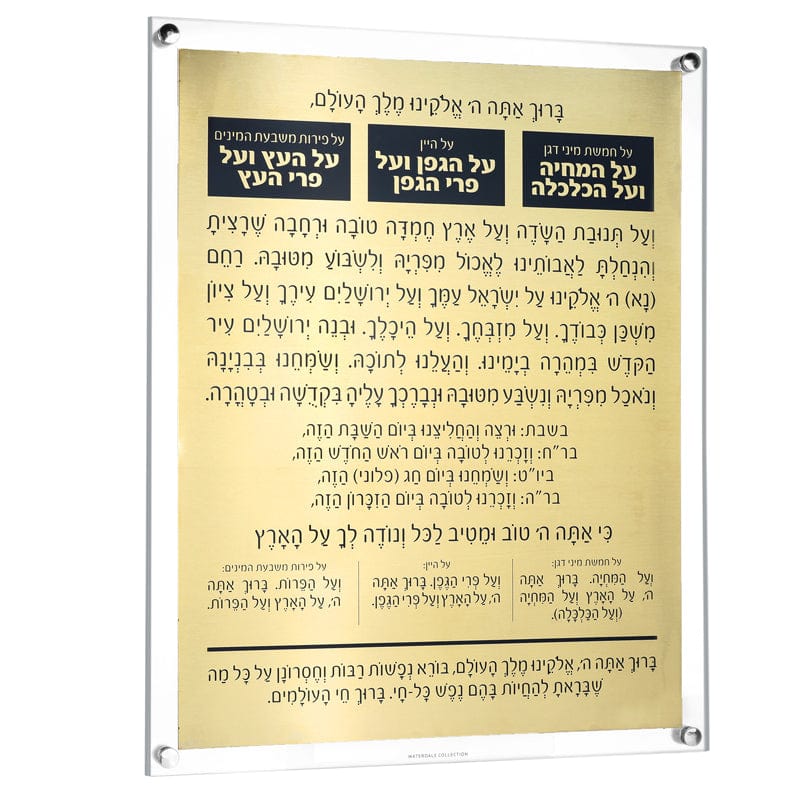
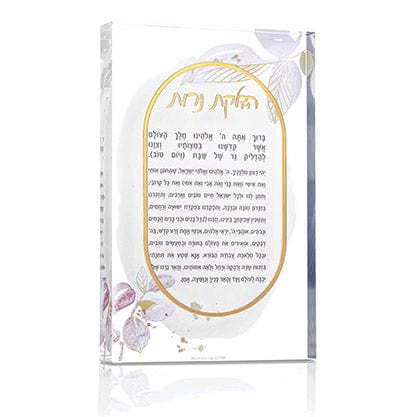
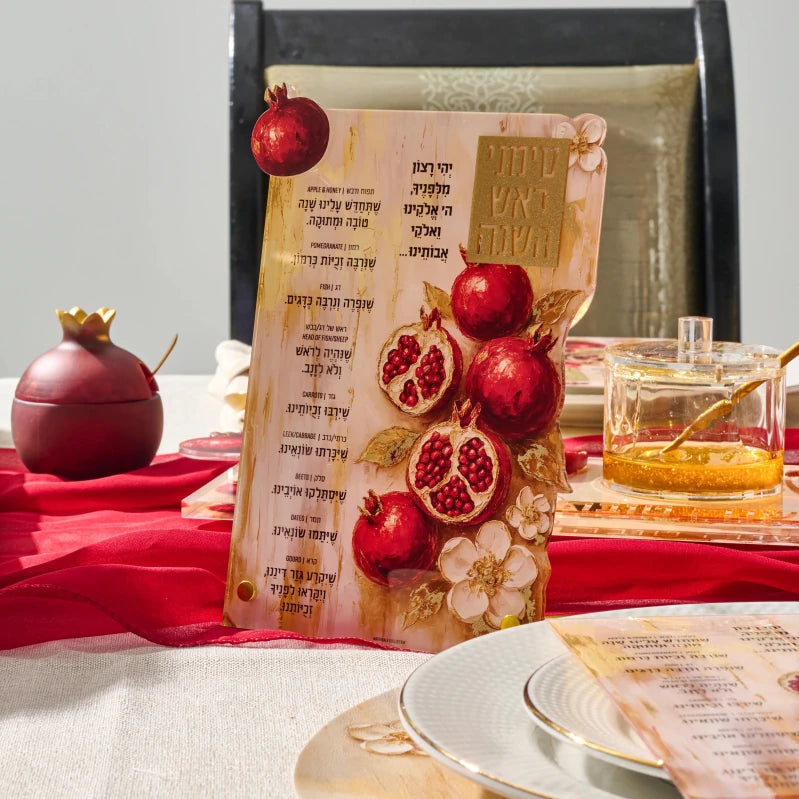
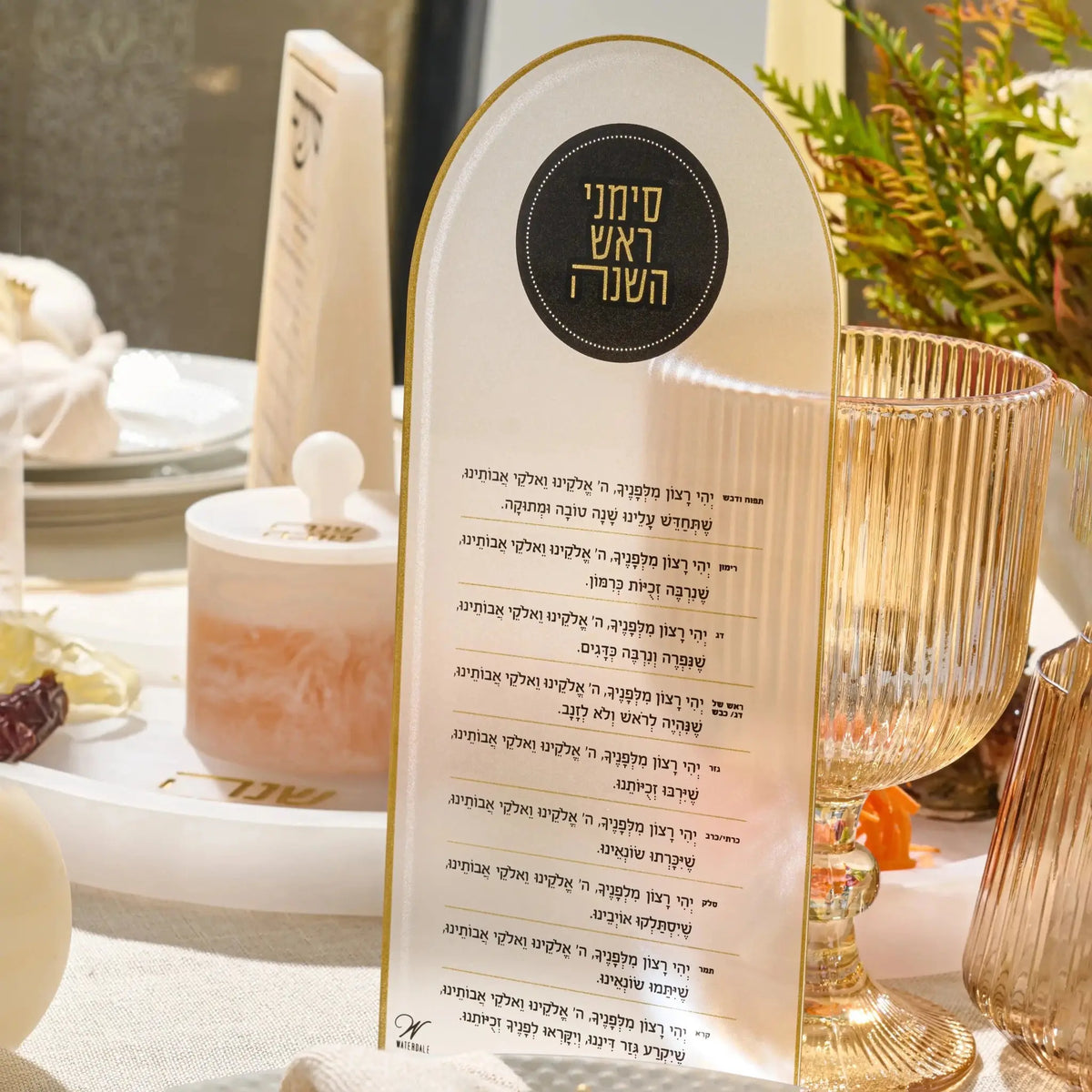
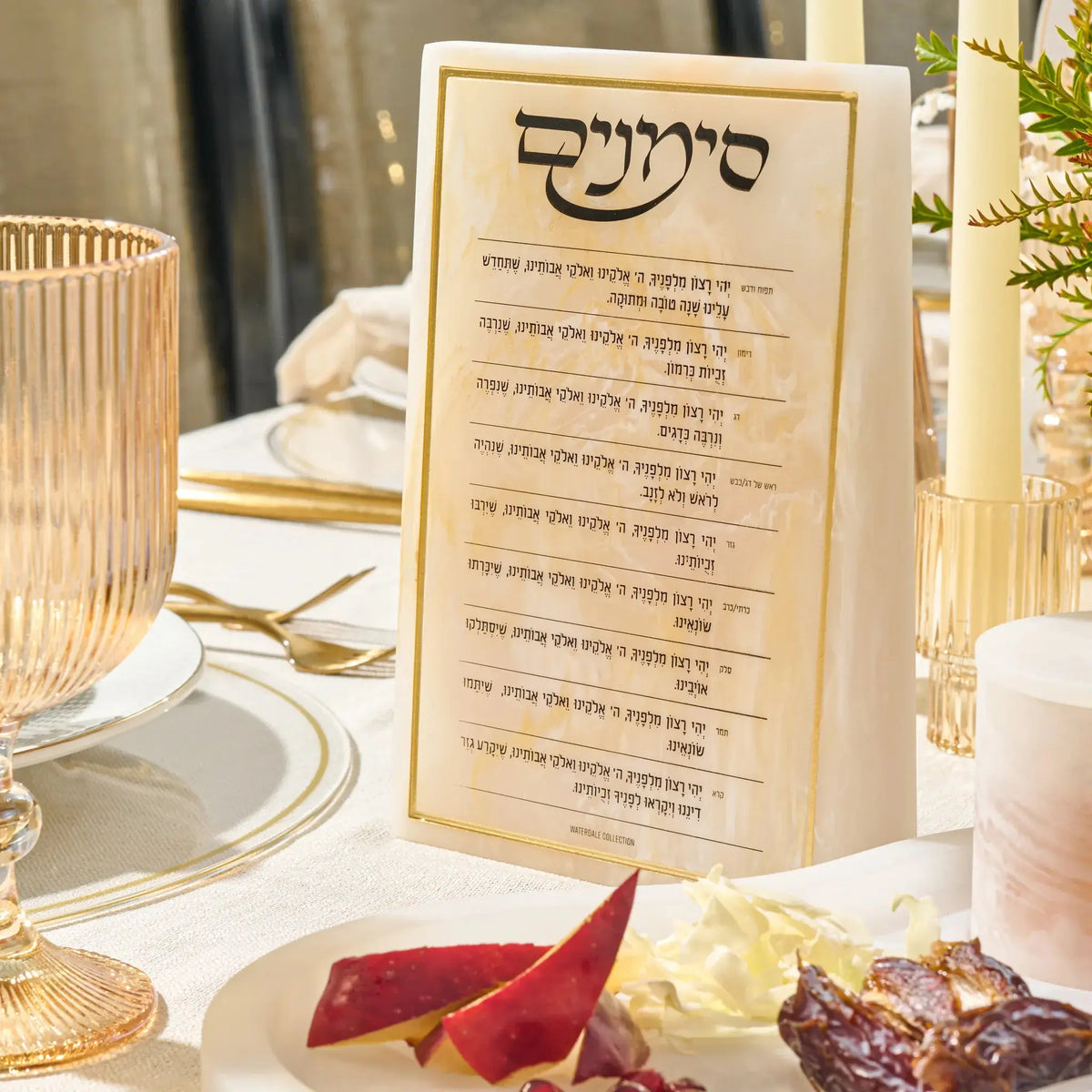
The best Rosh Hashanah gift ideas pair beauty with tradition — think honey dishes, simanim card sets, or a curated Rosh Hashanah gift basket that arrives ready to give. Lucite simanim cards on their own make a lighter gift for a coworker or neighbor, while a full tableware set suits a host or client. Pre-packaged Jewish New Year gifts are especially popular for corporate and bulk gifting since they're visually impressive and easy to send at scale.
What are the simanim foods eaten on Rosh Hashanah, and what do they symbolize?
The traditional simanim include apple and honey (a sweet year), dates (an end to those who wish us harm), pomegranate (a year full of mitzvot), carrots or gourd (increased merits), leeks or scallions (the downfall of our enemies), beets or spinach (removal of adversaries), and sometimes a fish or ram's head (to be "a head and not a tail"). Each food is chosen as a play on its Hebrew or Aramaic name, and they're traditionally eaten in sequence during the Rosh Hashanah seder, each with a short accompanying blessing.
Why do we dip apples in honey on Rosh Hashanah?
Apples dipped in honey are the best-known siman of Rosh Hashanah, eaten right after Kiddush to express the wish for a sweet, good new year — often with the words "shana tova u'metuka" said beforehand.
It's typically the very first food eaten at the meal, which is why a dedicated honey dish tends to become one of the most-used pieces on a family's Rosh Hashanah table.
Is the Rosh Hashanah simanim seder an Ashkenazi or Sephardic custom?
The full simanim seder — with foods well beyond apples and honey — is rooted in Sephardic and Edut Mizrach tradition, observed in detail for centuries. Ashkenazi custom historically centered on apple and honey alone, though many Ashkenazi families today run the fuller seder as well; Waterdale's simanim trays and card sets are written to work for either tradition.
Honey dish vs. simanim plate: what's the difference, and do I need both?
A honey dish holds just the honey (and sometimes apple slices) for the very first dip after Kiddush, while a simanim plate is a larger, sectioned tray that displays all the symbolic foods for the full seder. Many Rosh Hashanah tables use both — a honey dish for the opening blessing and a simanim plate for the rest of the meal — though an all-in-one platter with a built-in honey compartment works well for smaller or simpler setups.
What's the best material for a Rosh Hashanah honey dish or simanim tray — glass, lucite, or silver?
Glass and lucite/acrylic pieces are easy to clean and let the honey's color show through, while silver-plated honey dishes and trays bring a more formal, heirloom look to the Rosh Hashanah table. There's no religious requirement for a specific material, so it comes down to your table's style and how much wear the piece needs to hold up to — many families set aside one dish used only for Rosh Hashanah each year, regardless of material.