

We're closed for Shabbos. We reopen [[opentime]]. Time until we reopen: [[countdown]]. Thanks for understanding.
When is Rosh Hashanah 2026?
Rosh Hashanah 2026 — the start of Hebrew year 5787 — begins at sundown on Friday, September 11, 2026, and ends at nightfall on Sunday, September 13, 2026. The first day of Yom Tov falls on Shabbos this year, which means the shofar is blown only on the second day and tashlich is deferred as well. With the holiday falling early in September, most families begin their Rosh Hashanah shopping and table planning in mid-summer.
What do I need to set the Rosh Hashanah table?
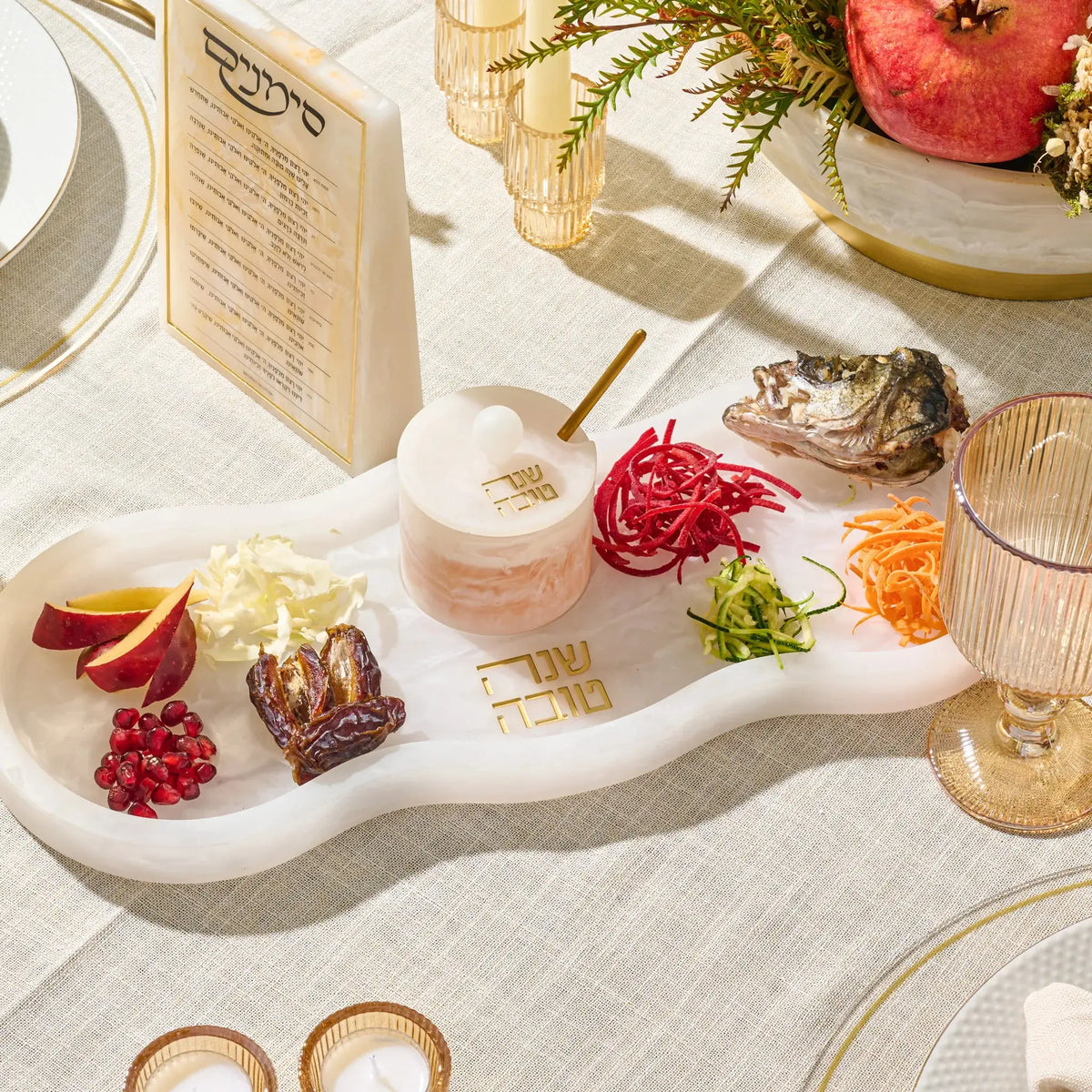
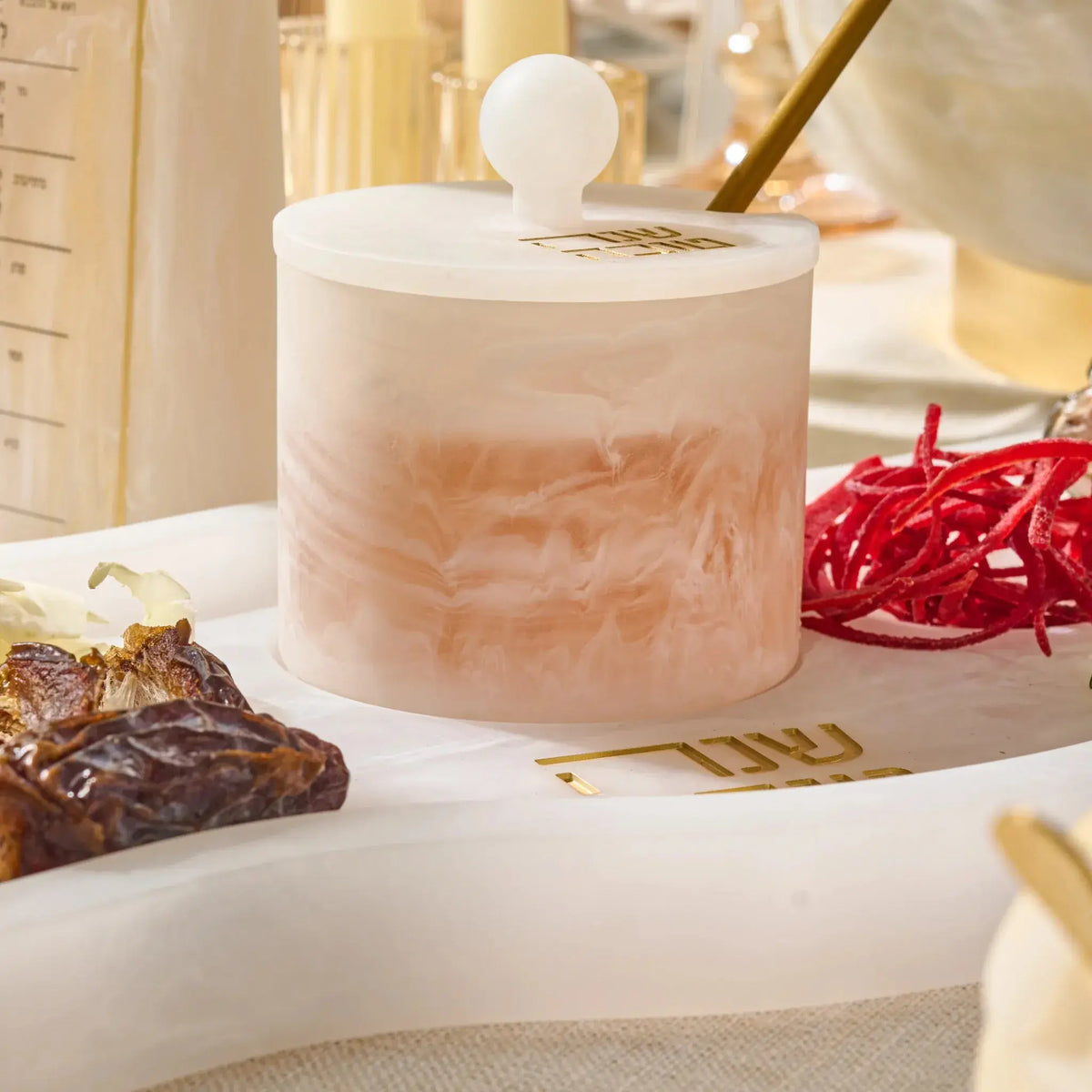
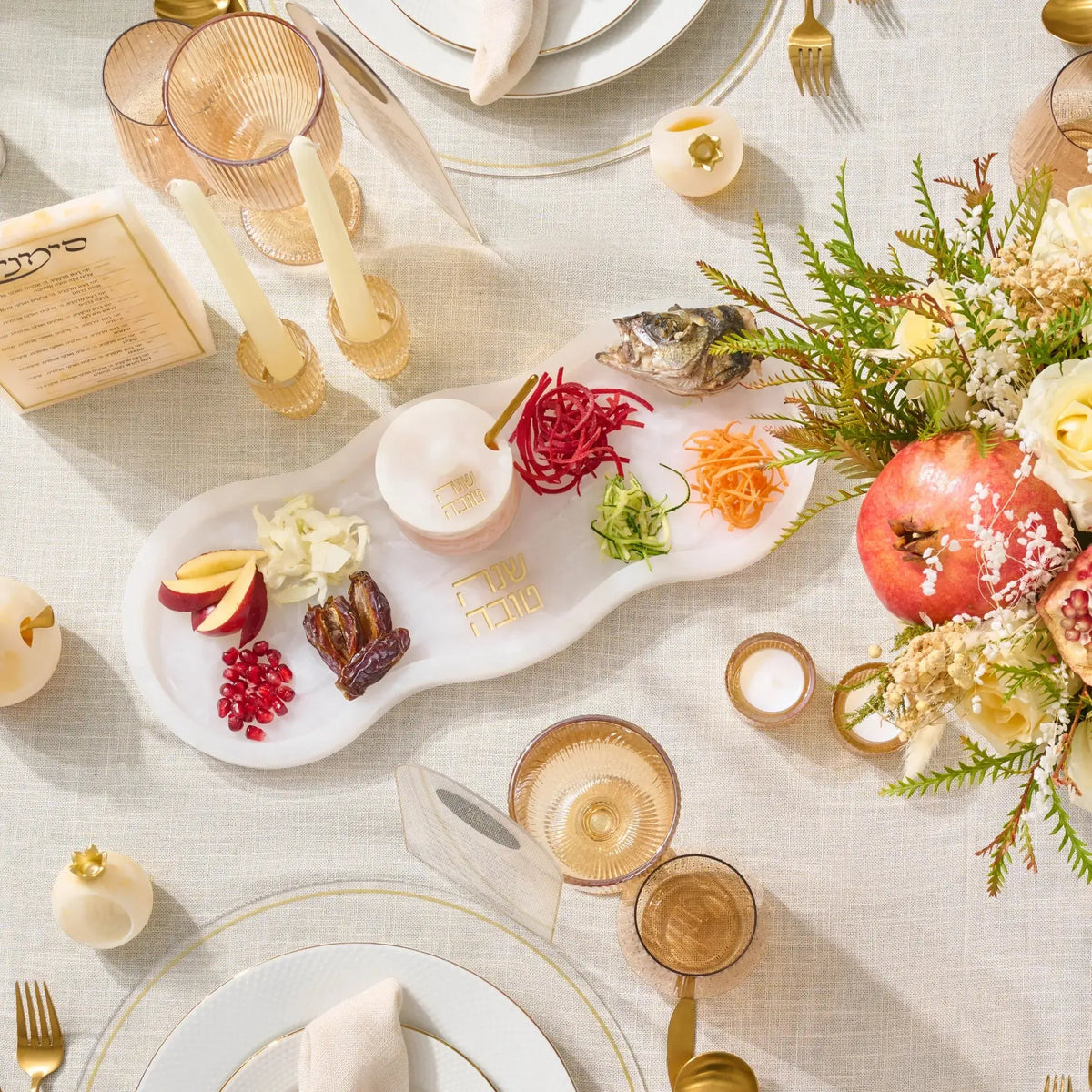
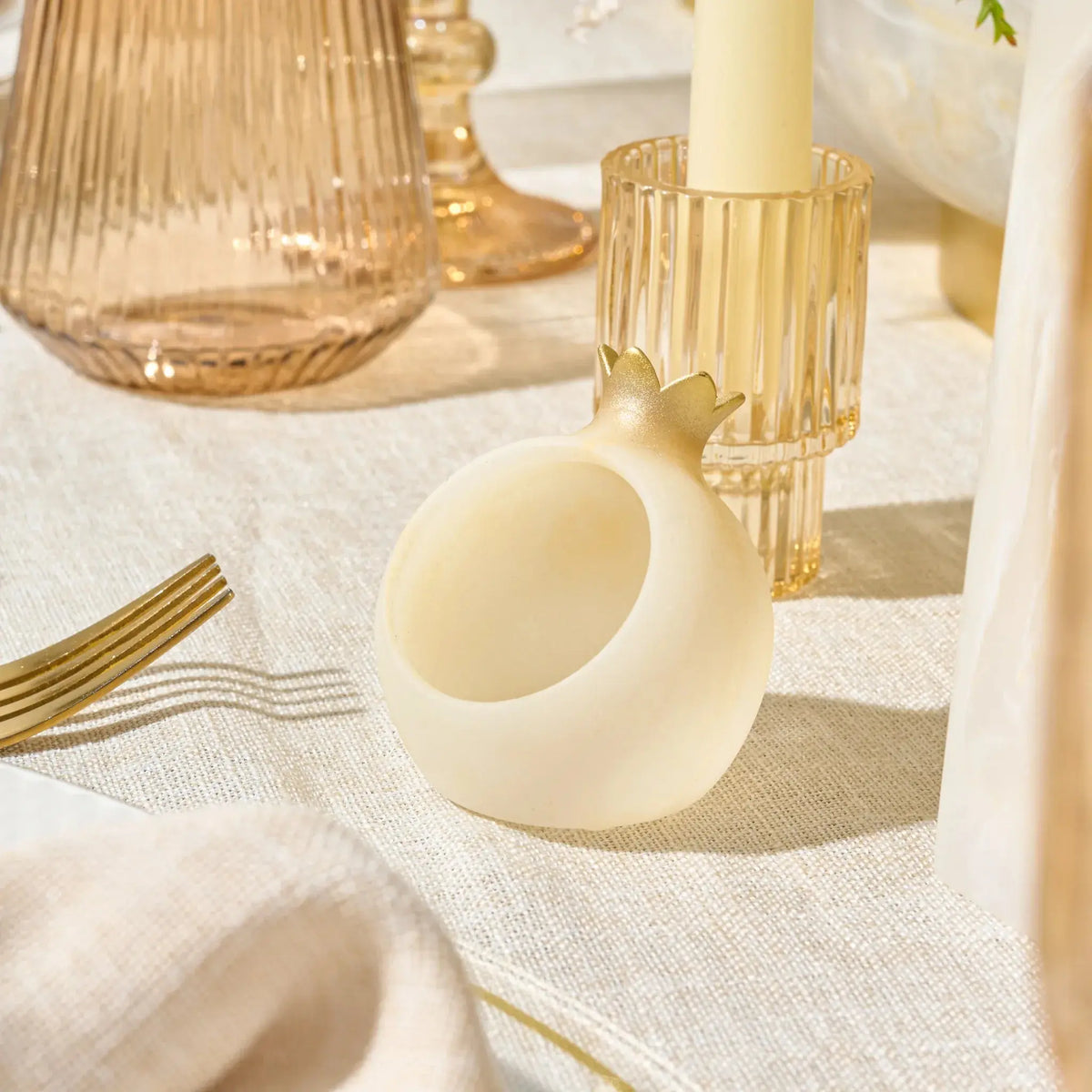
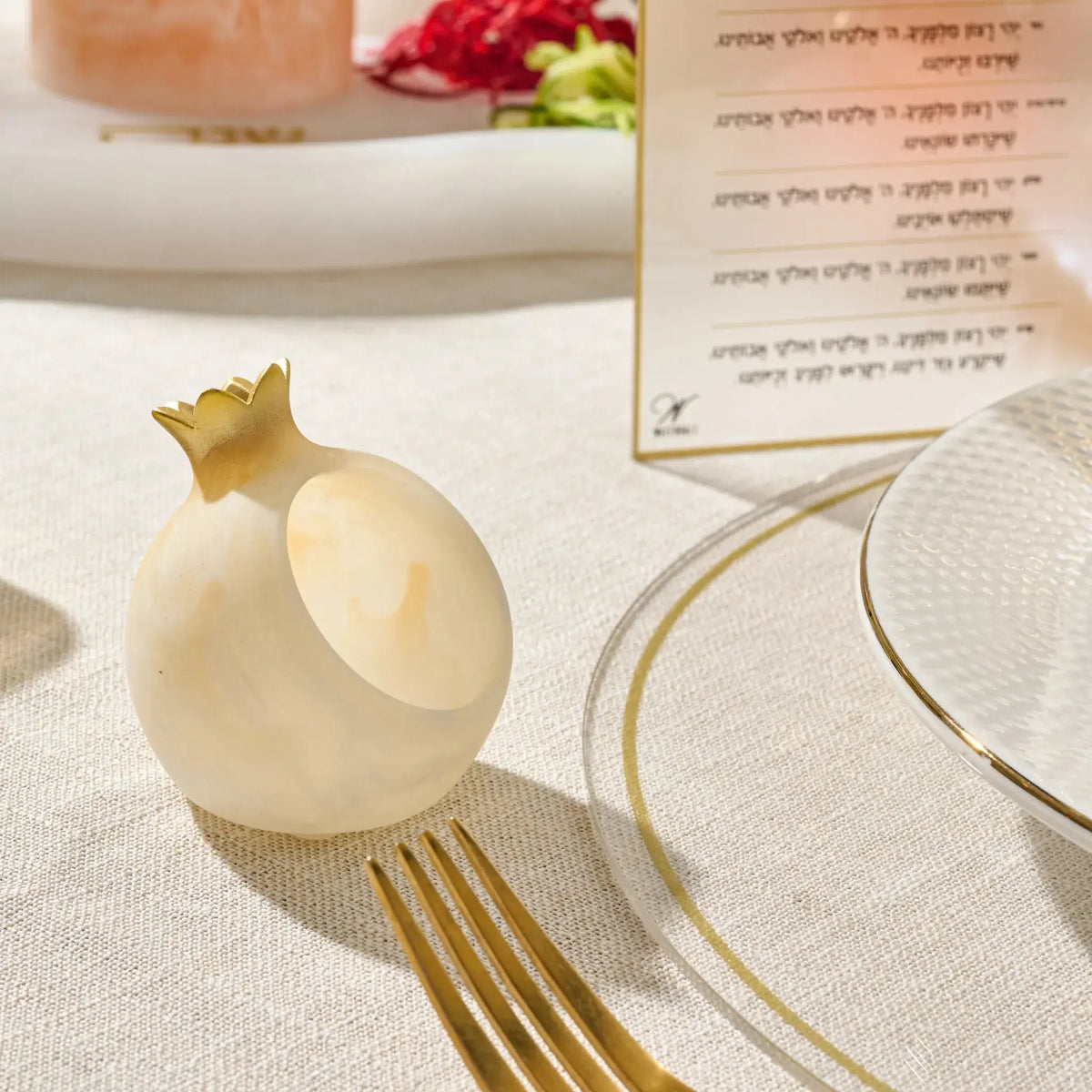
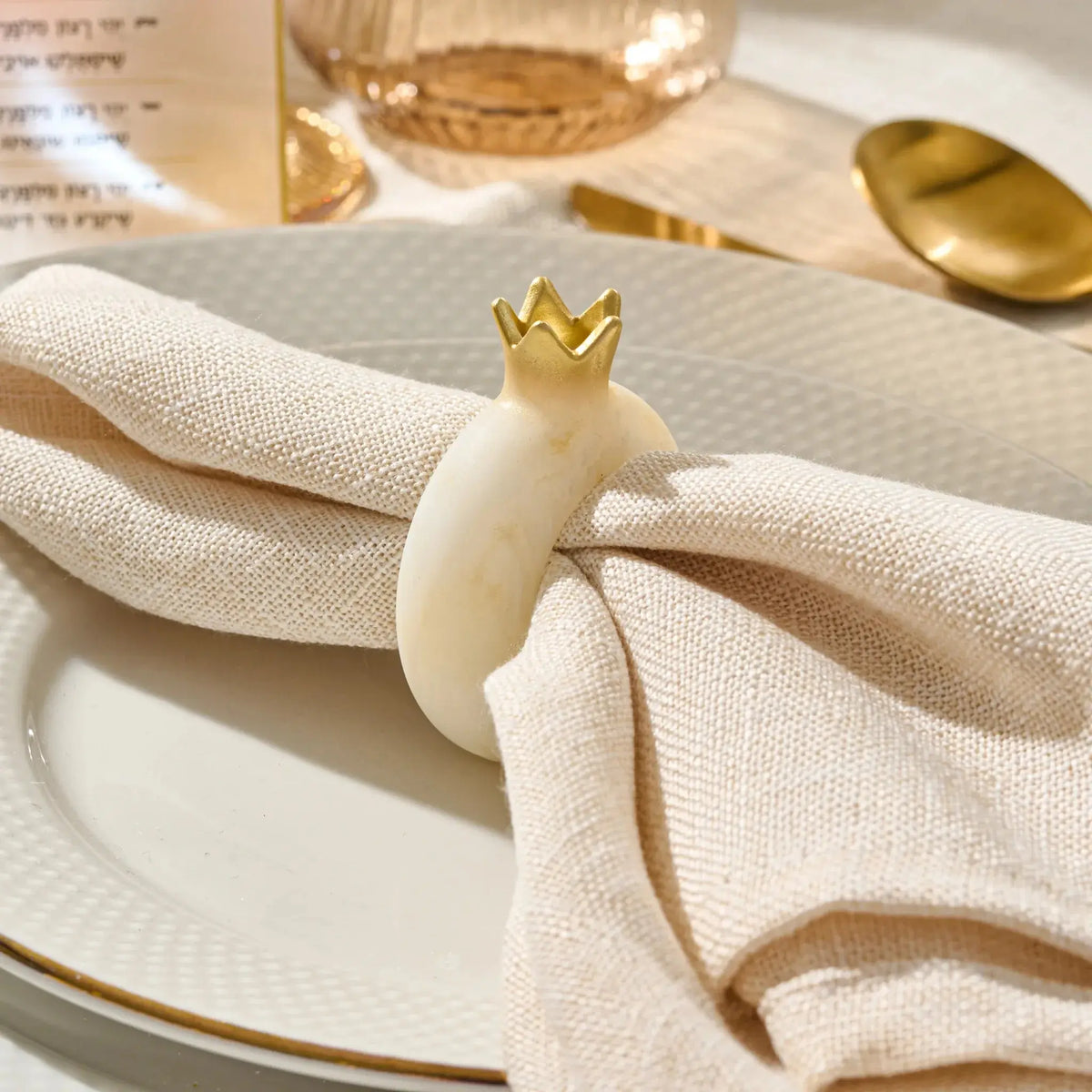
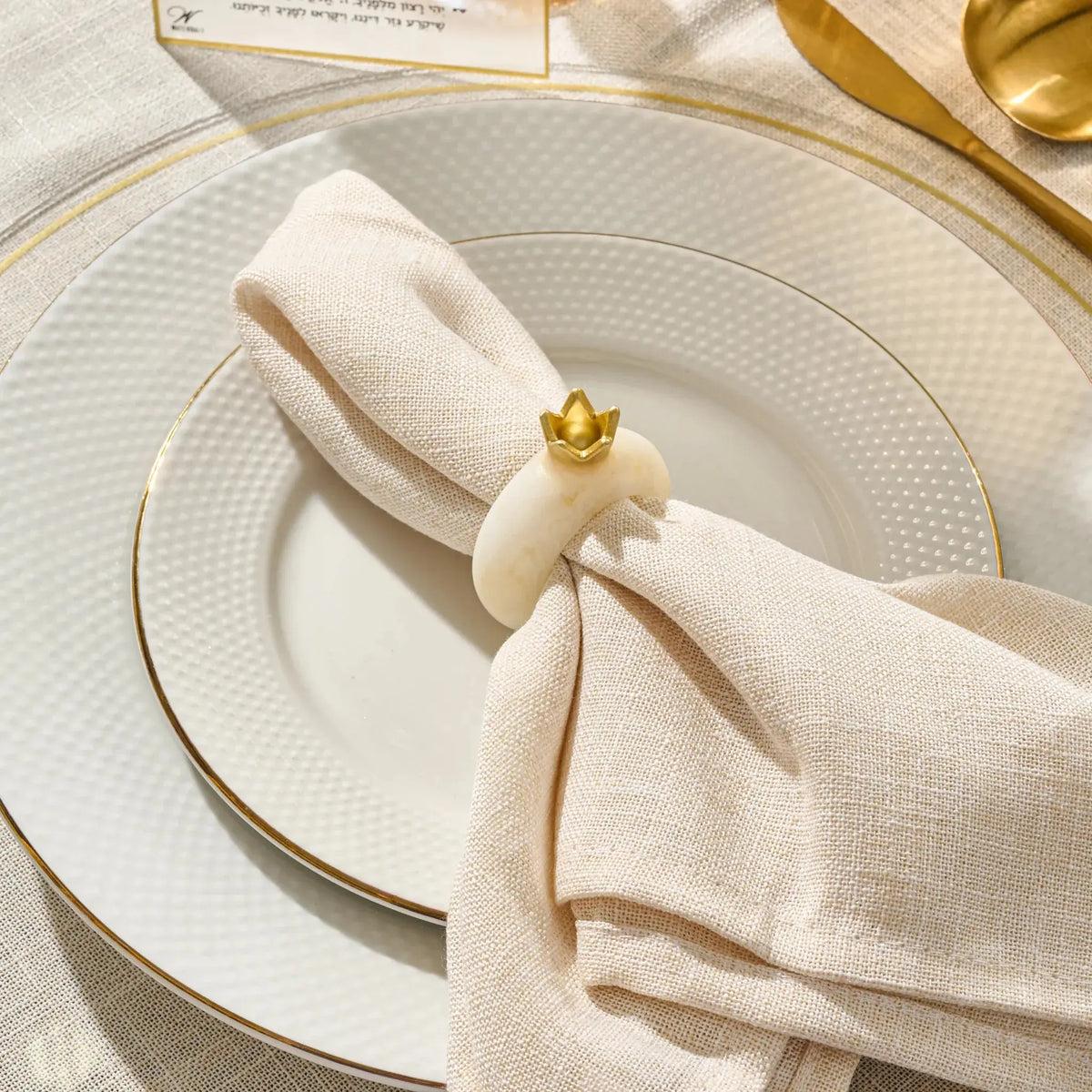
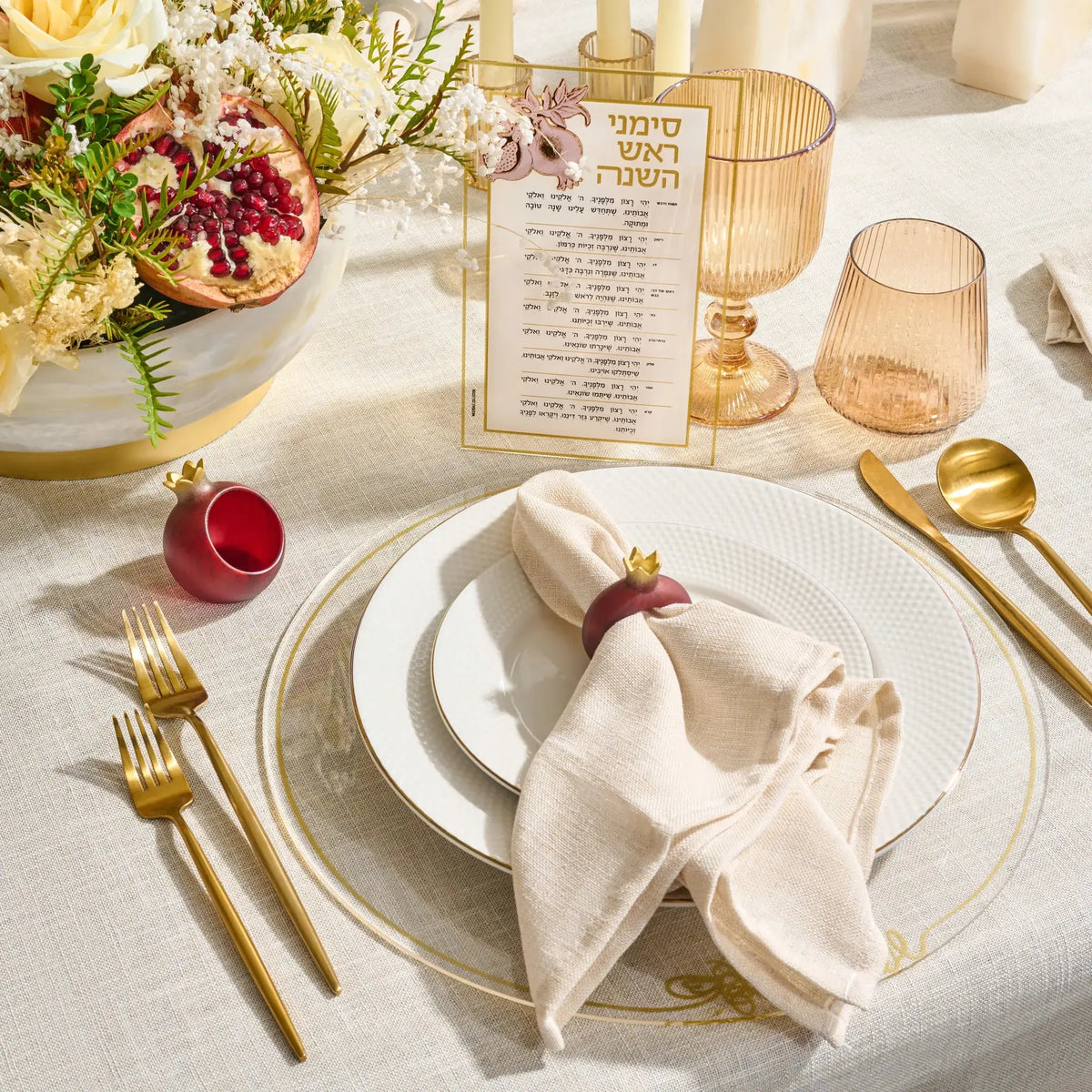
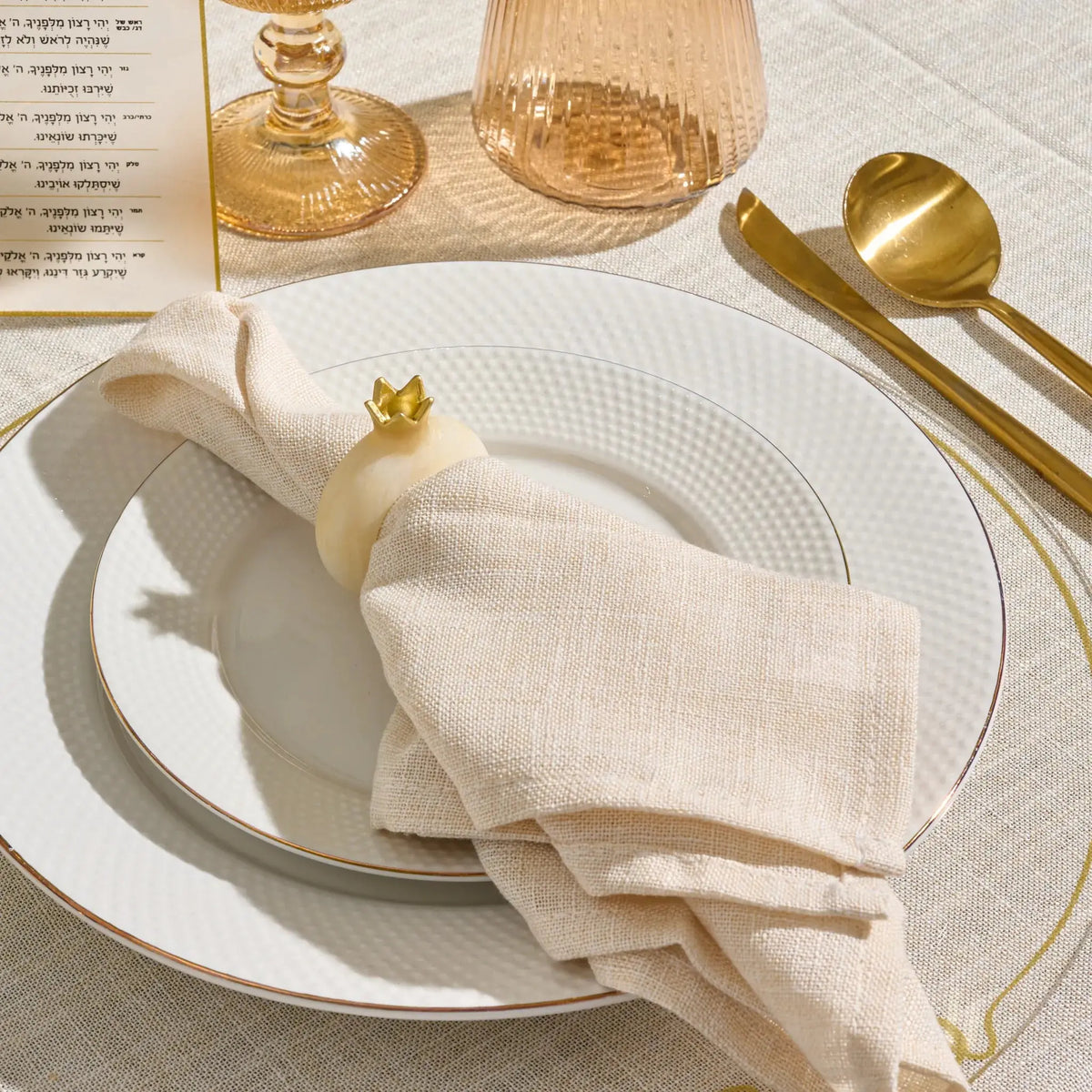
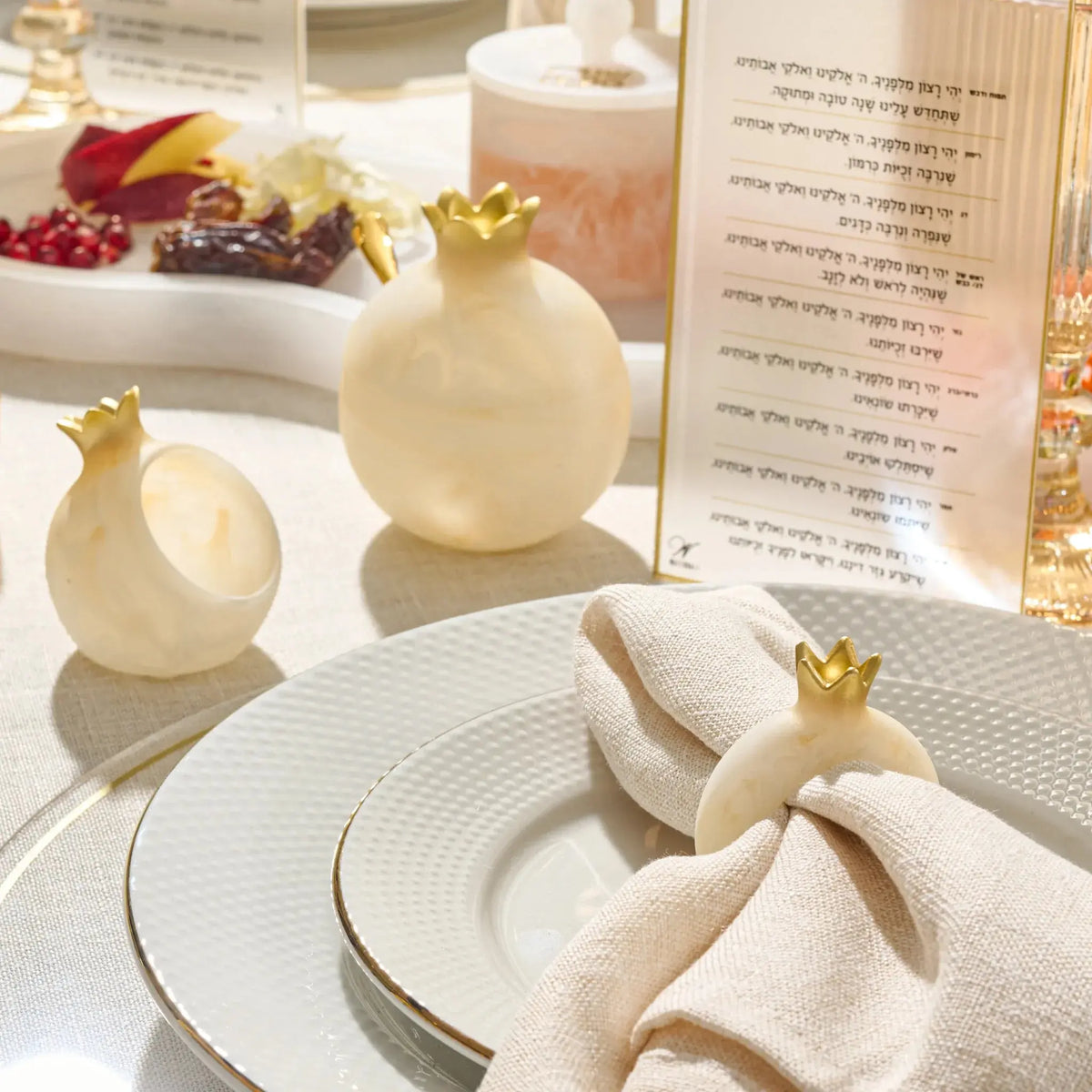
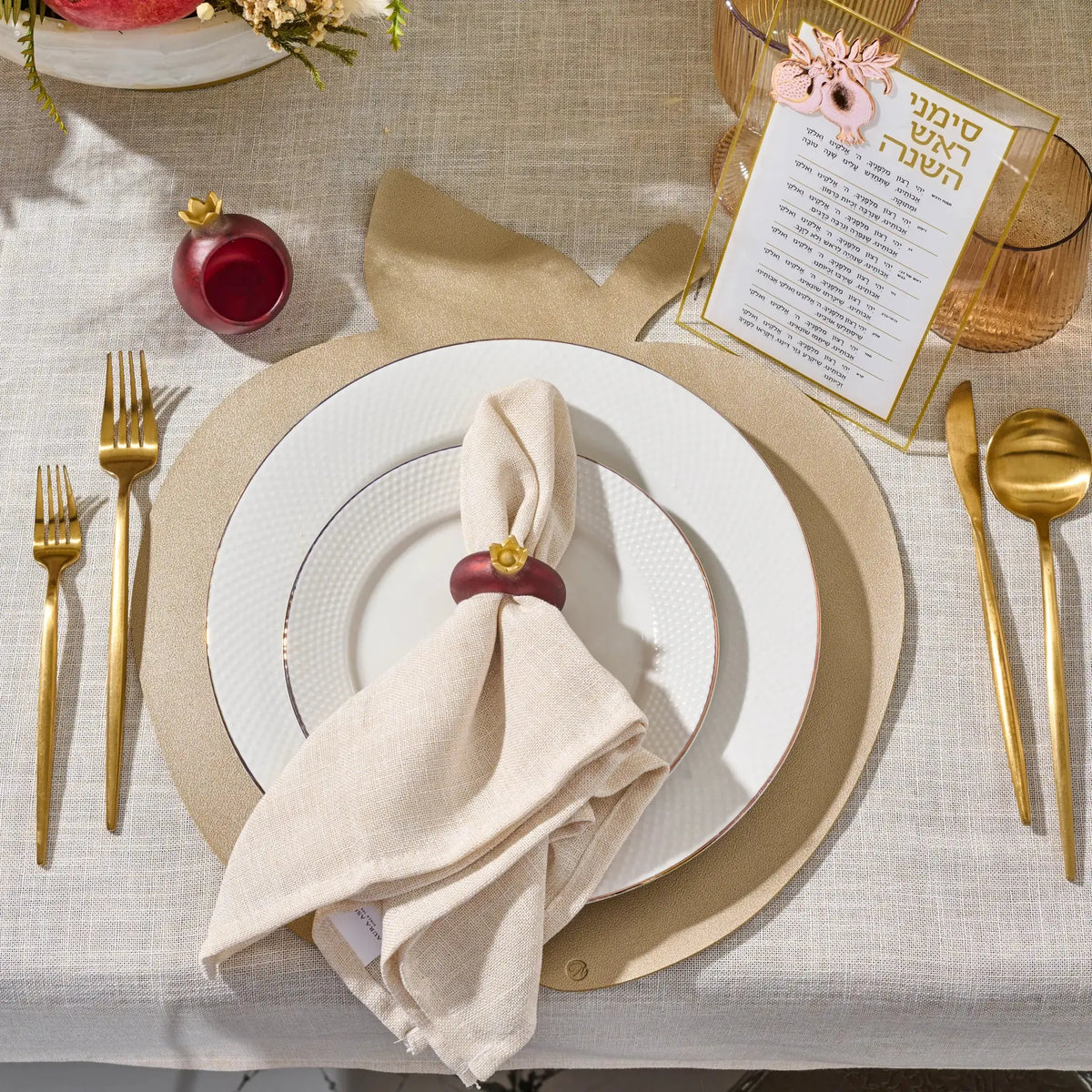
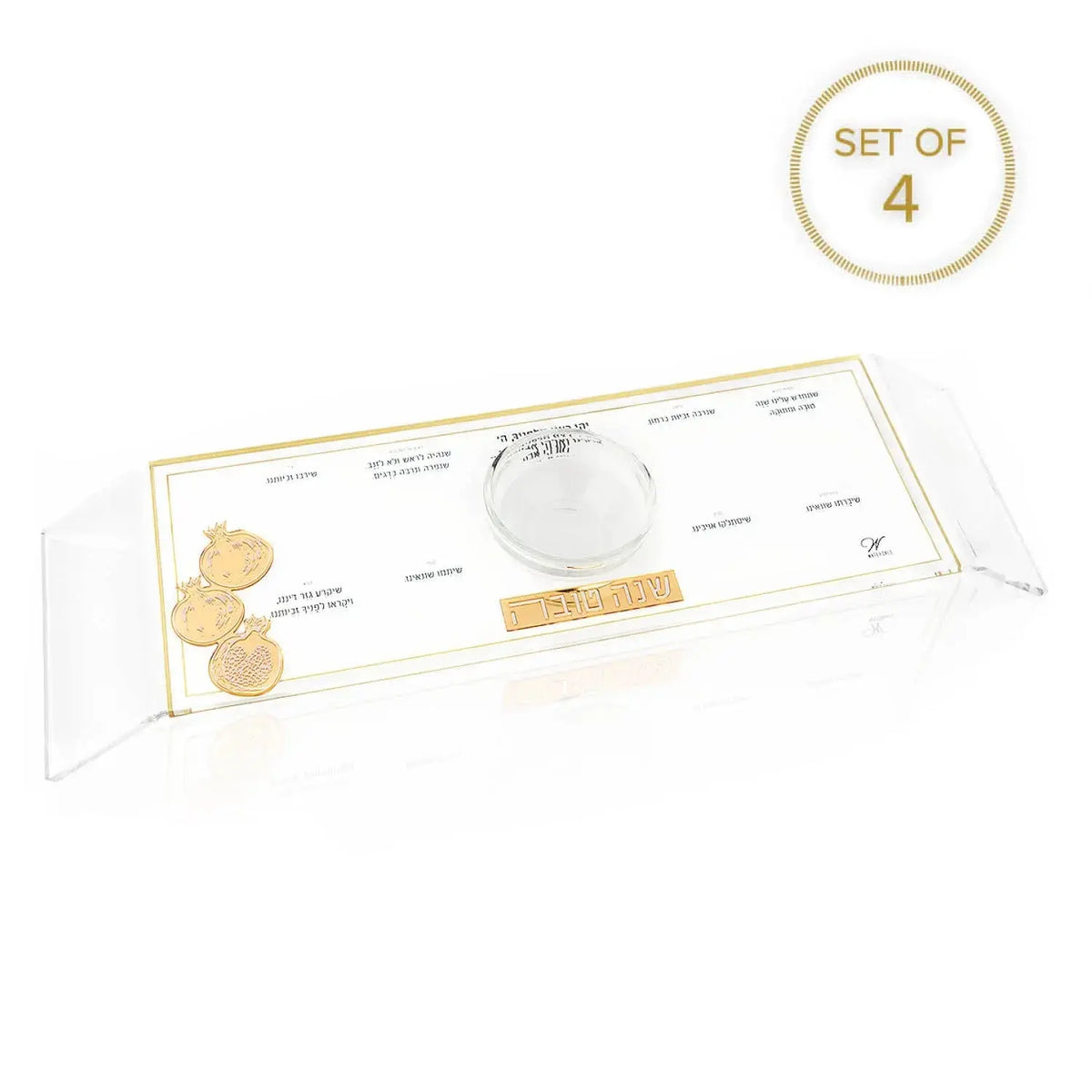
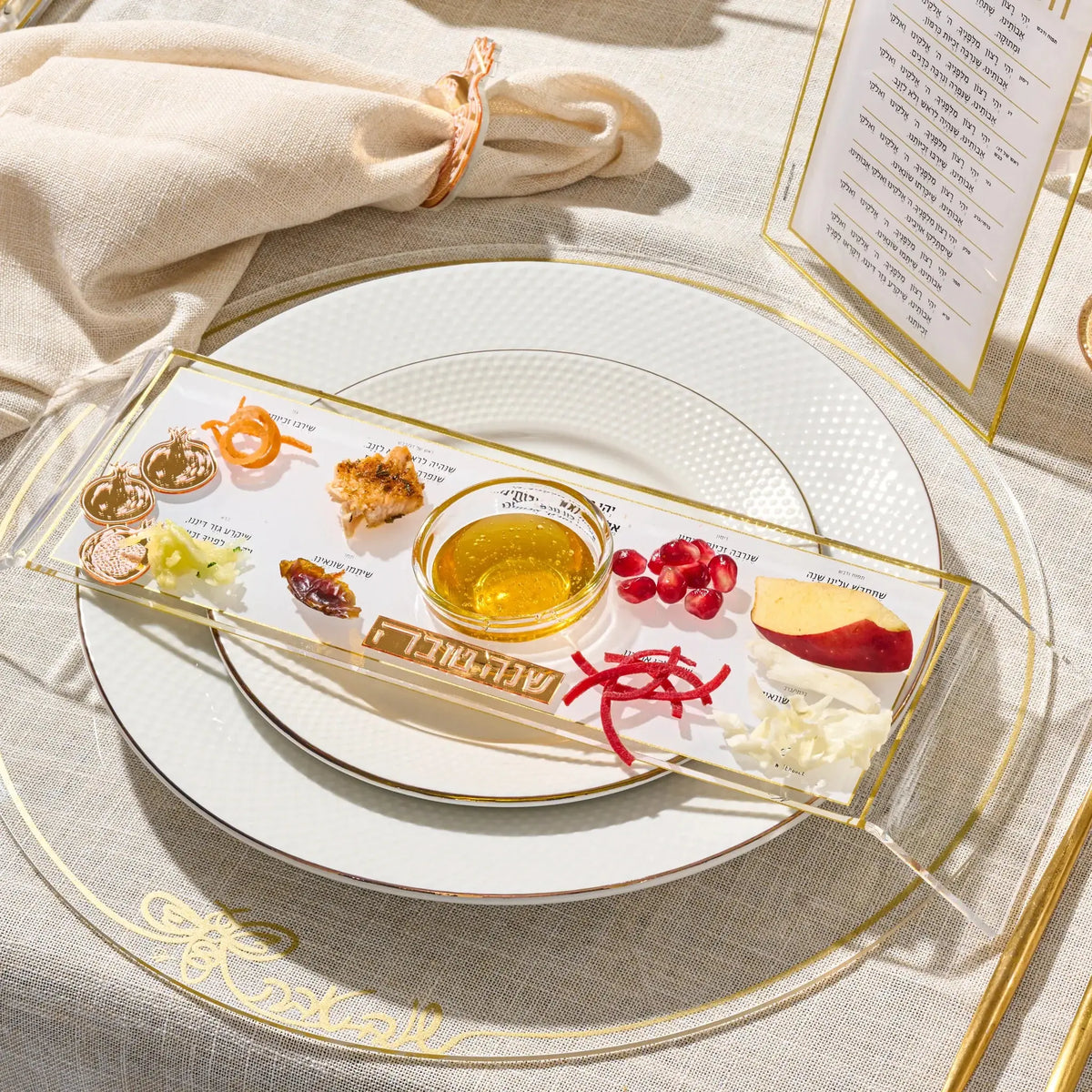
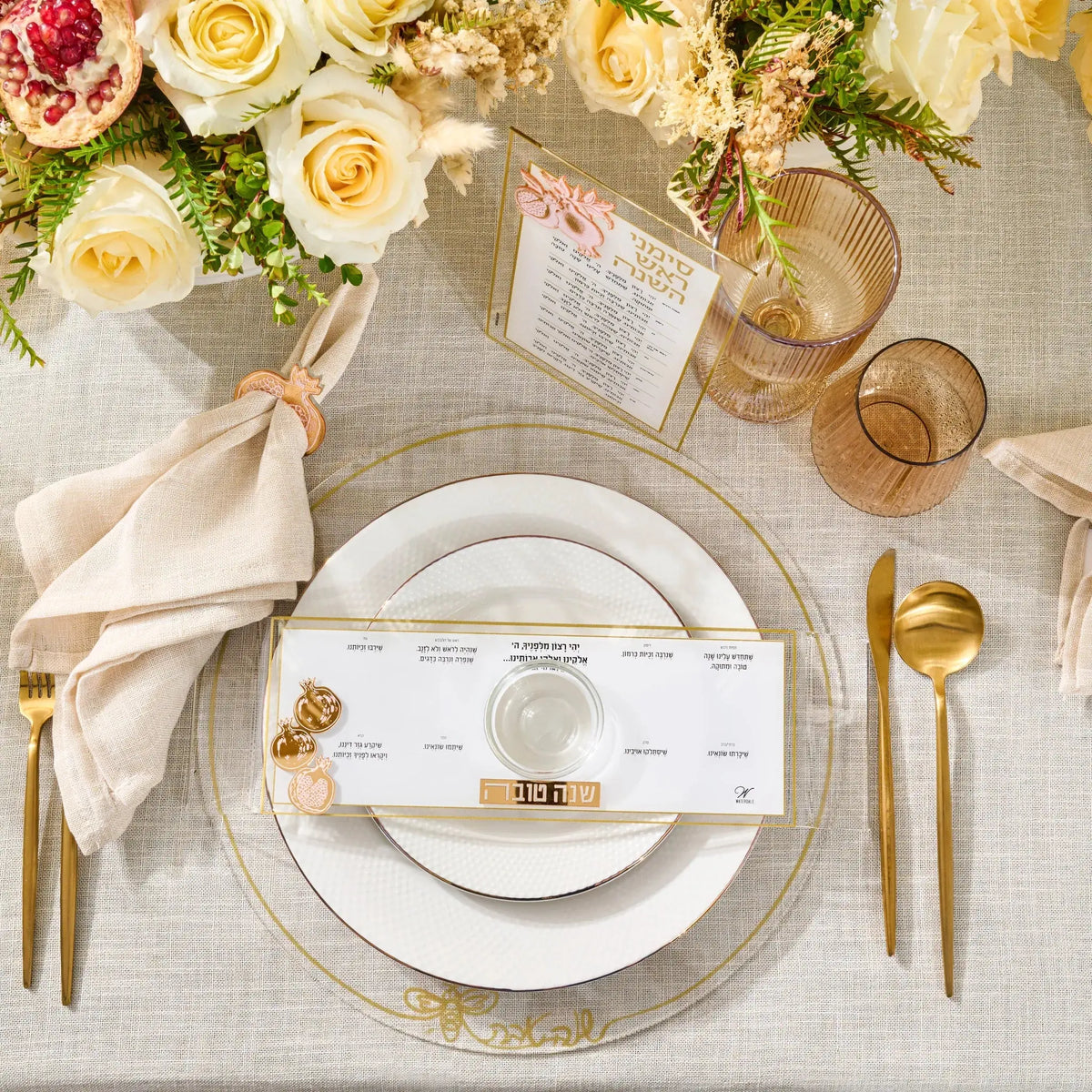
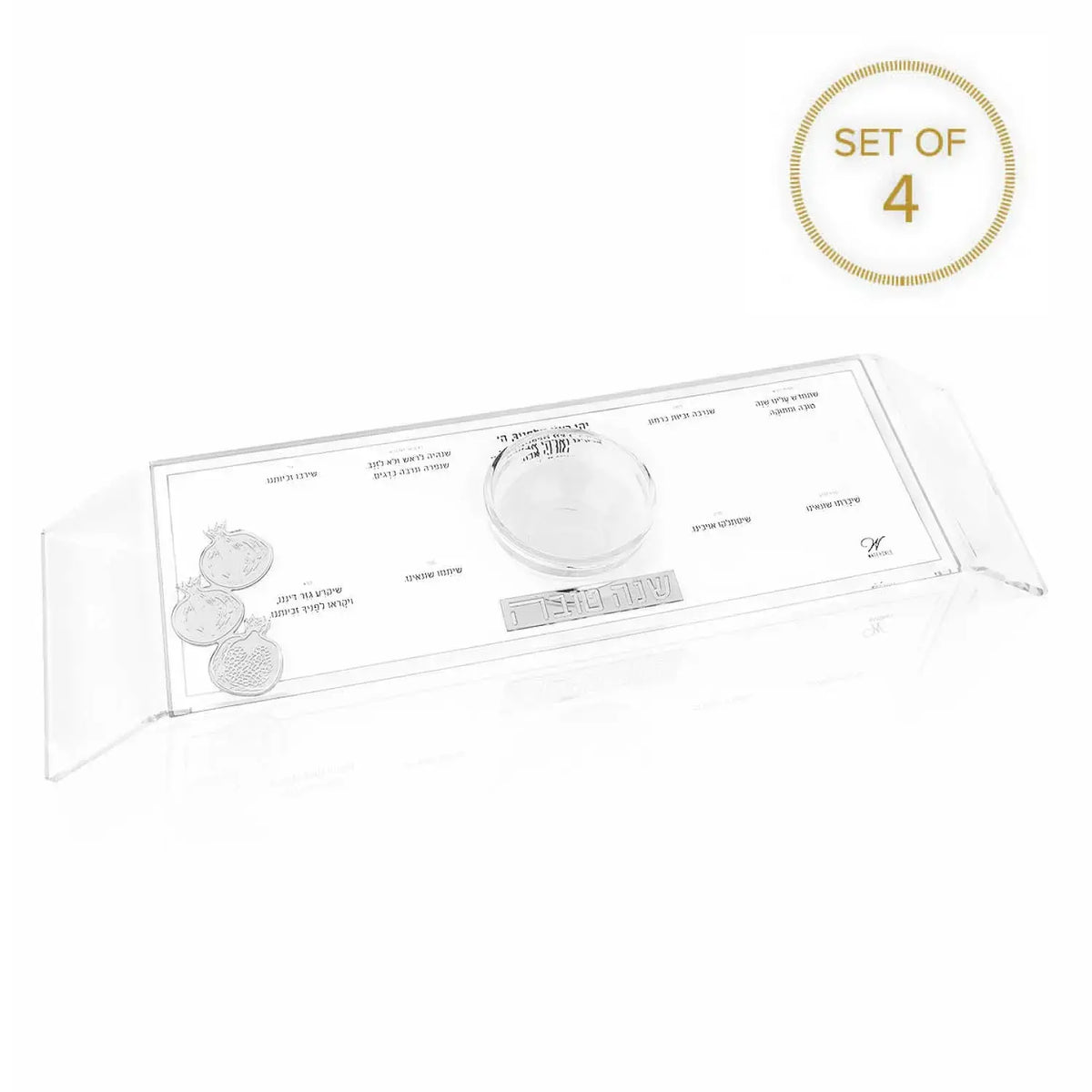
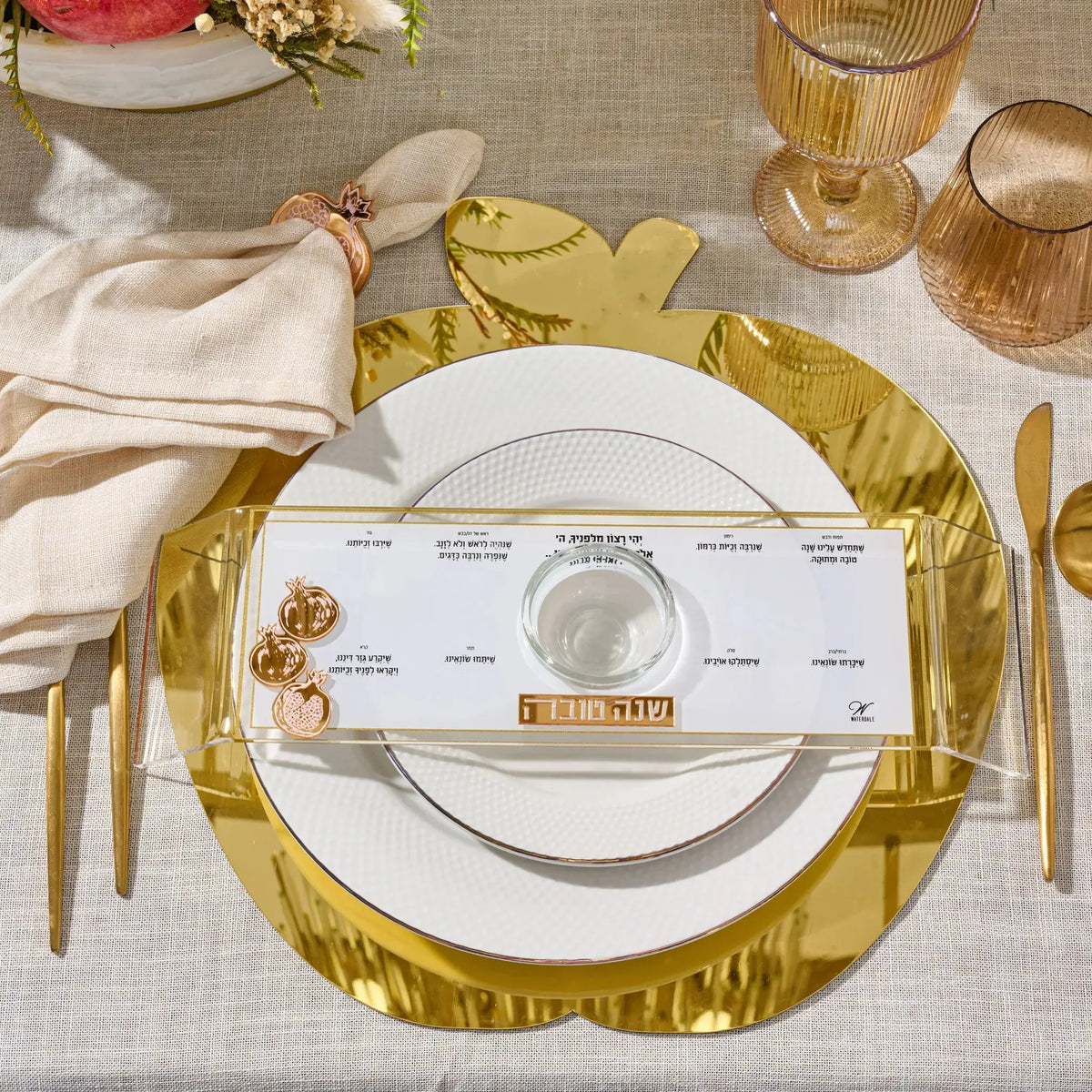
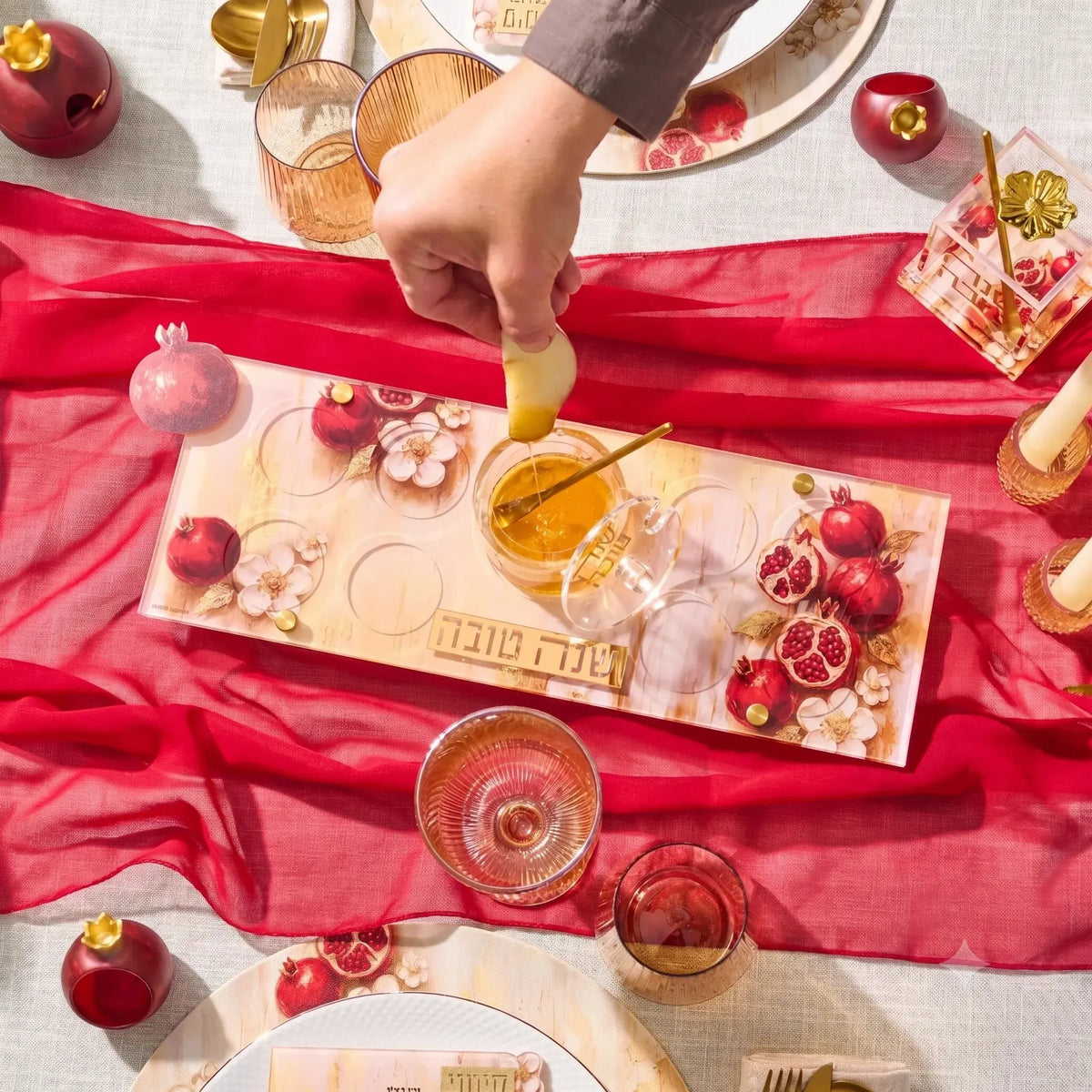
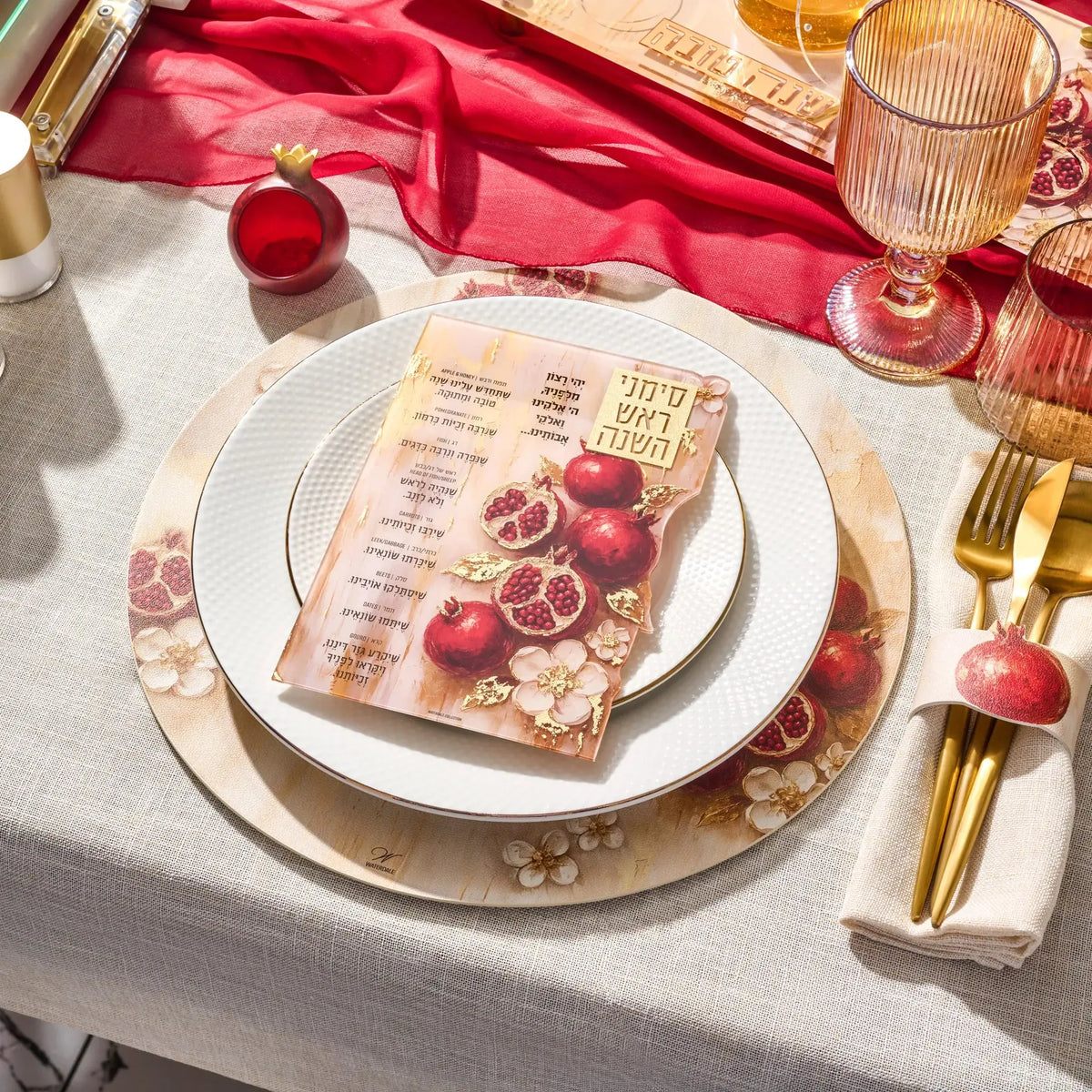
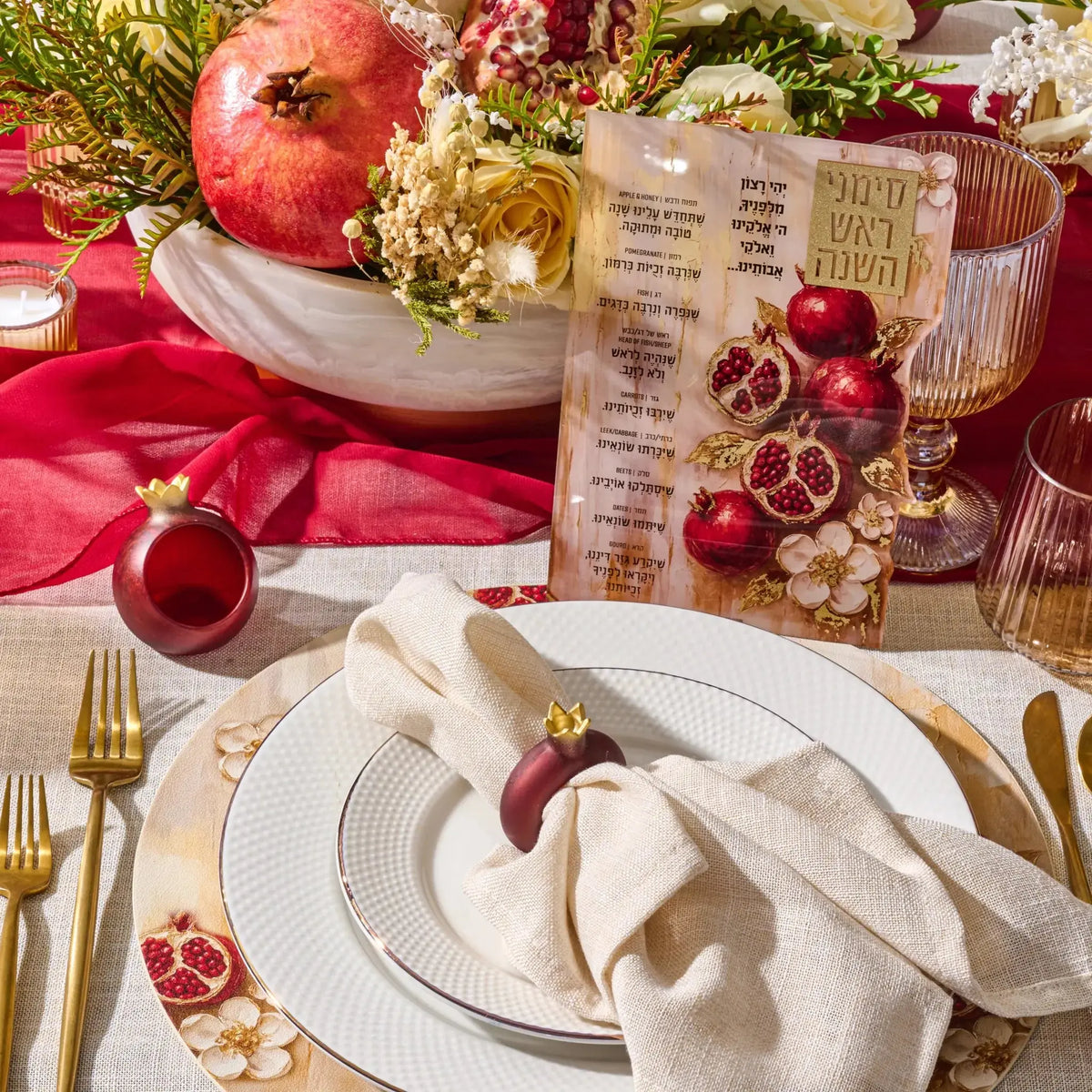
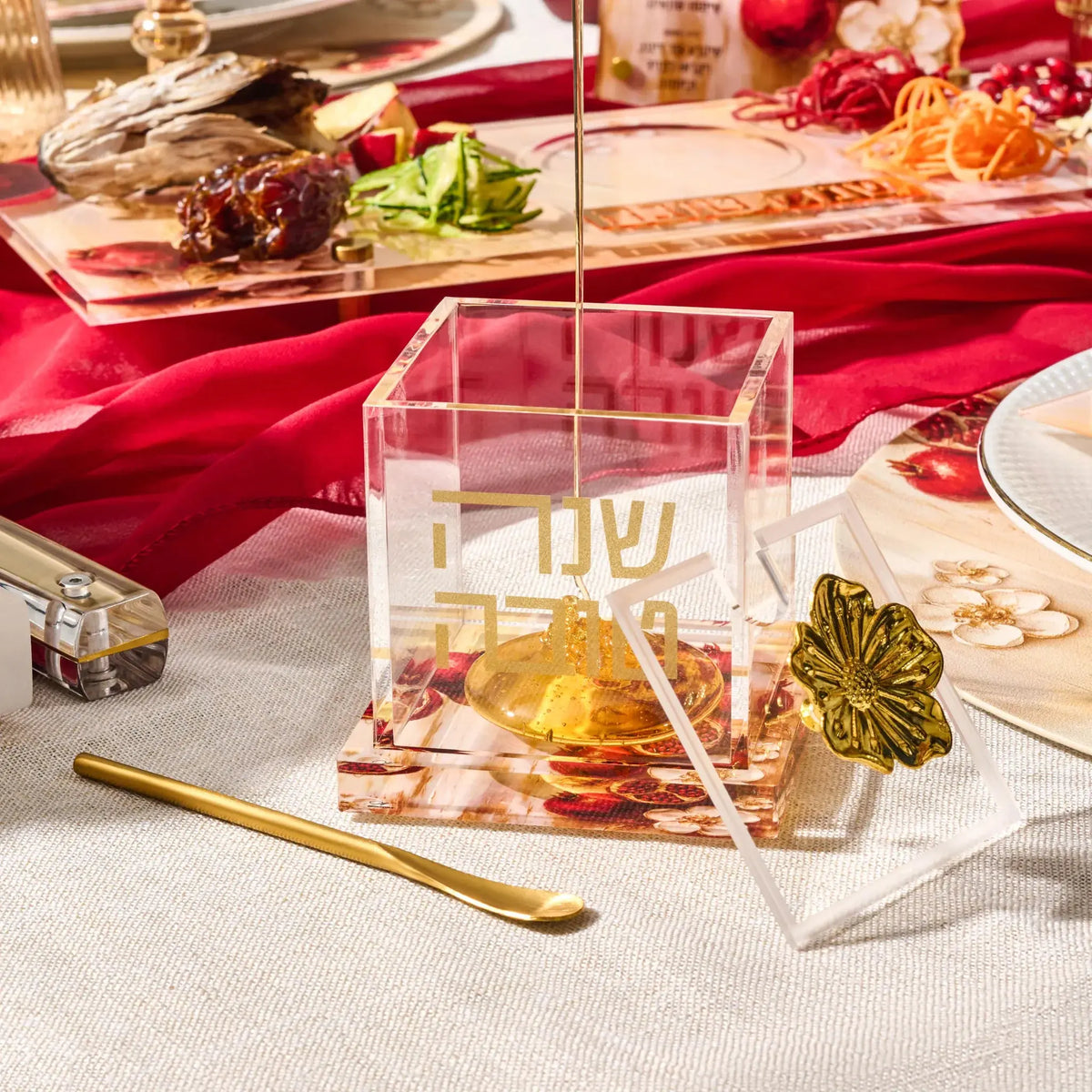
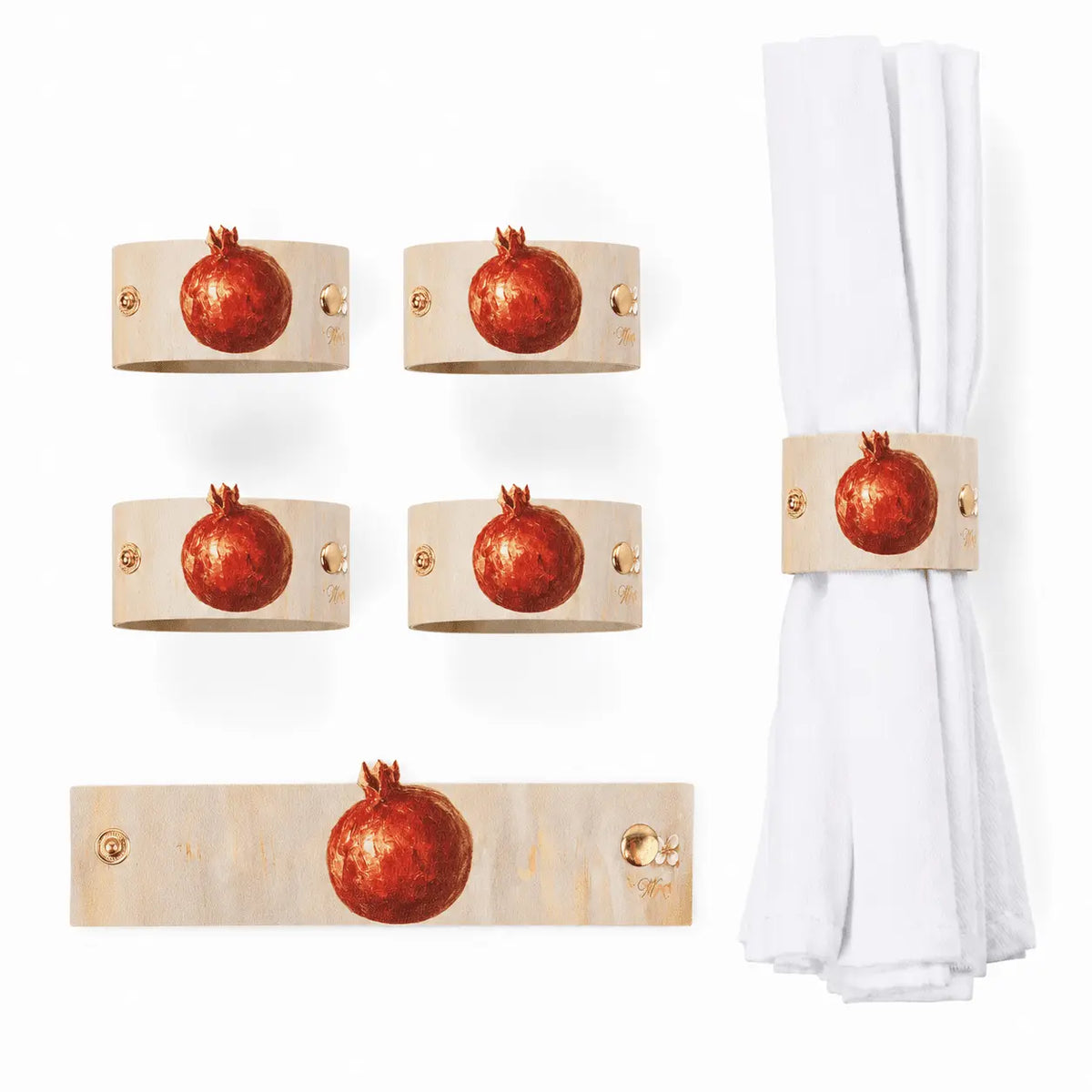
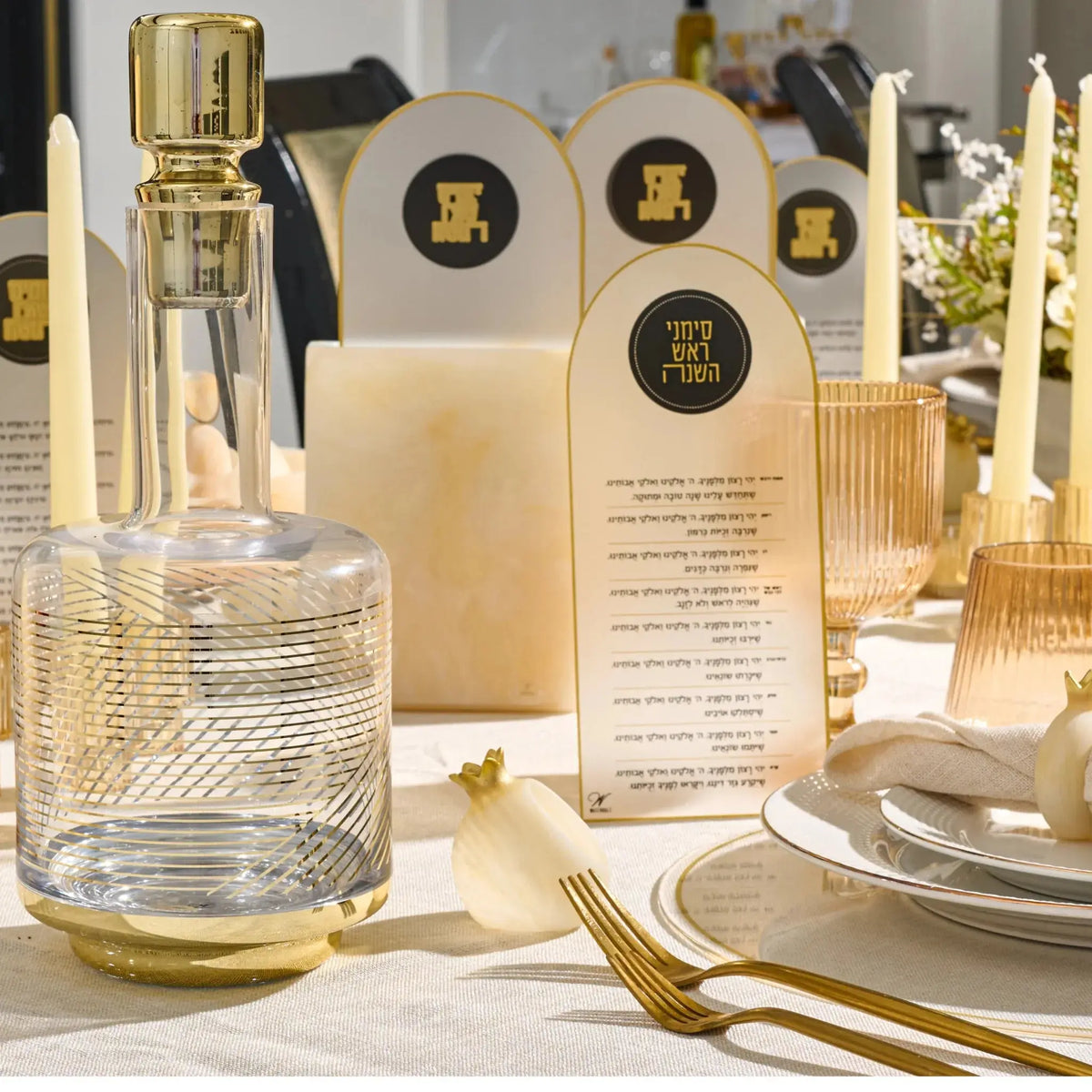
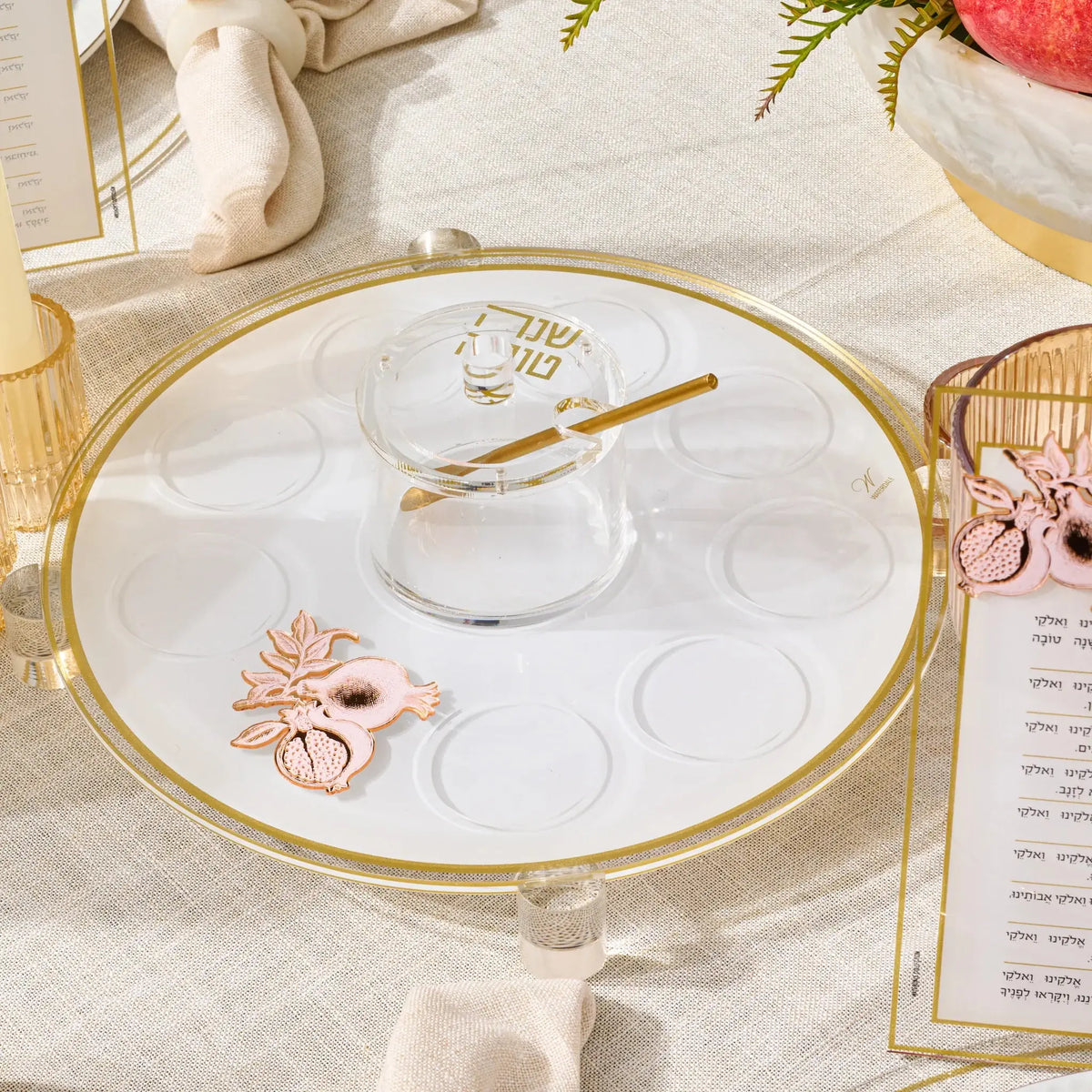
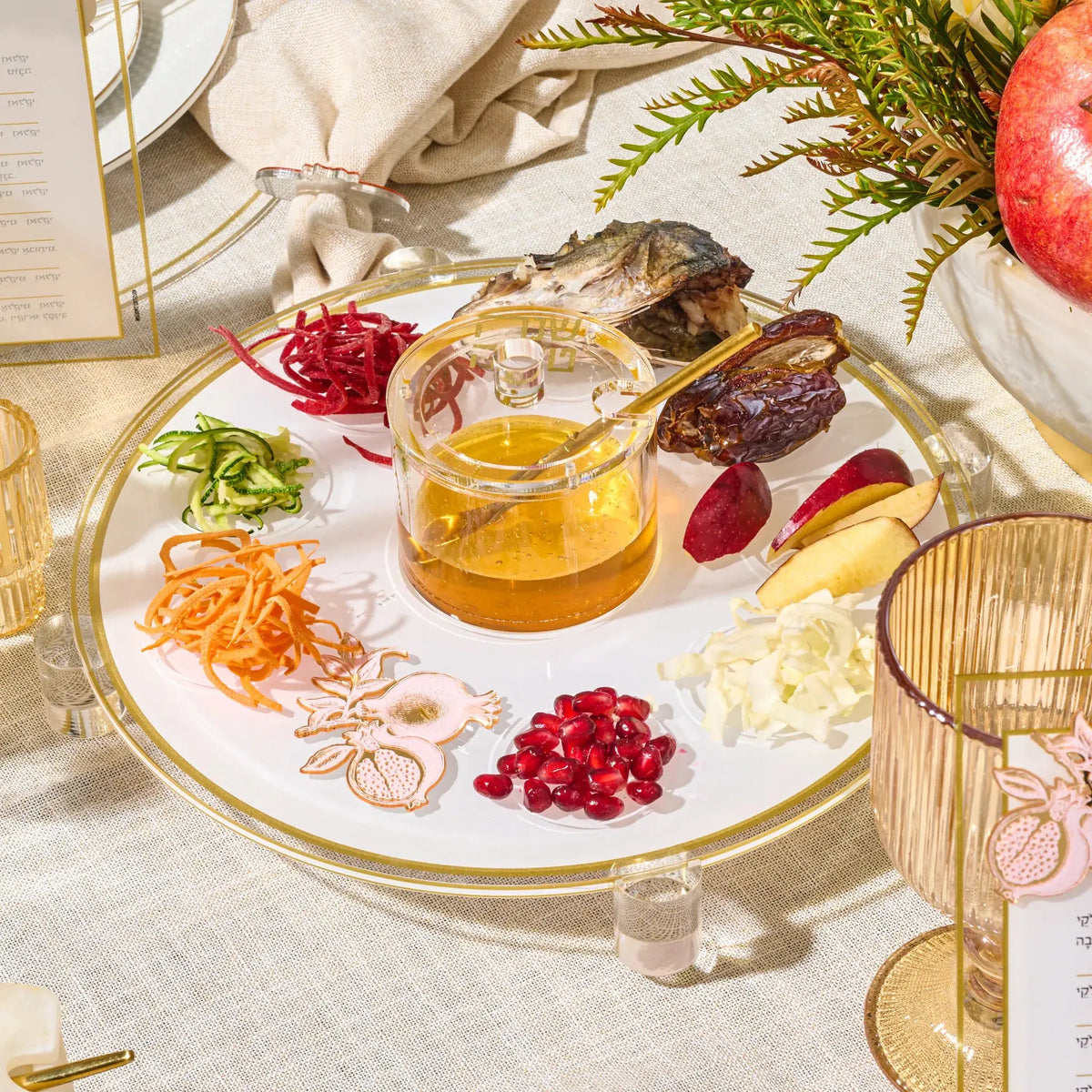
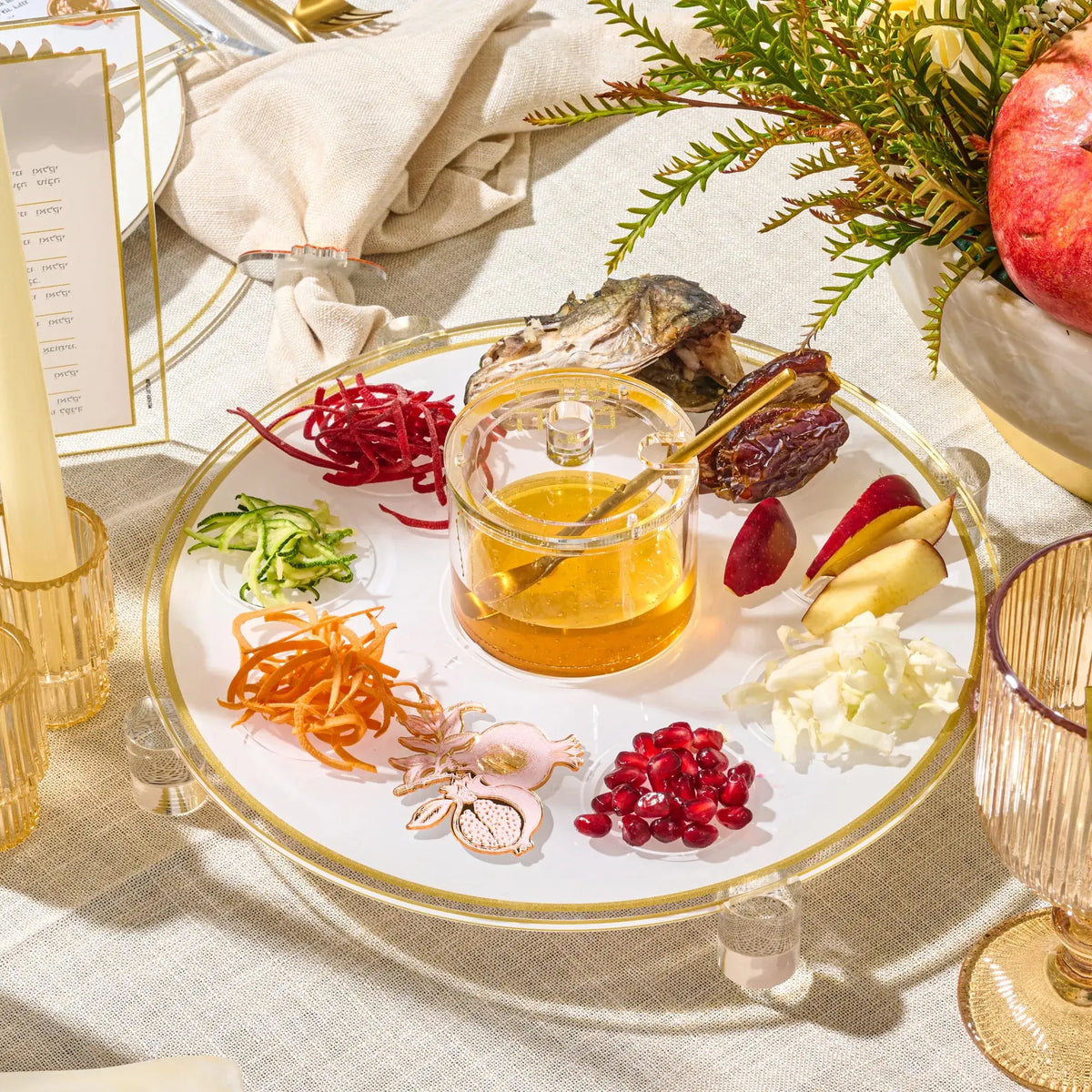
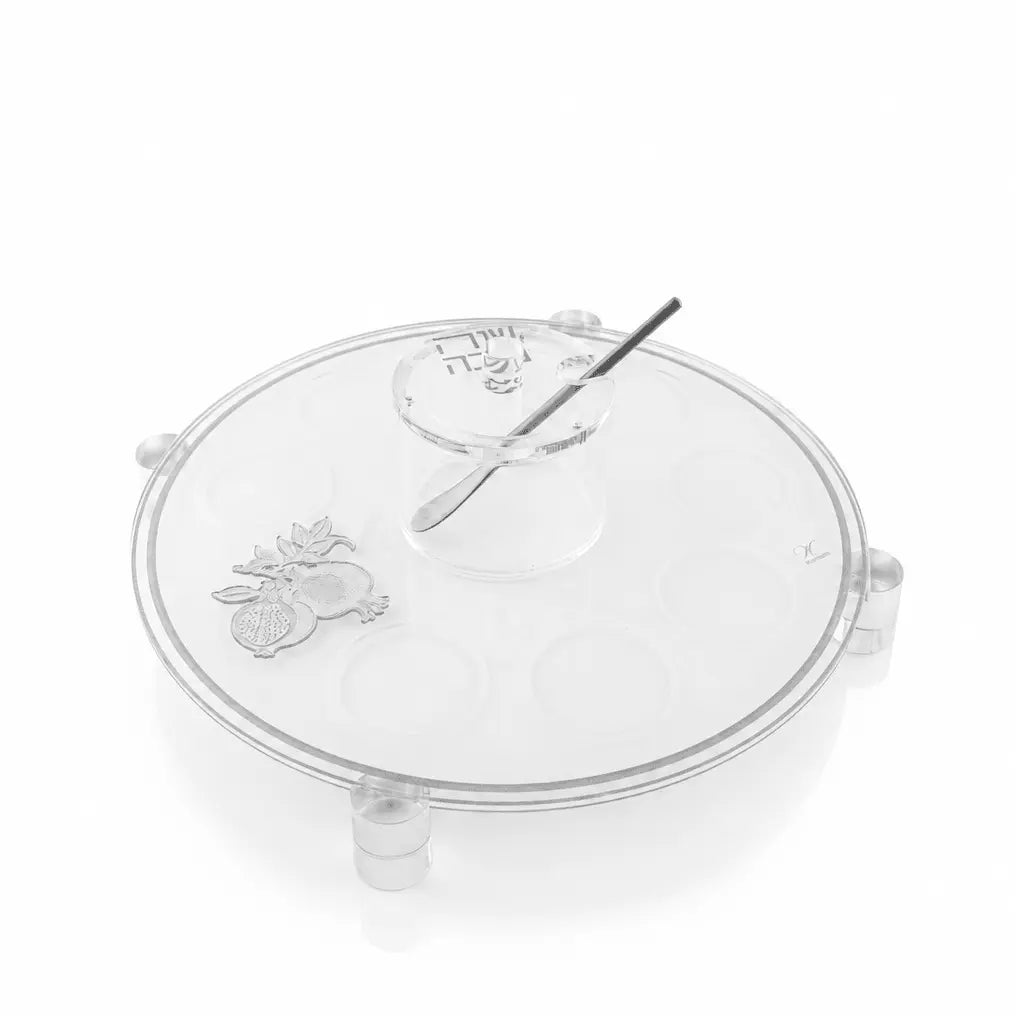
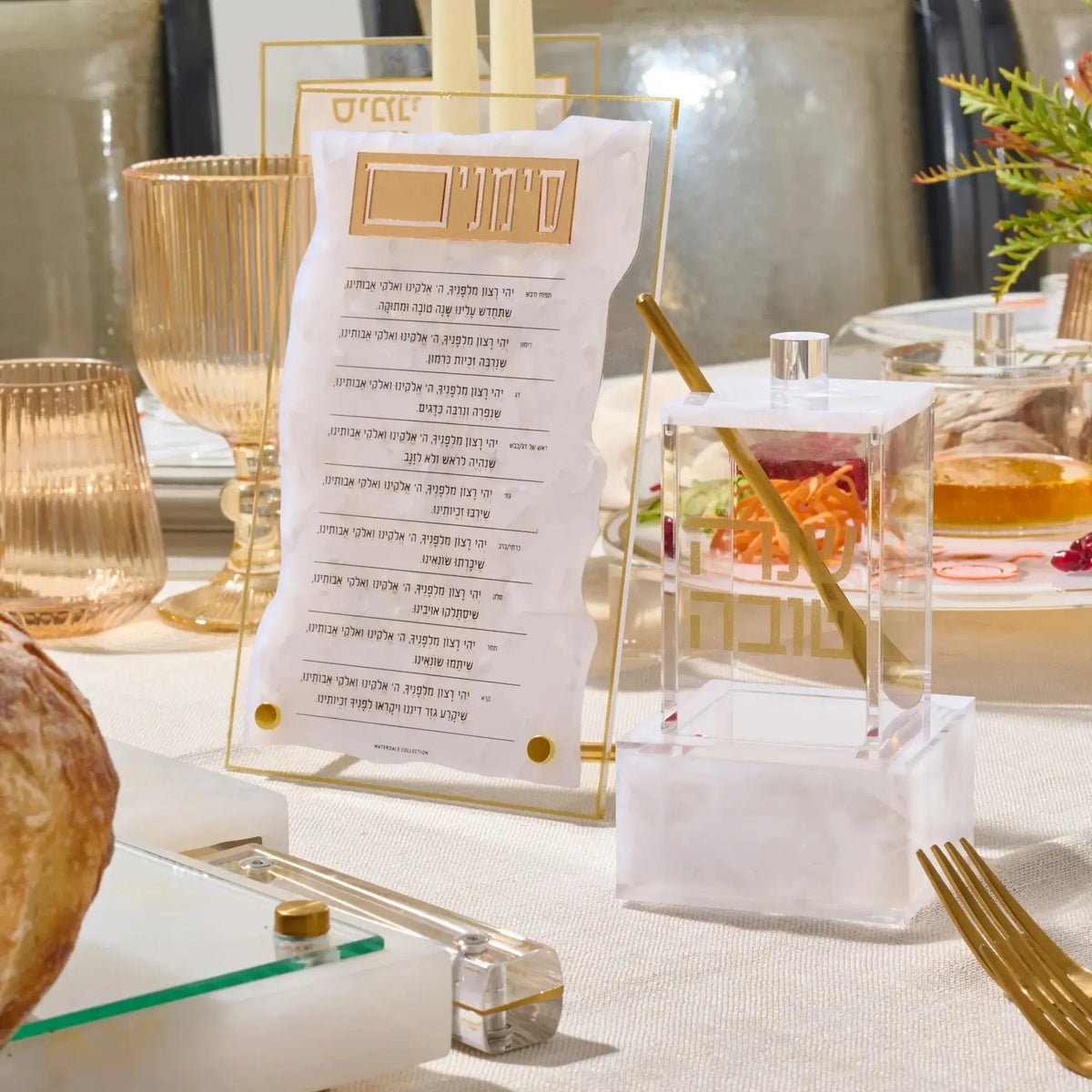
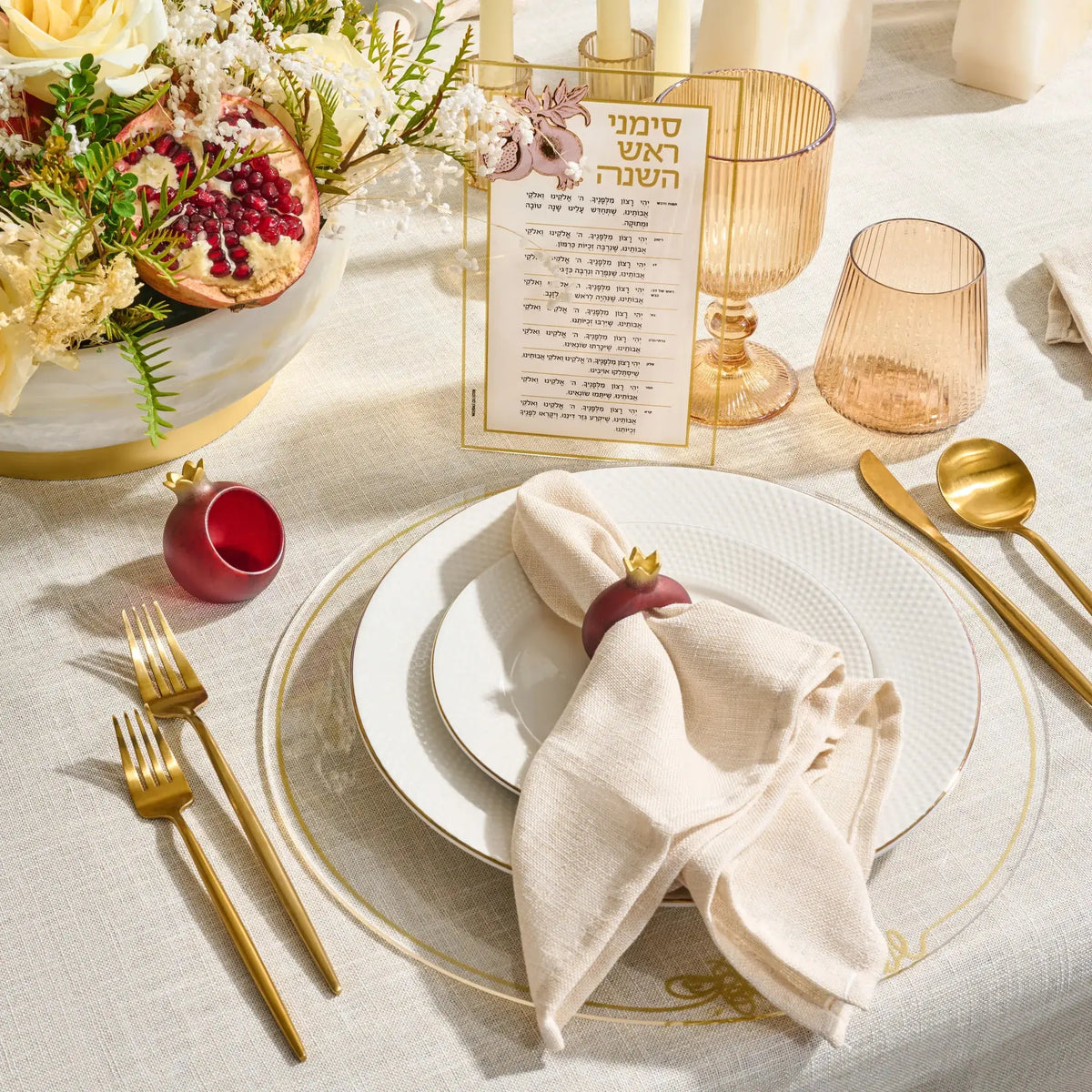
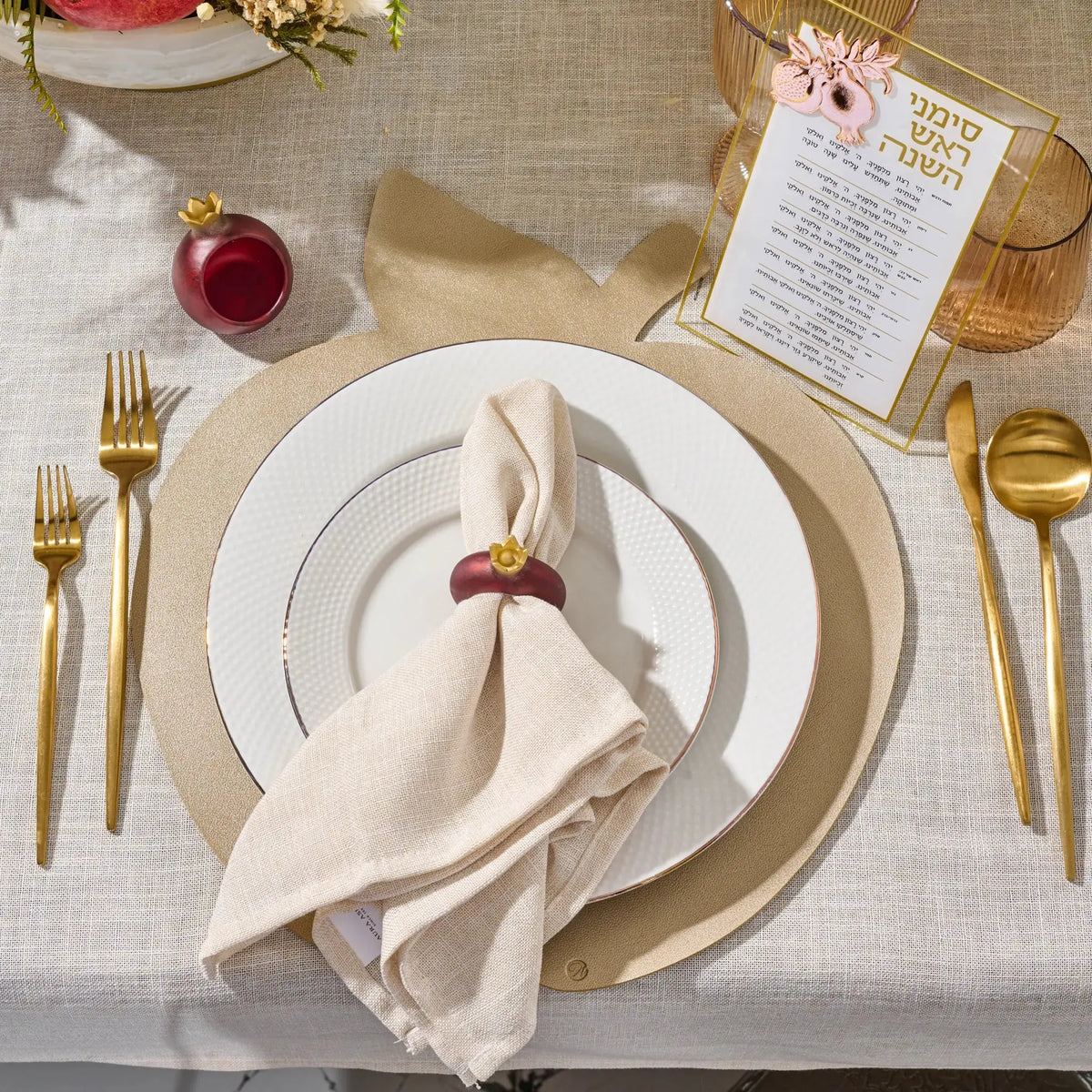
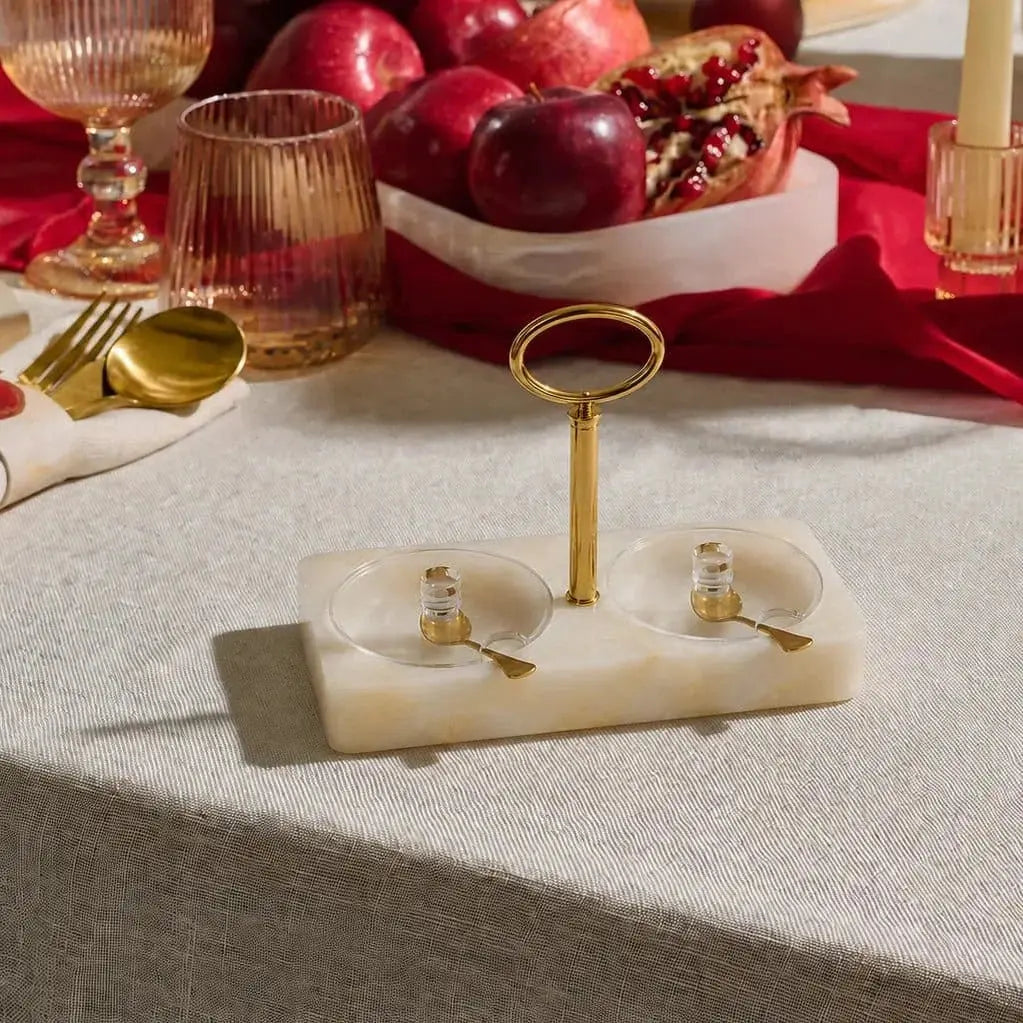
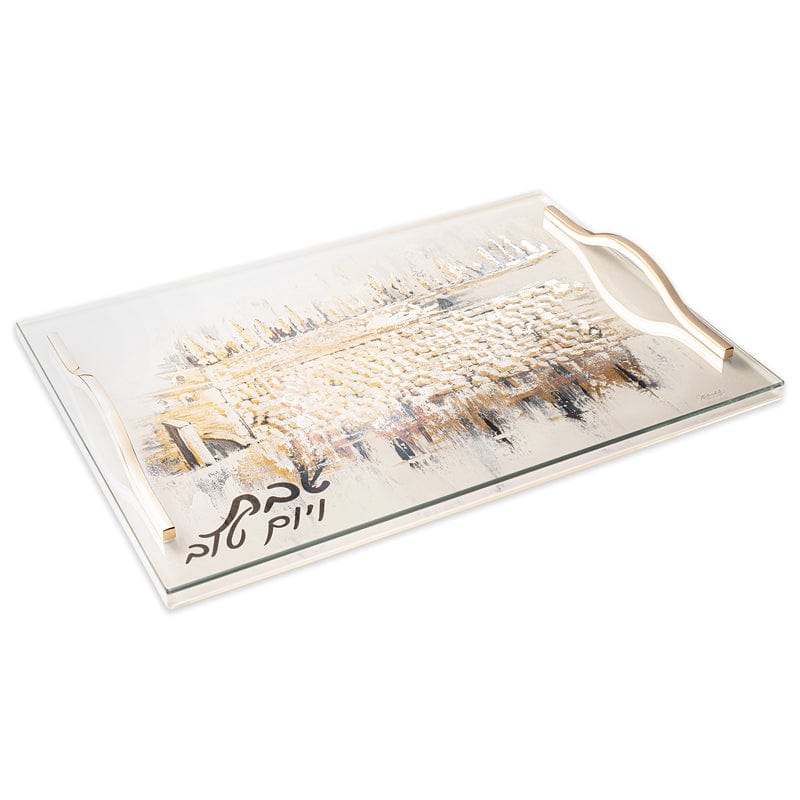
A complete Rosh Hashanah table setting starts with the simanim essentials: a honey dish for dipping the apple in honey, a simanim tray to serve the symbolic foods, and simanim cards at each place setting with the Yehi Ratzon blessings. Many families finish their Rosh Hashanah tablescape with pomegranate chargers and napkin wraps that carry the Jewish New Year theme across the whole table.
Why do we dip an apple in honey on Rosh Hashanah?
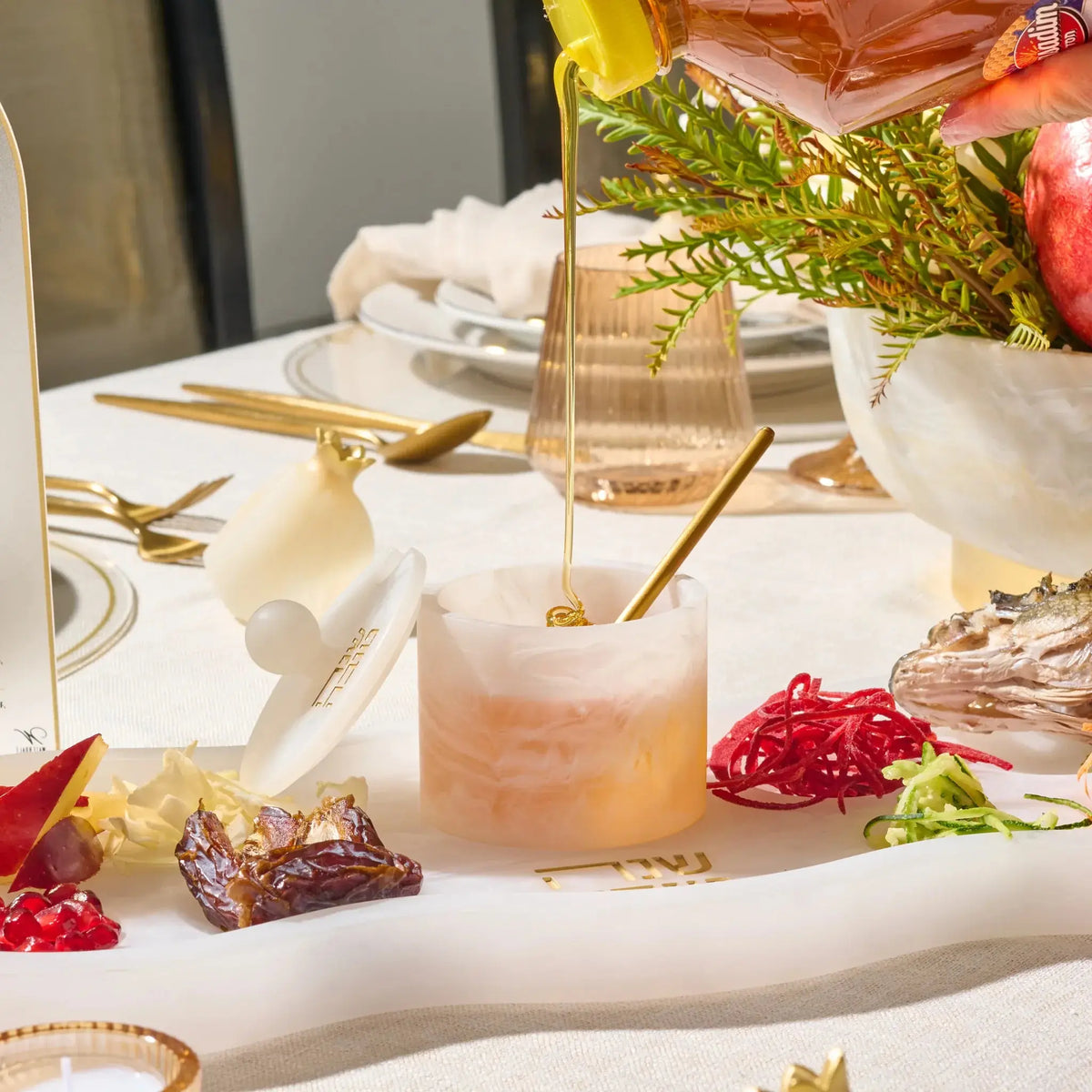
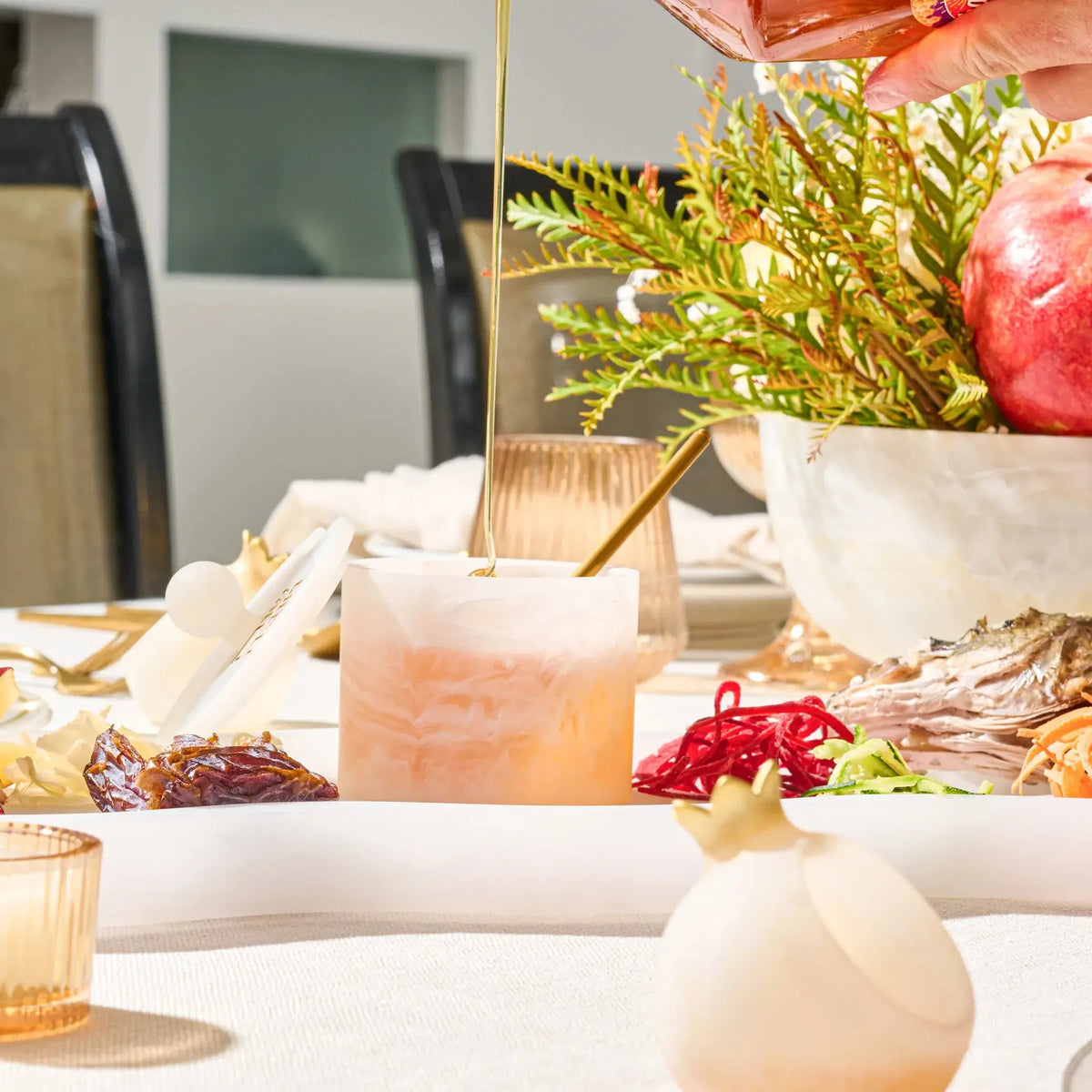
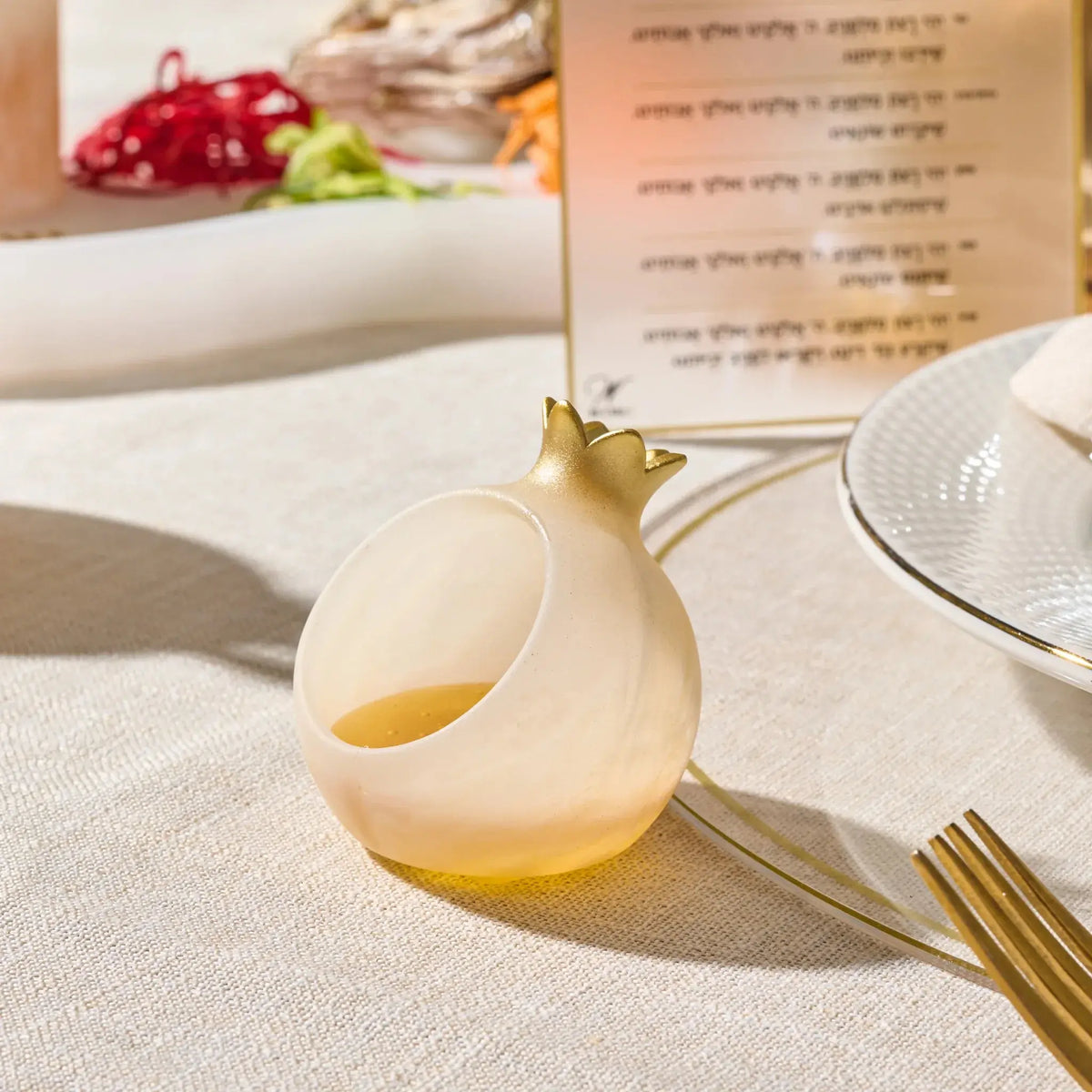
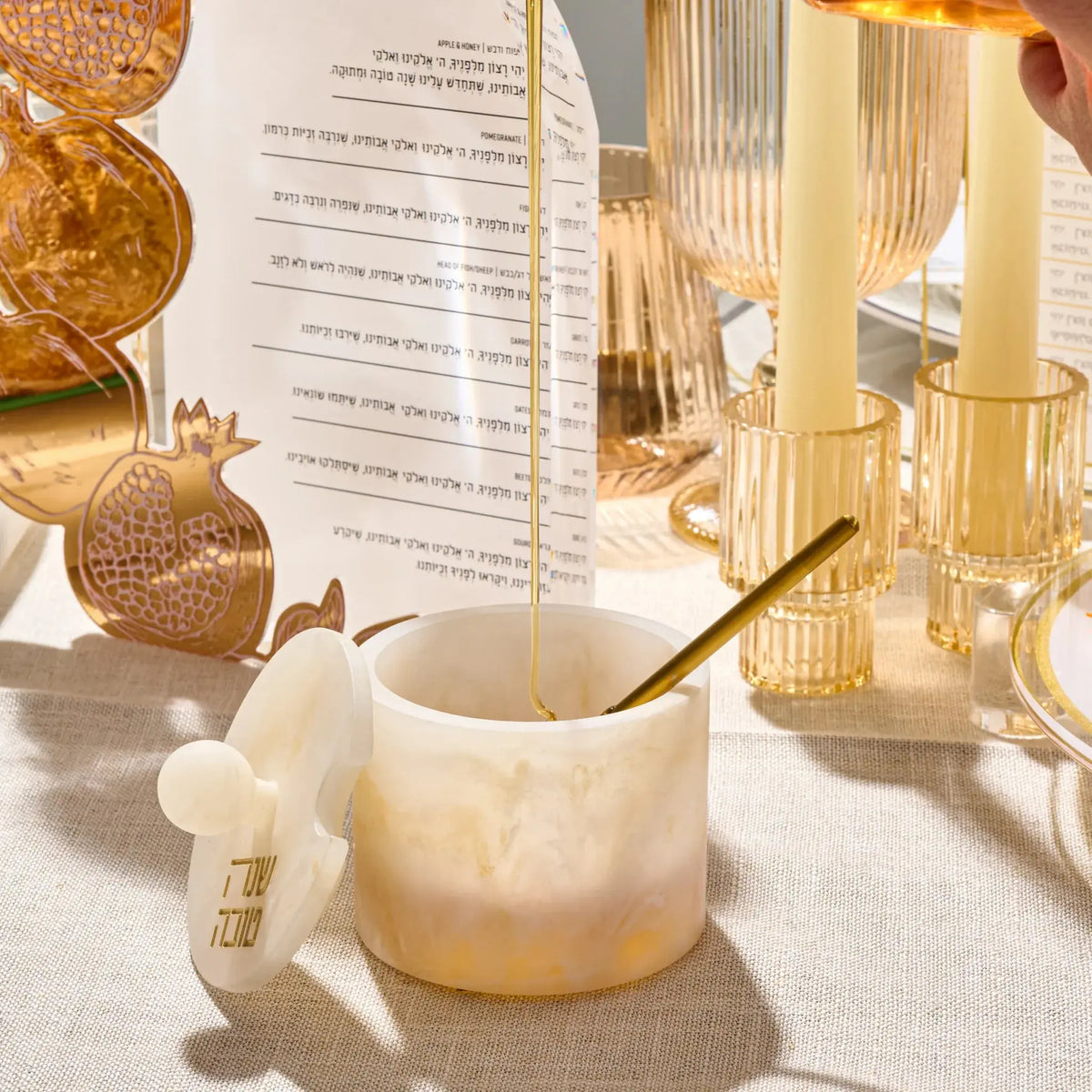
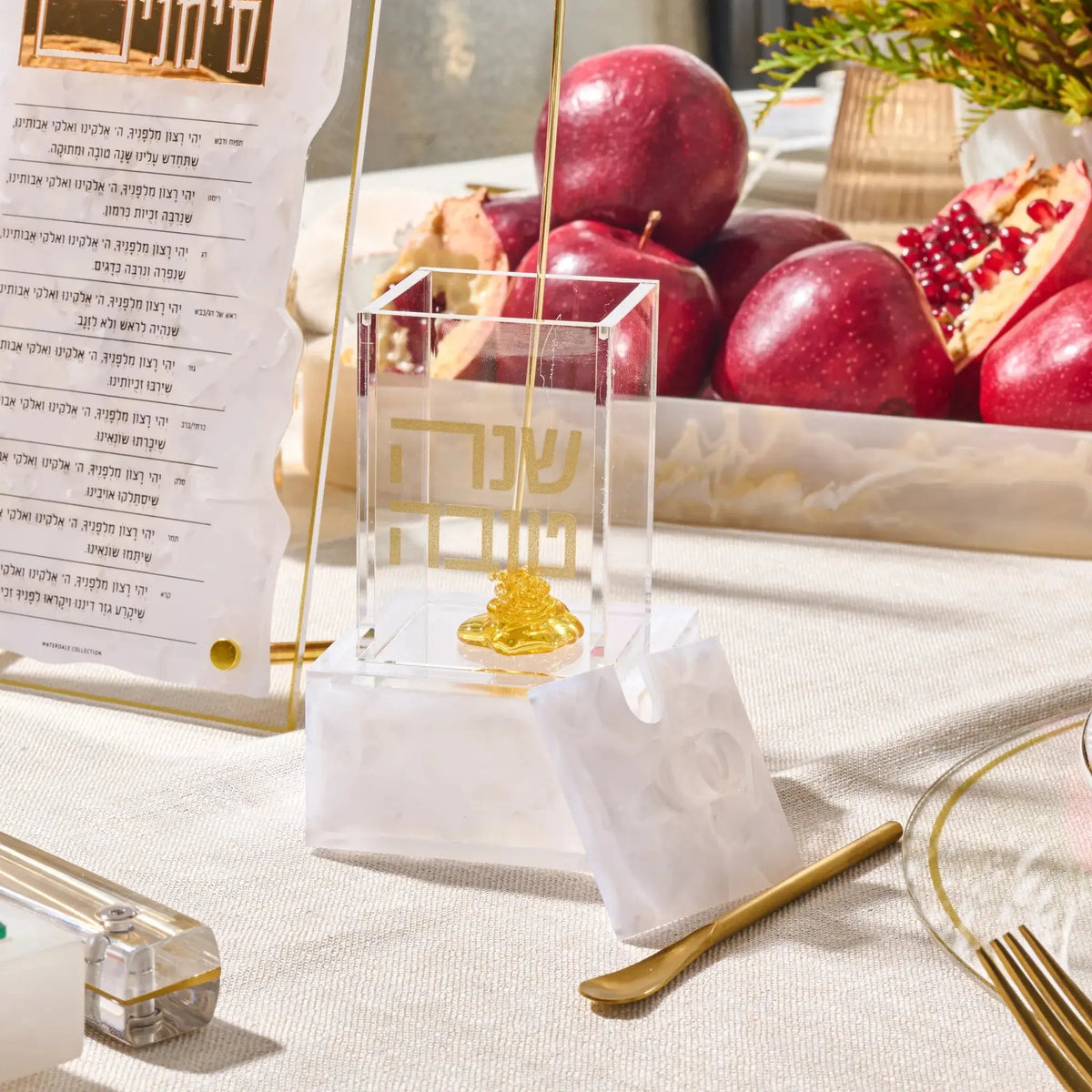
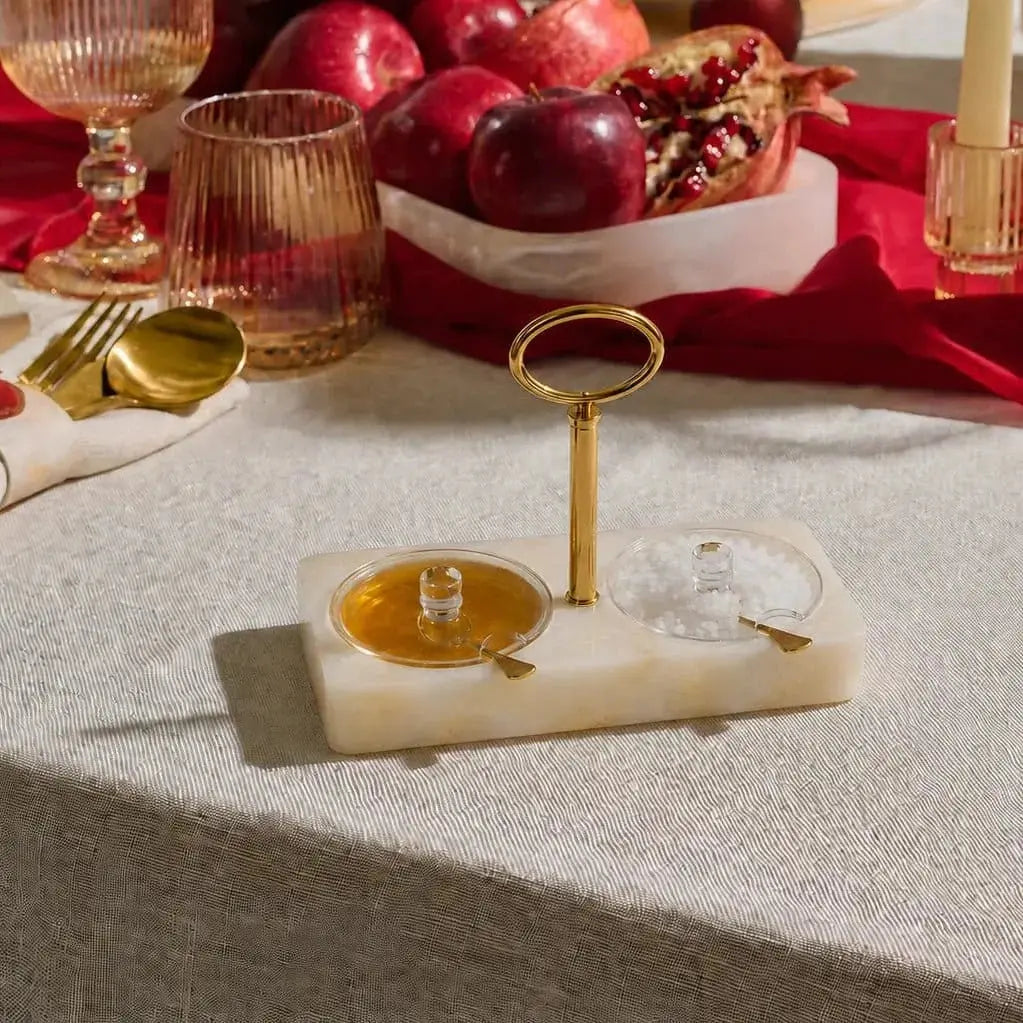
Dipping an apple in honey is the most famous of the Rosh Hashanah simanim — the symbolic foods eaten on the night of the Jewish New Year. The Talmud teaches that eating symbolic foods at the start of the year is a siman tov, a good omen, and the apple's natural sweetness doubled by honey expresses our prayer for a shanah tovah u'metukah, a good and sweet new year. That's why a dedicated honey dish sits at the center of nearly every Rosh Hashanah table.
Do I need a honey dish for Rosh Hashanah?
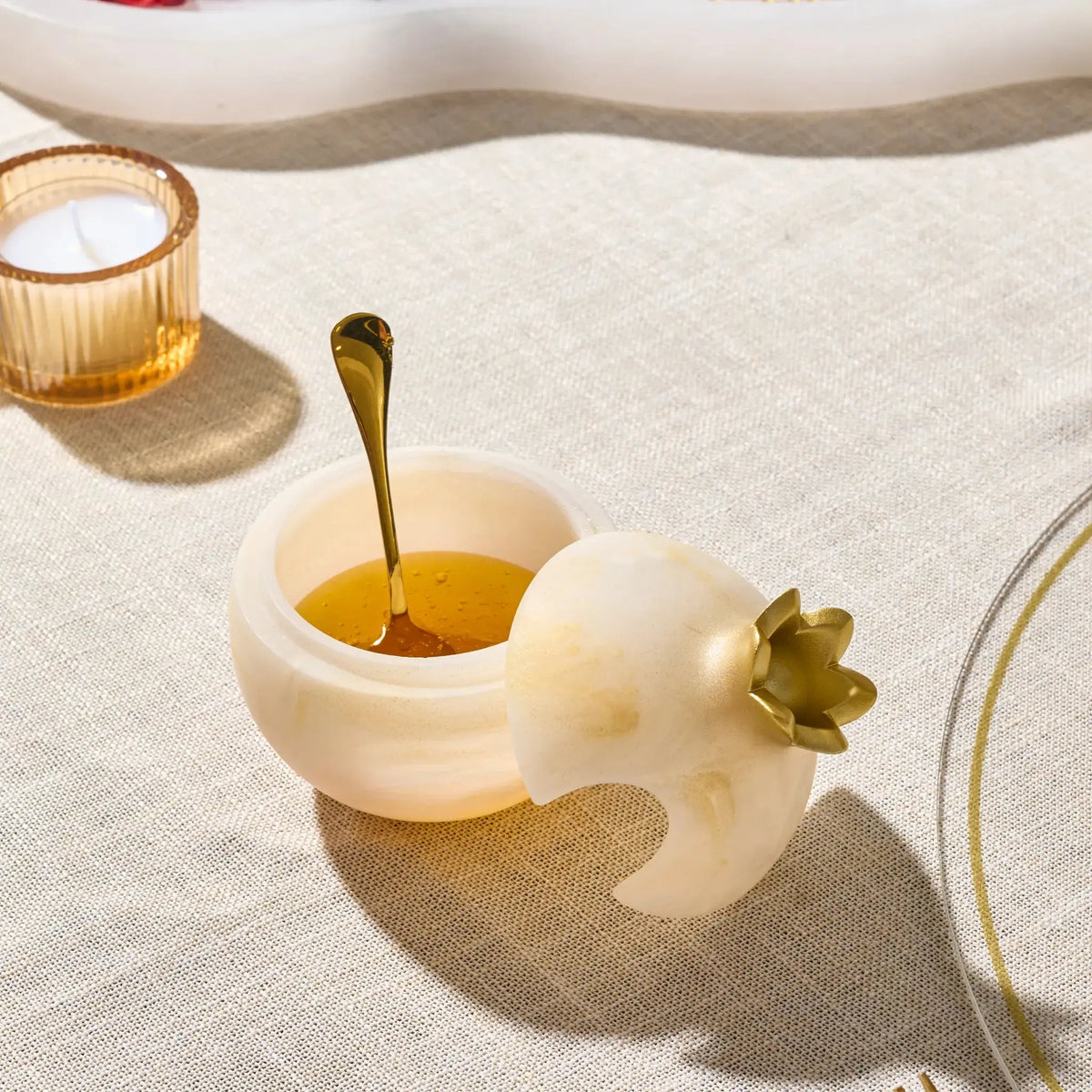
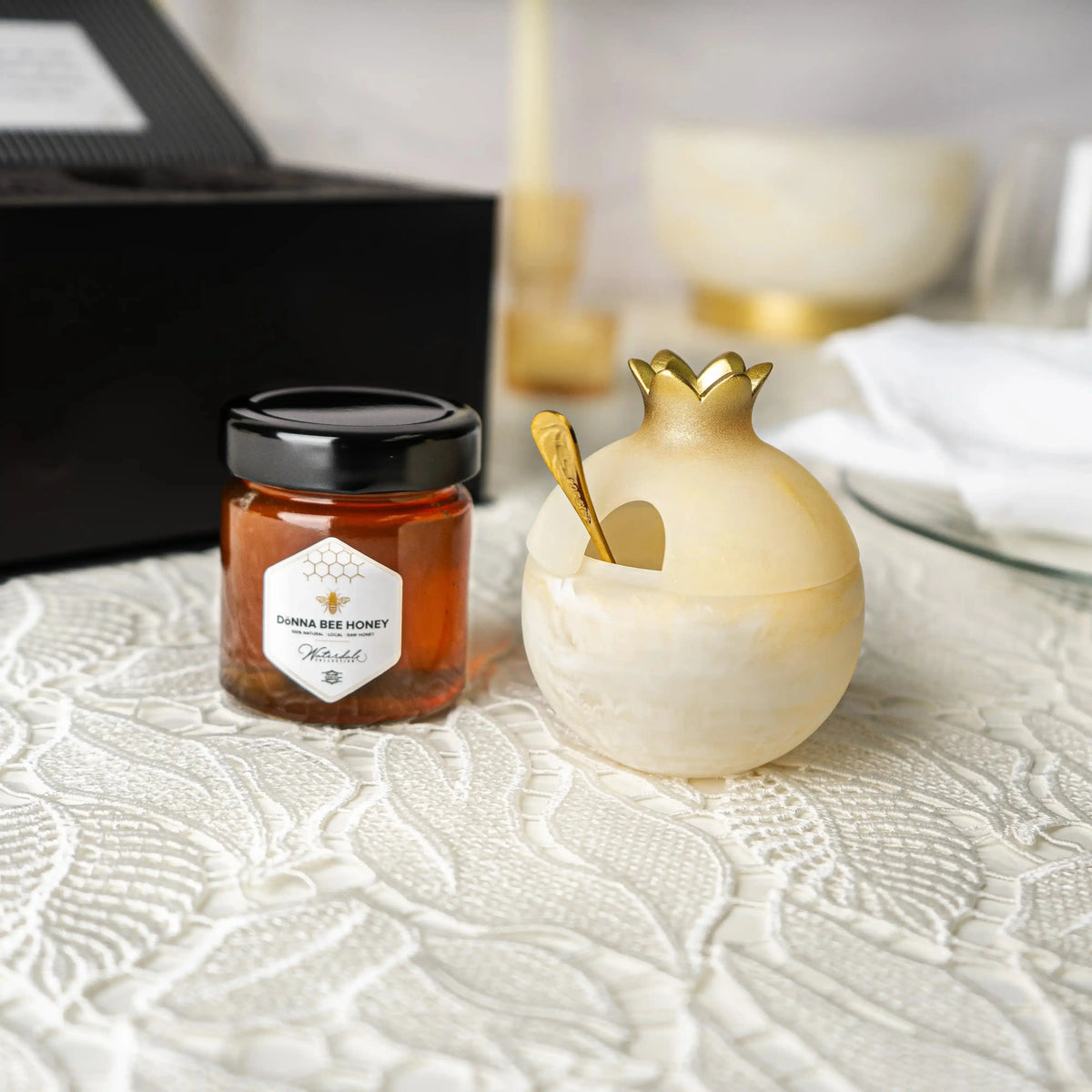
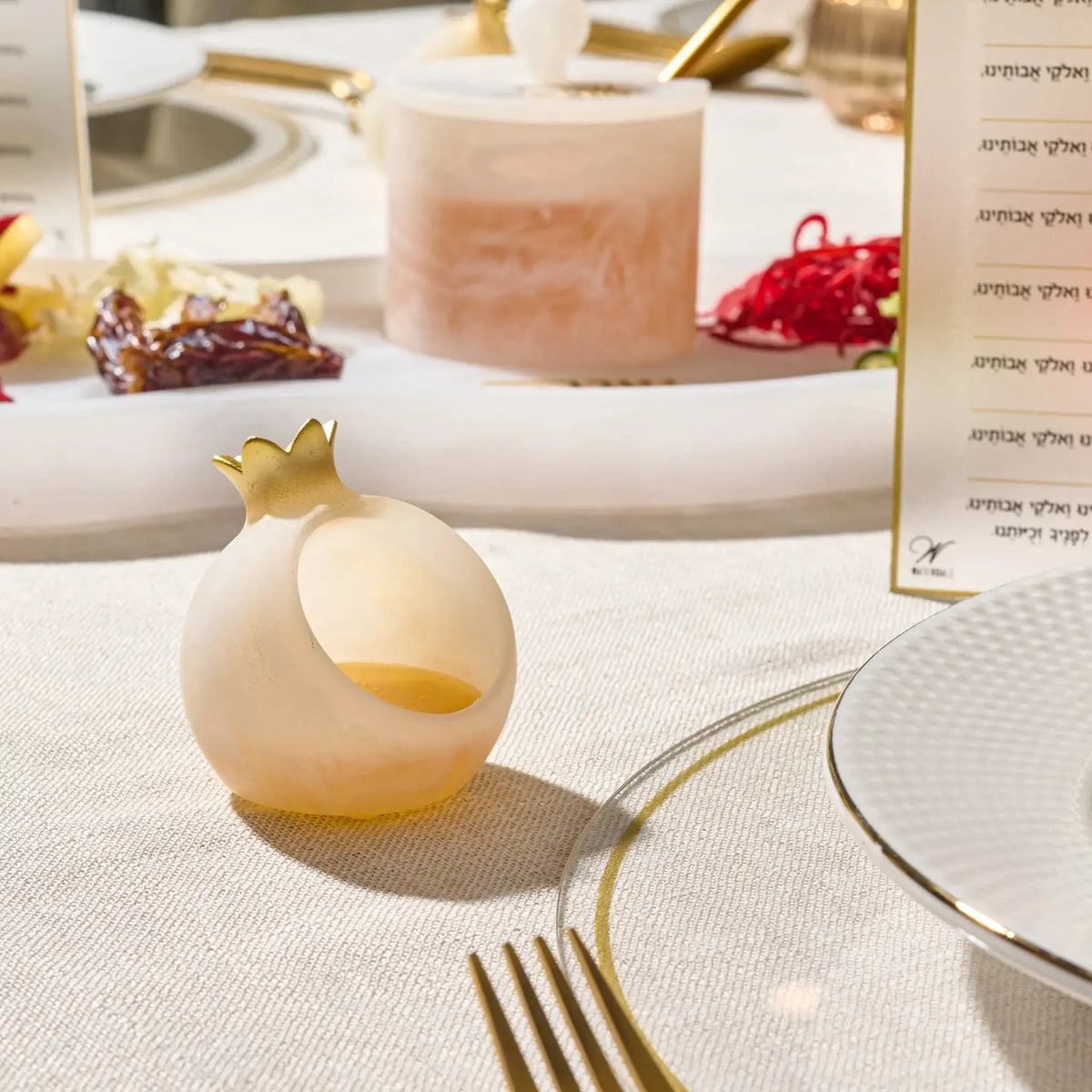
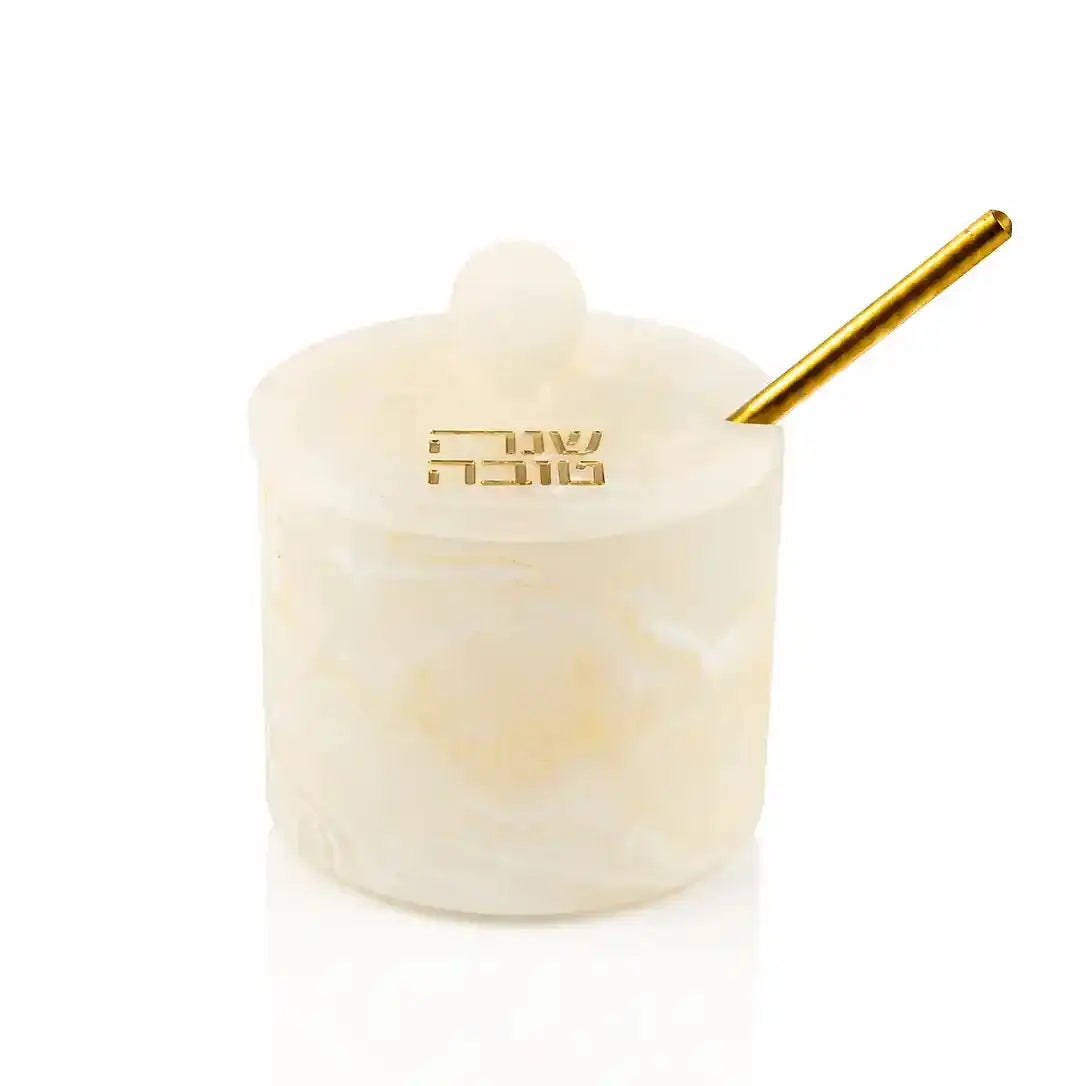
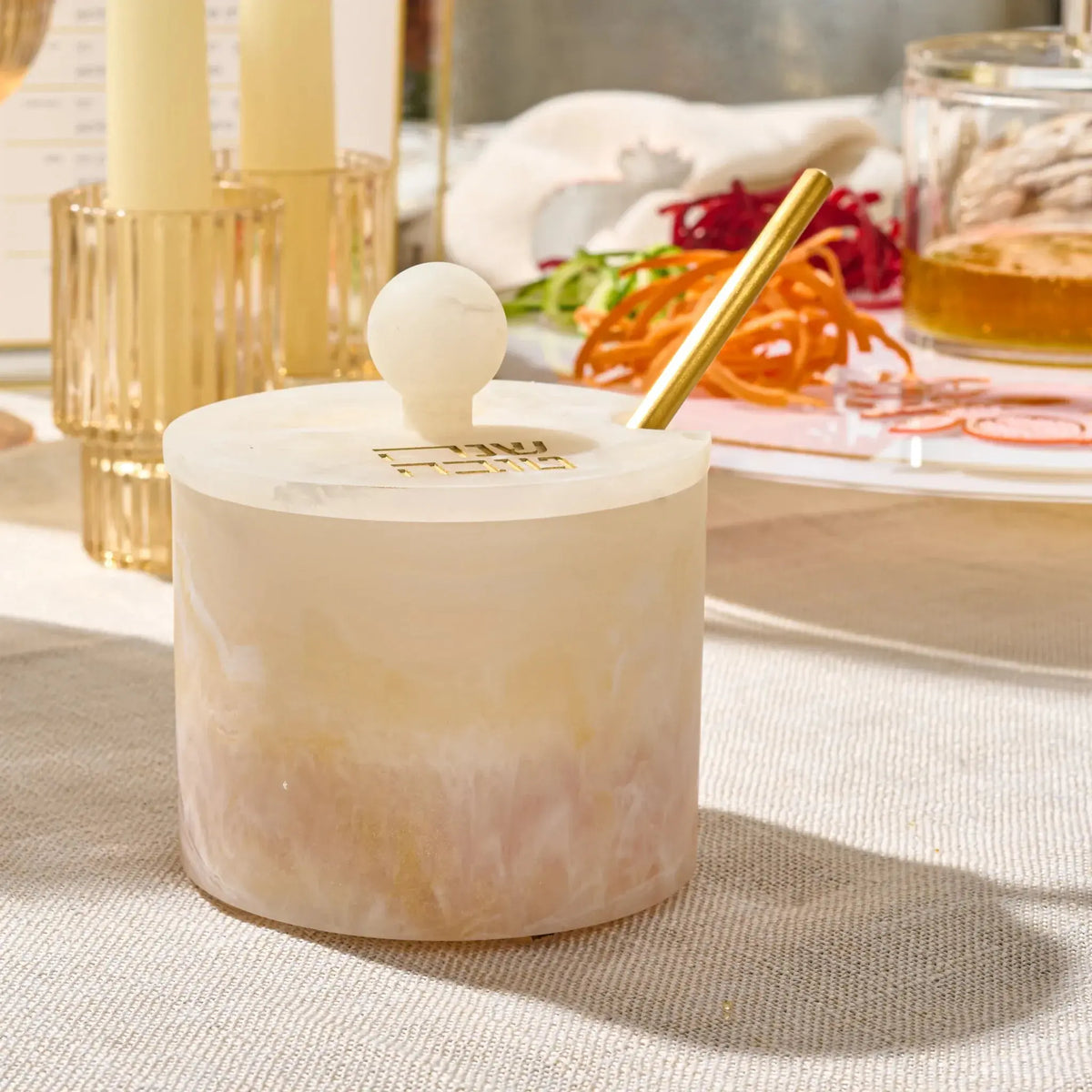
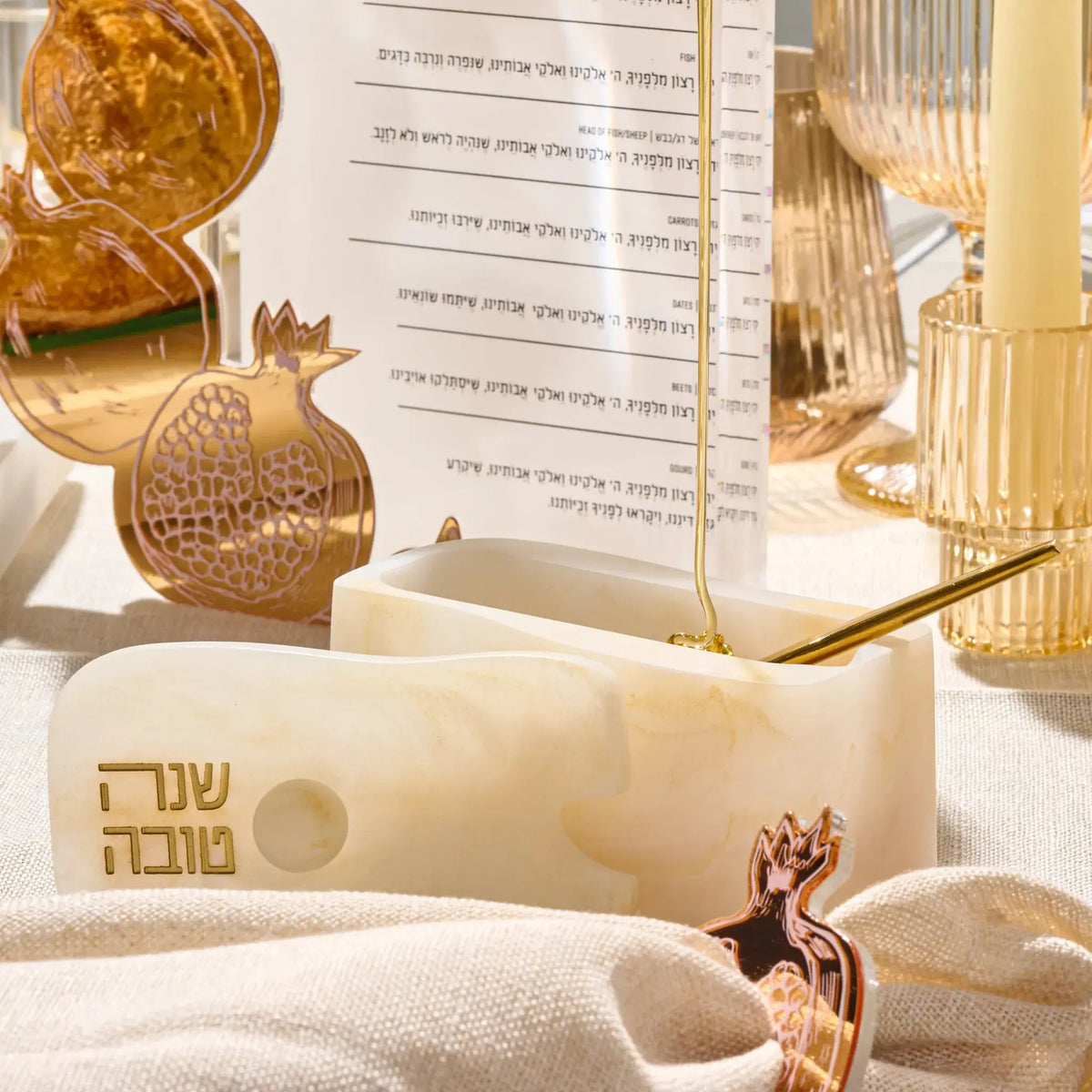
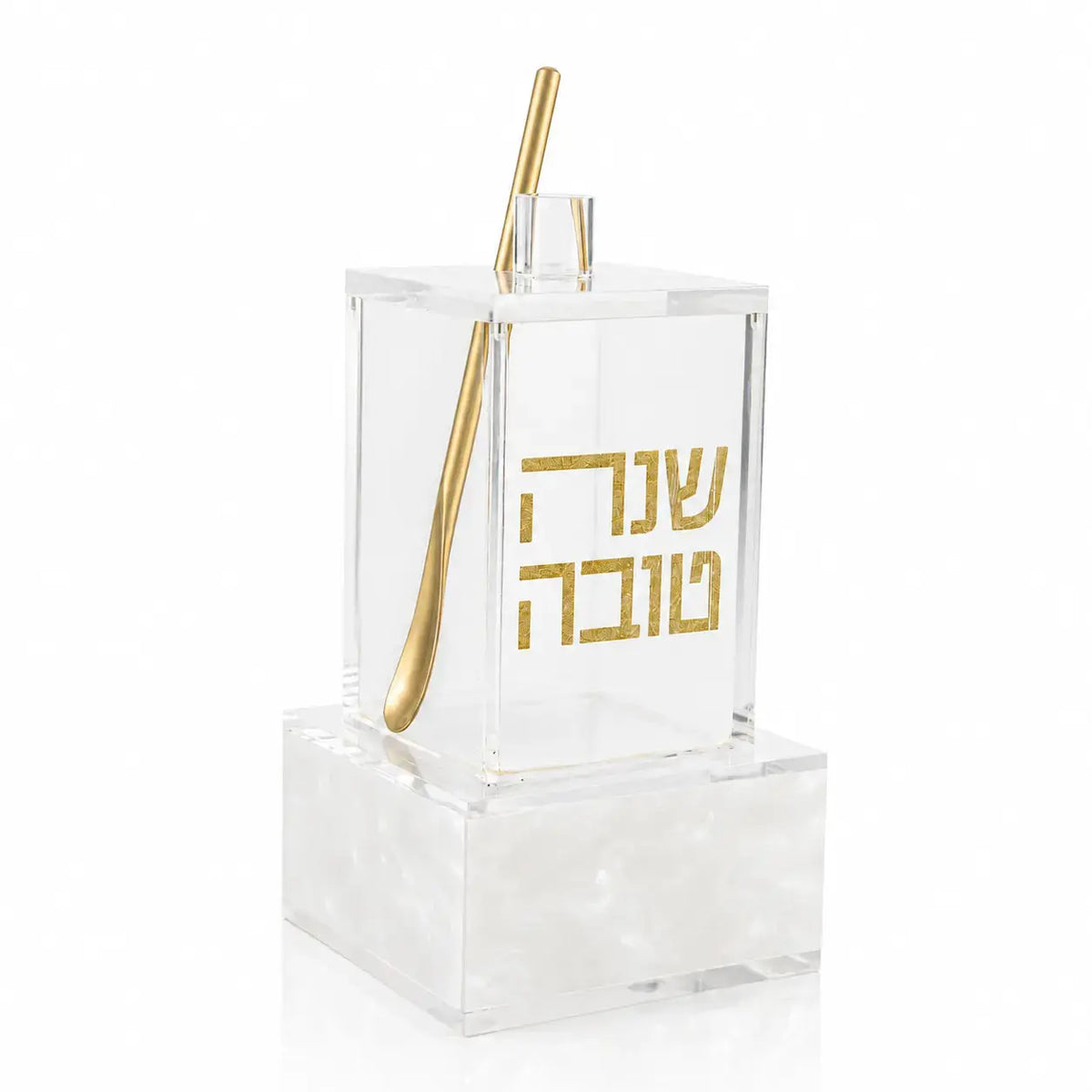
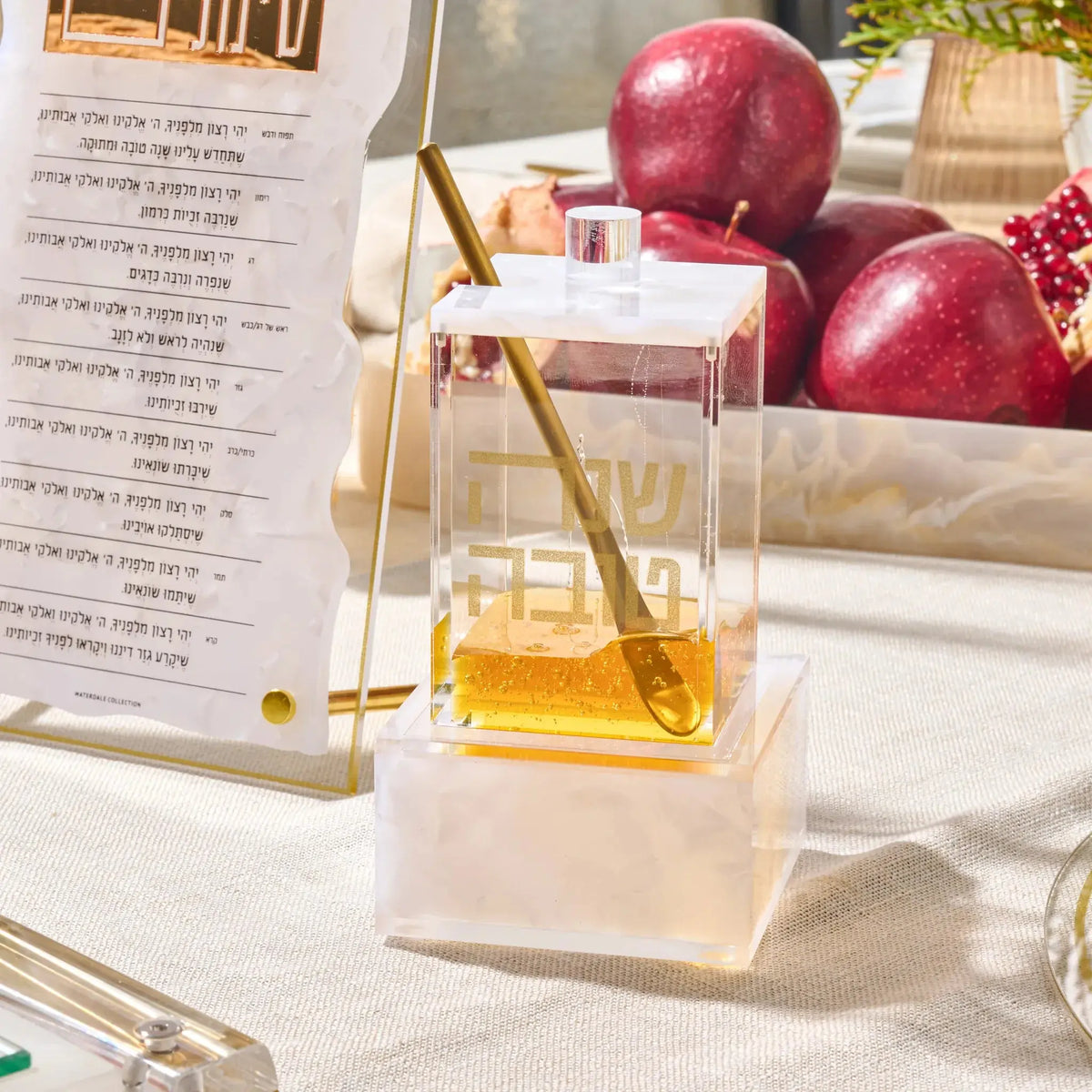
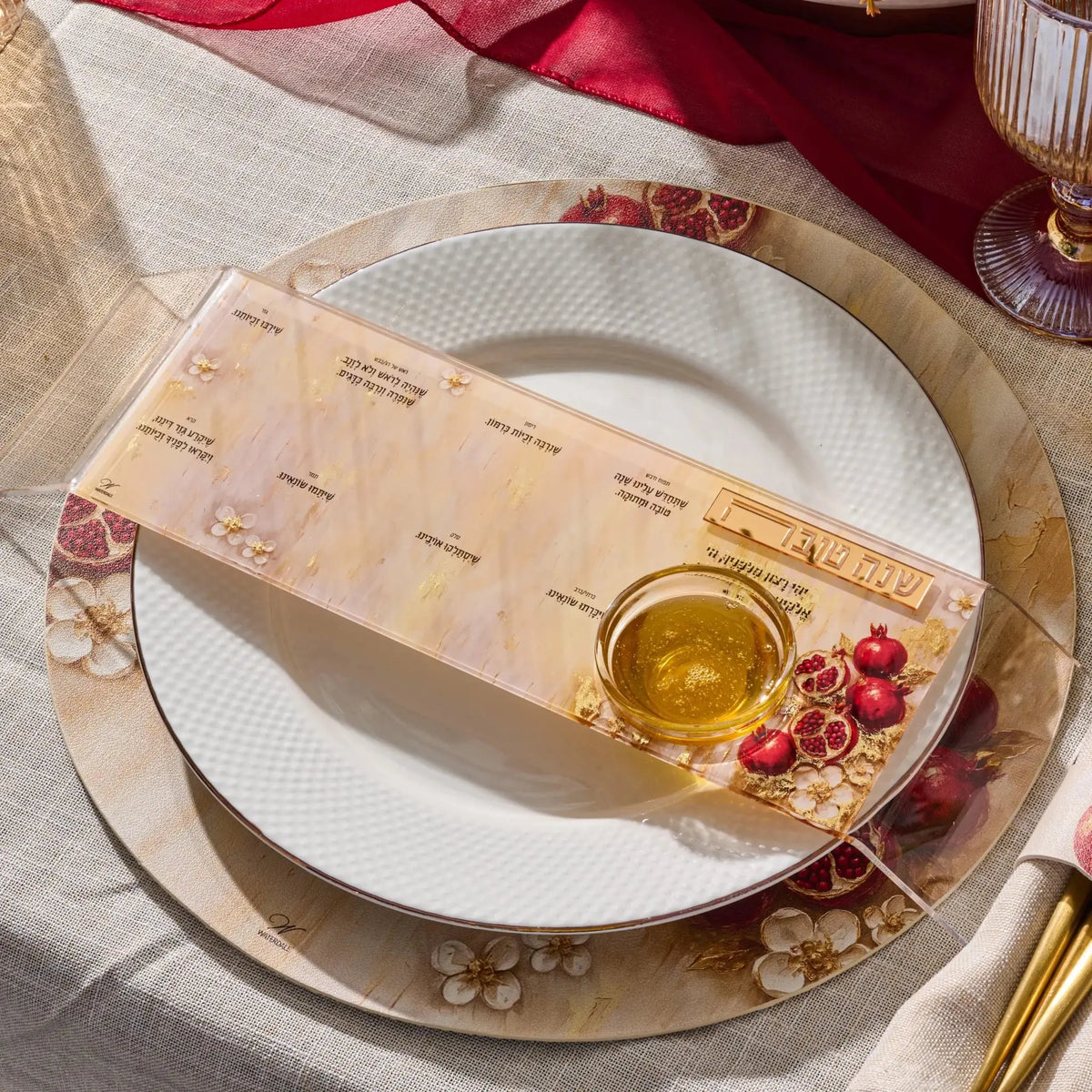
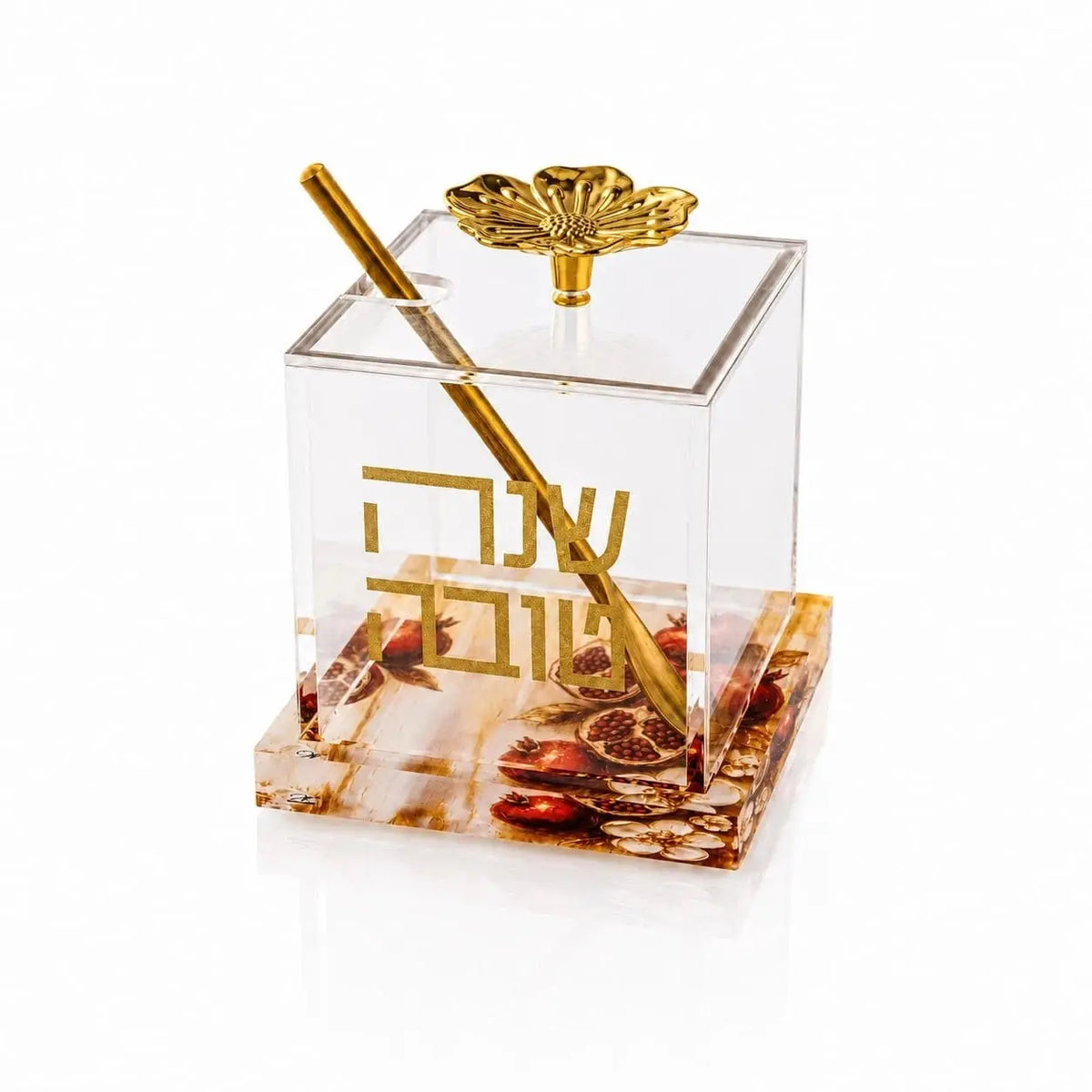
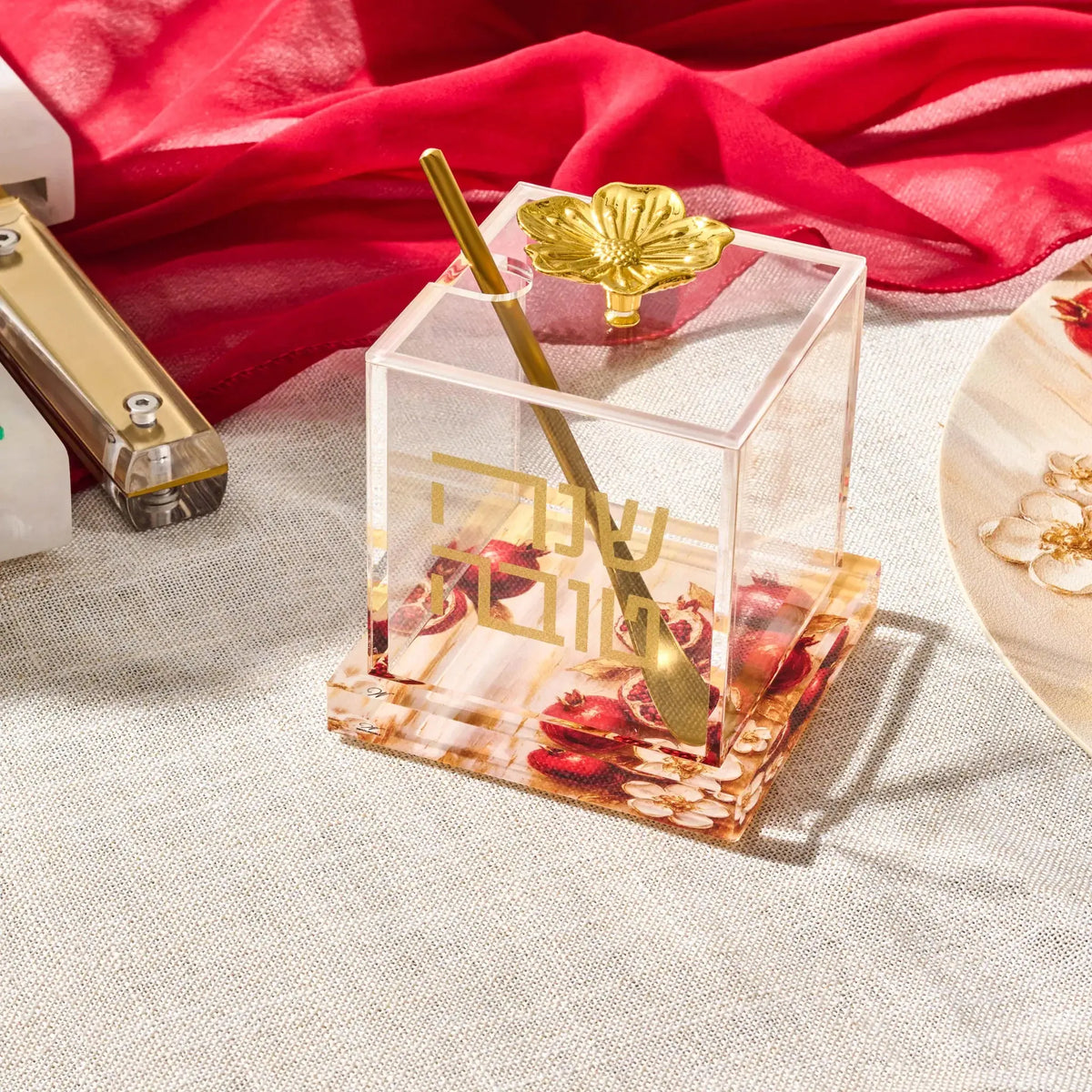
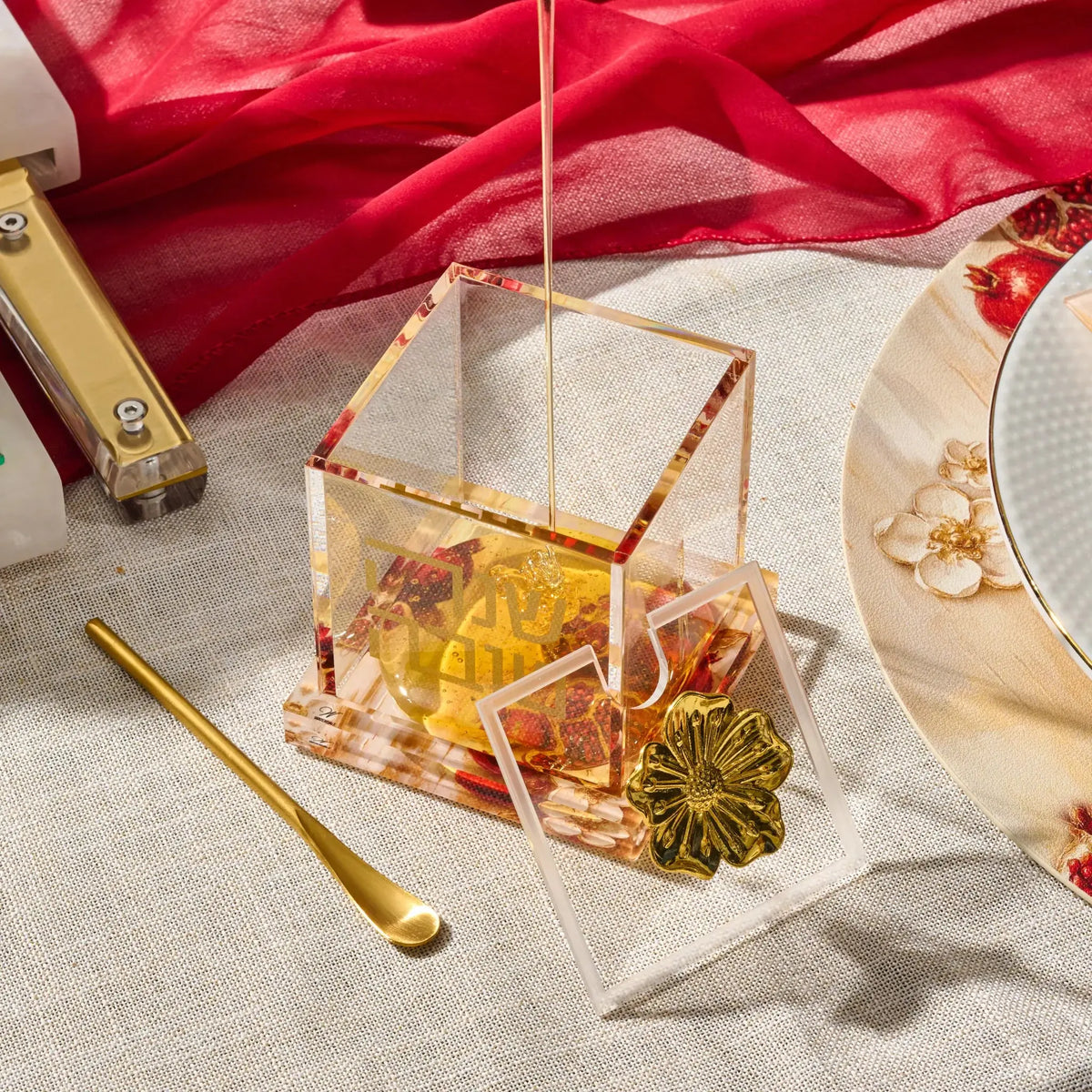
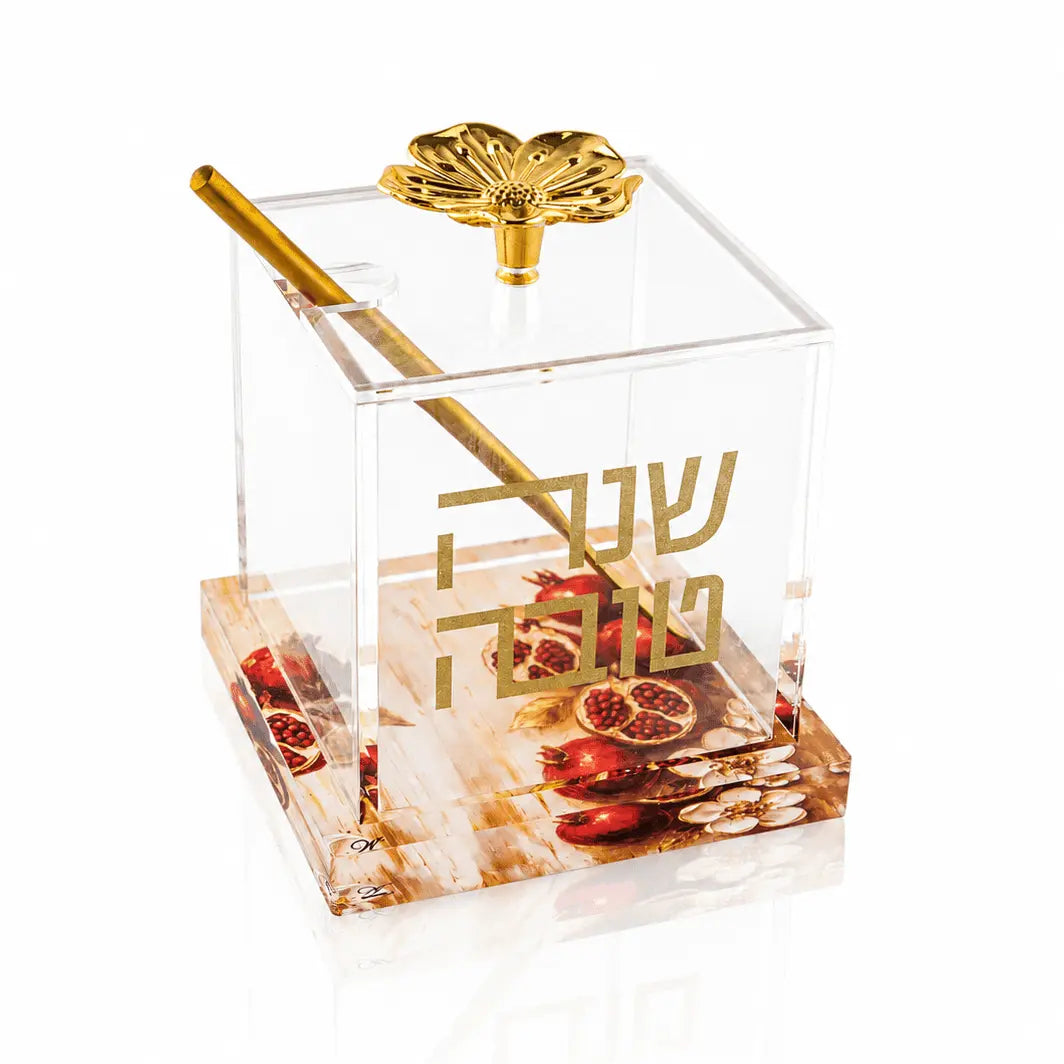
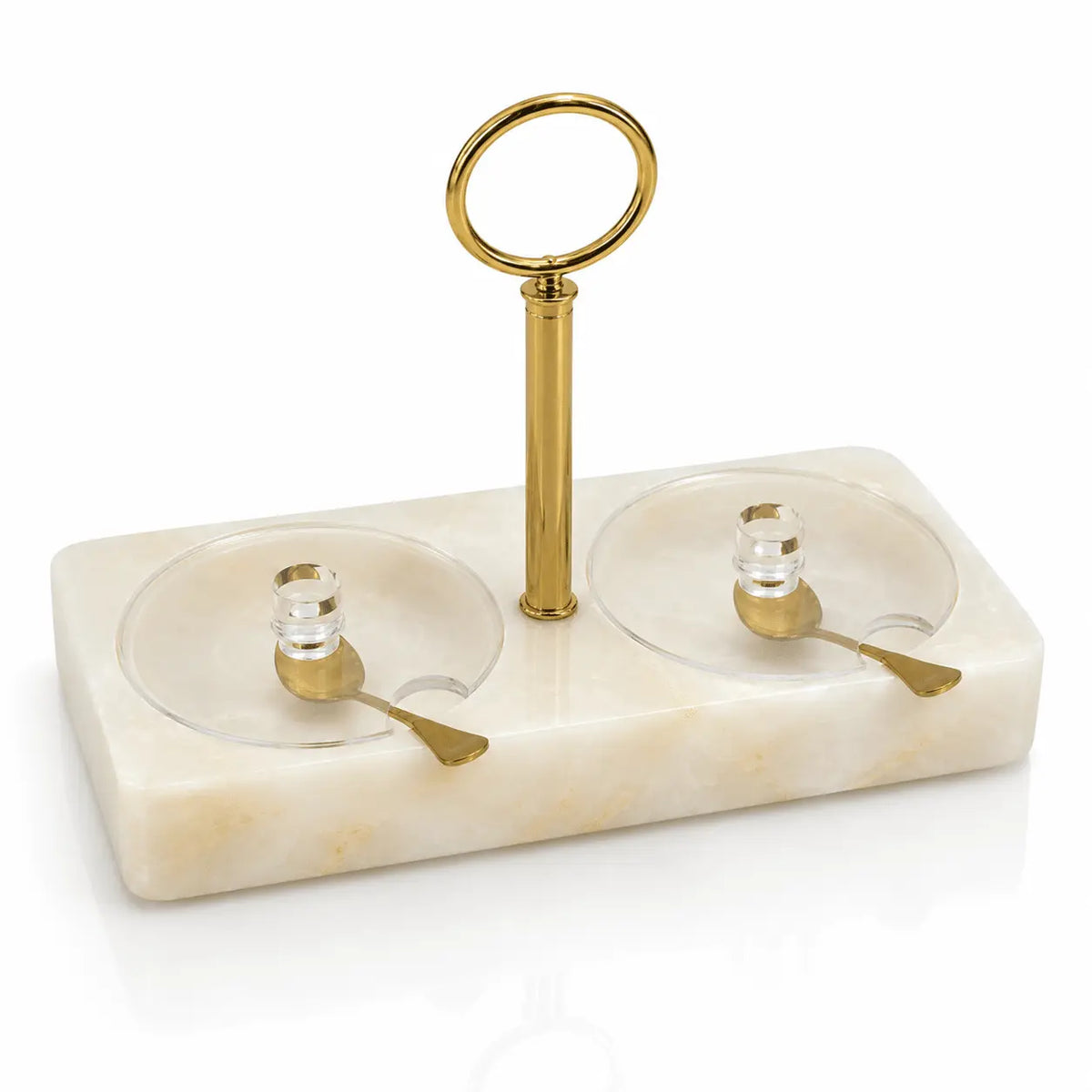
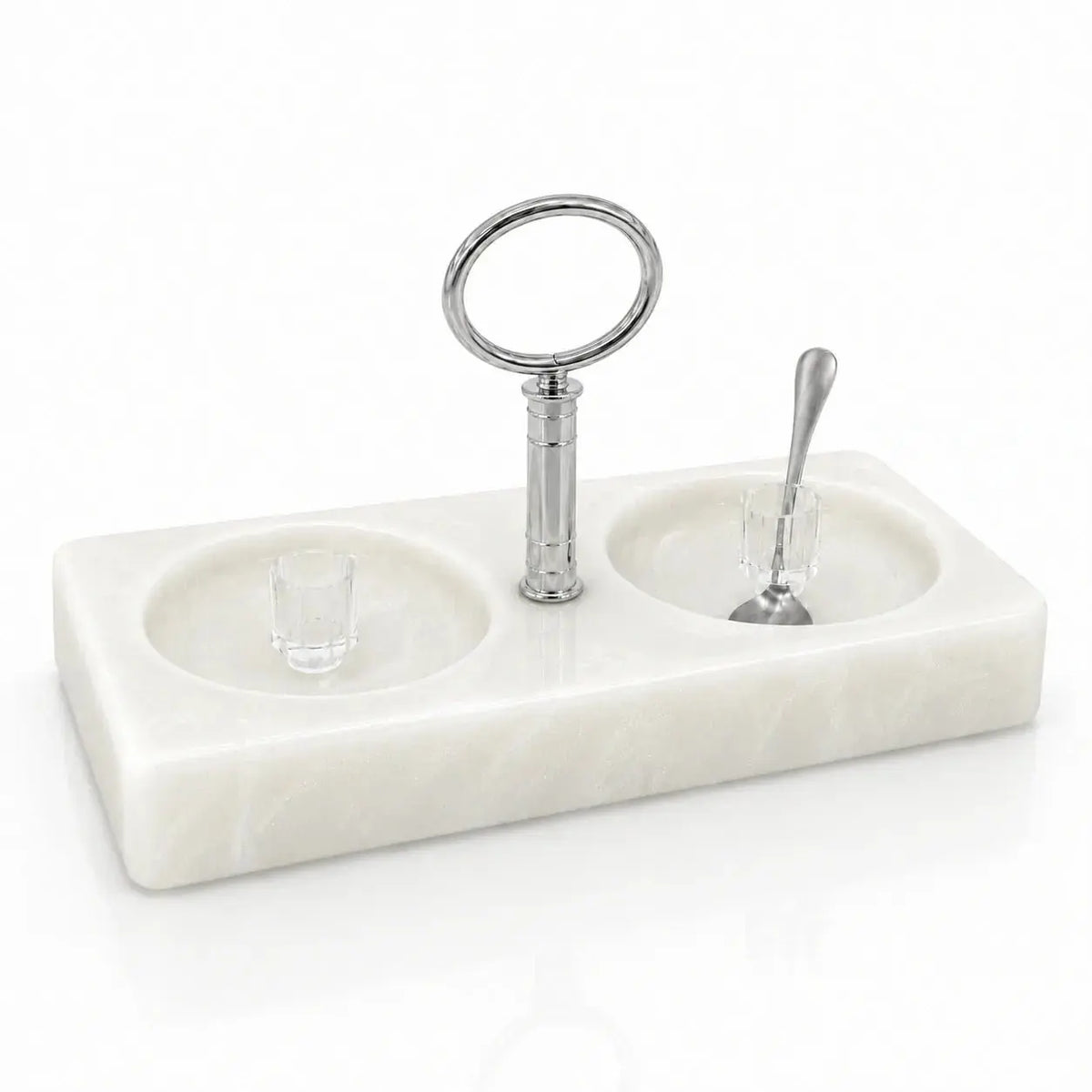
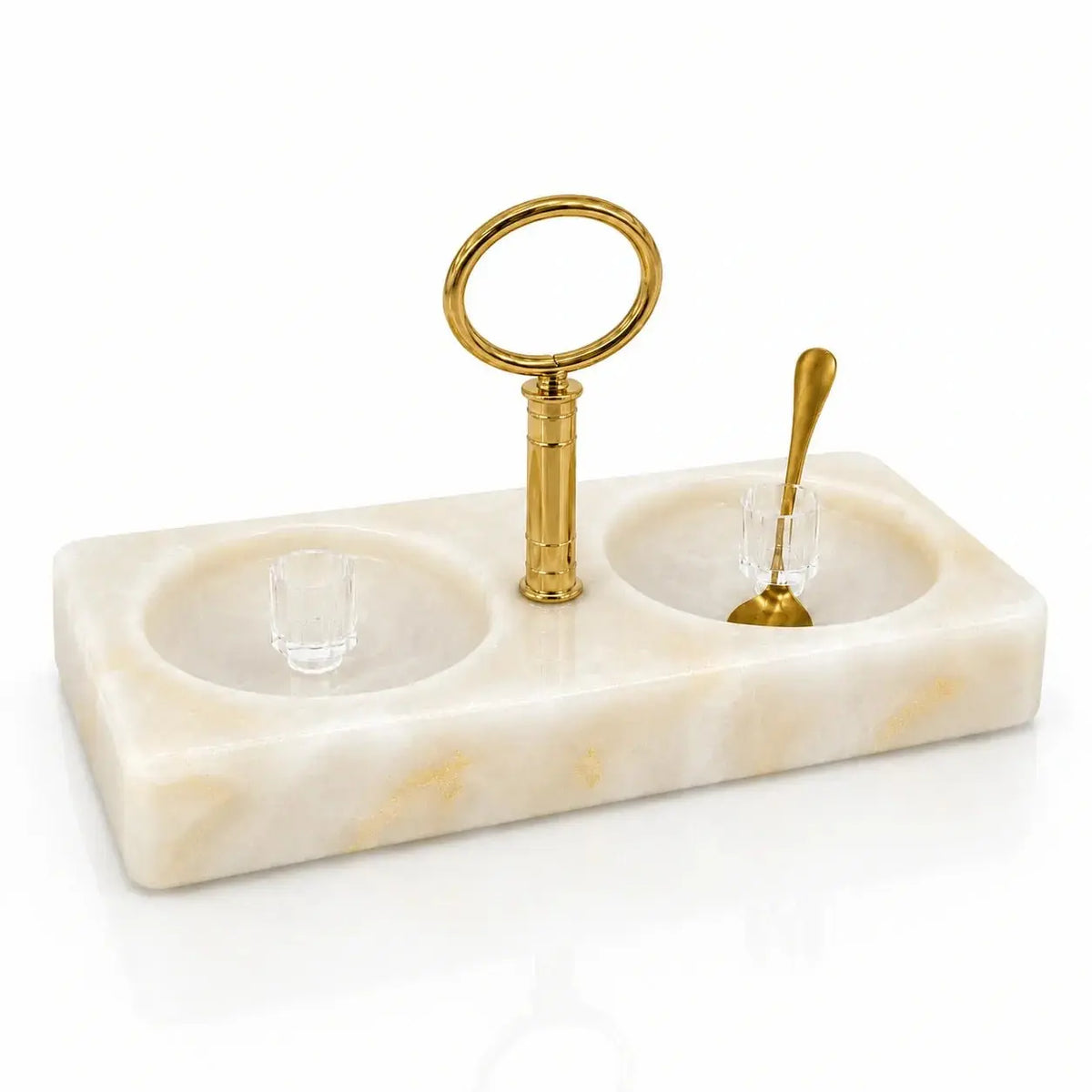
A honey dish isn't a halachic requirement, but it's become a near-universal Rosh Hashanah tradition — a designated honey dish elevates the apple and honey ritual and dresses up the Yom Tov table. Since many families serve honey at every meal from Rosh Hashanah through Sukkos, a beautiful honey dish stays on the table for weeks, making it one of the most-used pieces of Rosh Hashanah tableware you'll own.
What is the best honey dish for Rosh Hashanah?
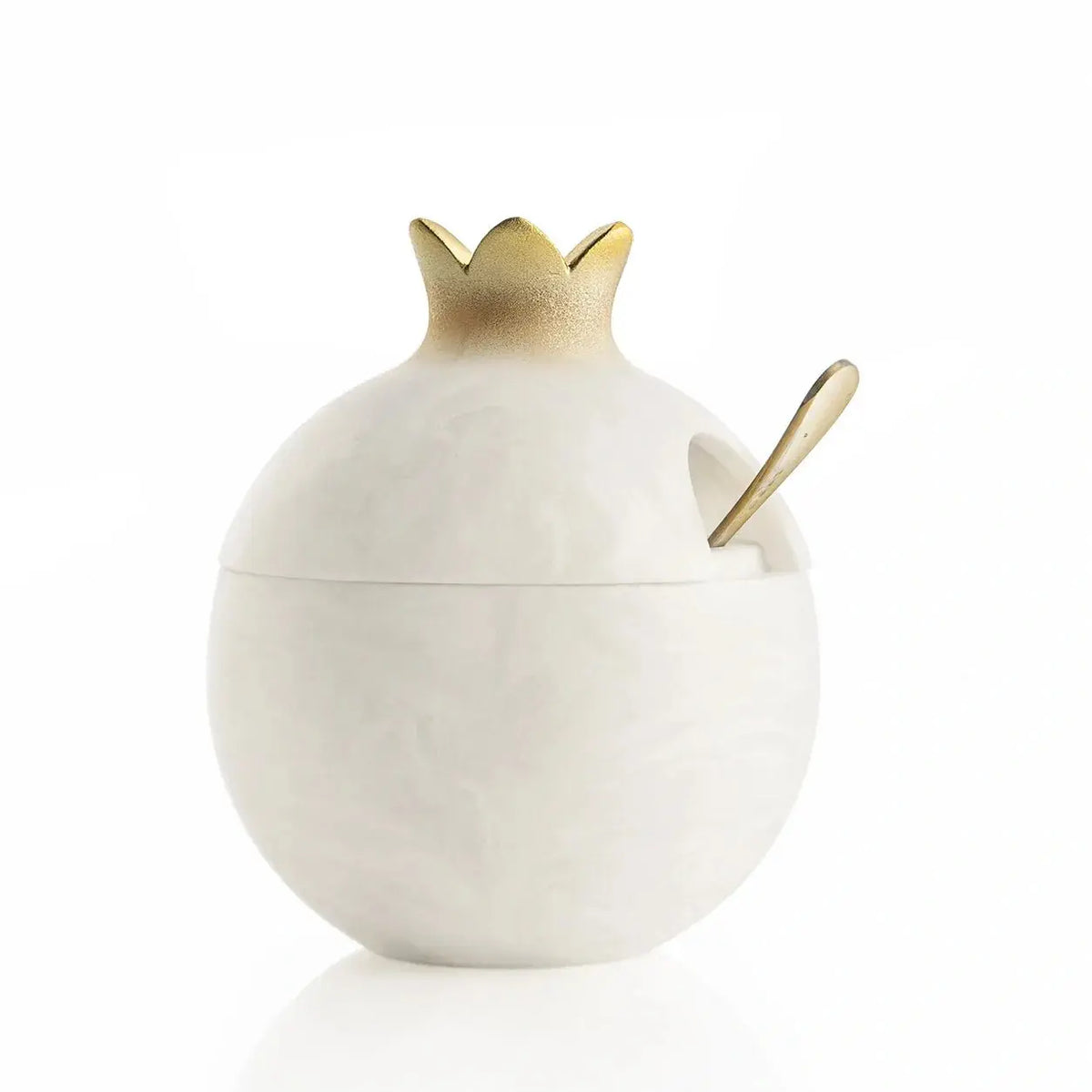
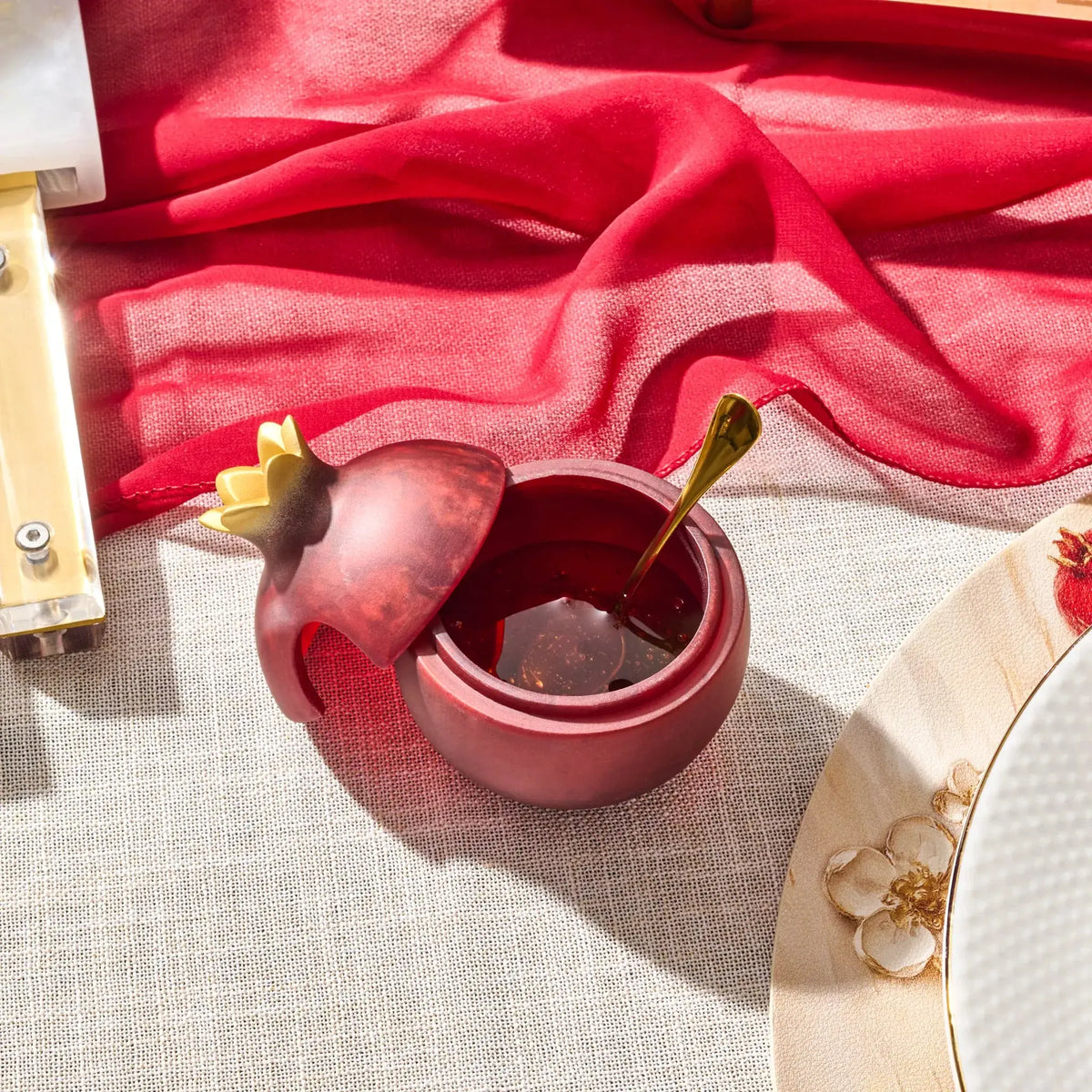
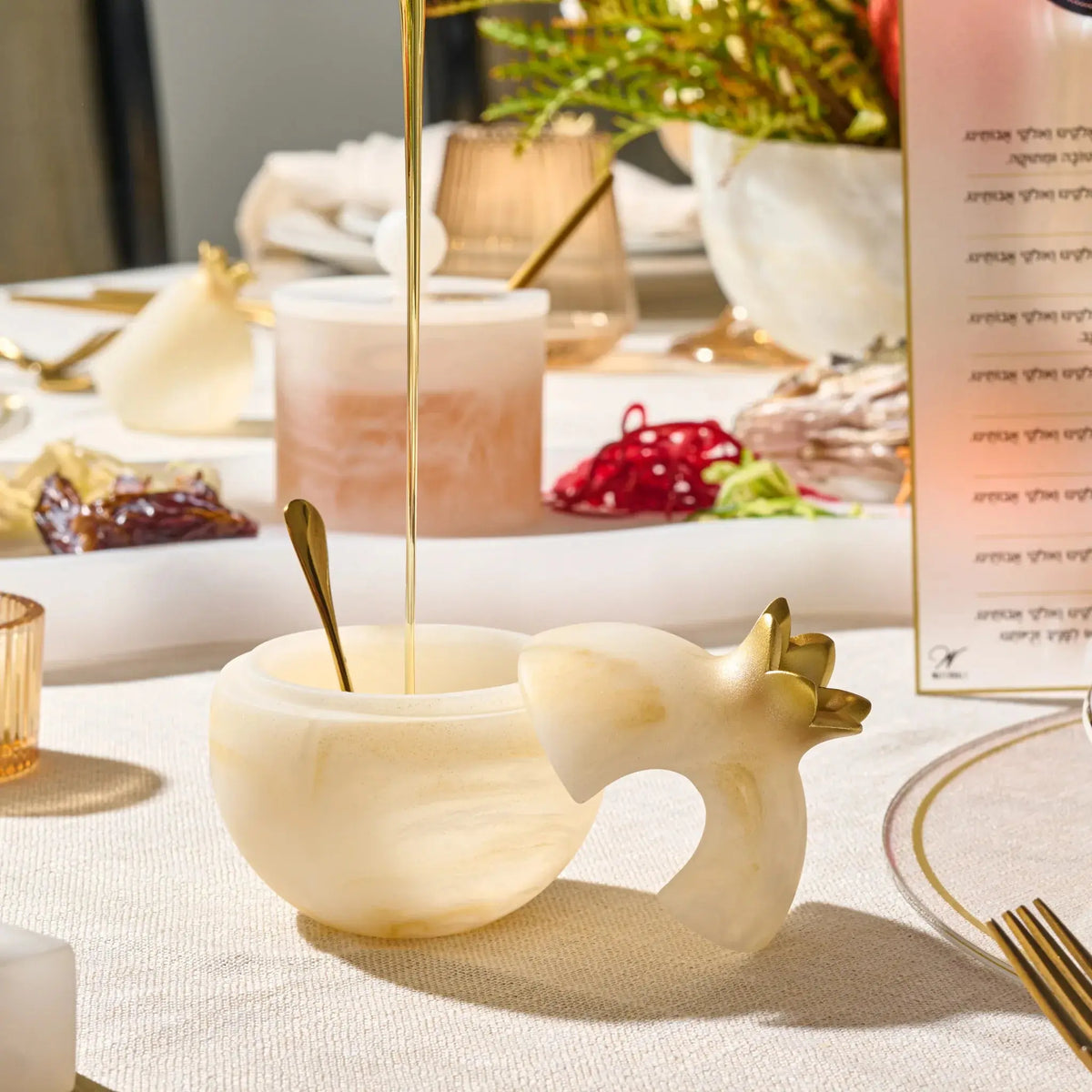
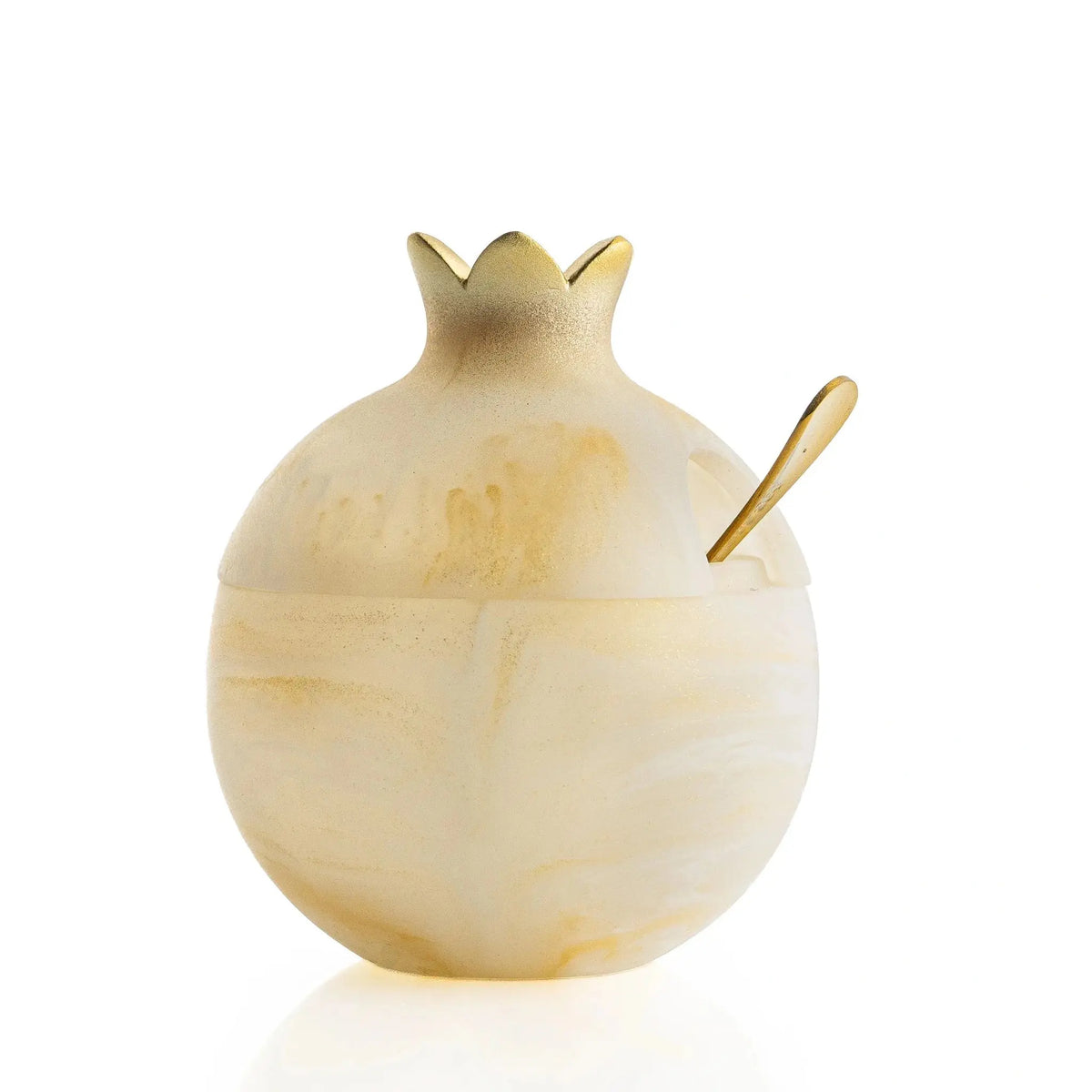
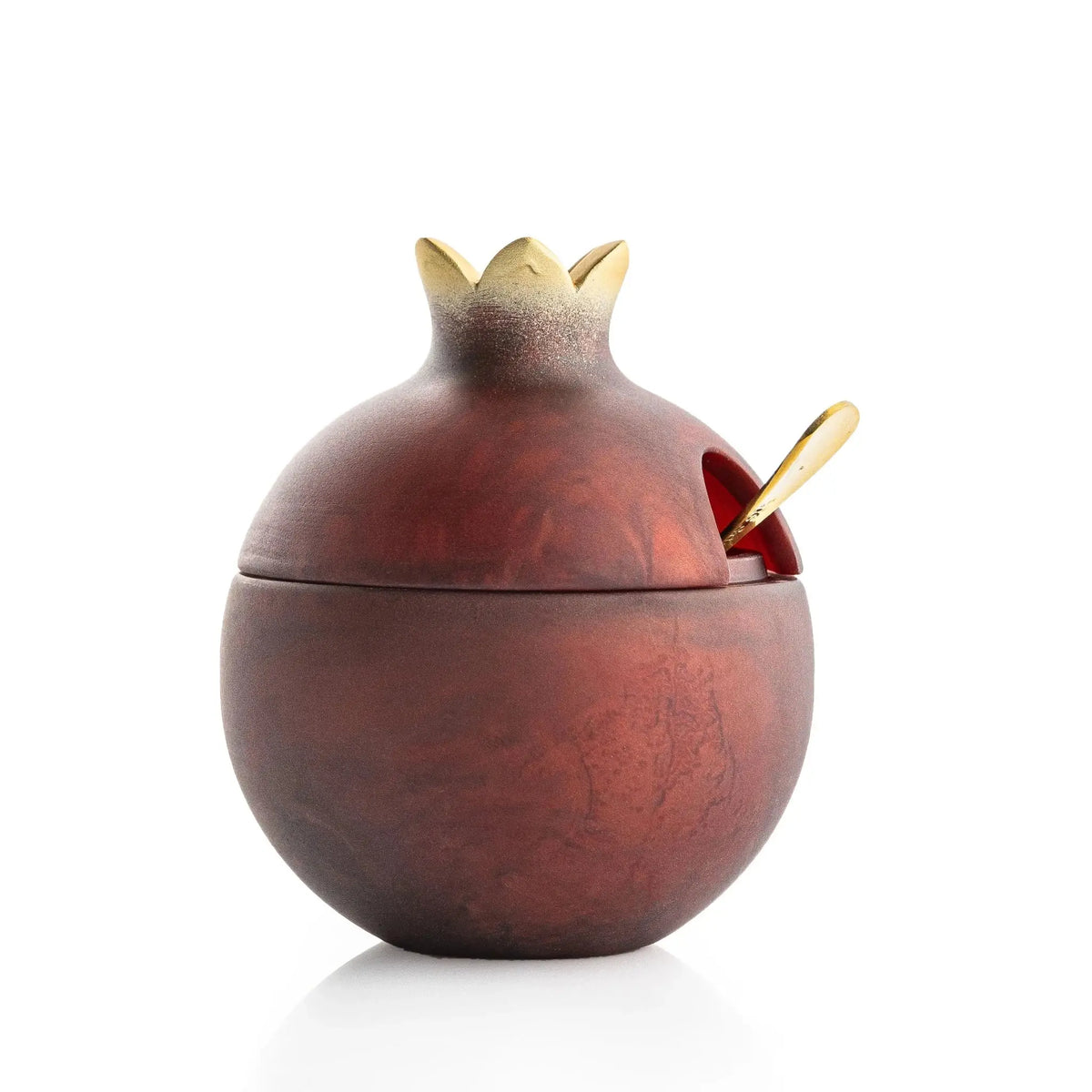
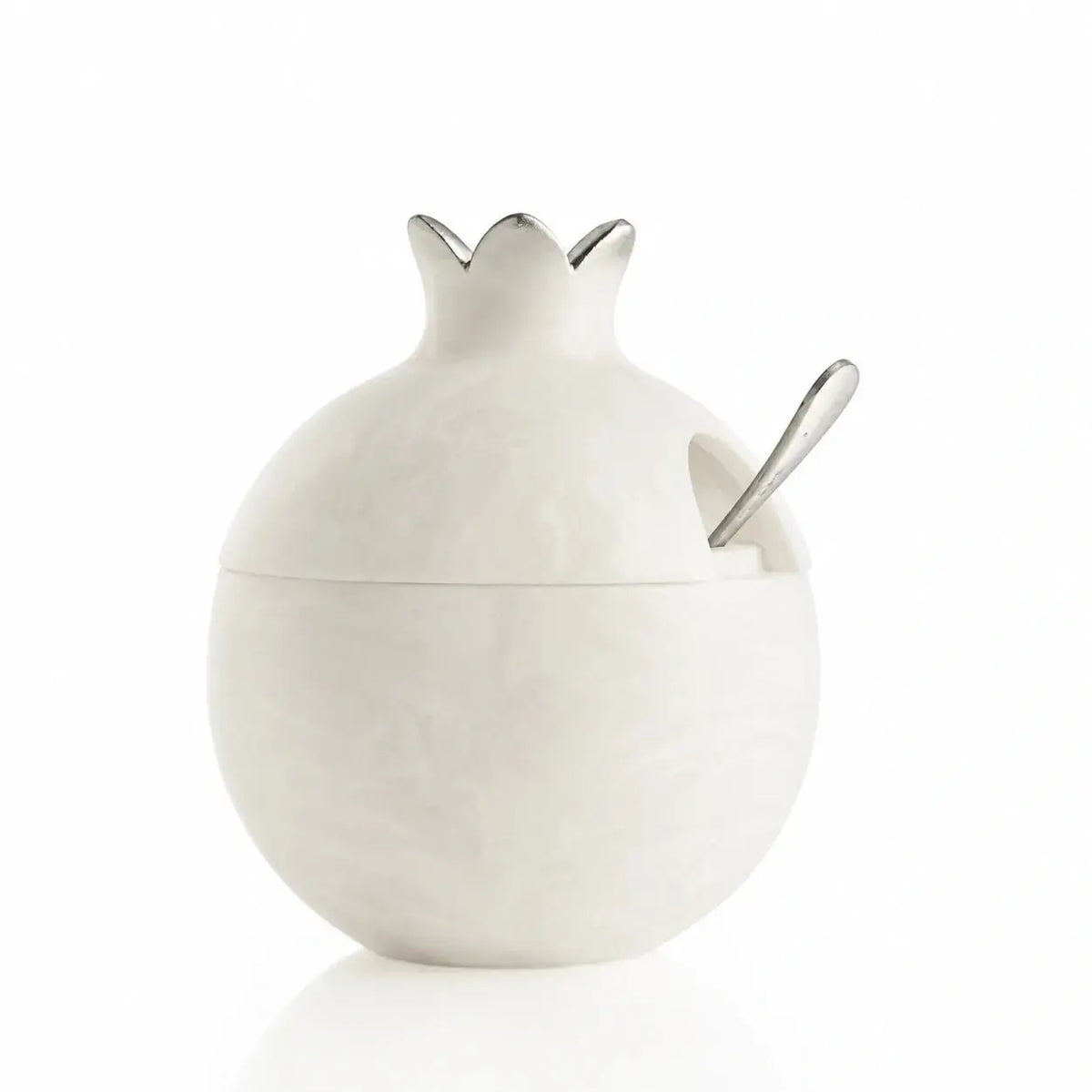
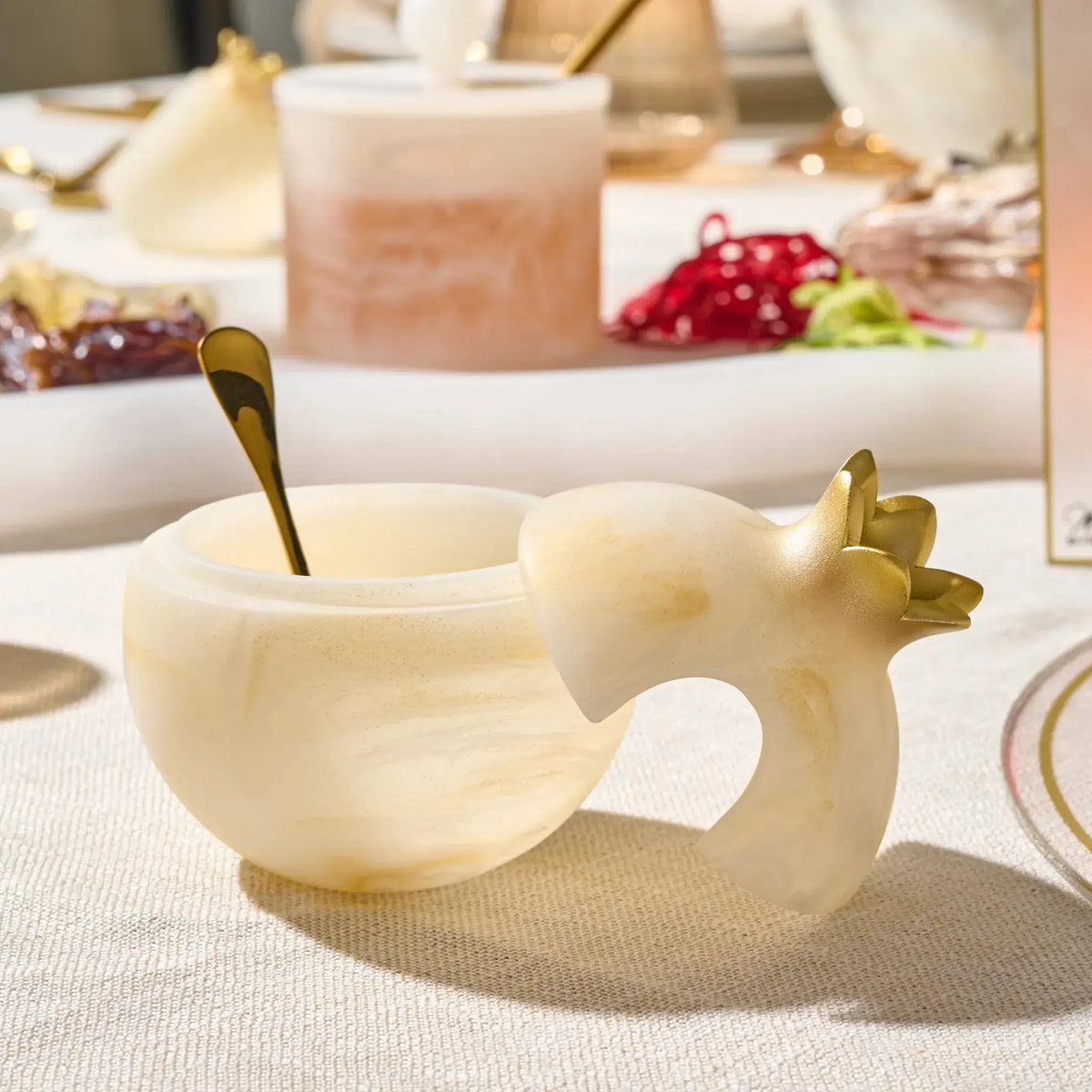
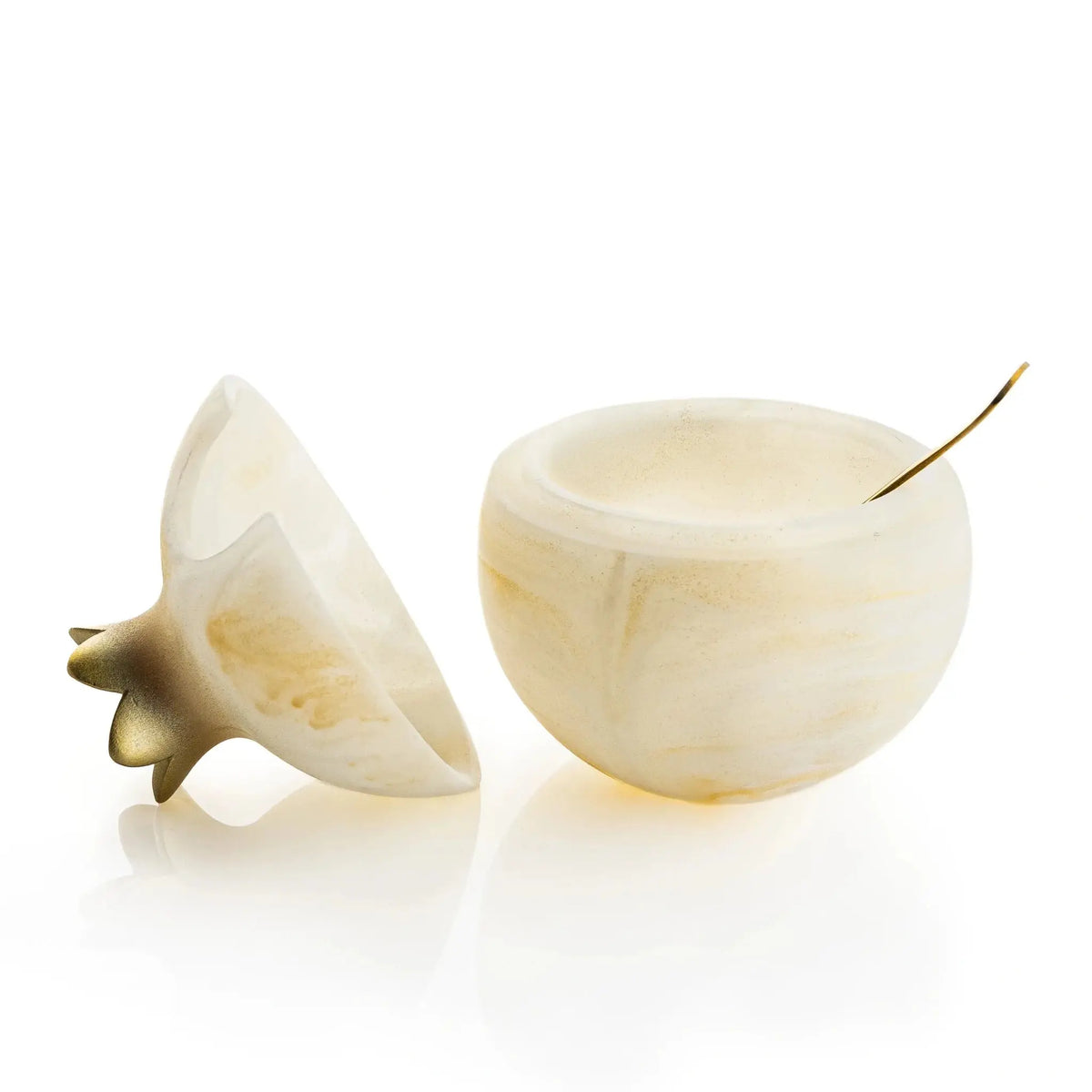
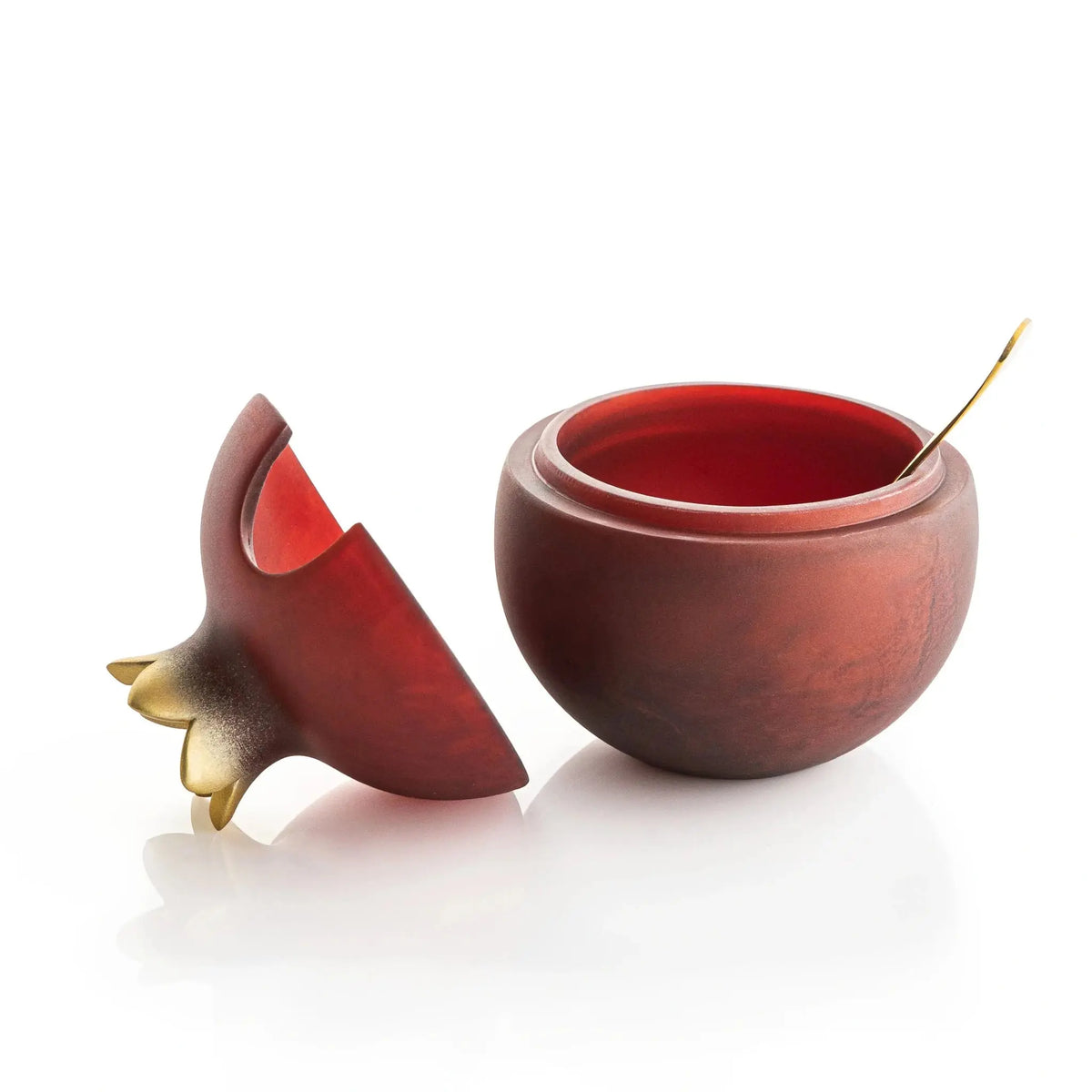
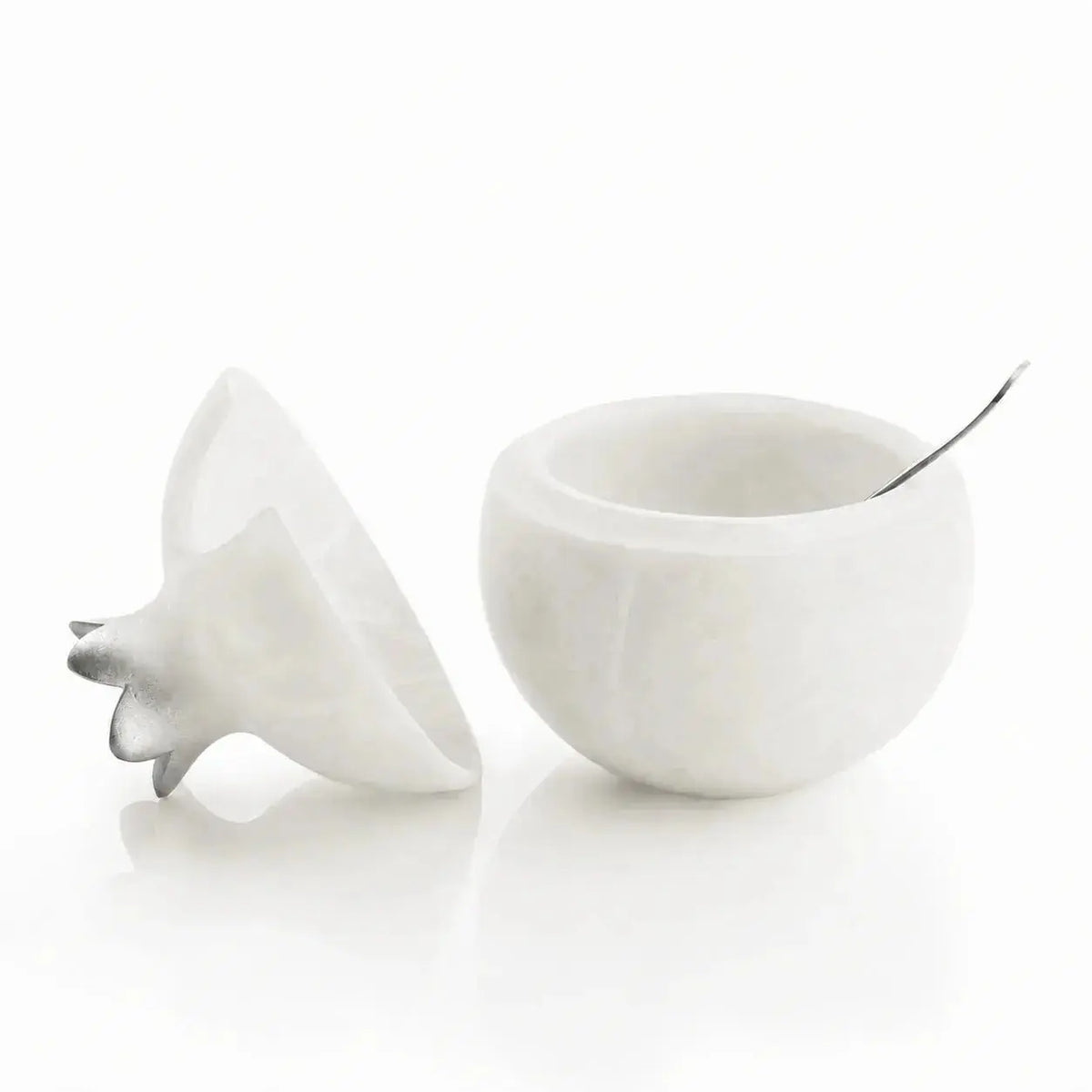
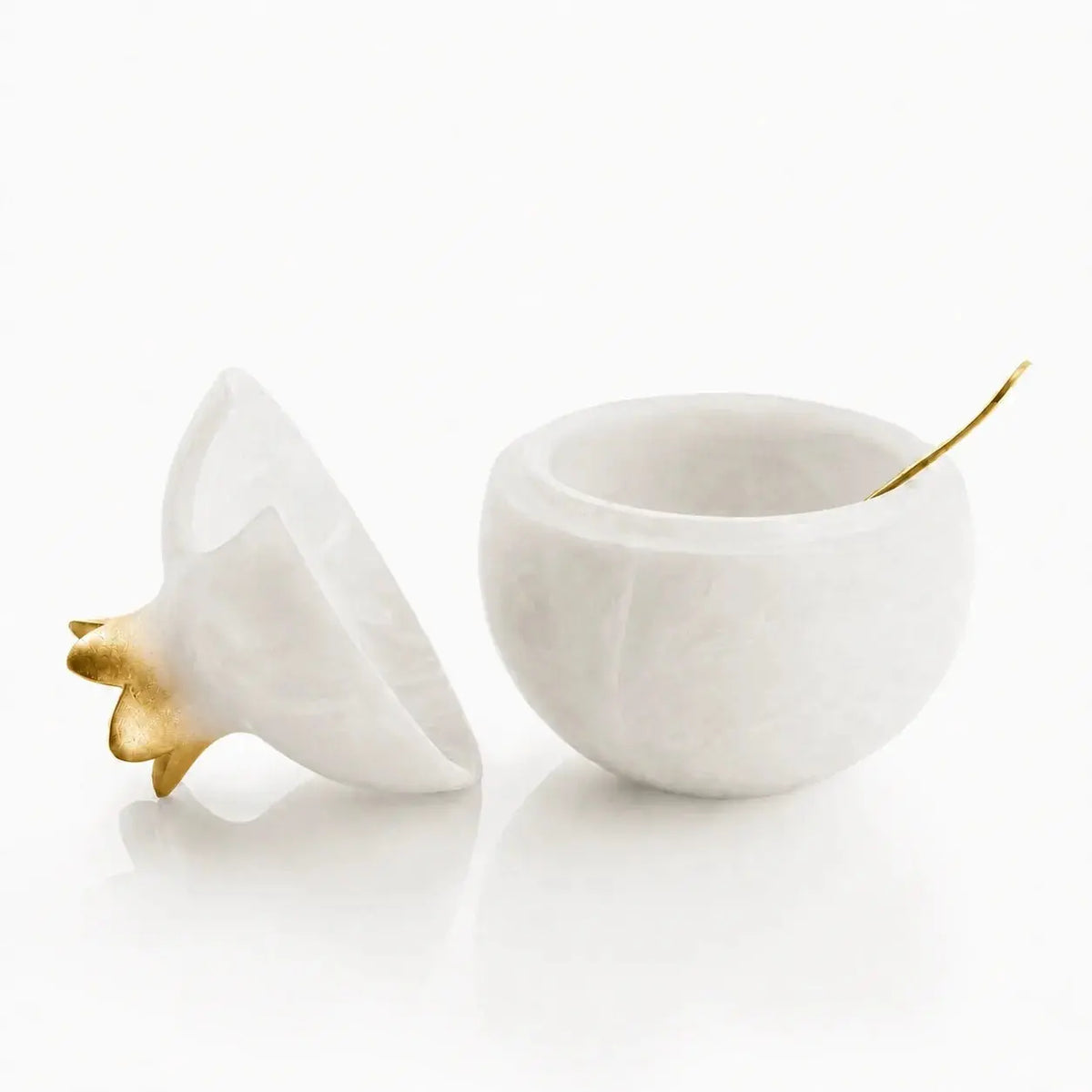
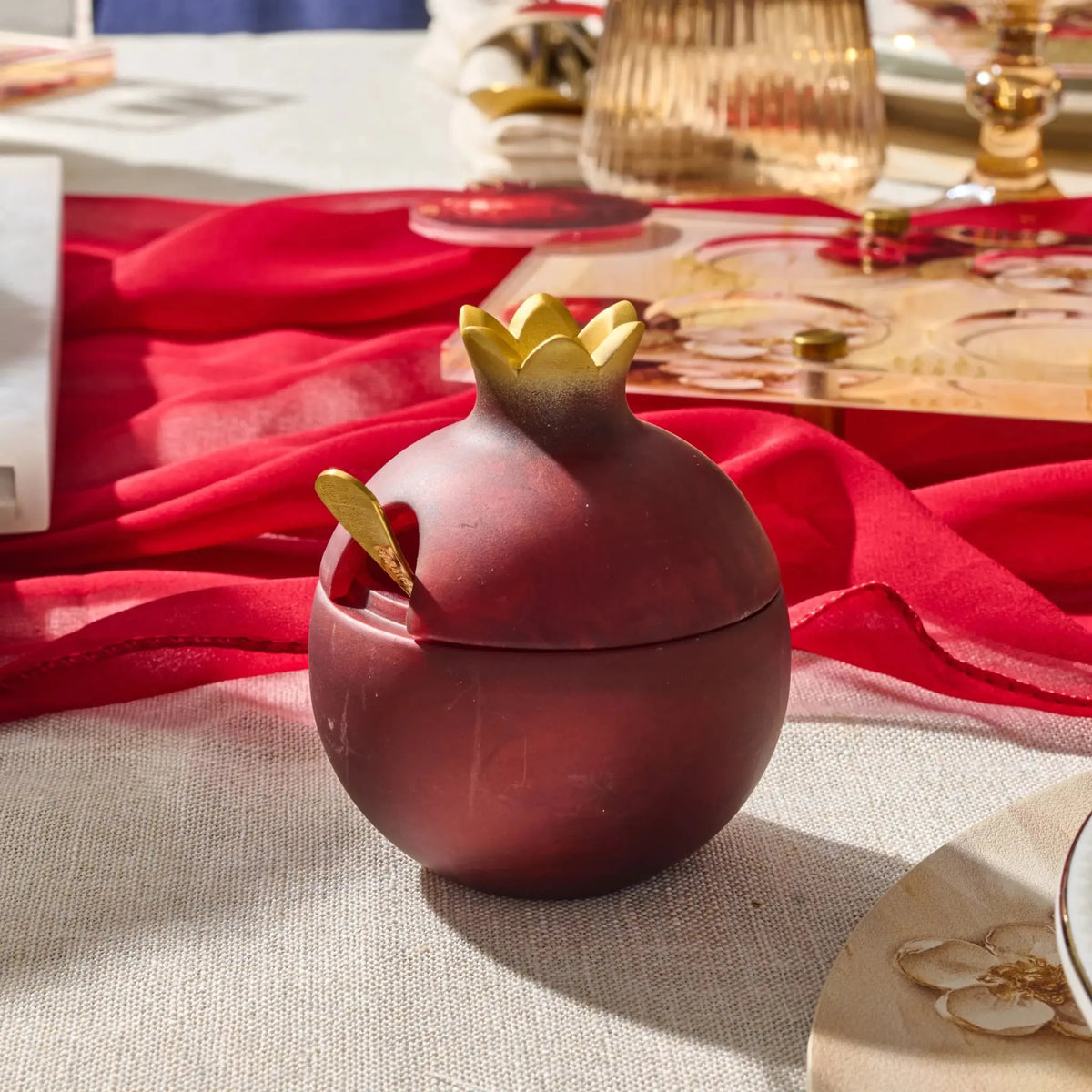
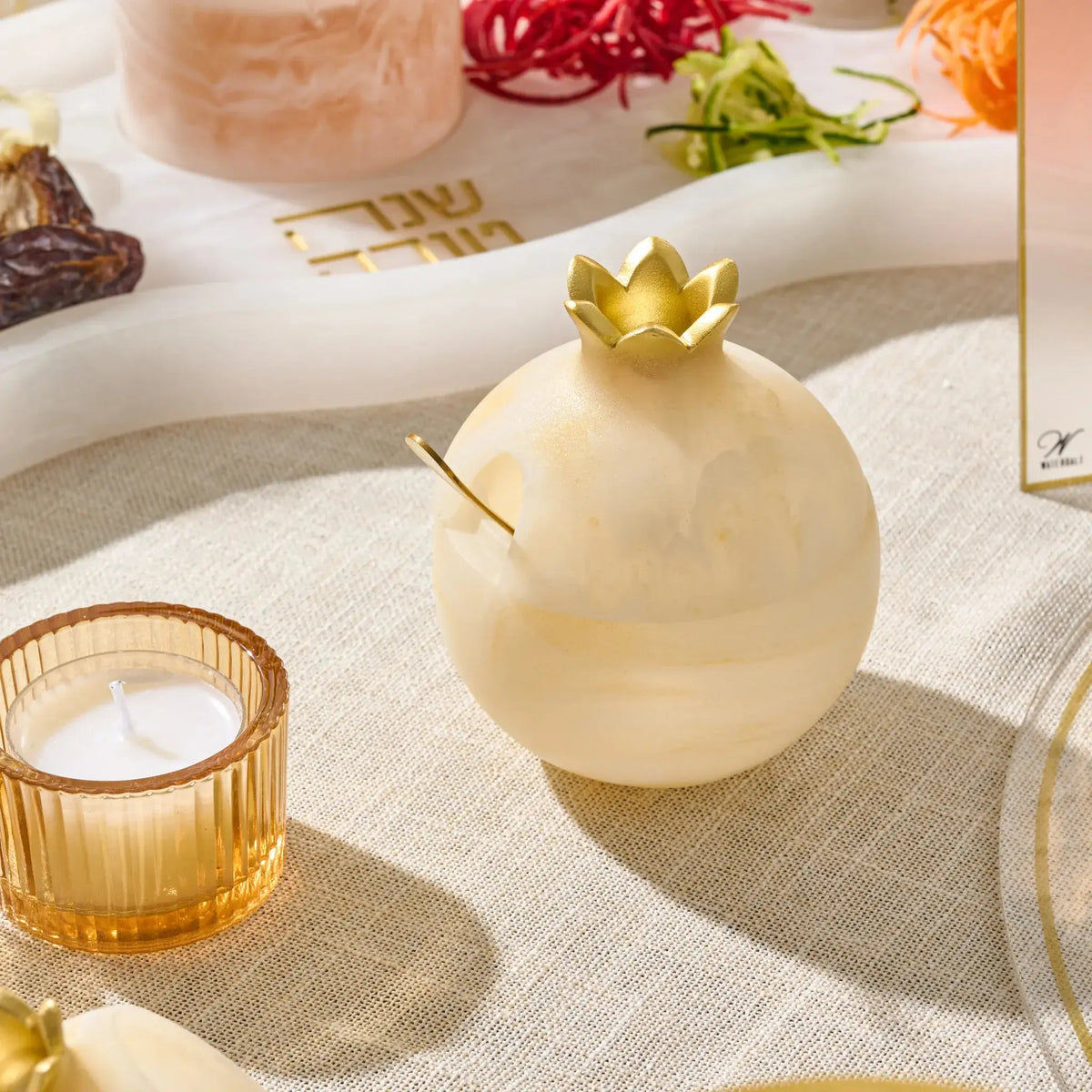
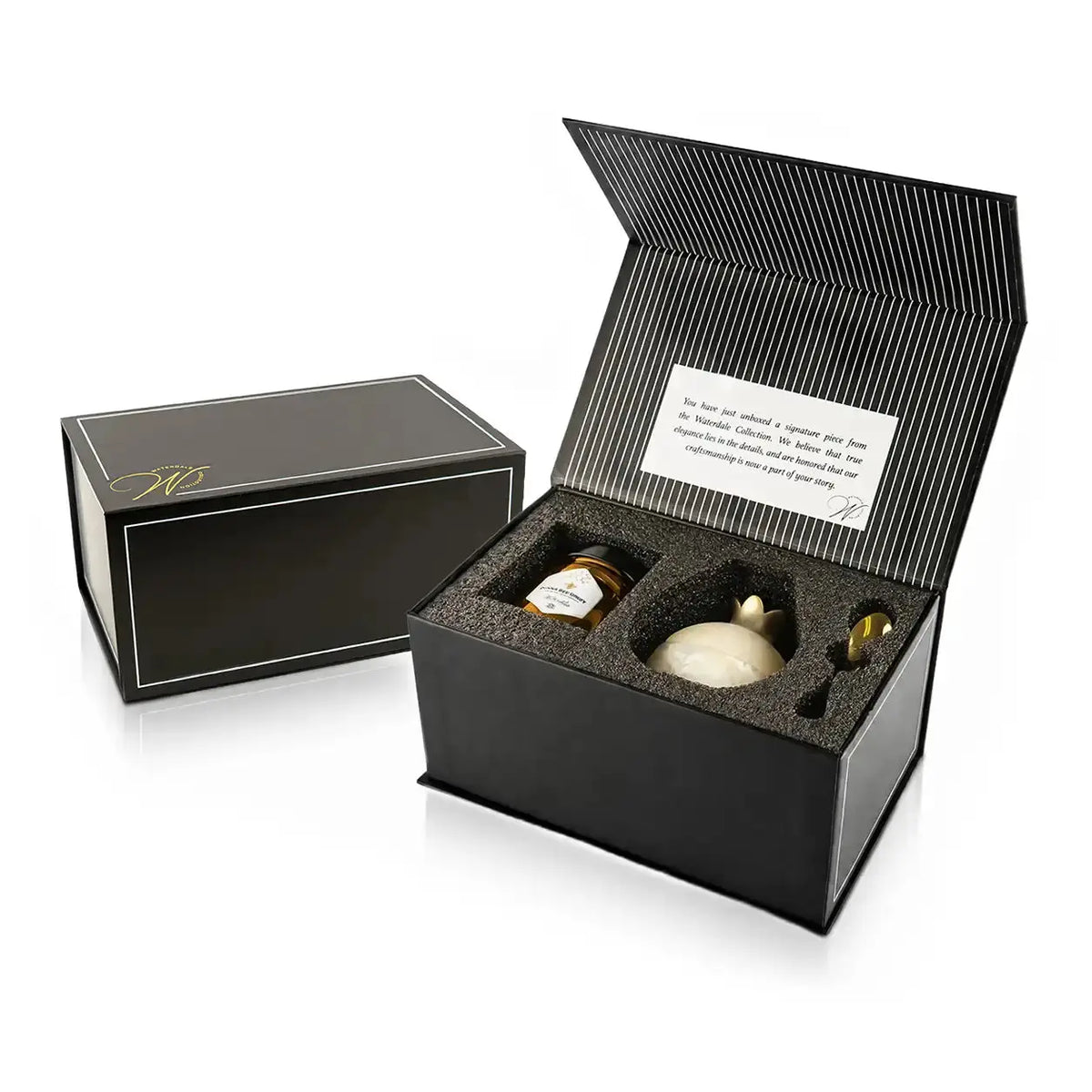
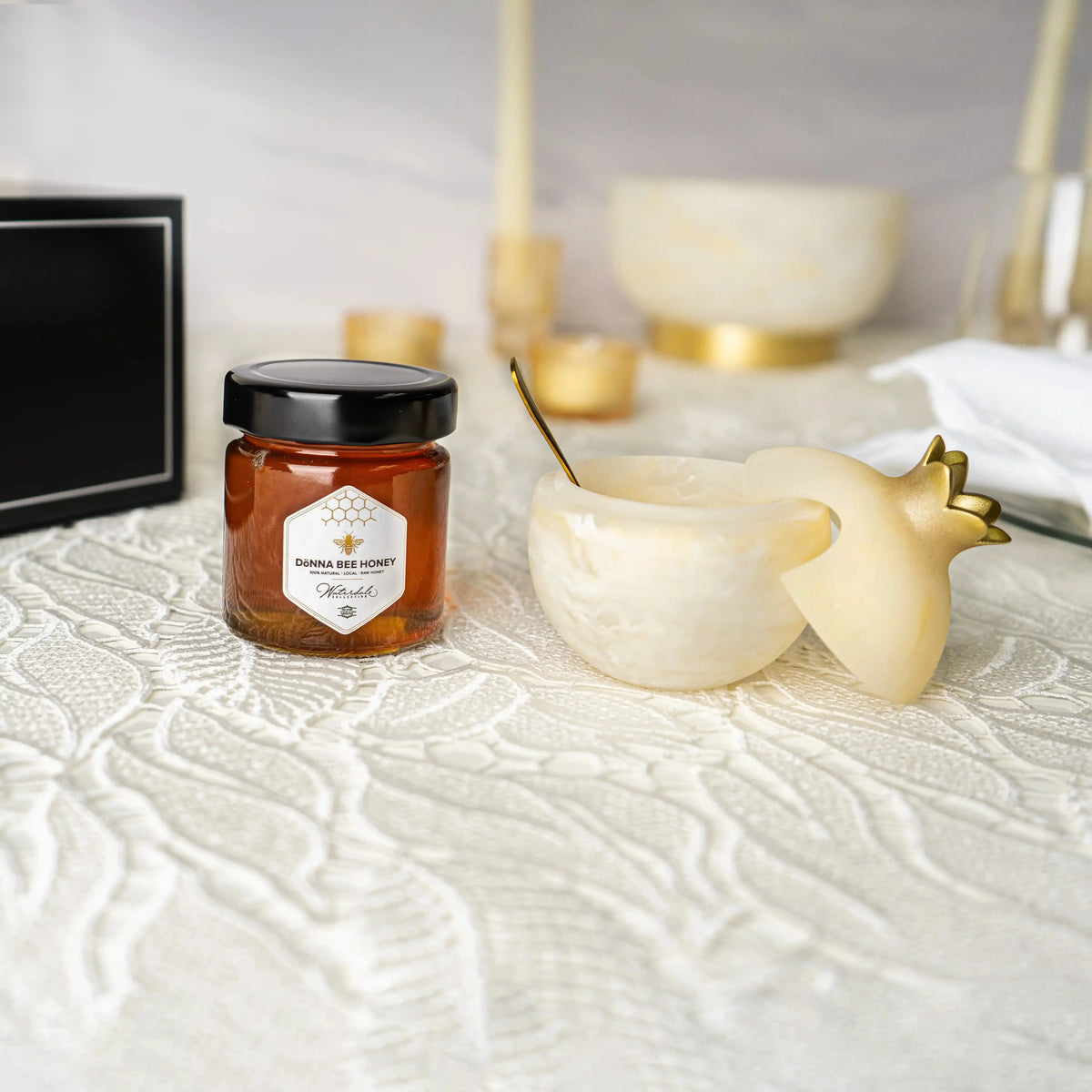
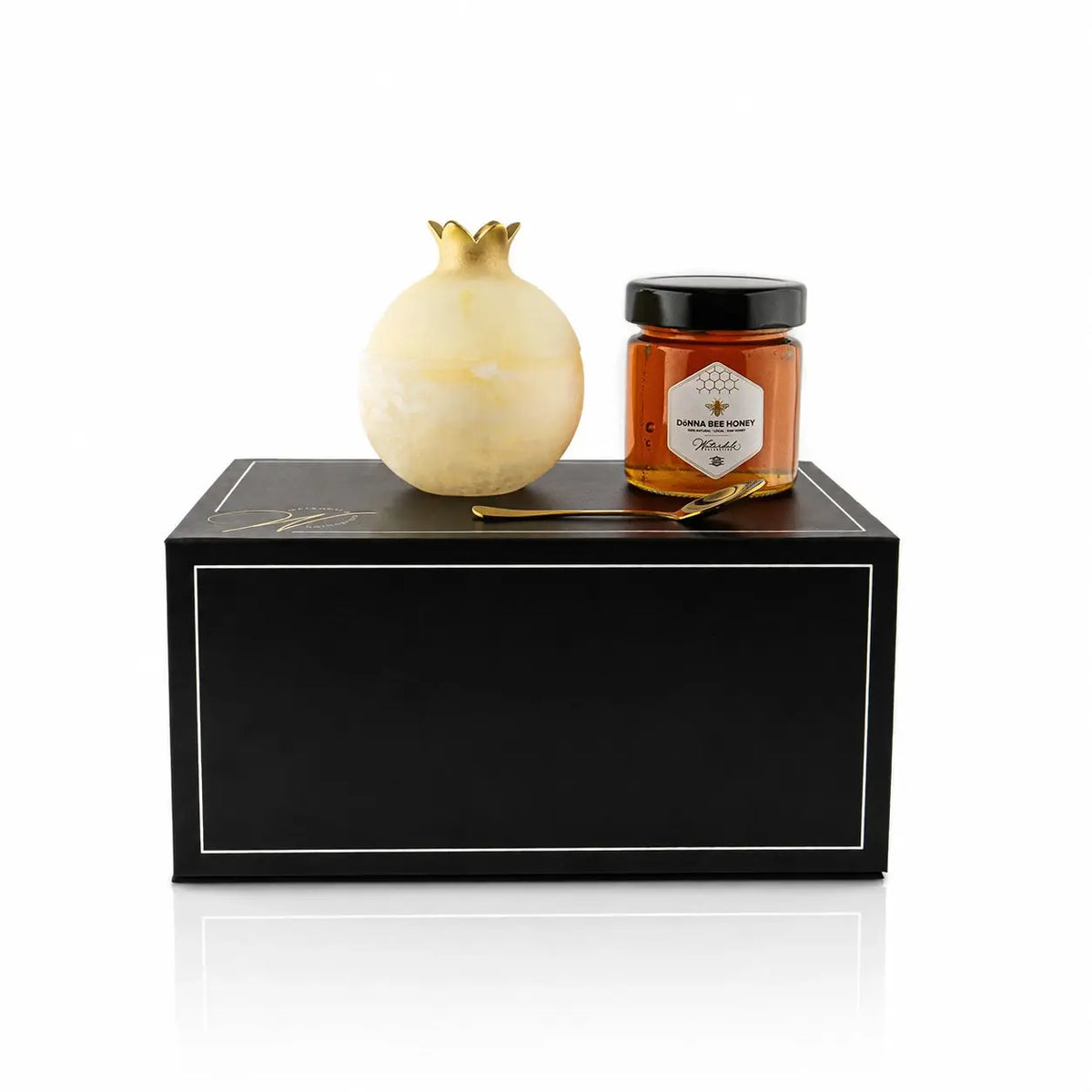
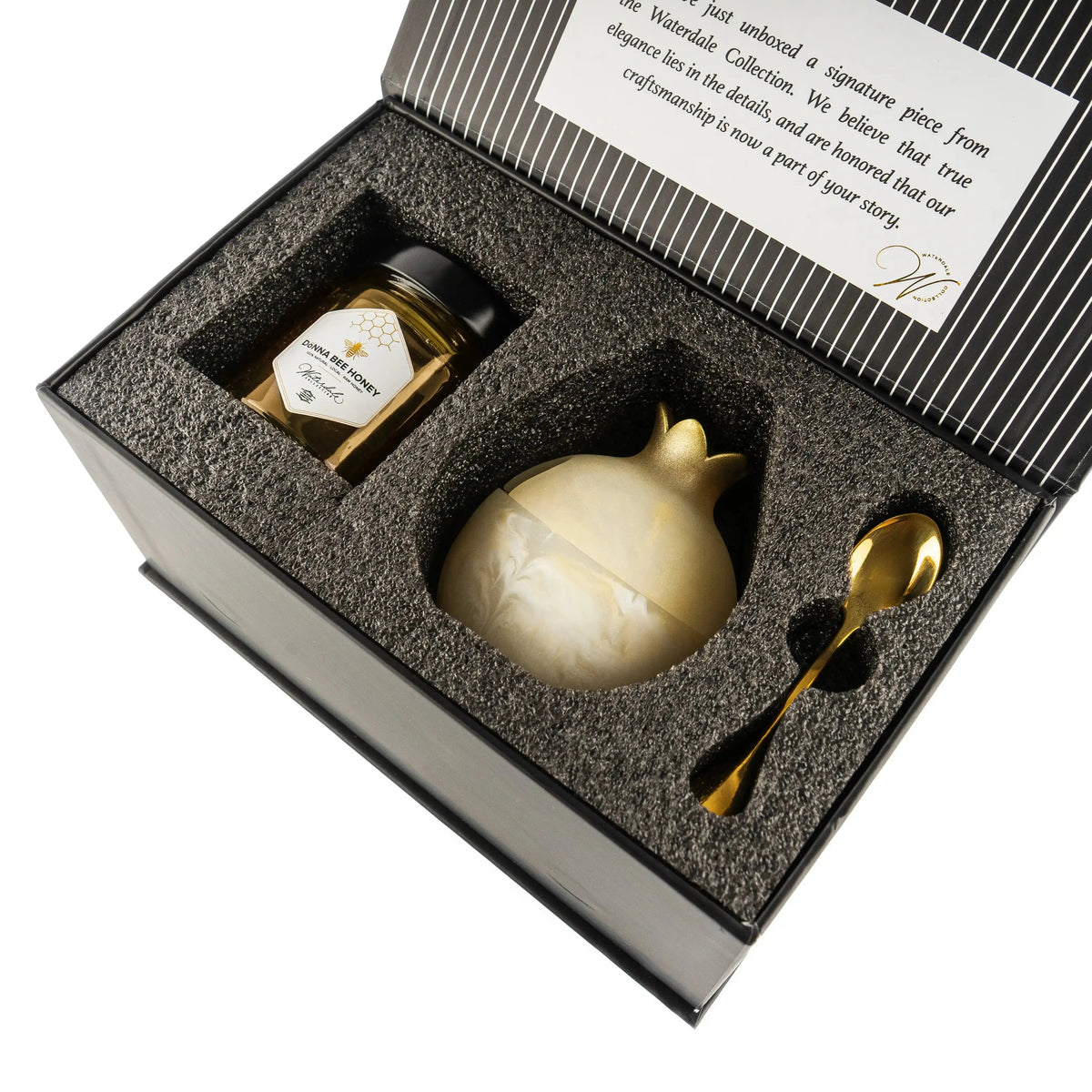
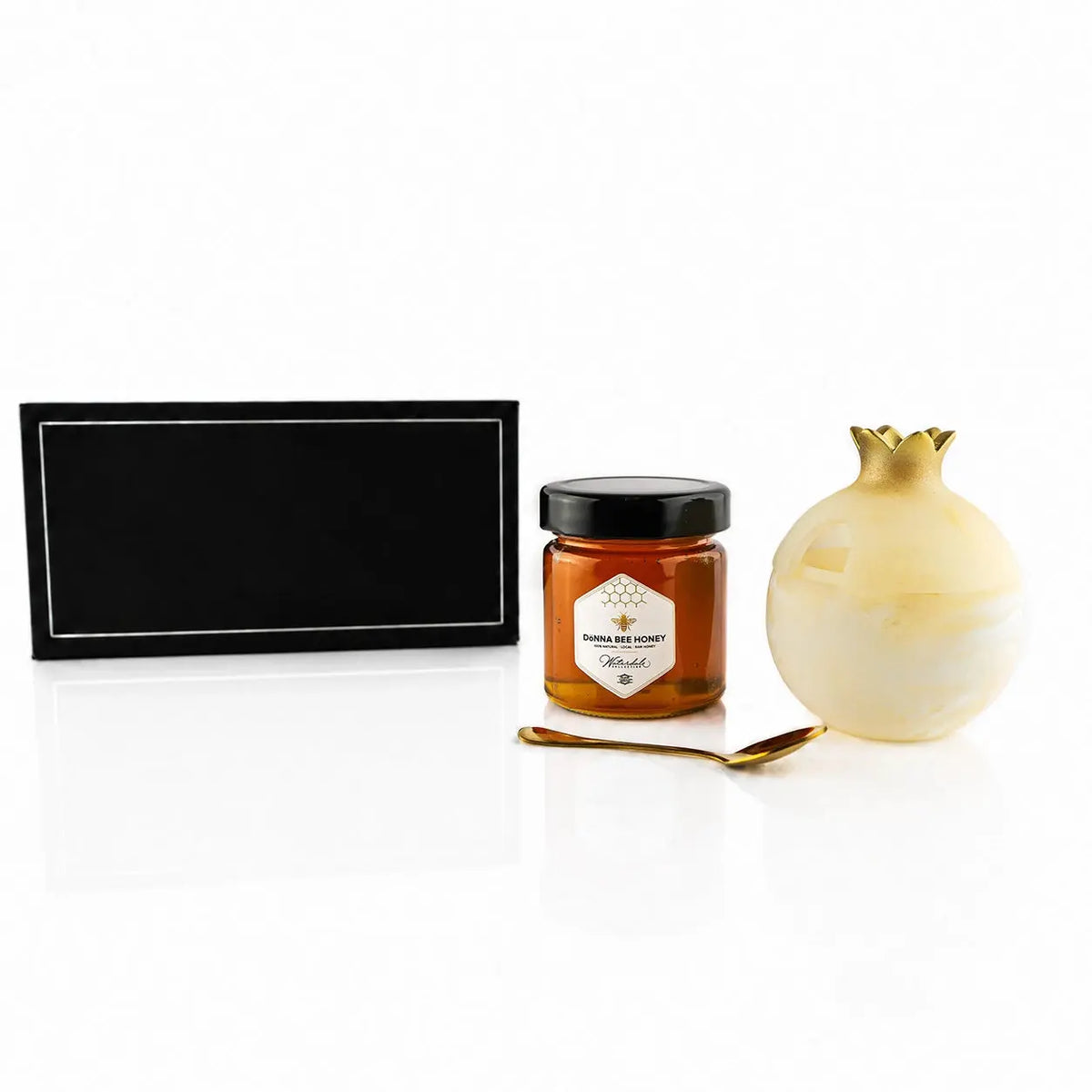
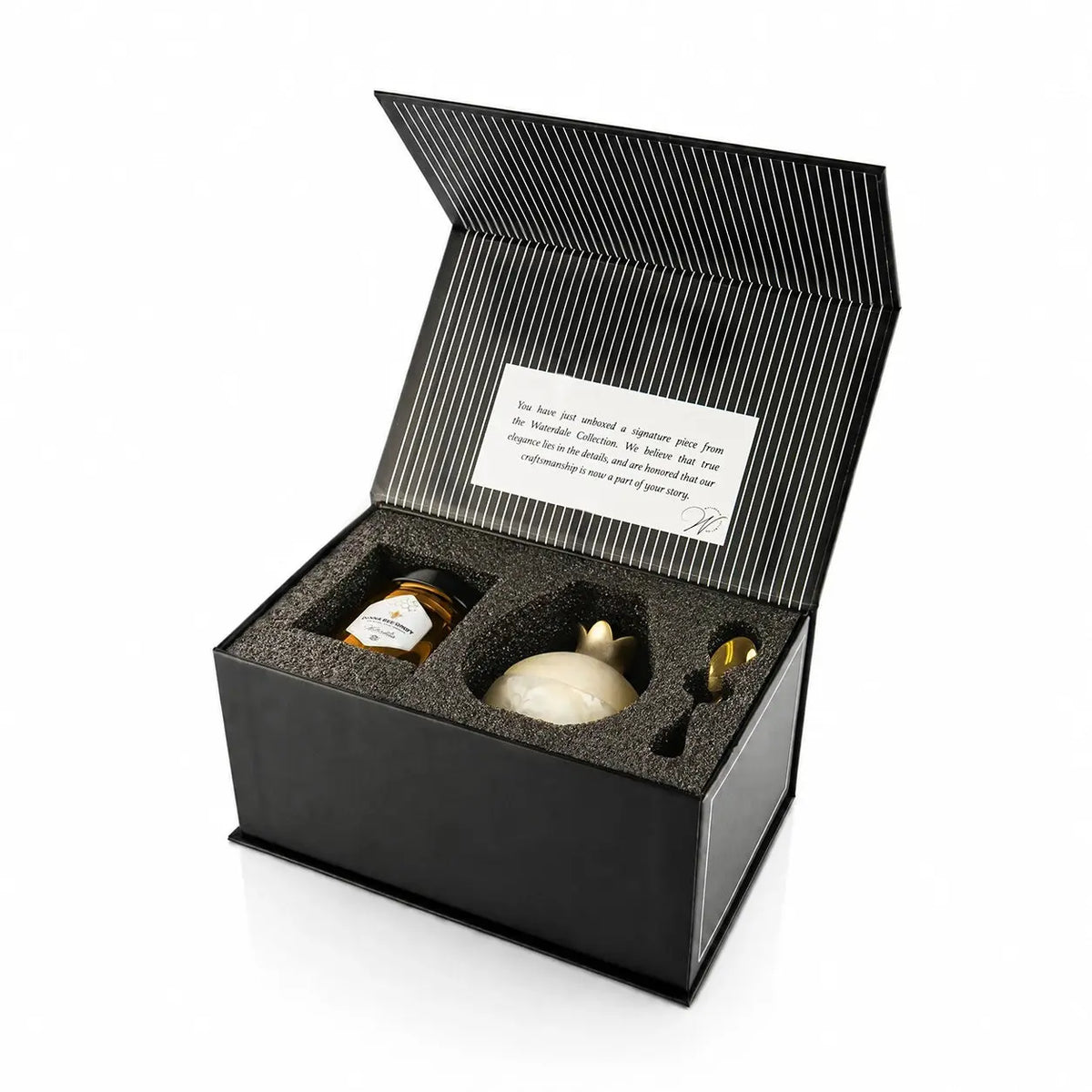
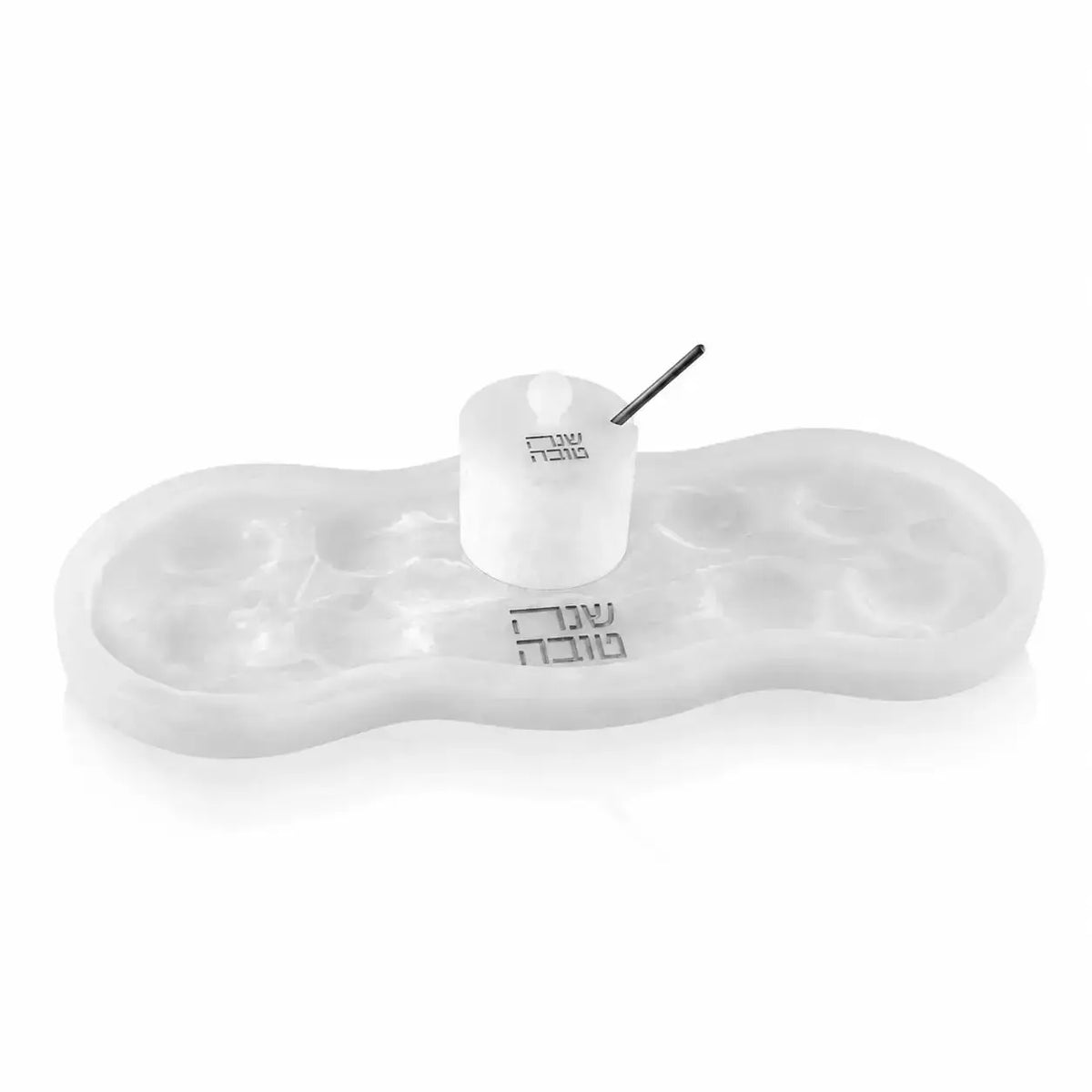
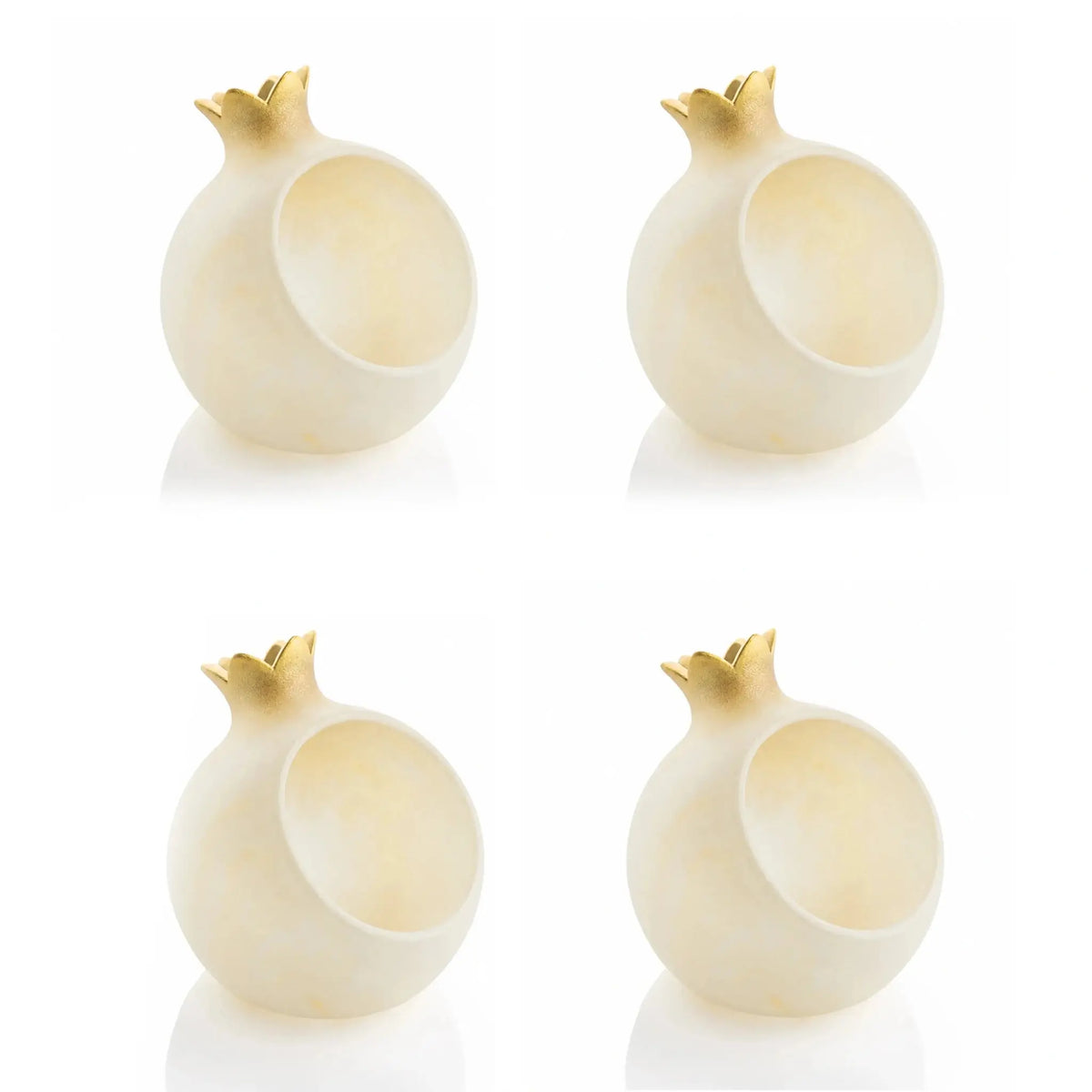
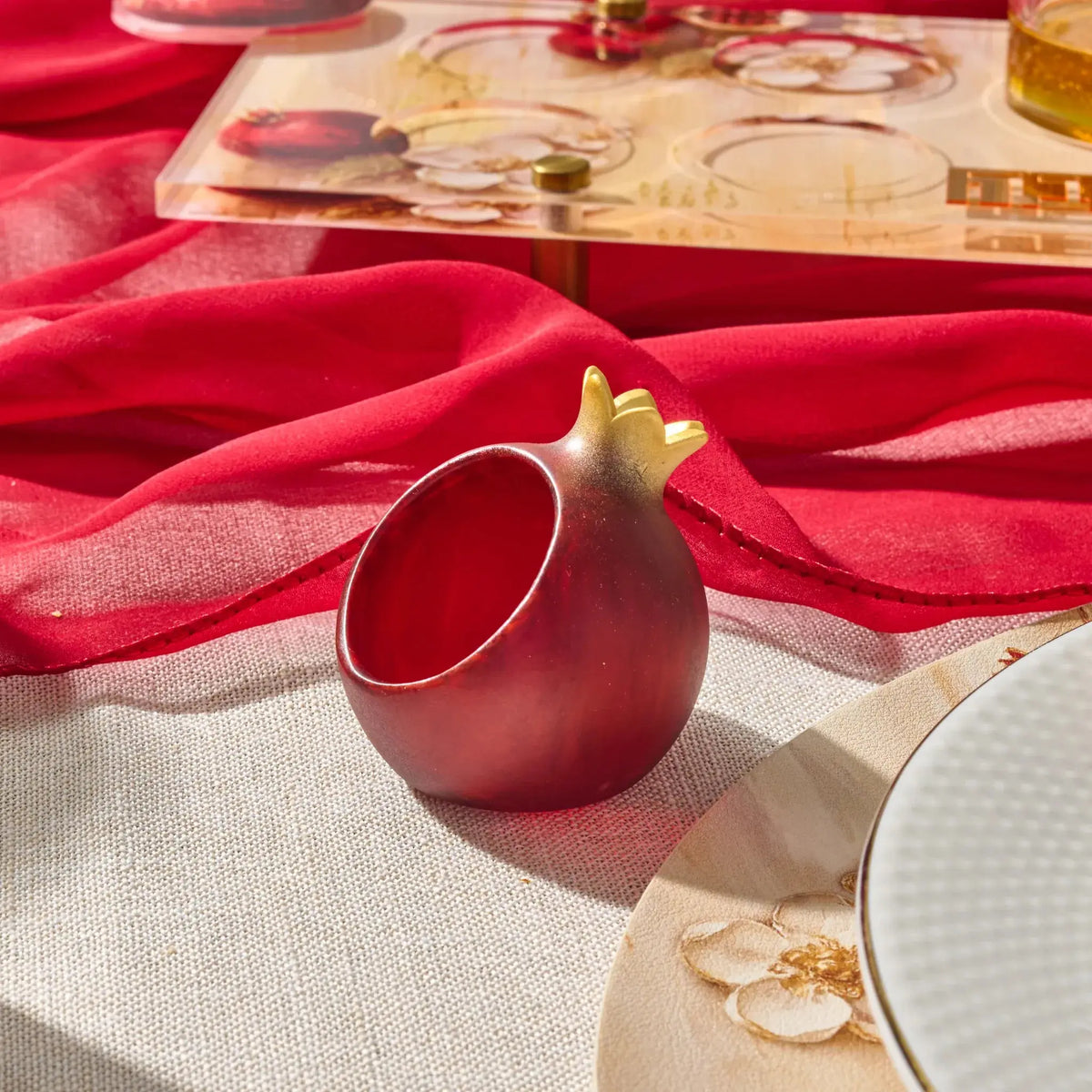
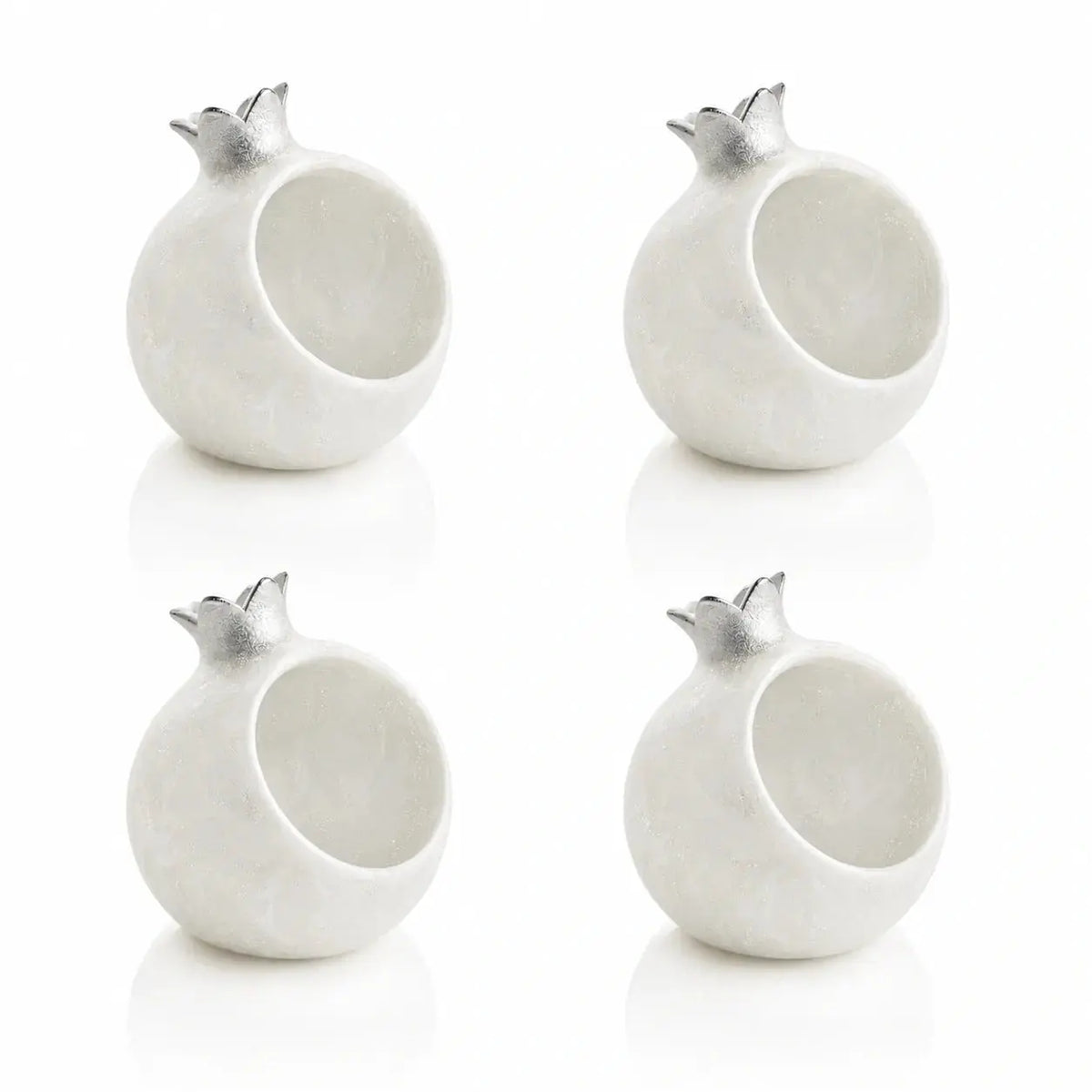
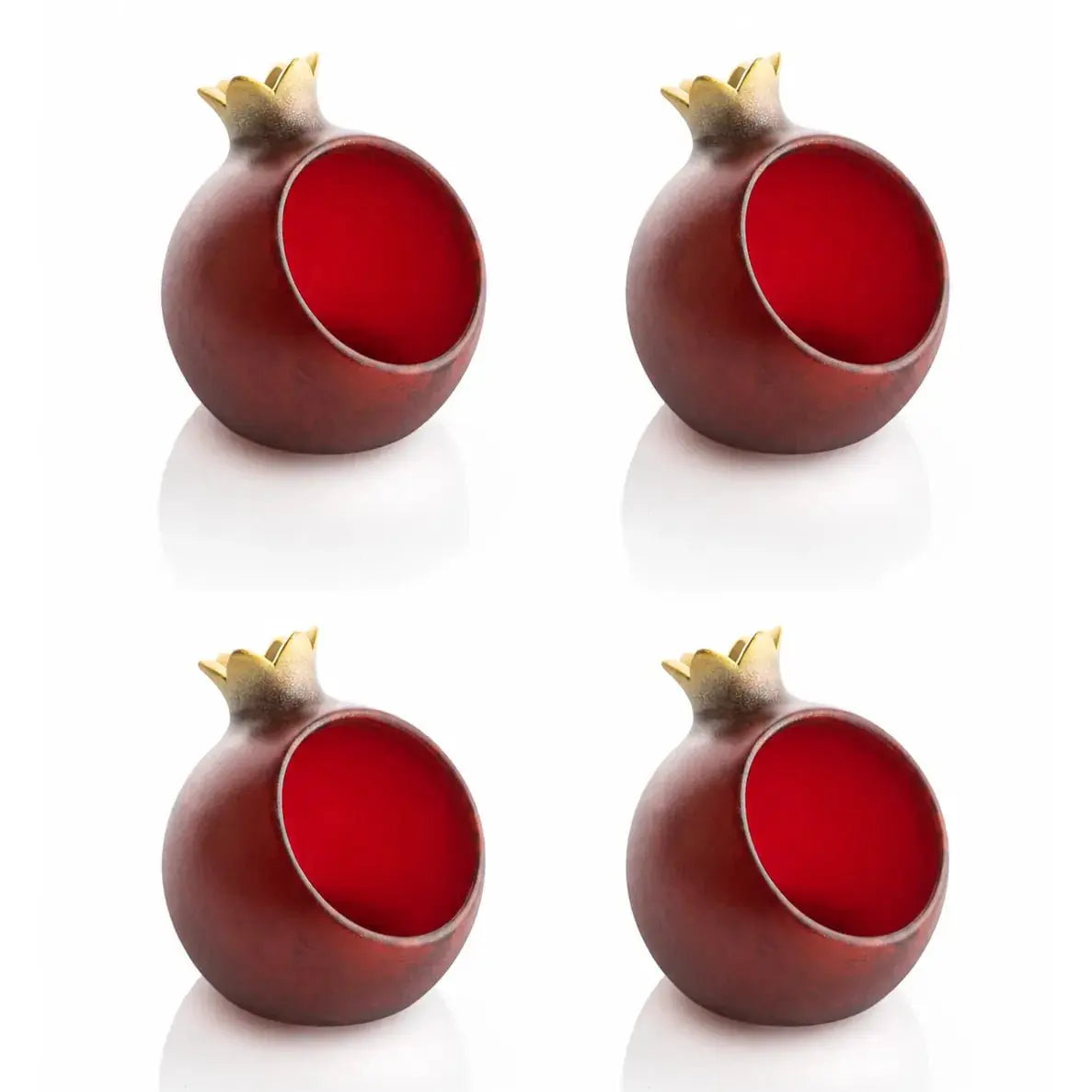
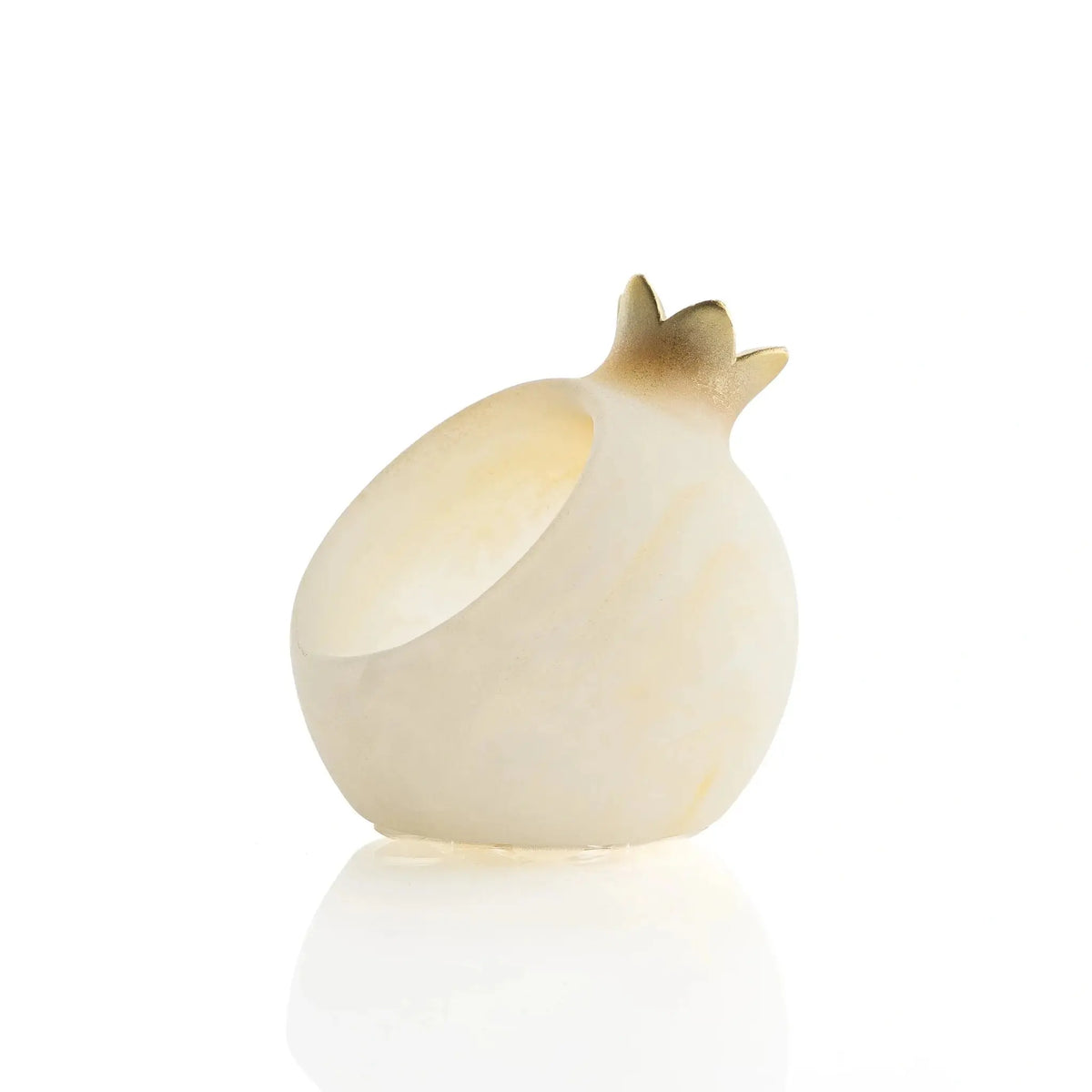
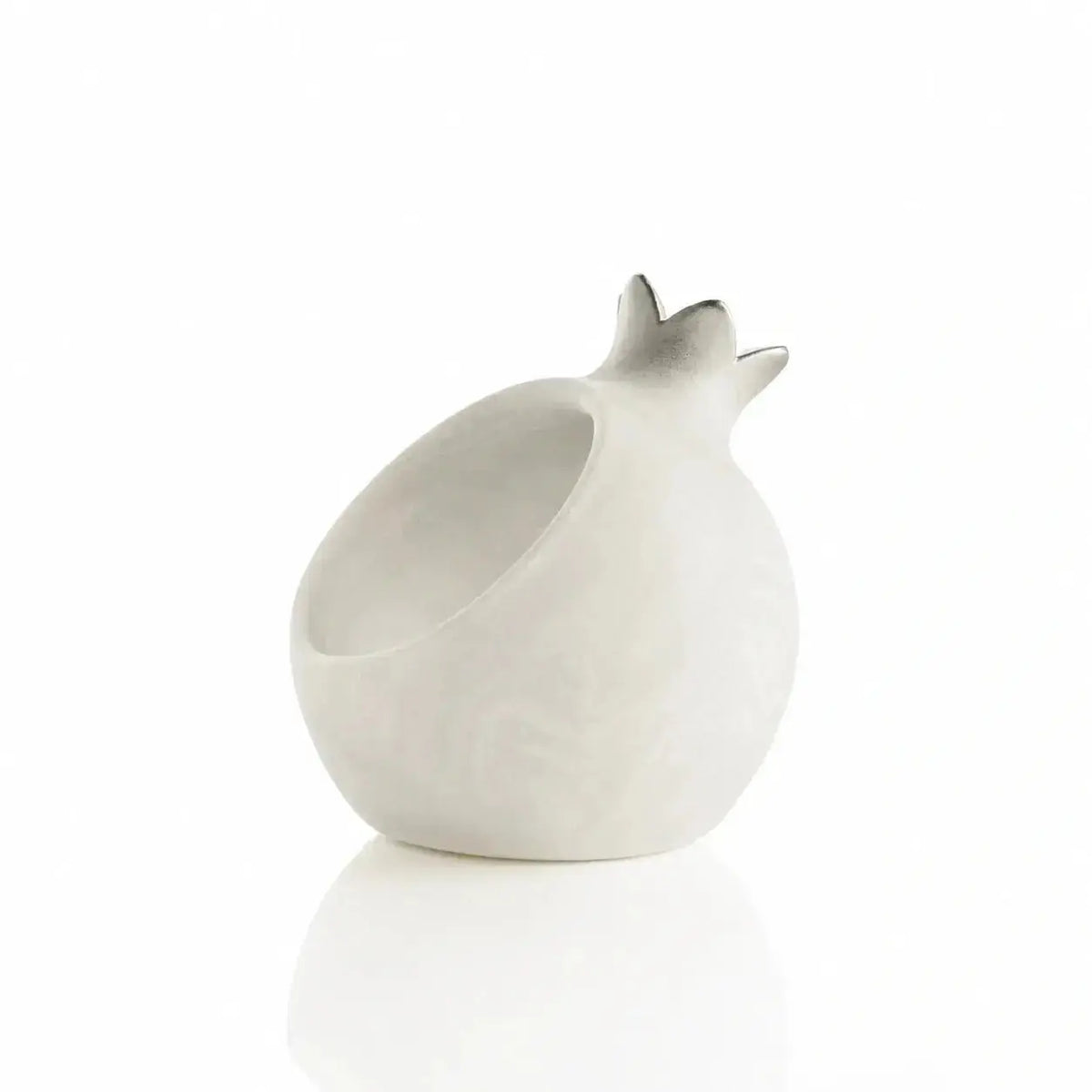
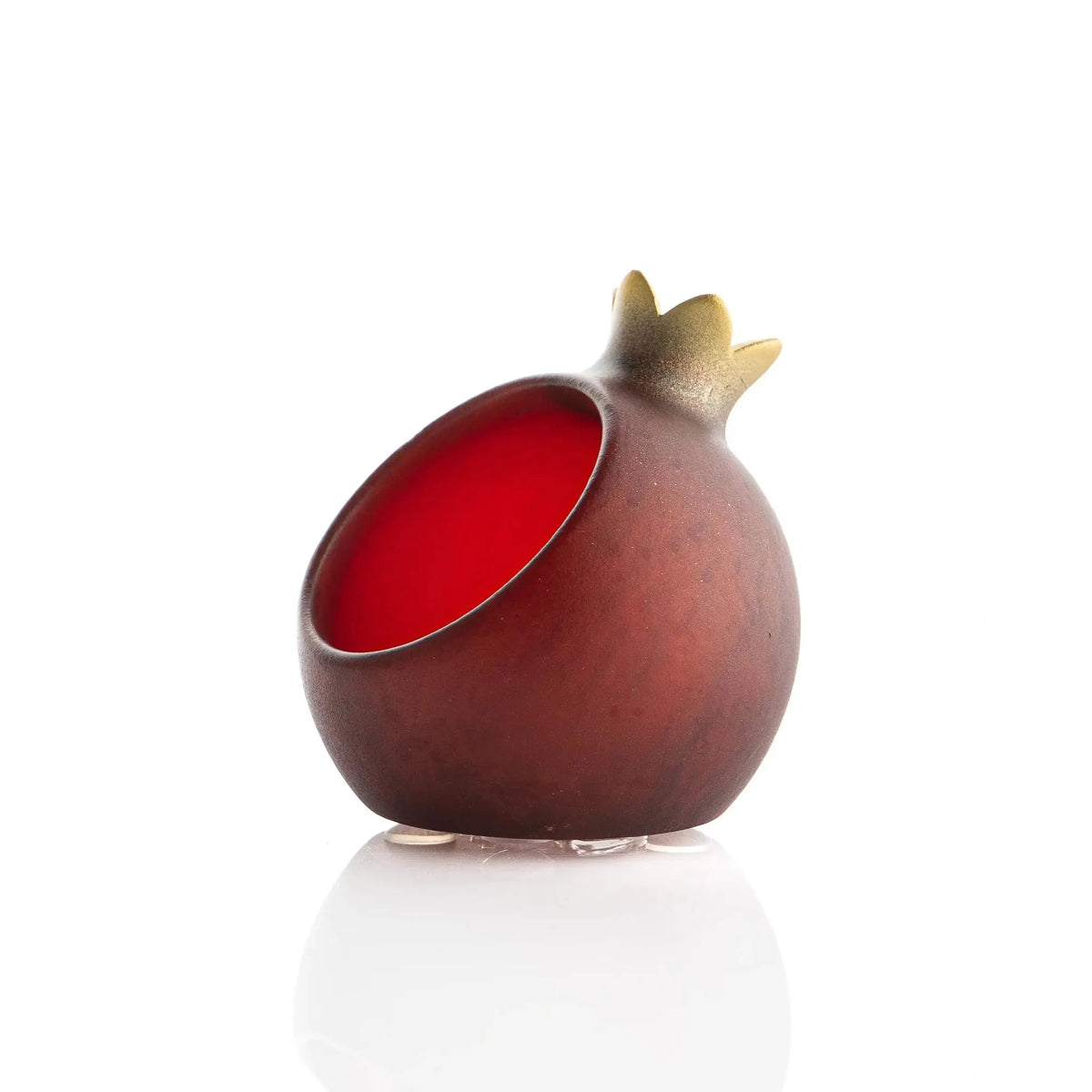
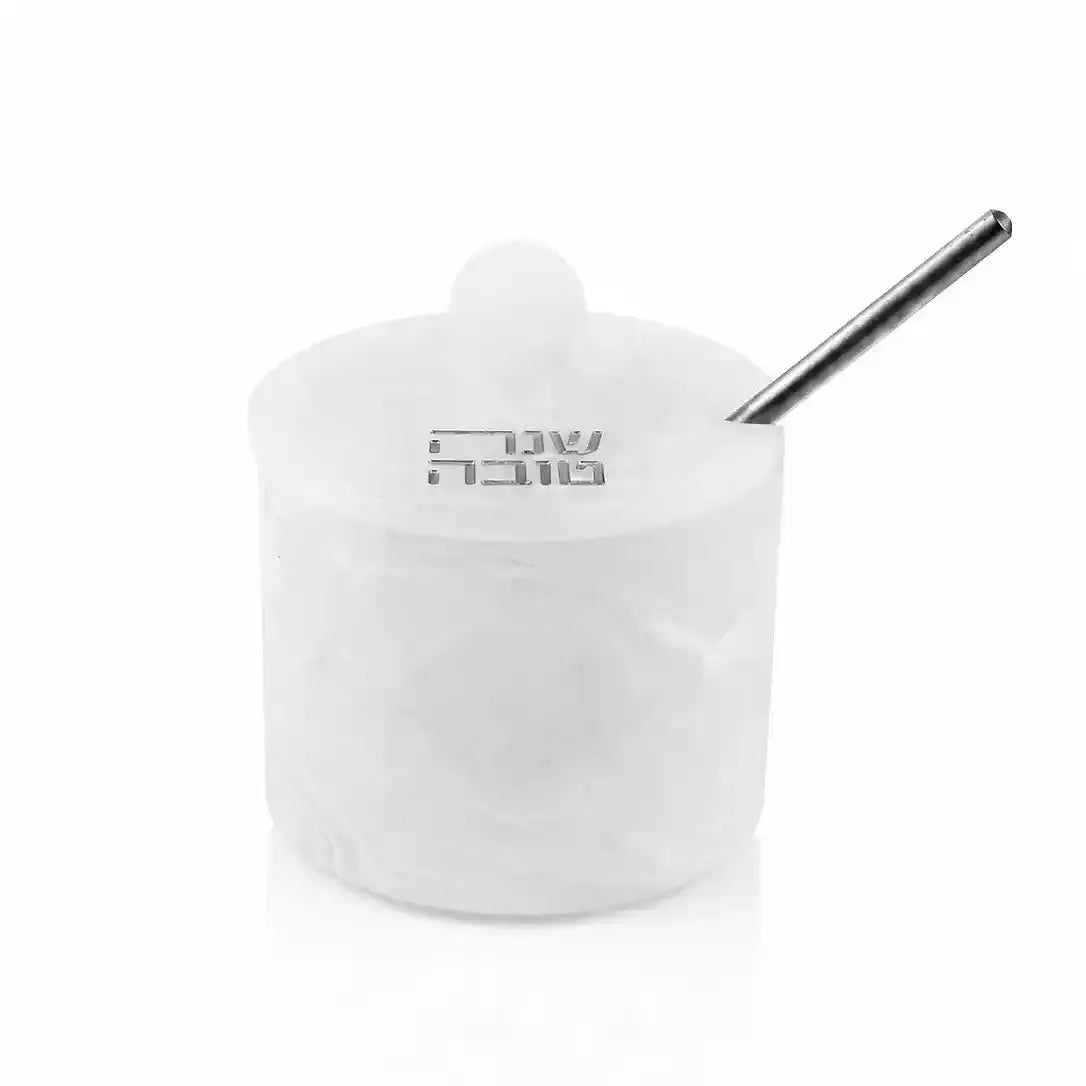
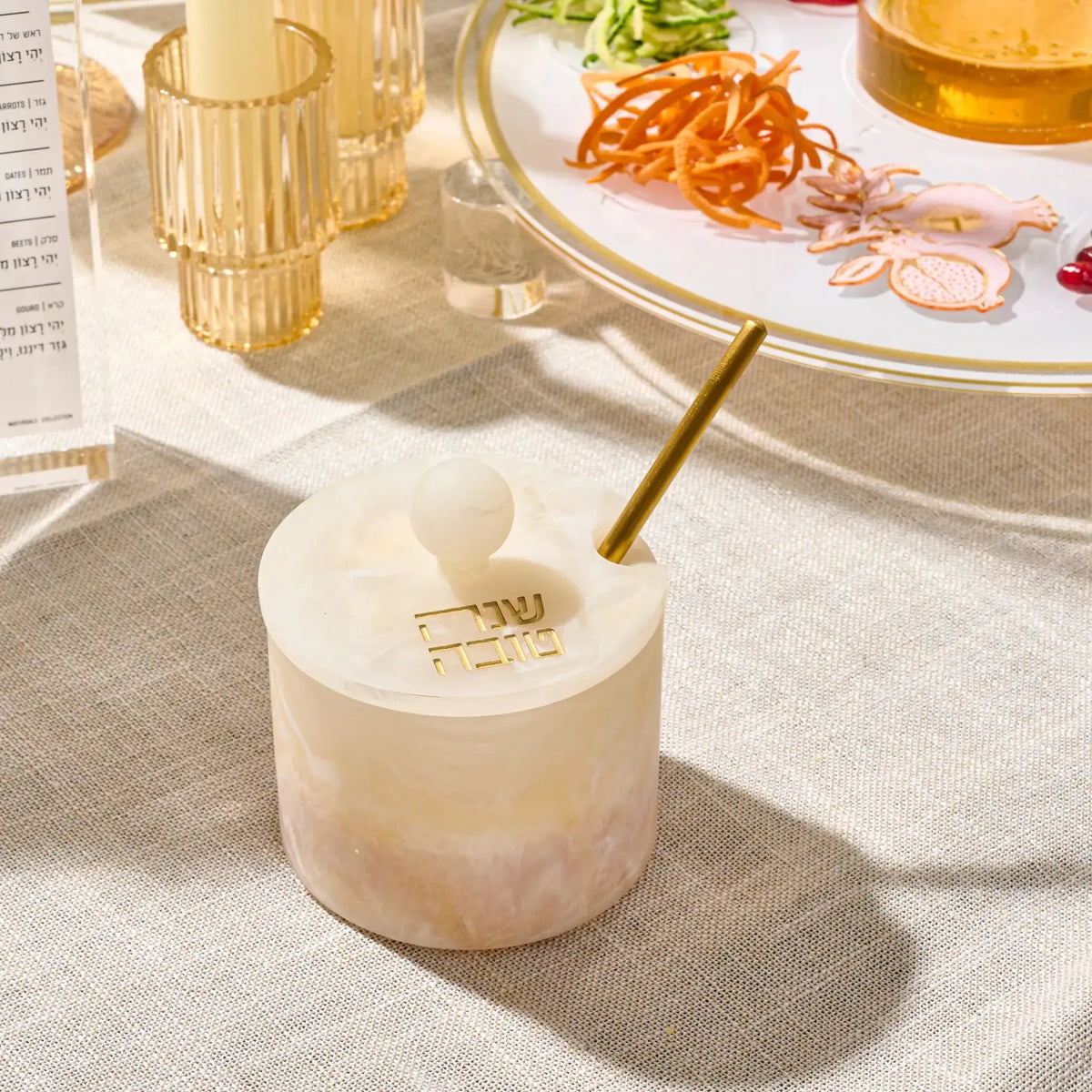
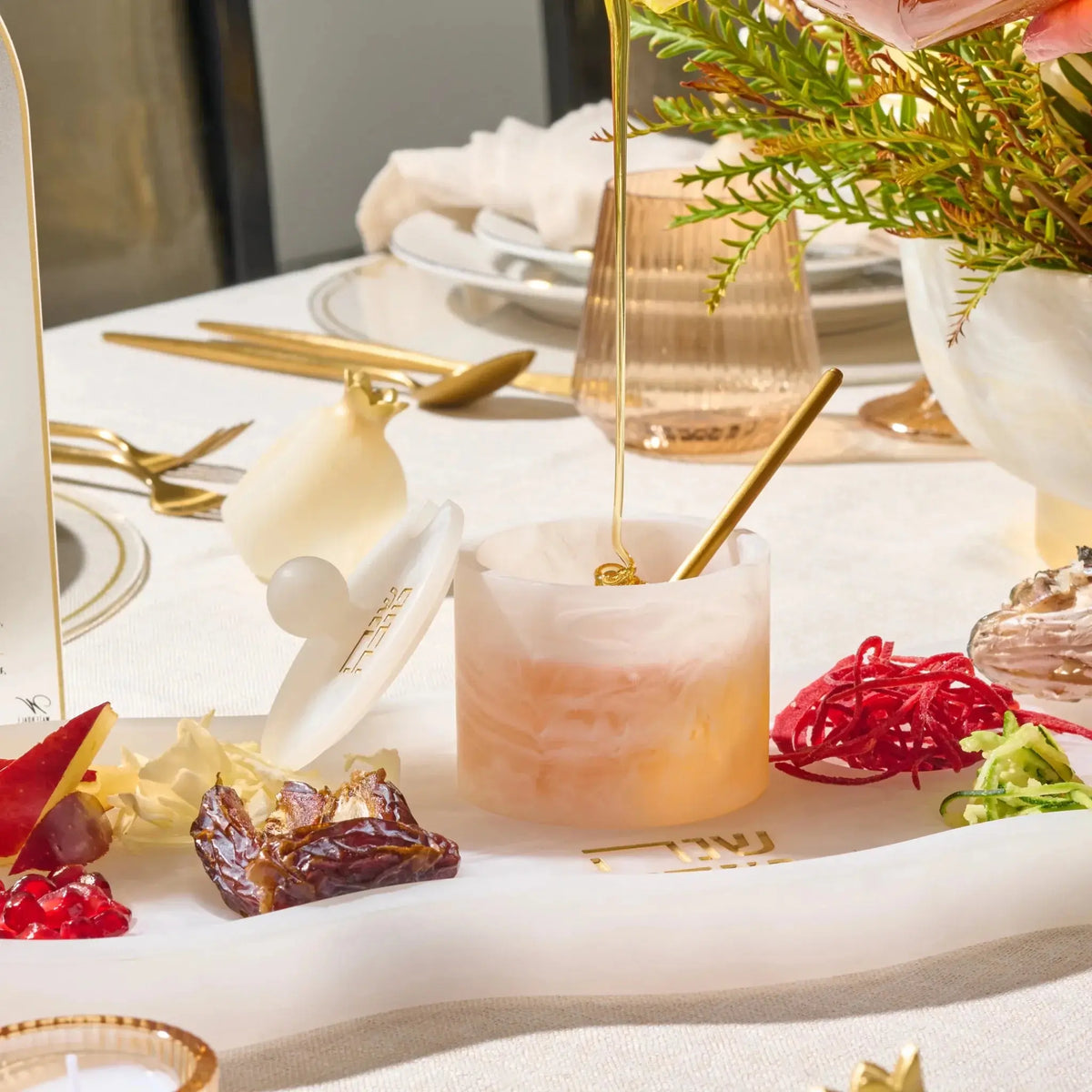
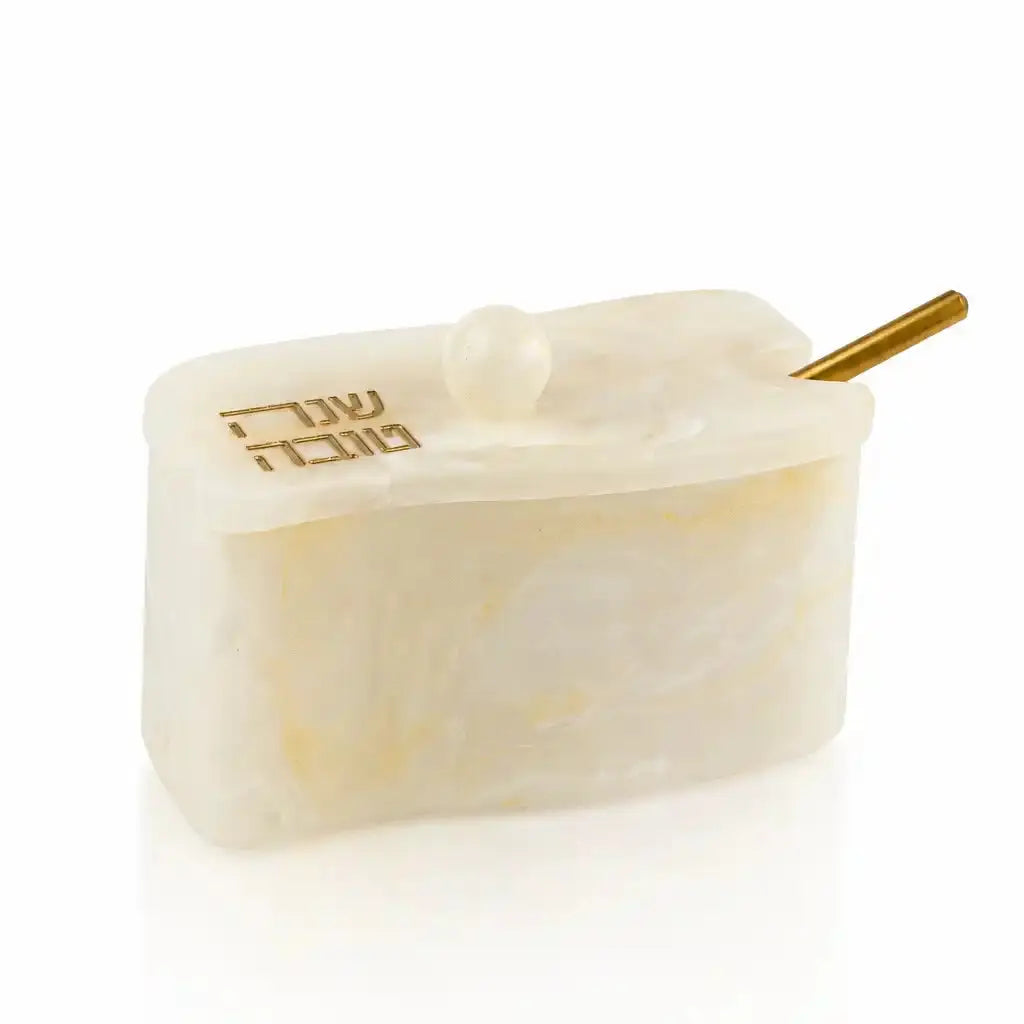
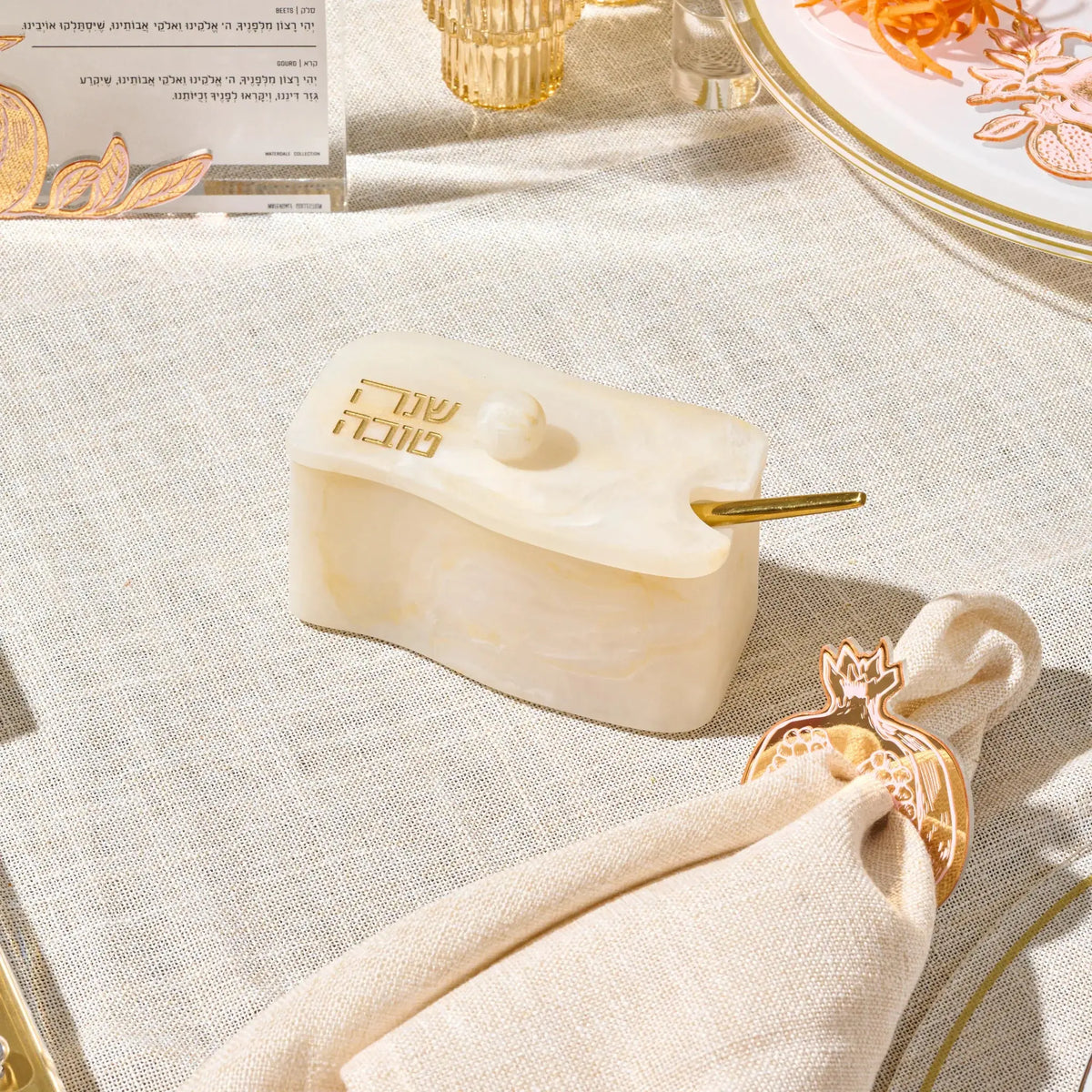
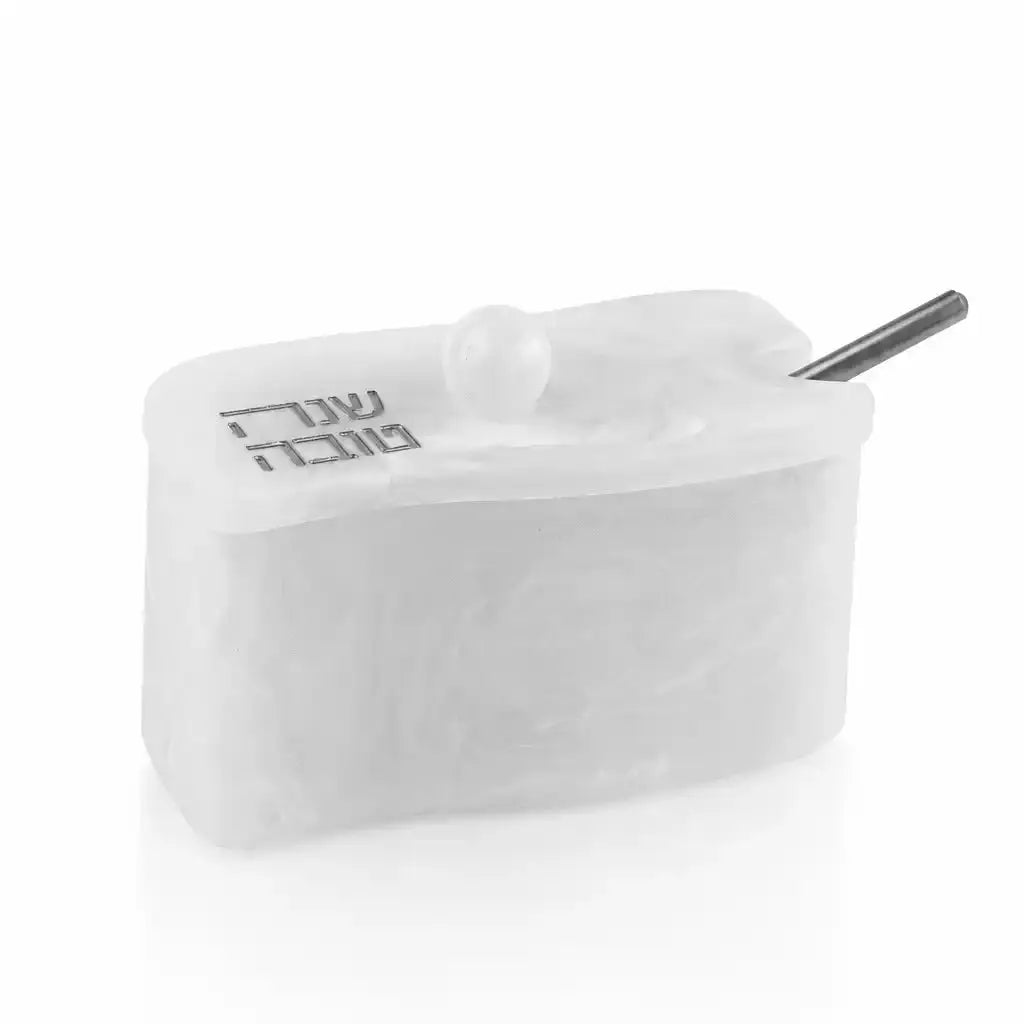
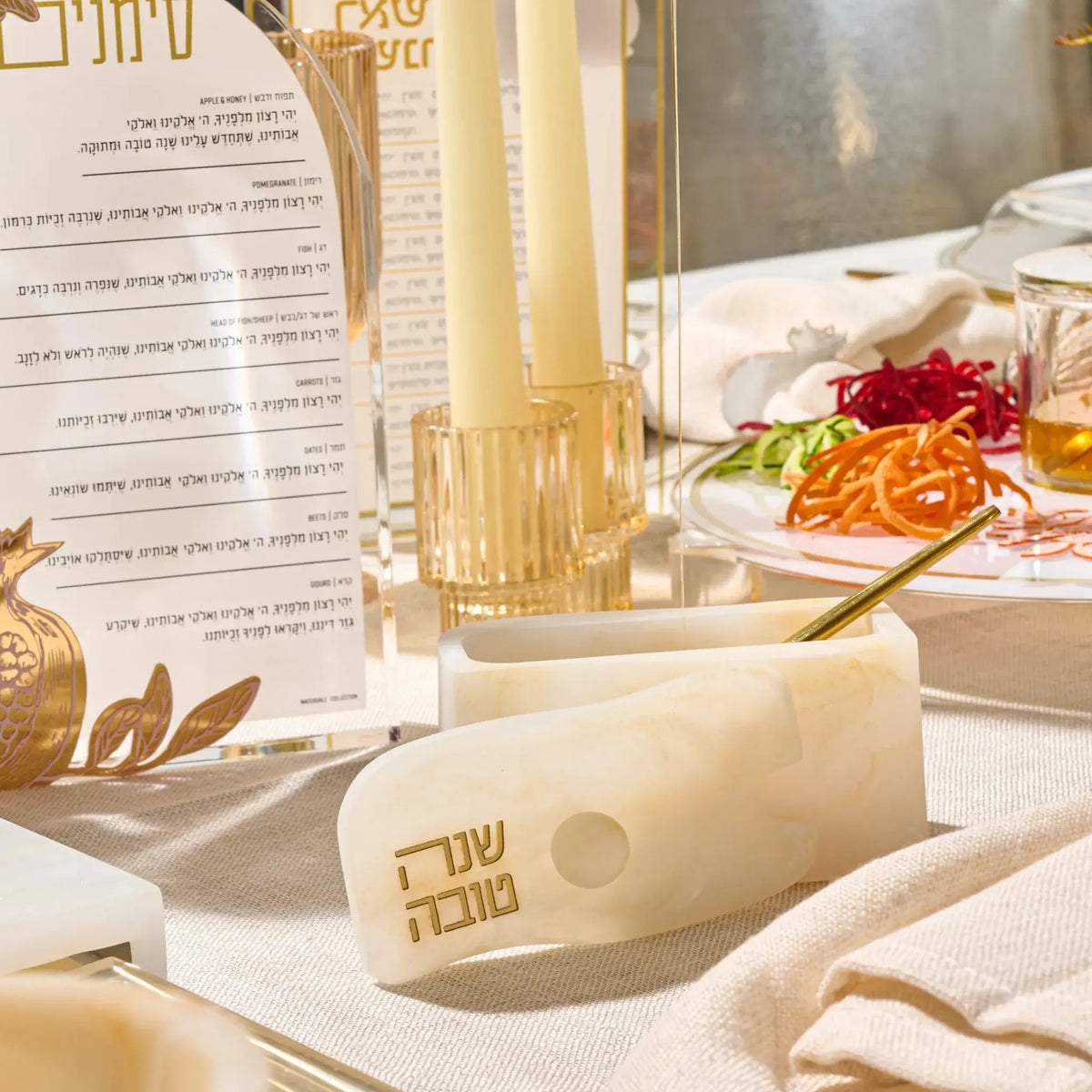
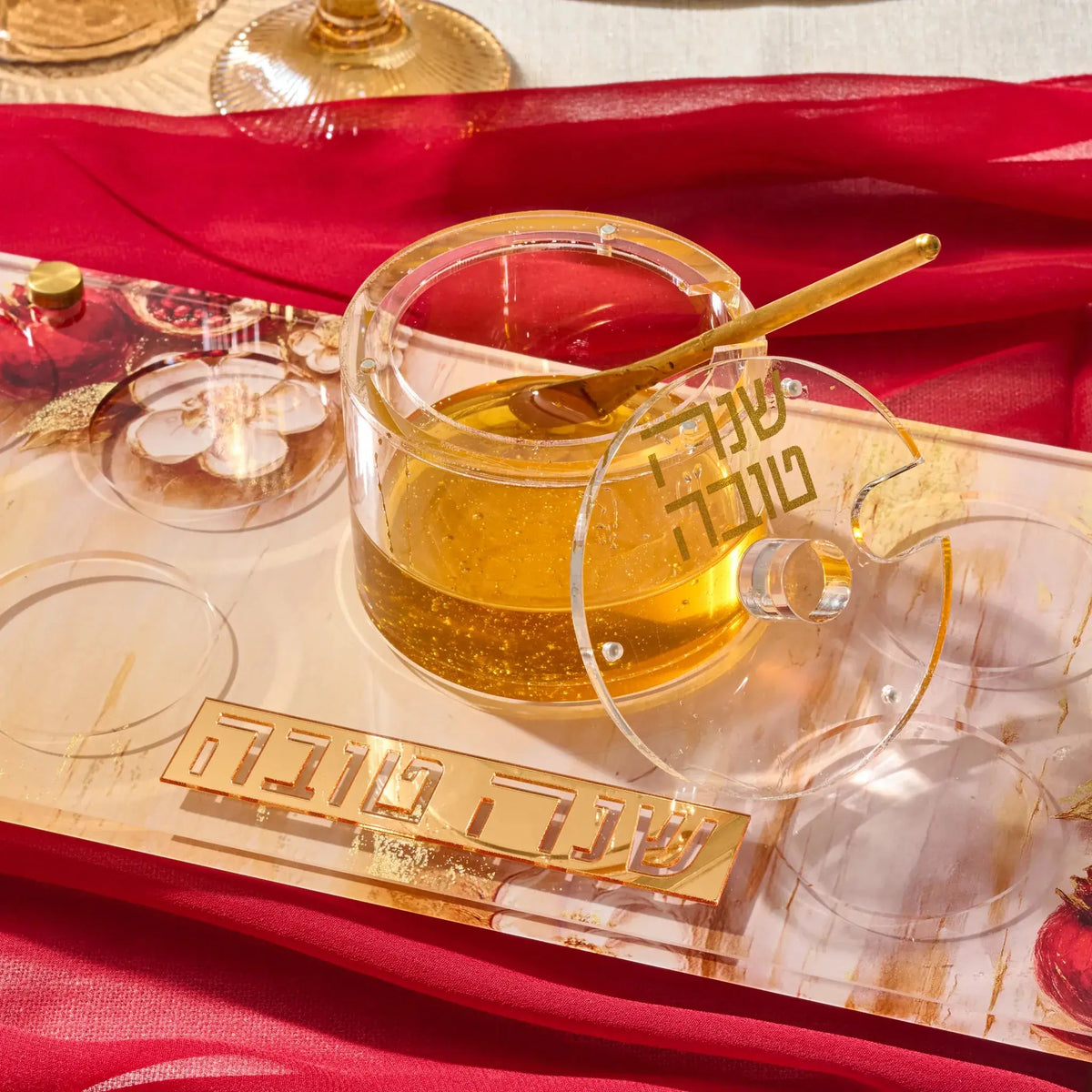
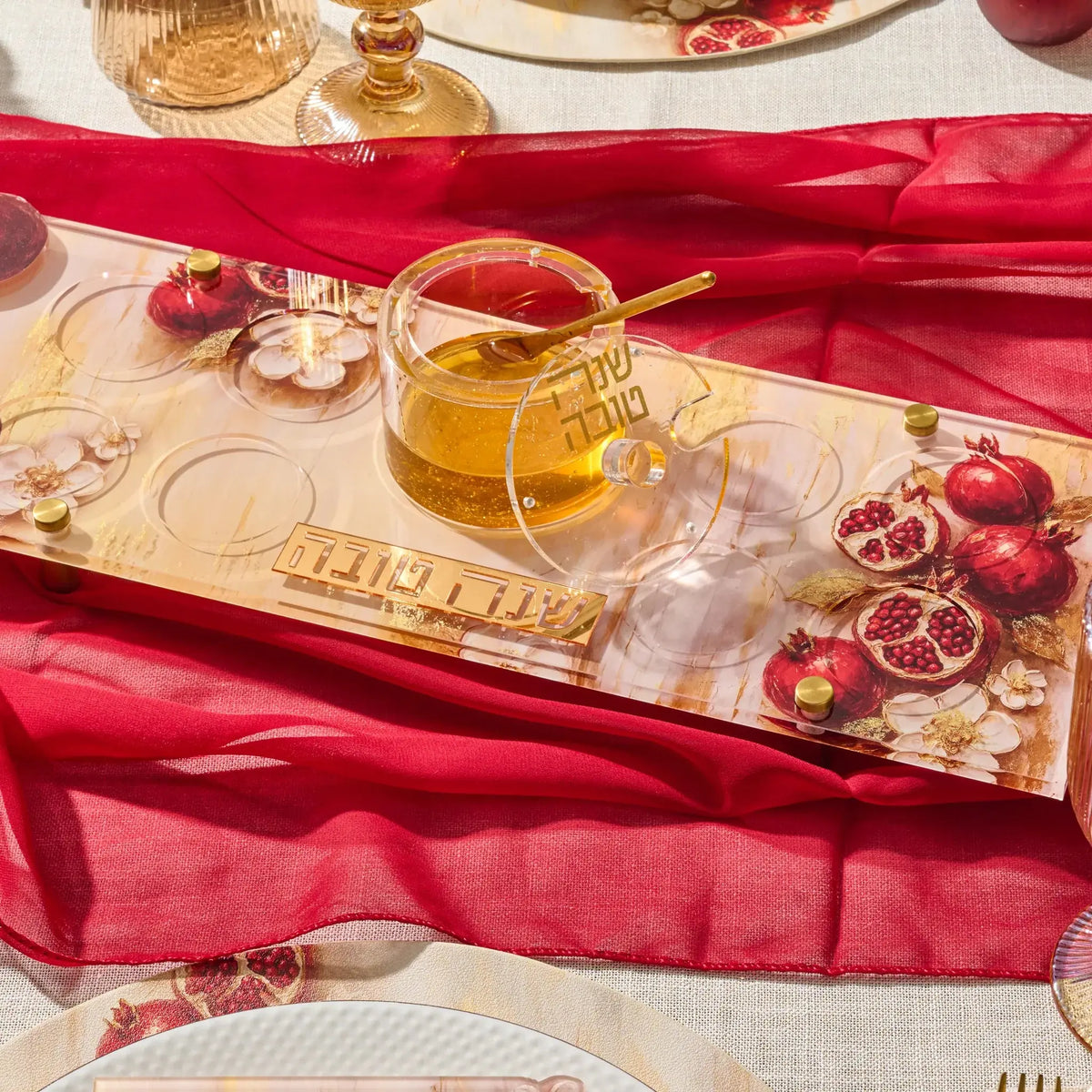
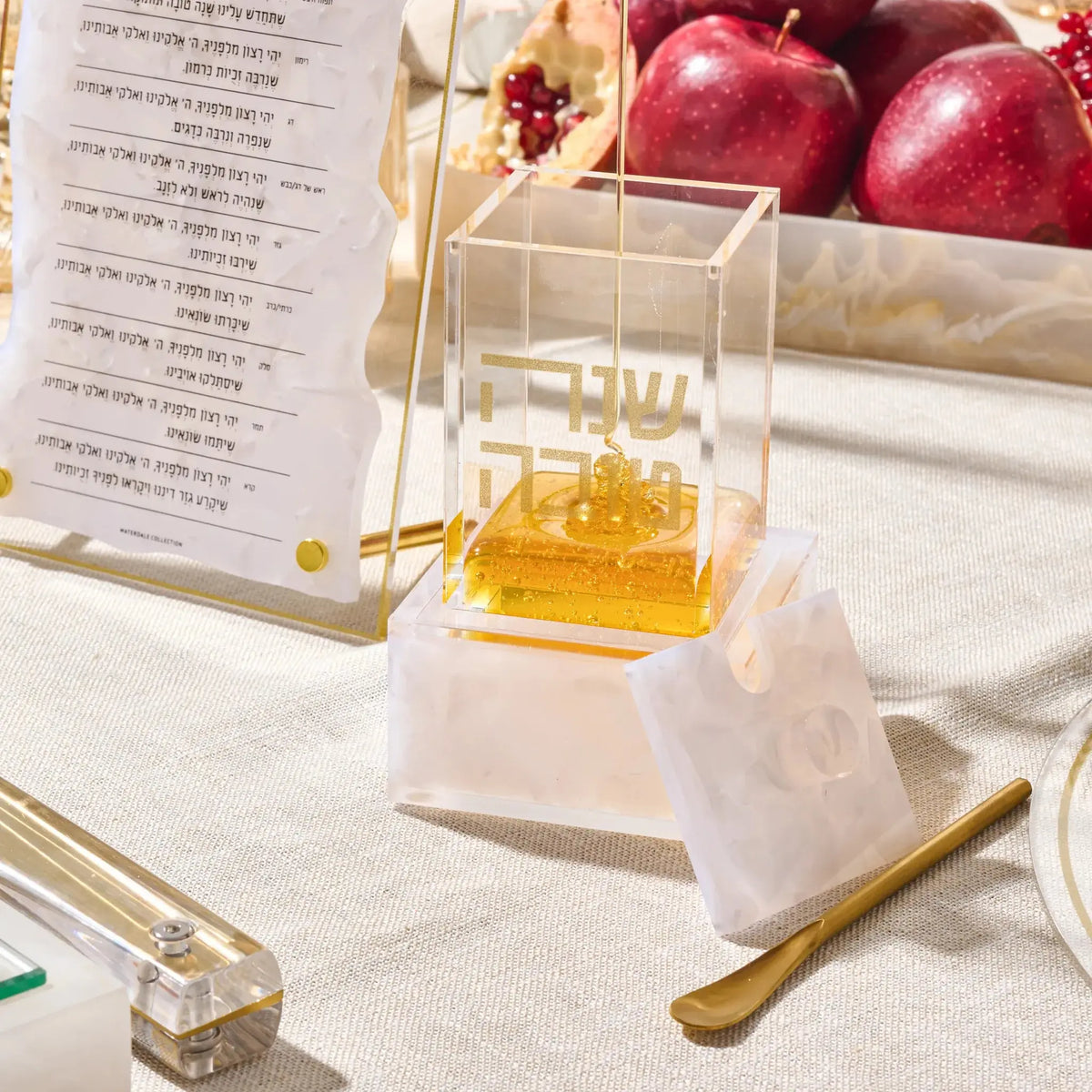
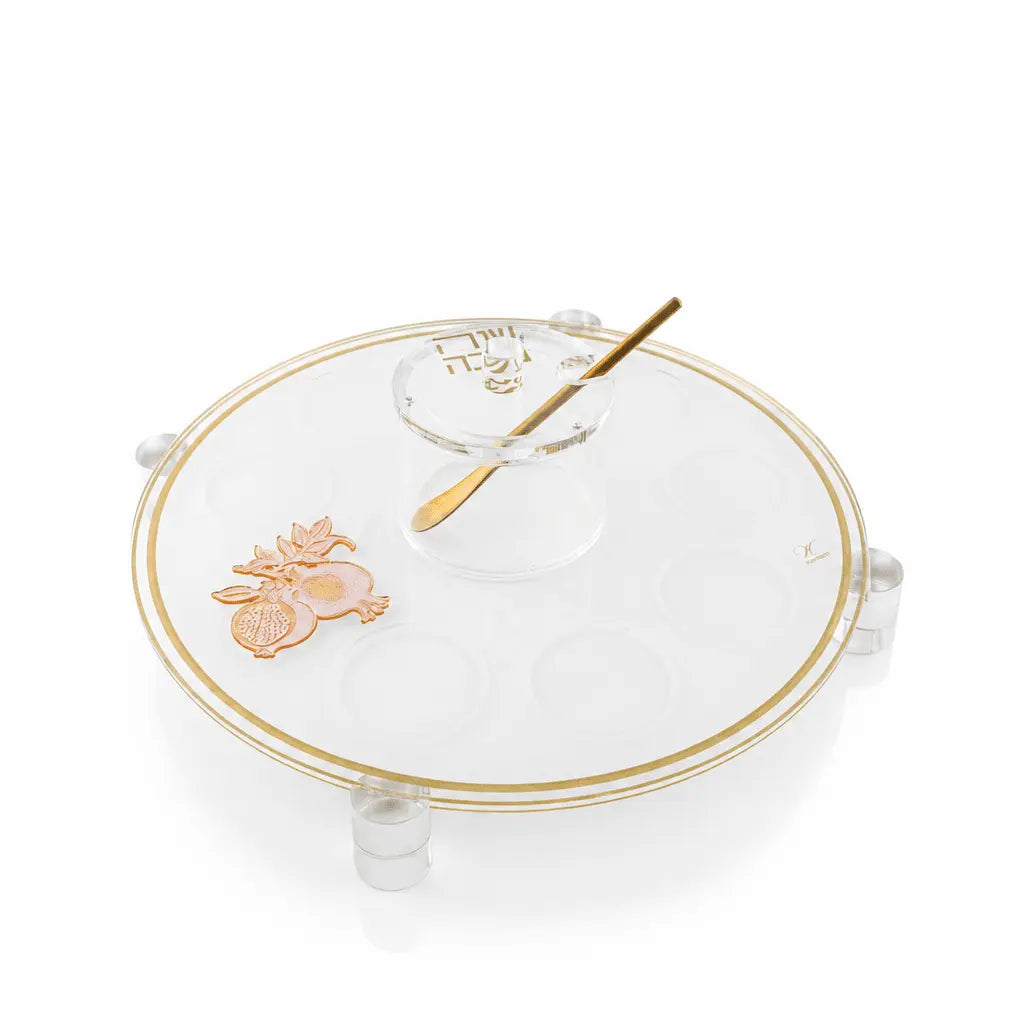
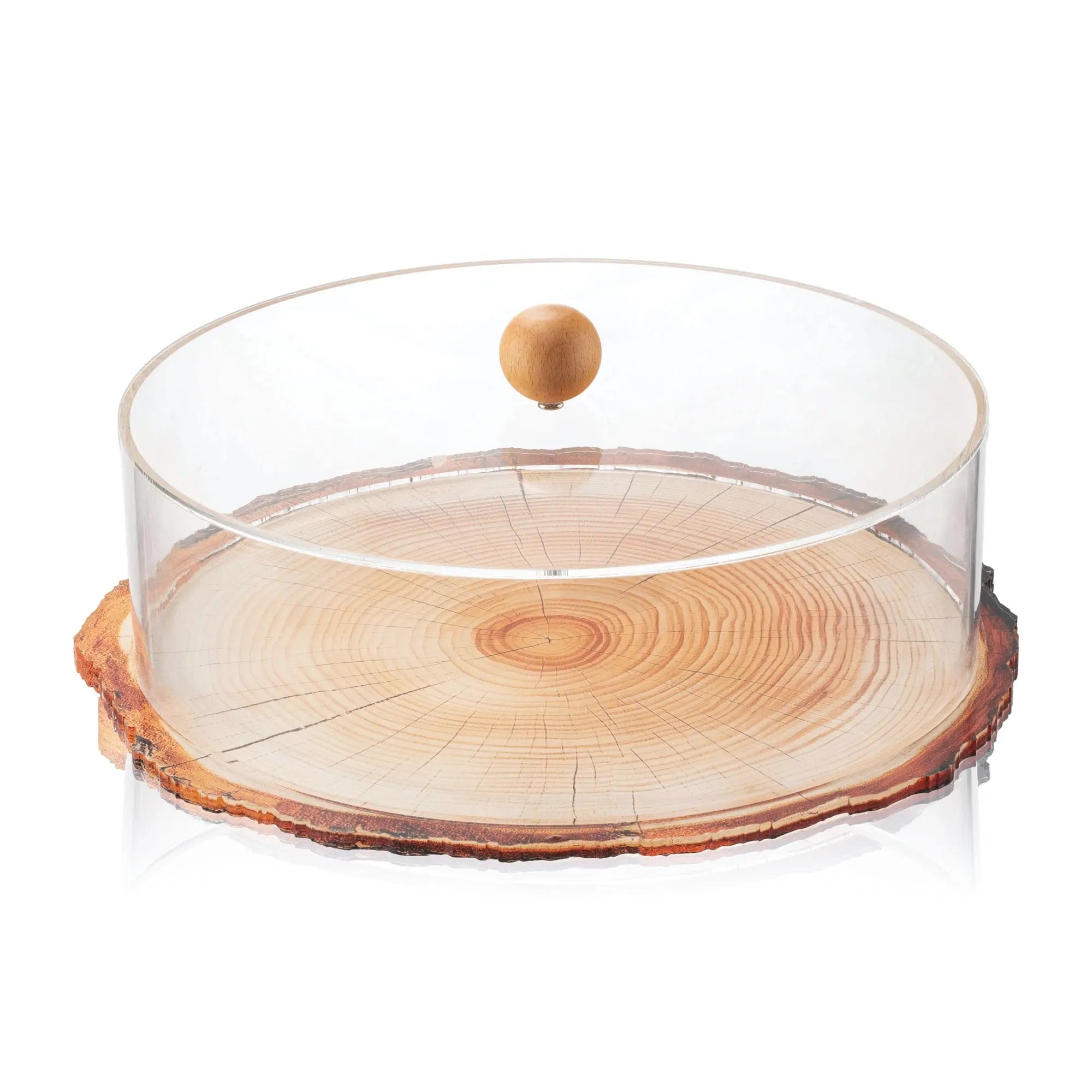
An acrylic honey dish or resin honey dish is the practical favorite — it won't chip like ceramic or glass, wipes clean of sticky honey in seconds, and keeps its polished, modern look year after year. The Waterdale Rosh Hashana 2026 collection includes a classic resin honey dish, round resin honey dish, painted pomegranate honey dish, and pearl marble honey dish, so you can match any Rosh Hashanah table decor from classic to contemporary.
What are the simanim for Rosh Hashanah?
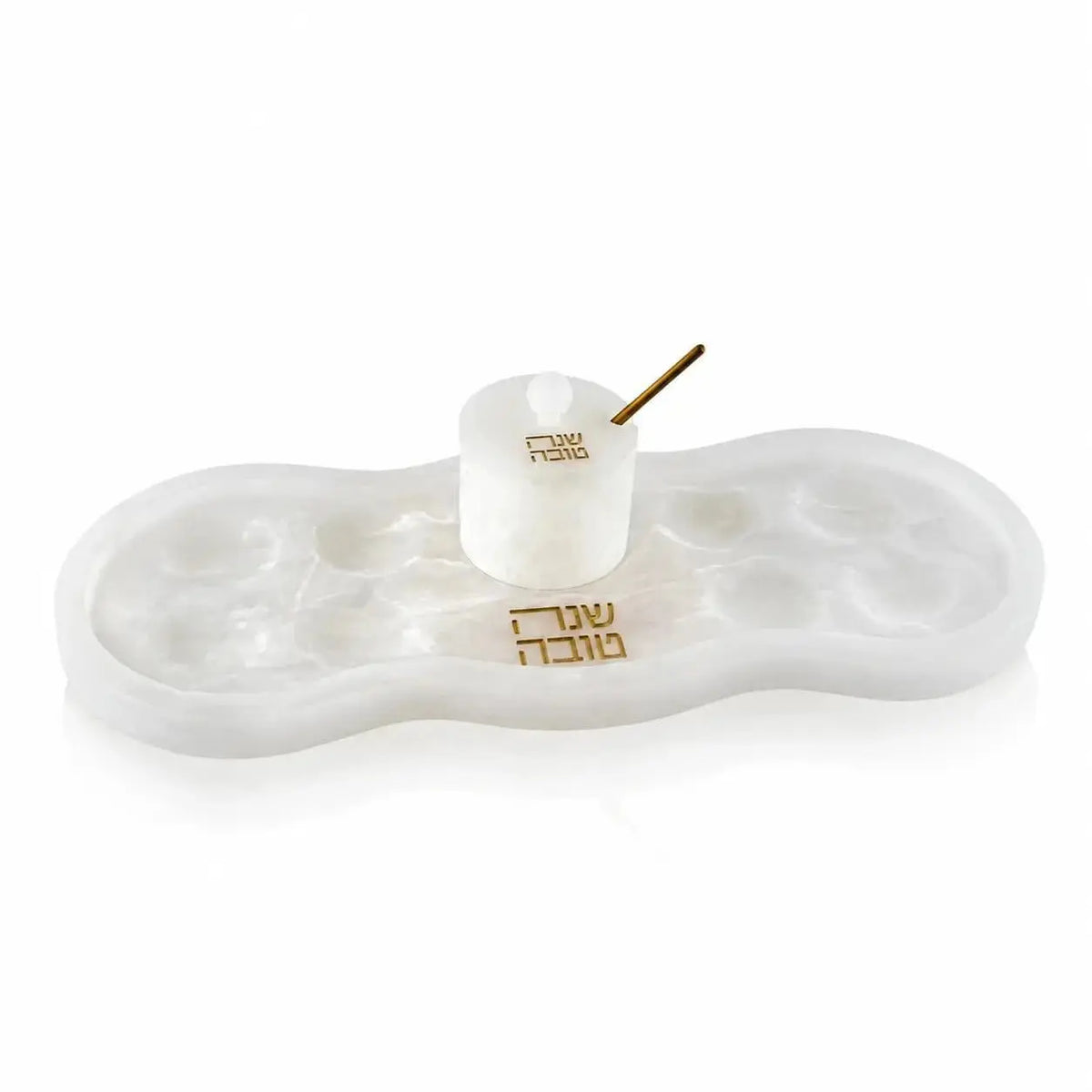
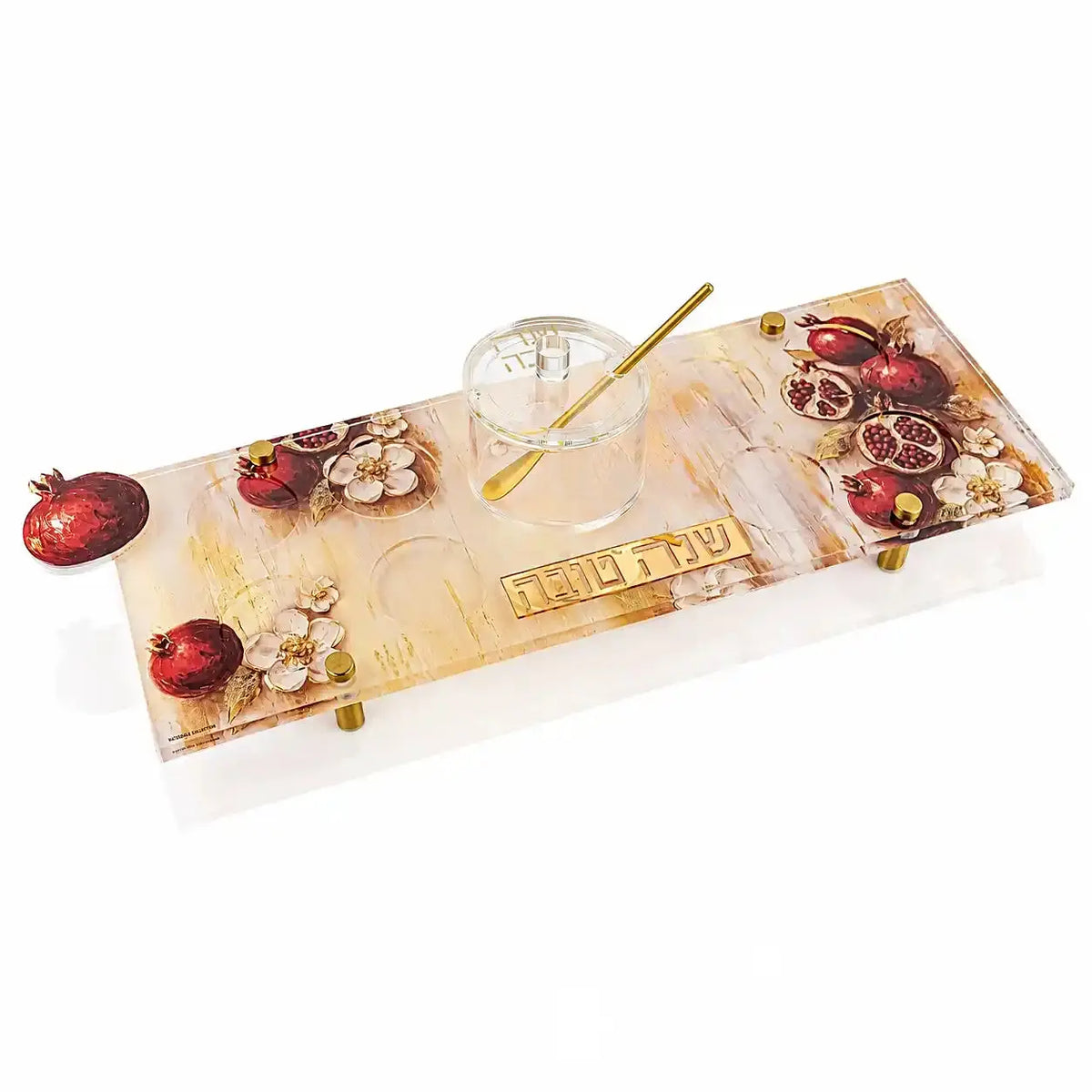
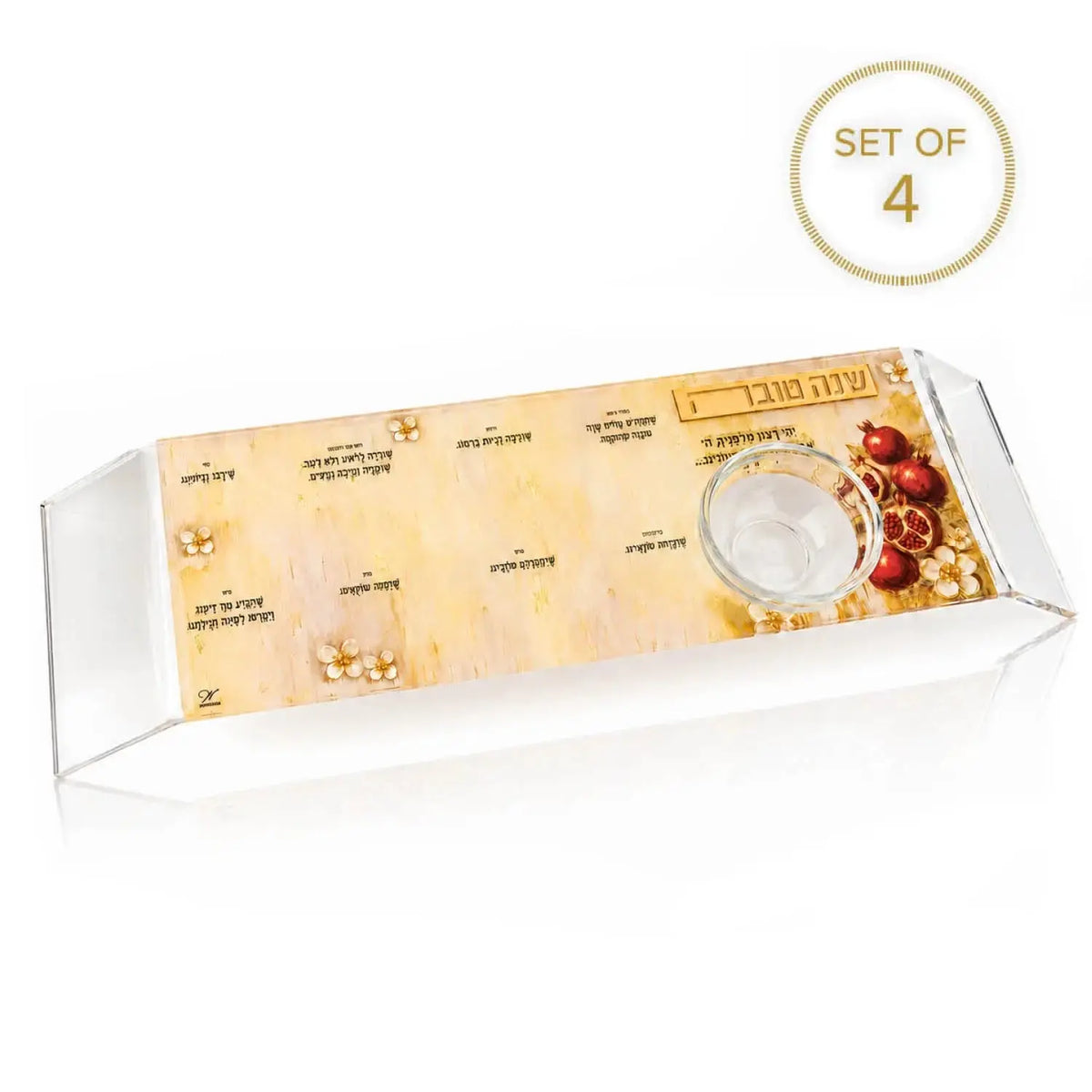
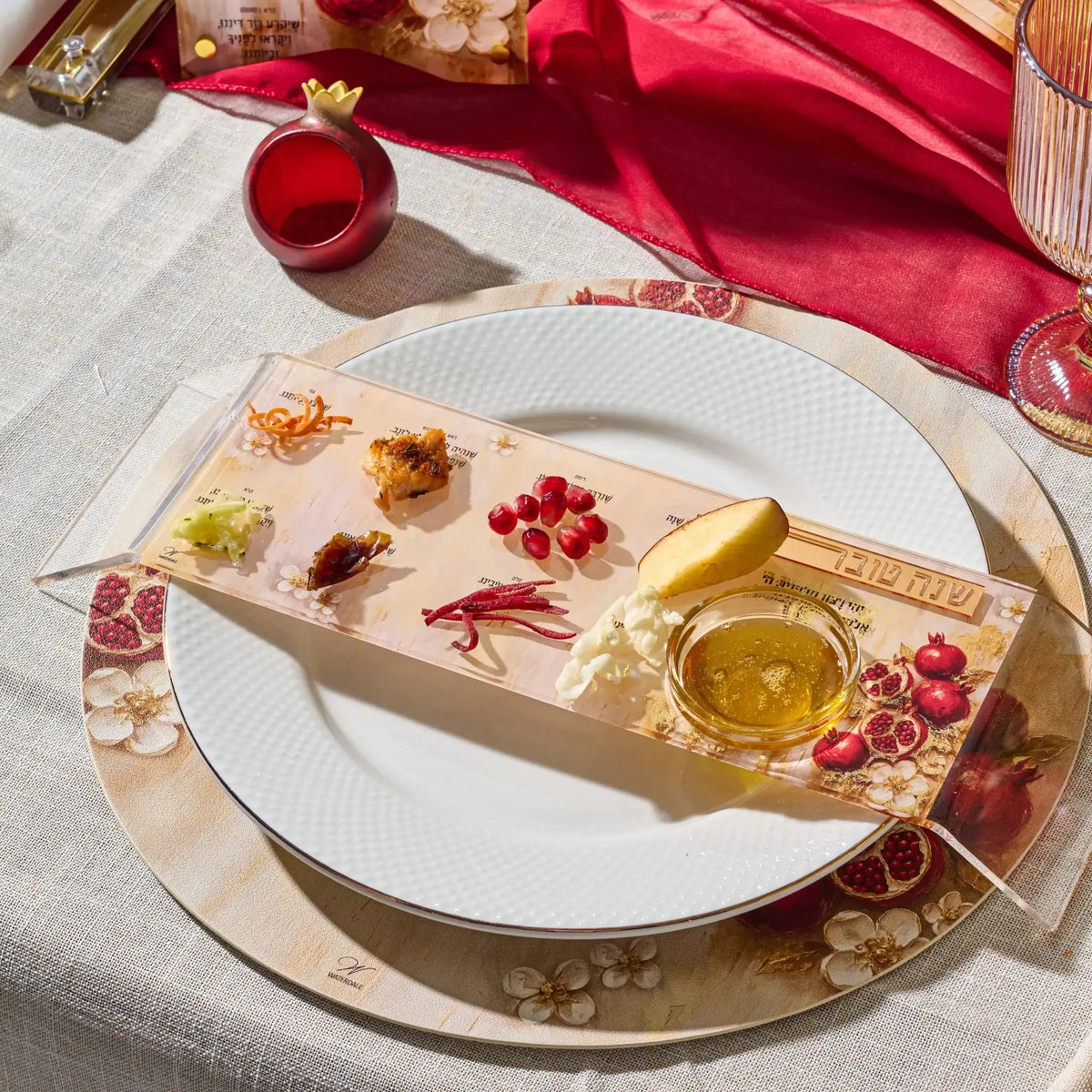
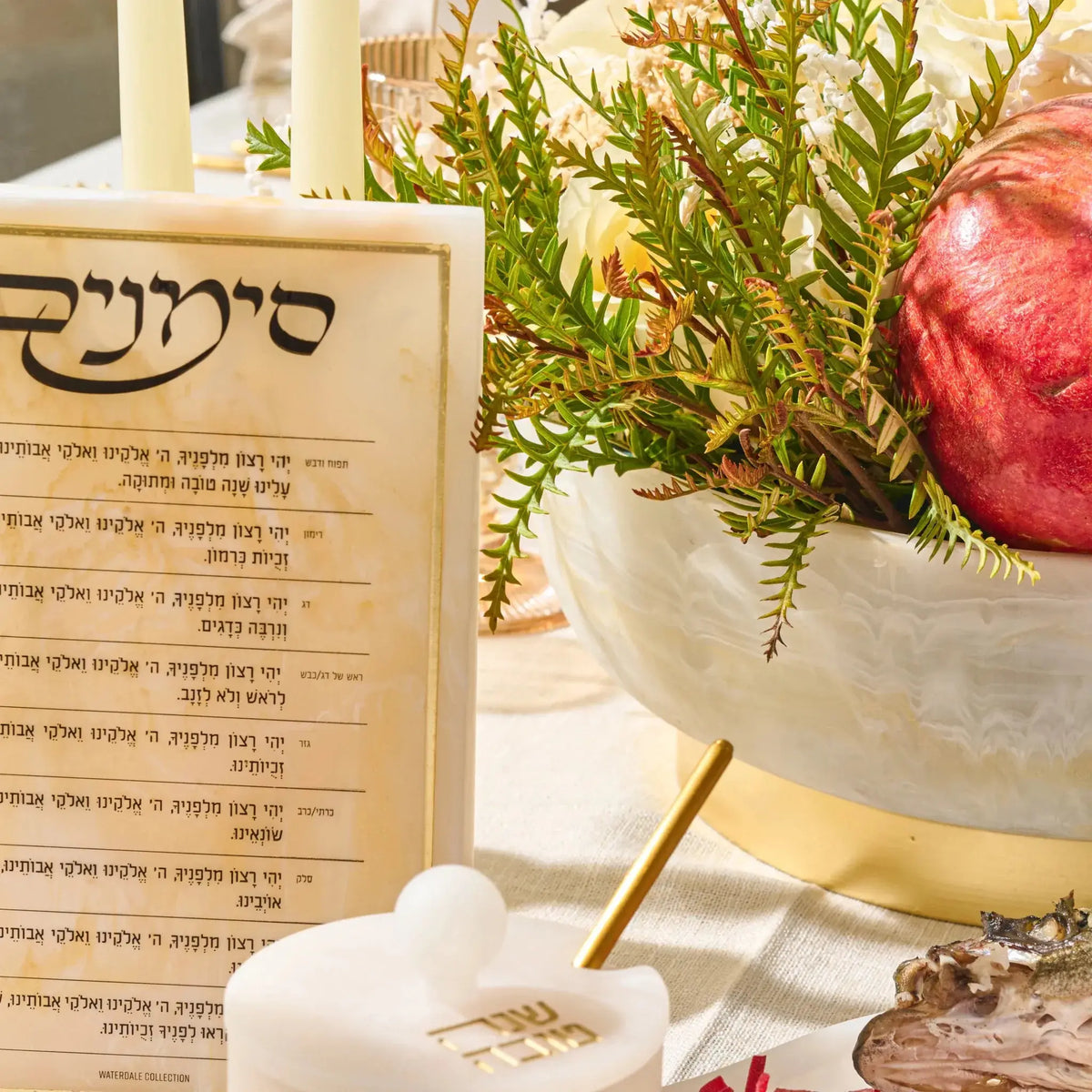
The simanim are the symbolic foods eaten at the Rosh Hashanah seder on the night of the Jewish New Year, each one hinting at a blessing for the year ahead. The traditional simanim foods include apple dipped in honey, pomegranate, dates, leek, gourd, beets, black-eyed peas (rubia), and a fish head or head of lamb. A sectioned simanim tray with a spot for each symbolic food makes it easy to present all the simanim at once.
What is the order of the simanim for Rosh Hashanah?
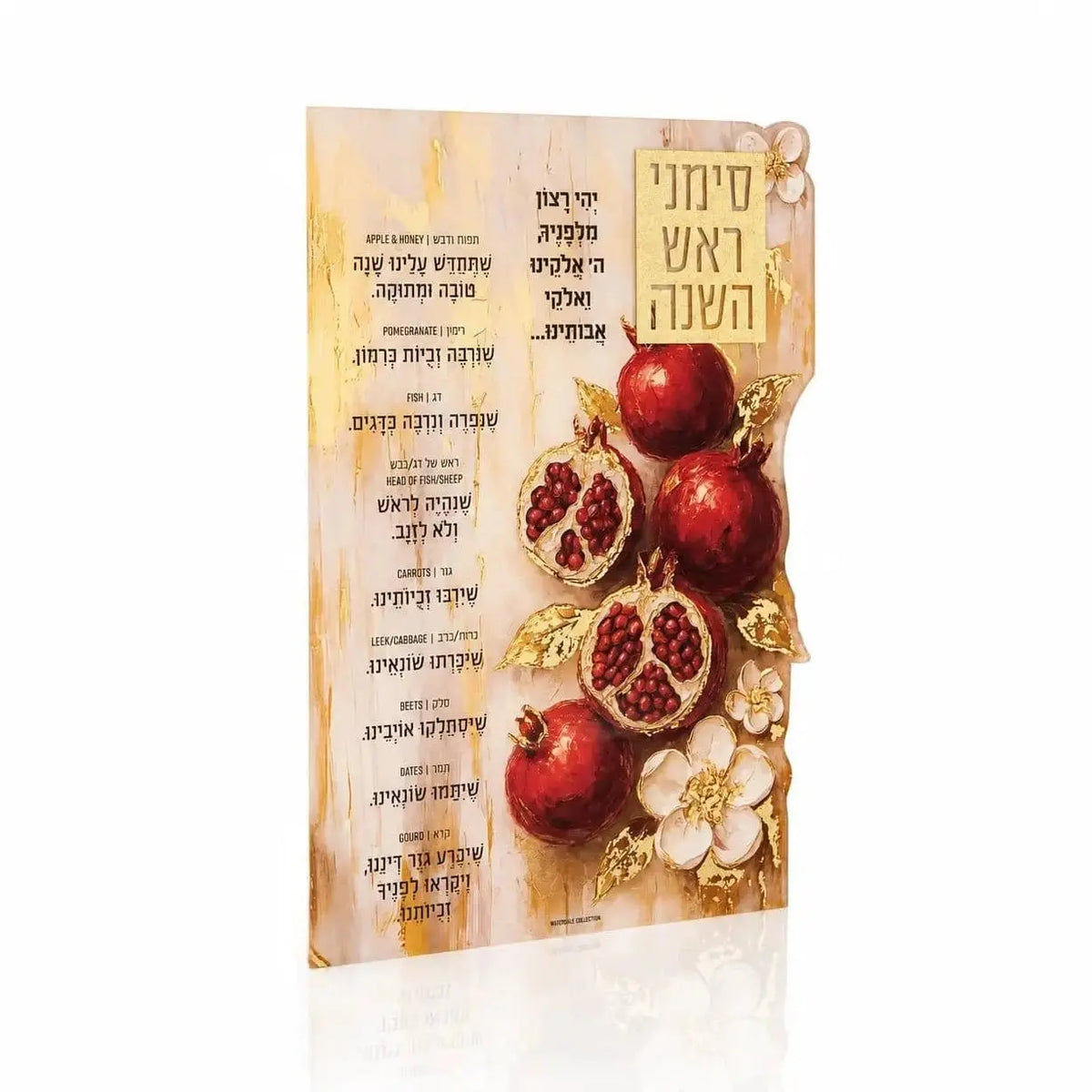
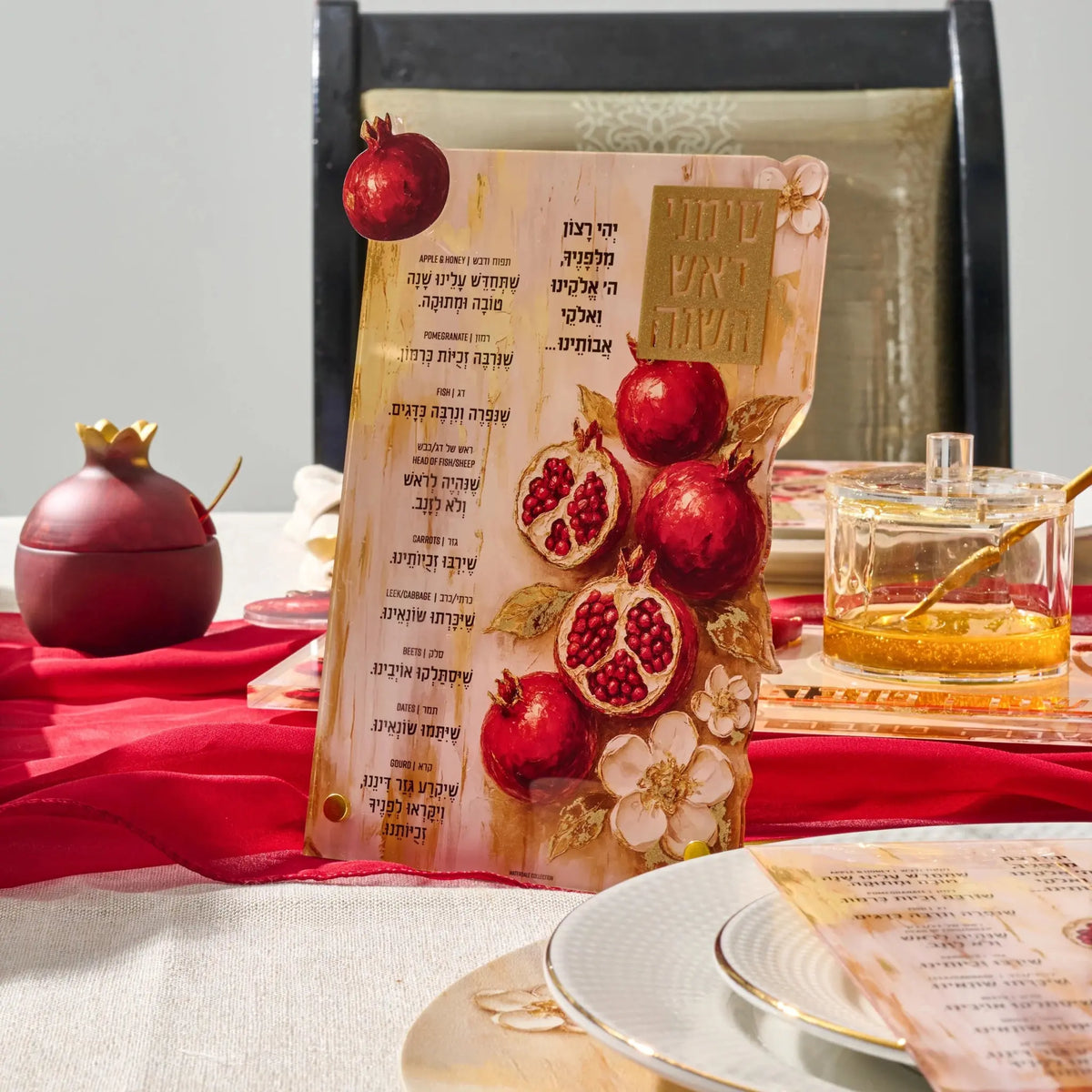
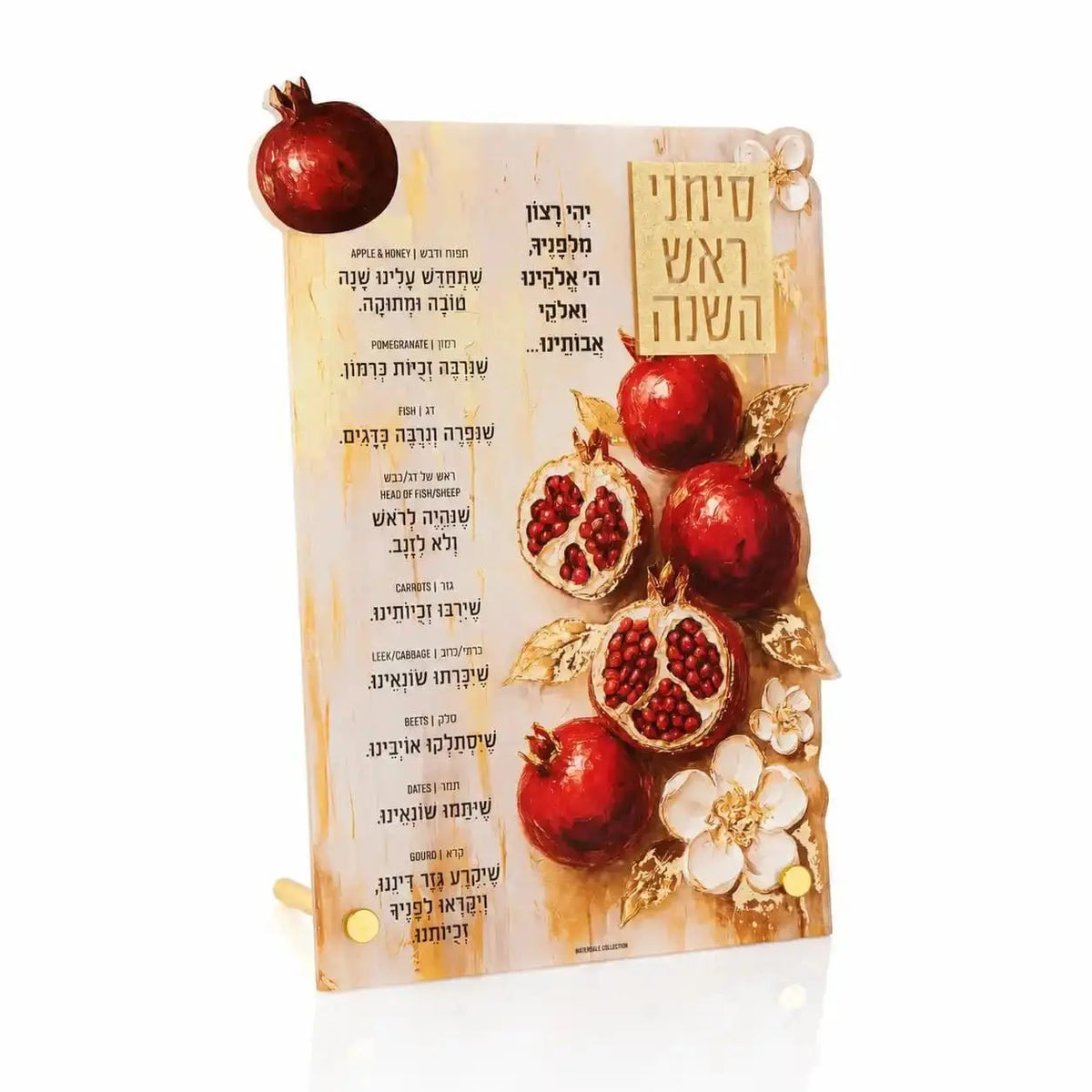
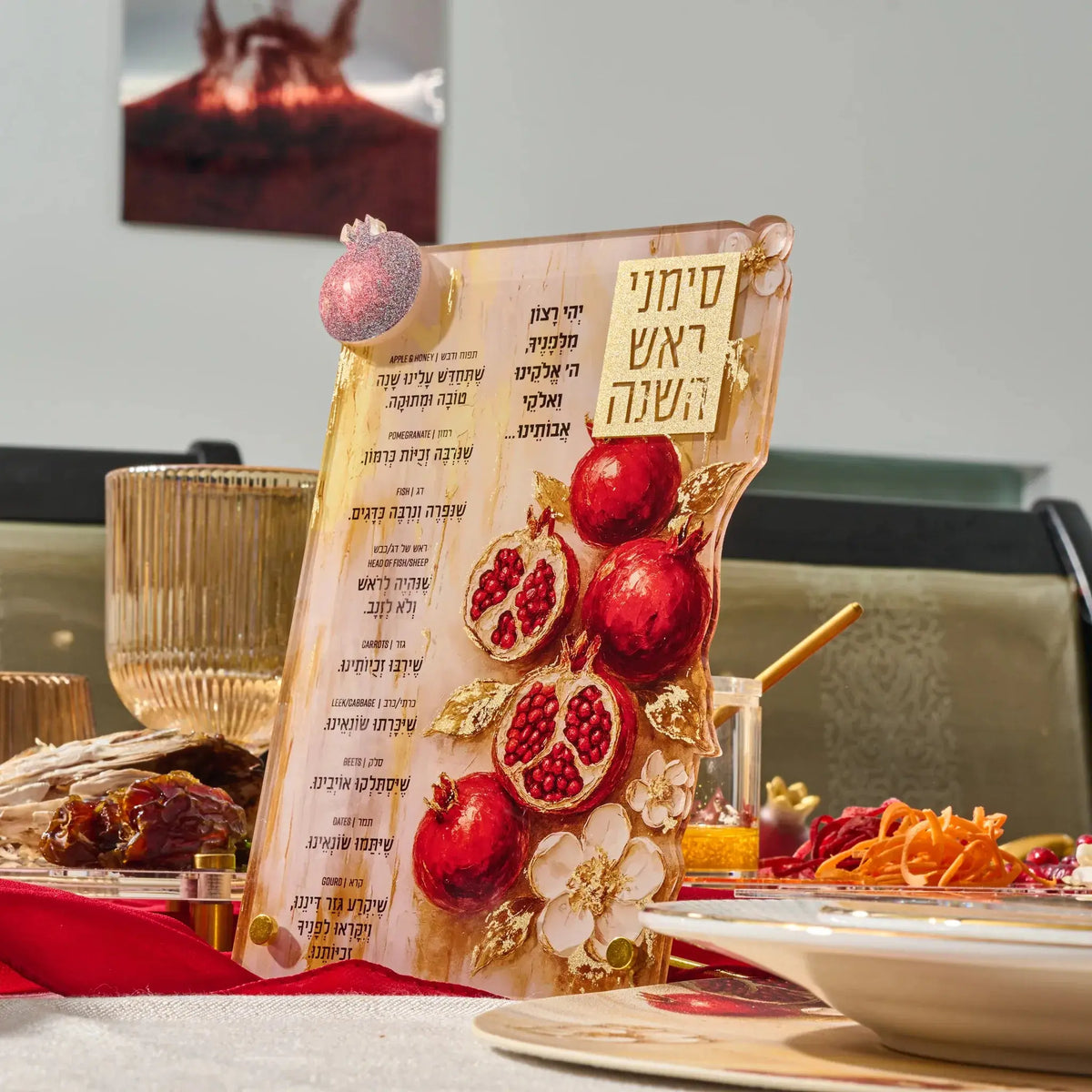
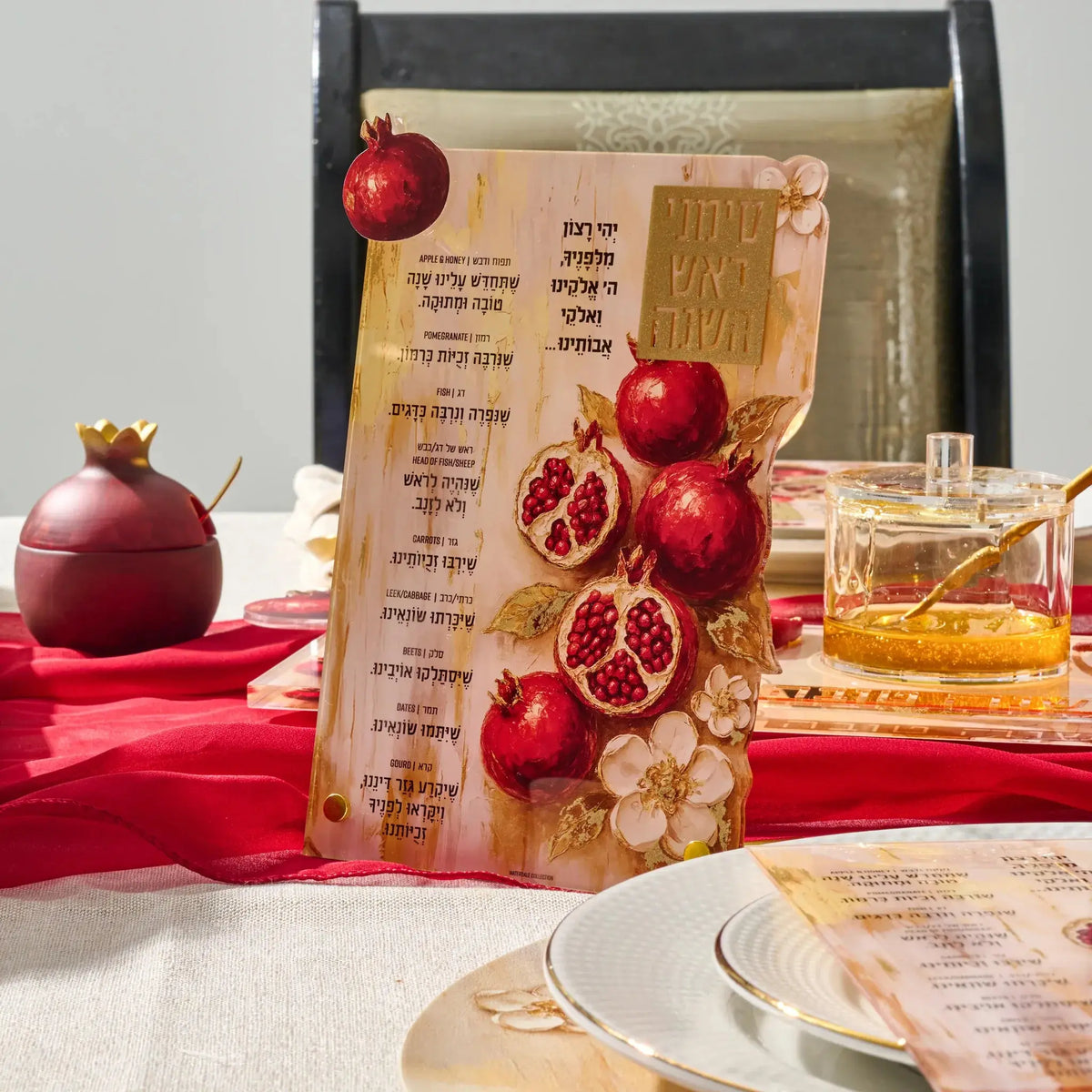
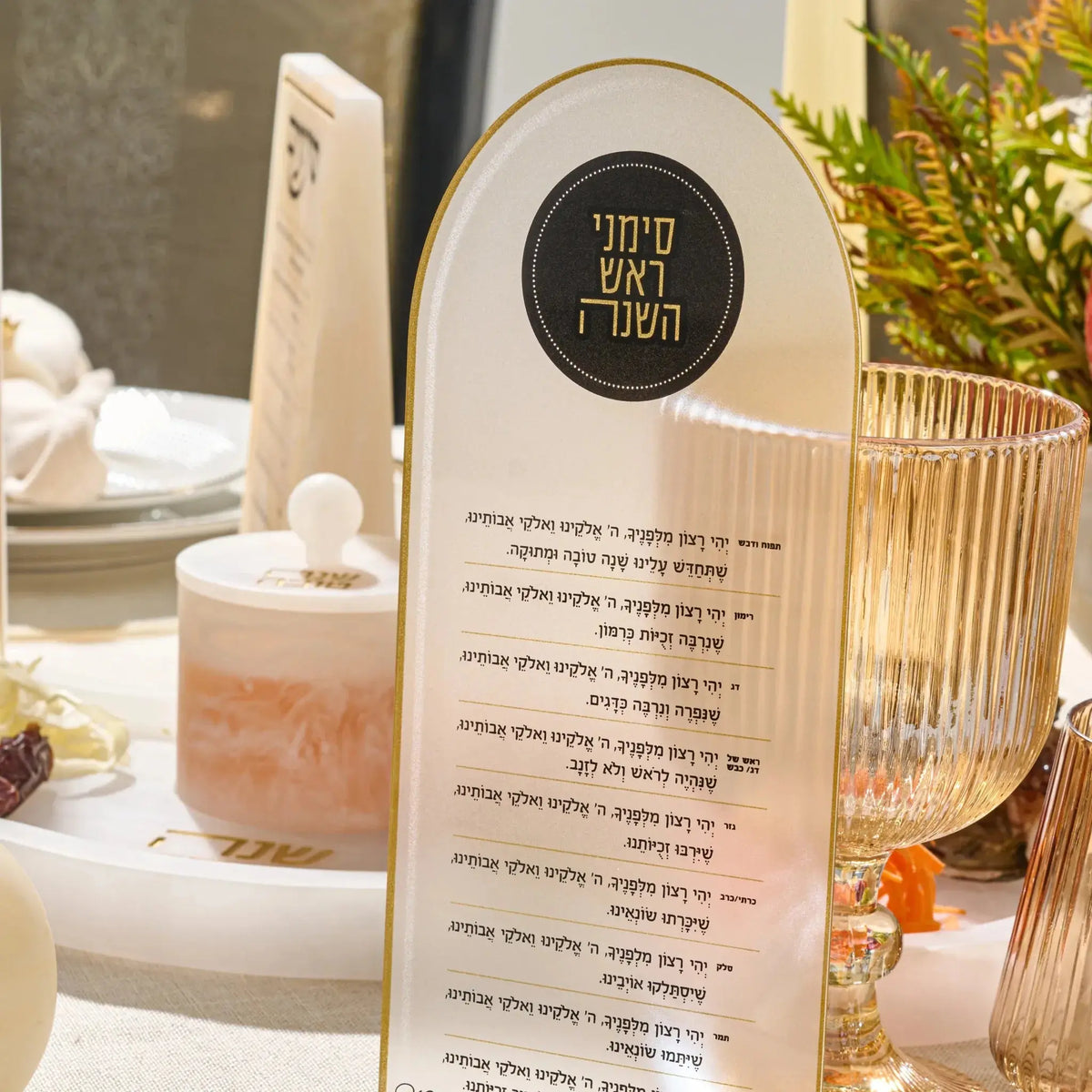
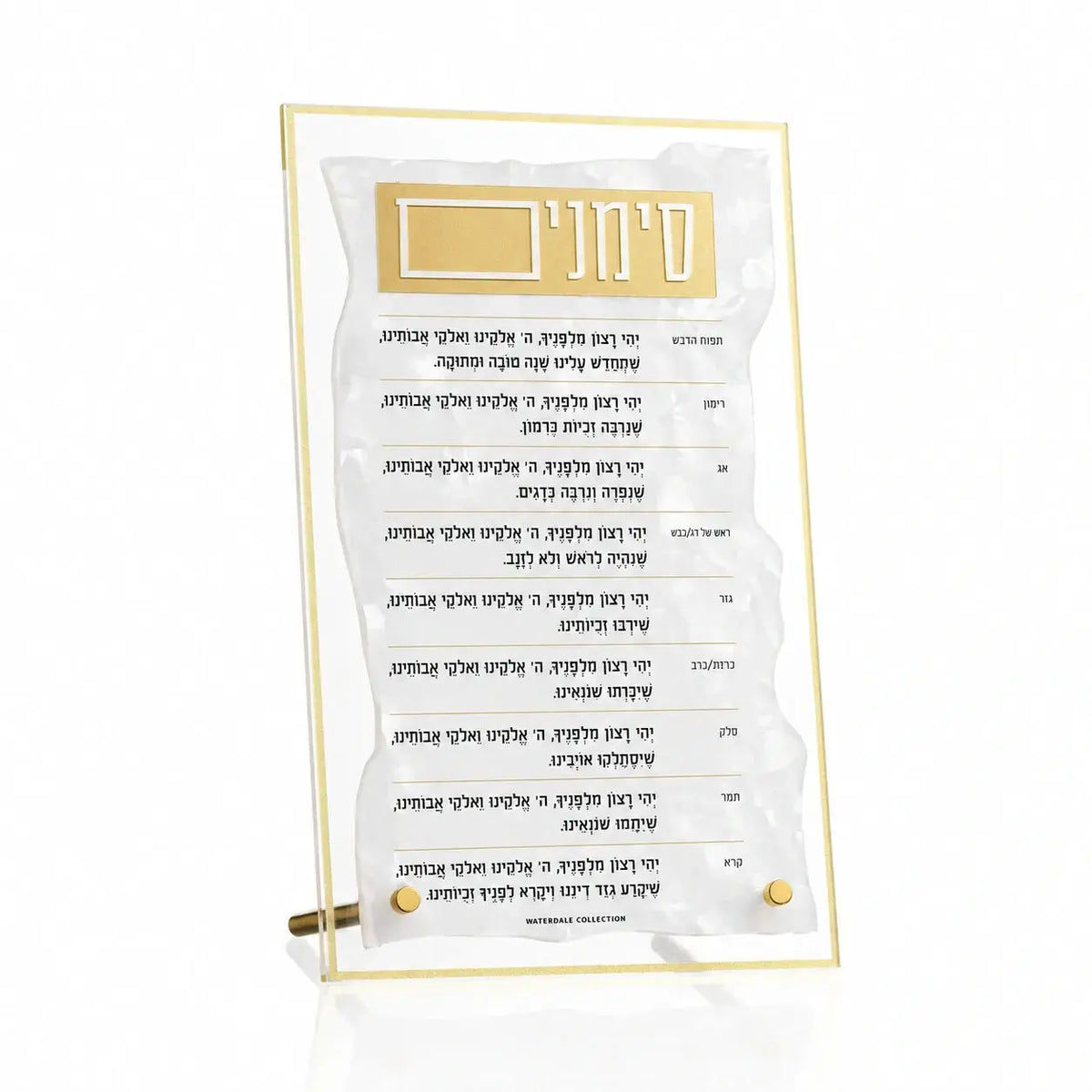
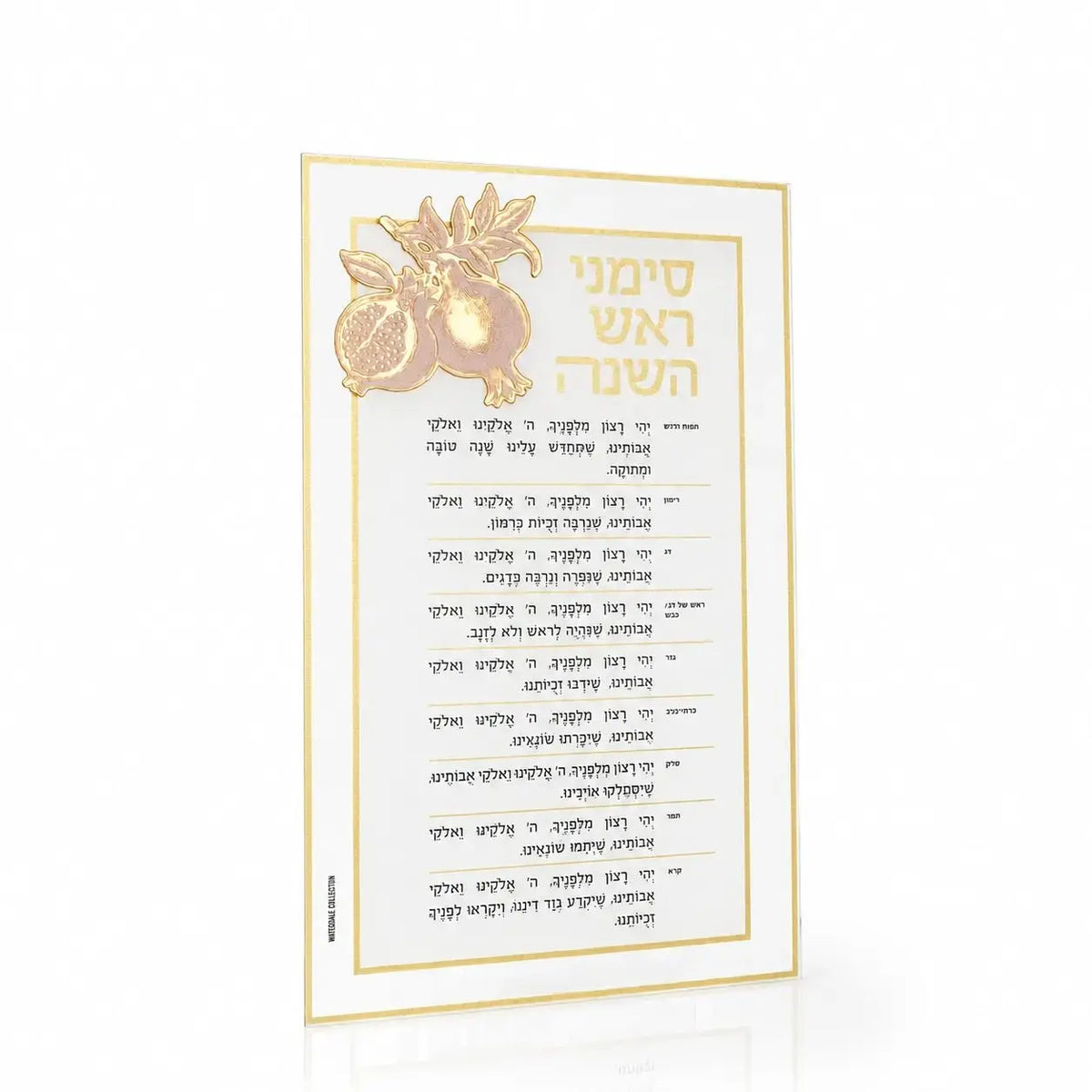
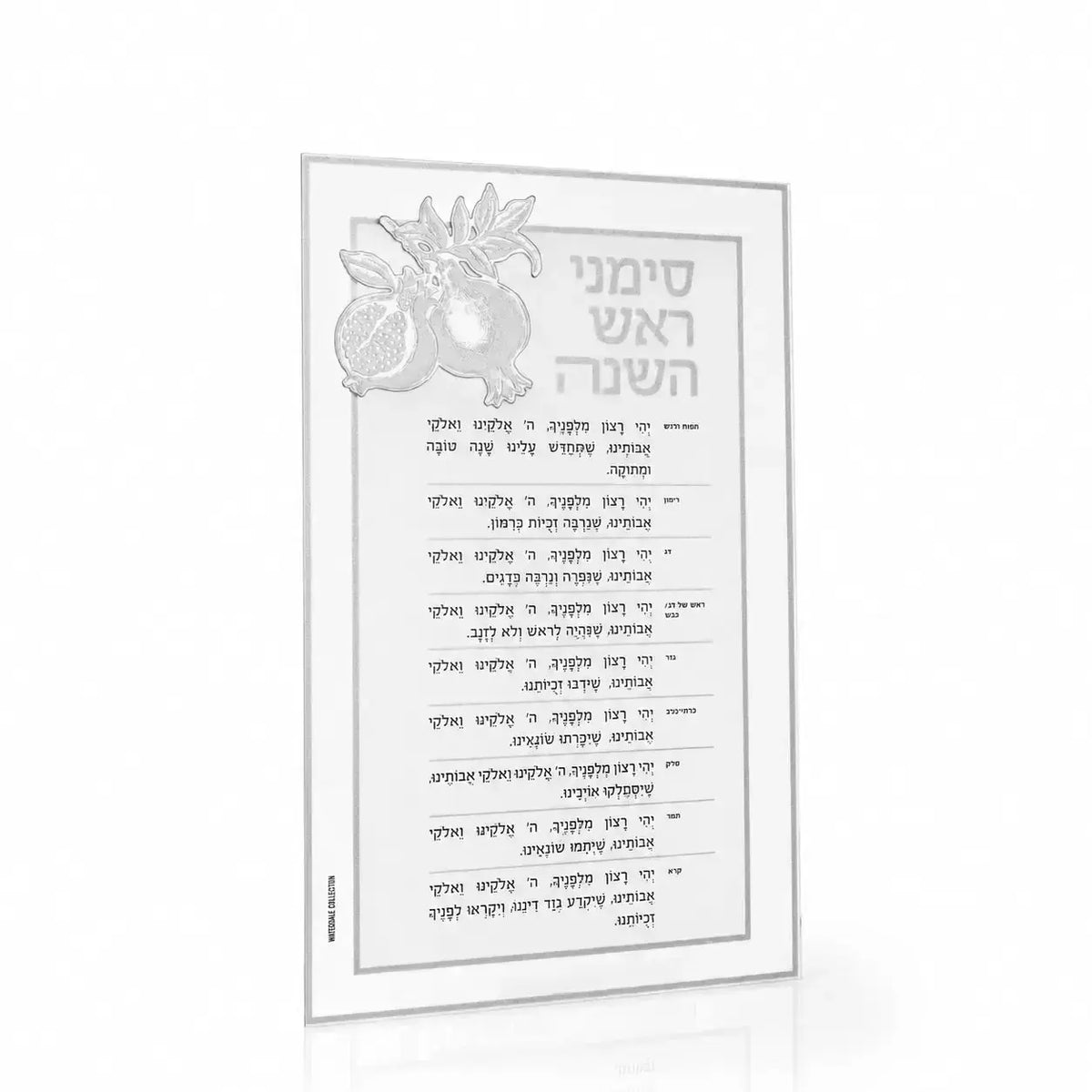
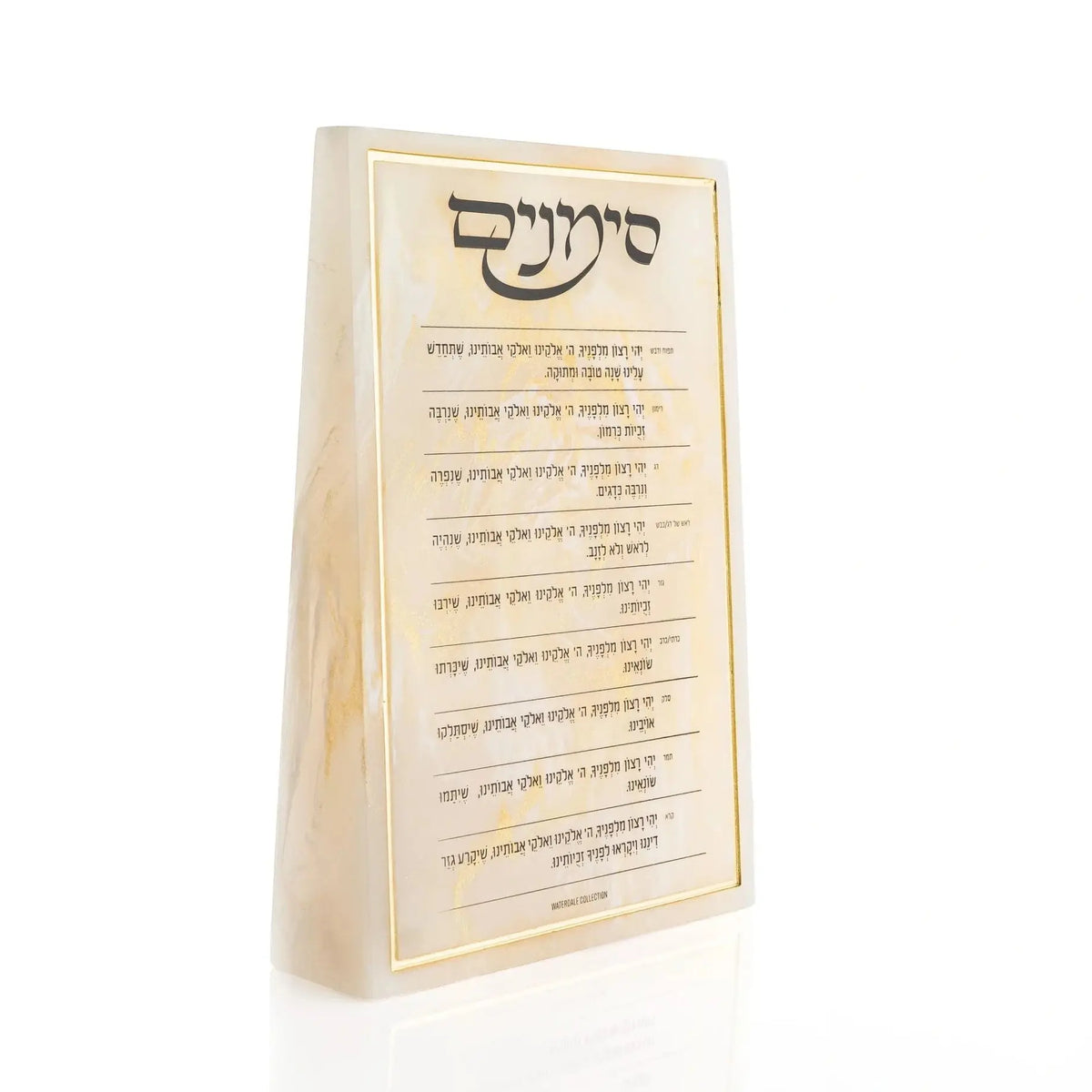
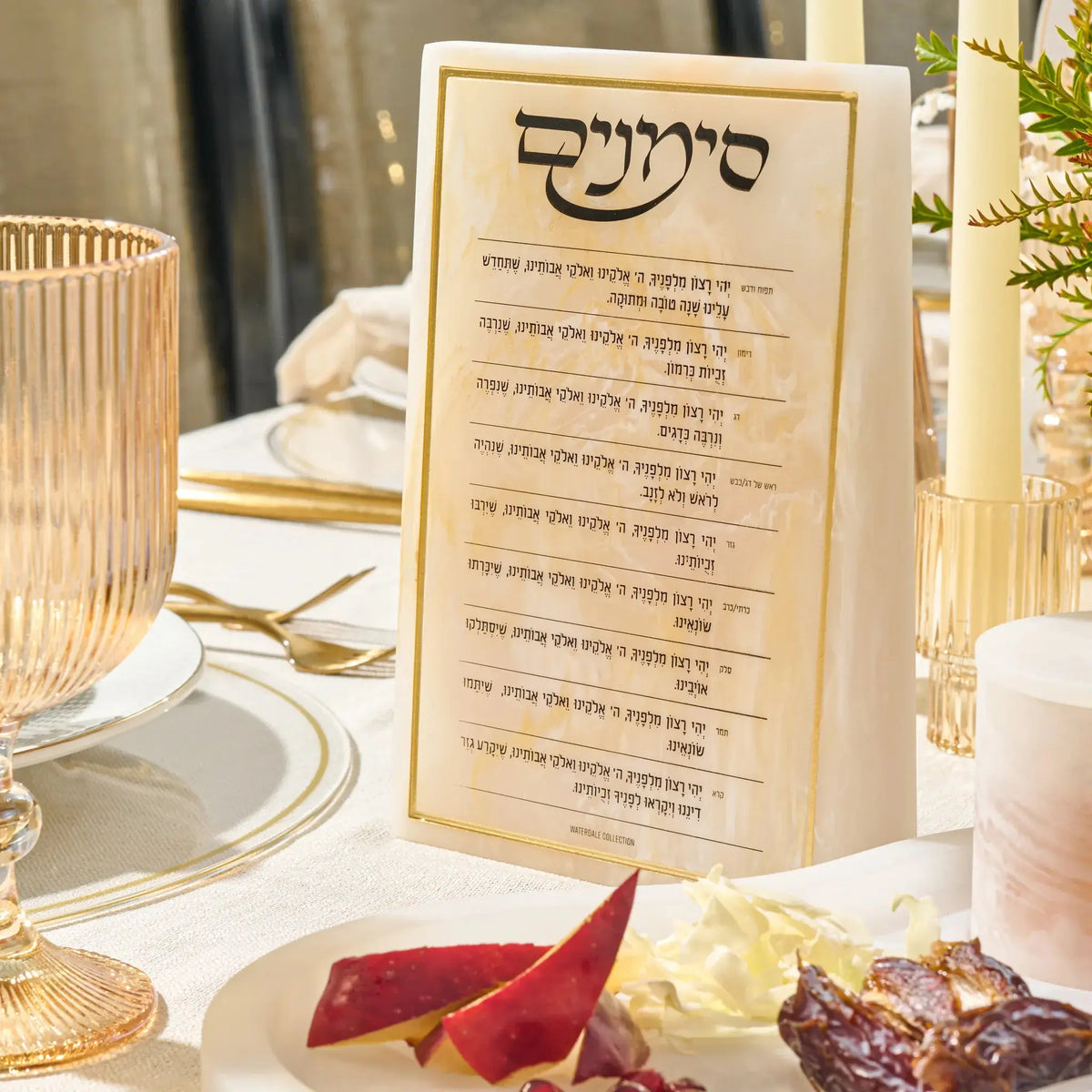
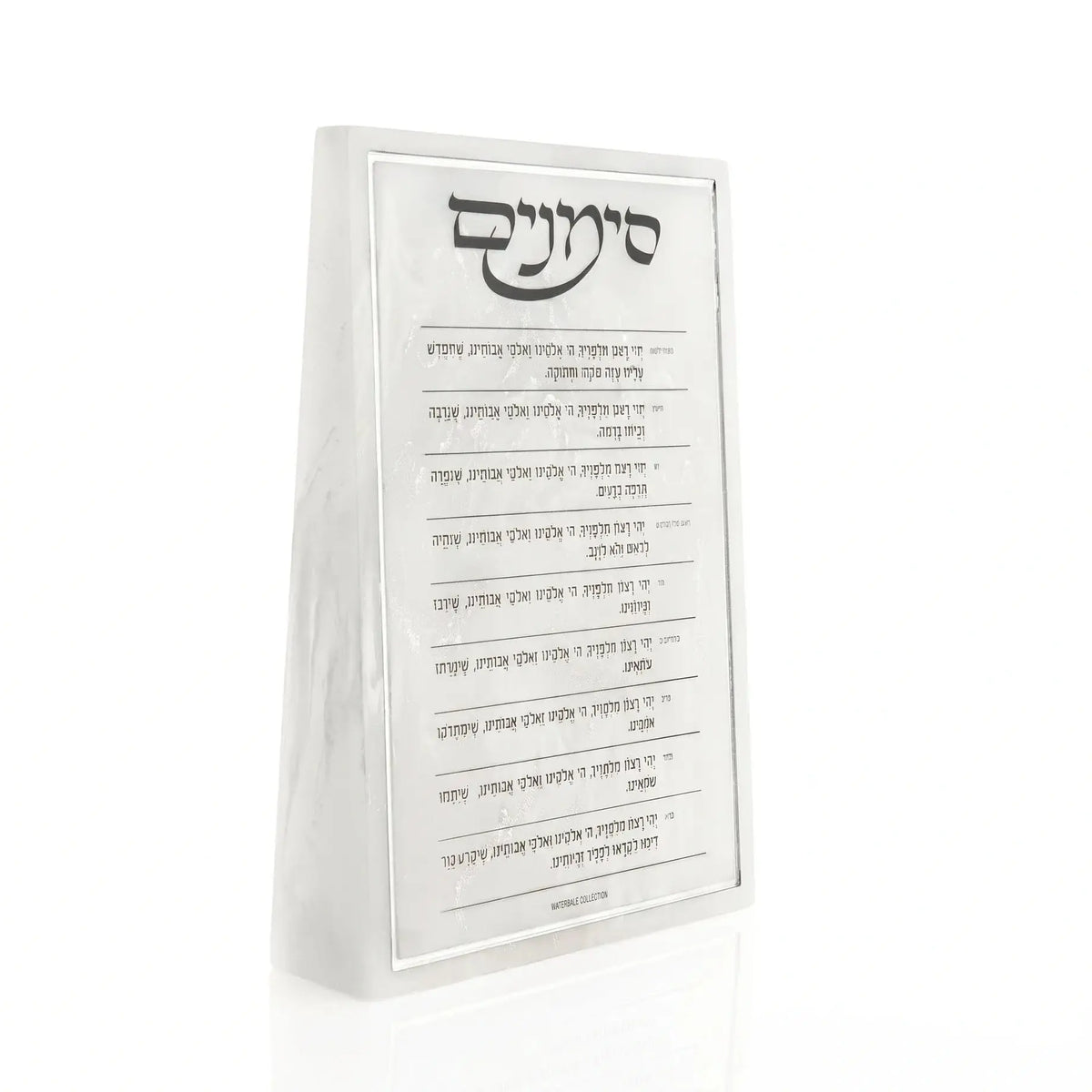
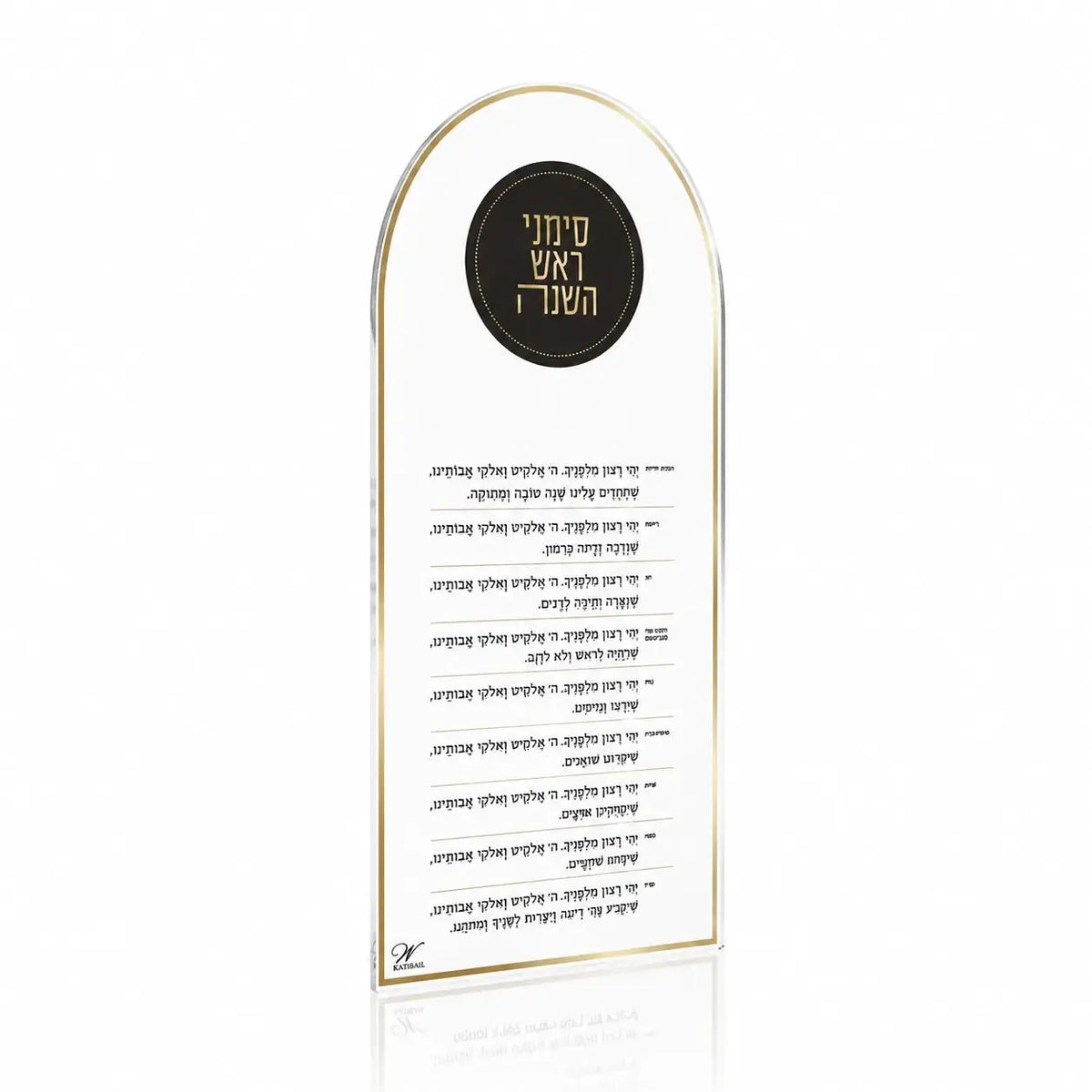
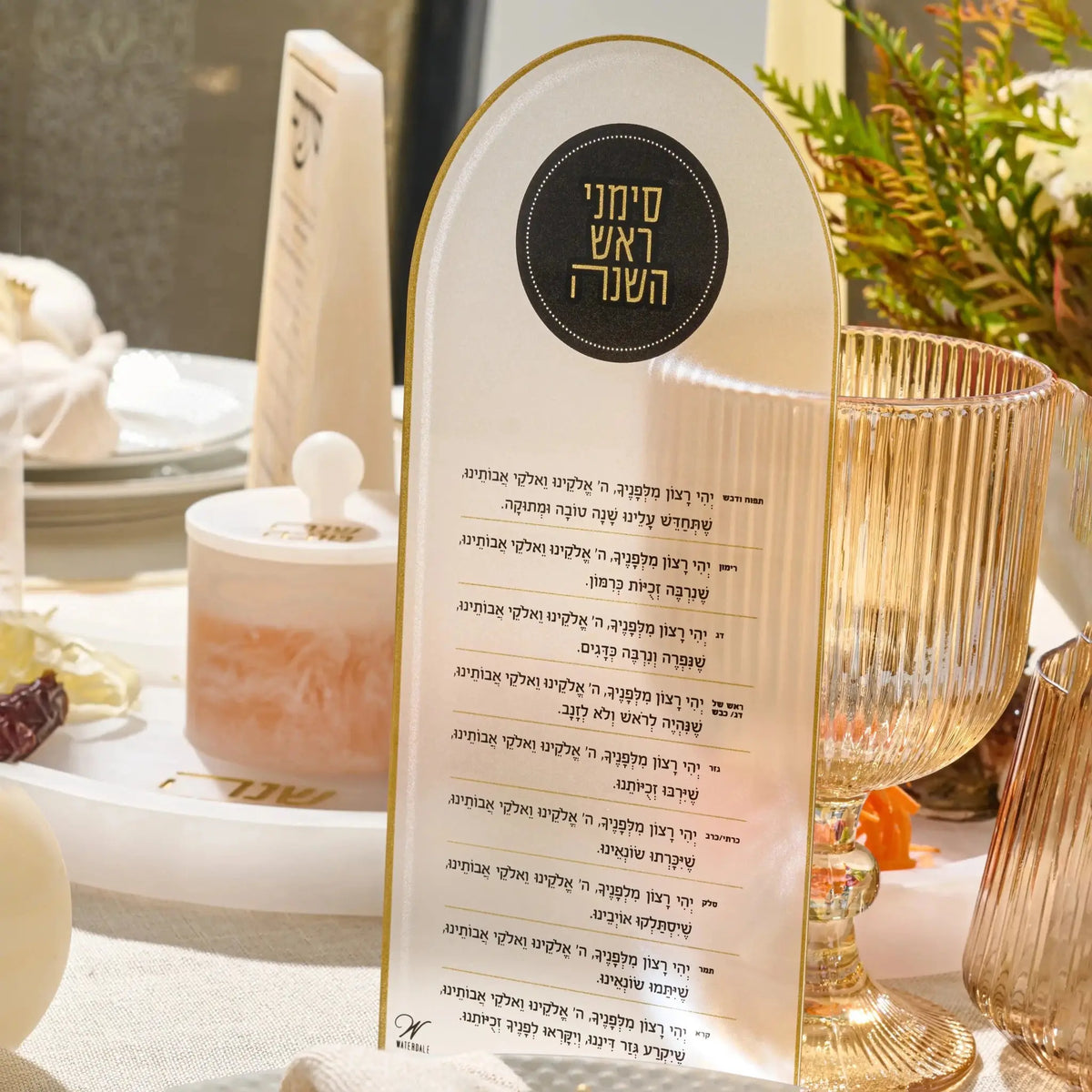
The order of the simanim varies by community — many families begin with the apple in honey, while others follow the order printed in the machzor, often starting with dates. The easiest way to keep everyone together is to follow a simanim card, which lists each symbolic food with its bracha and Yehi Ratzon in the proper order so the whole table can follow the Rosh Hashanah seder step by step.
What are the brachos and Yehi Ratzon blessings said on the simanim?
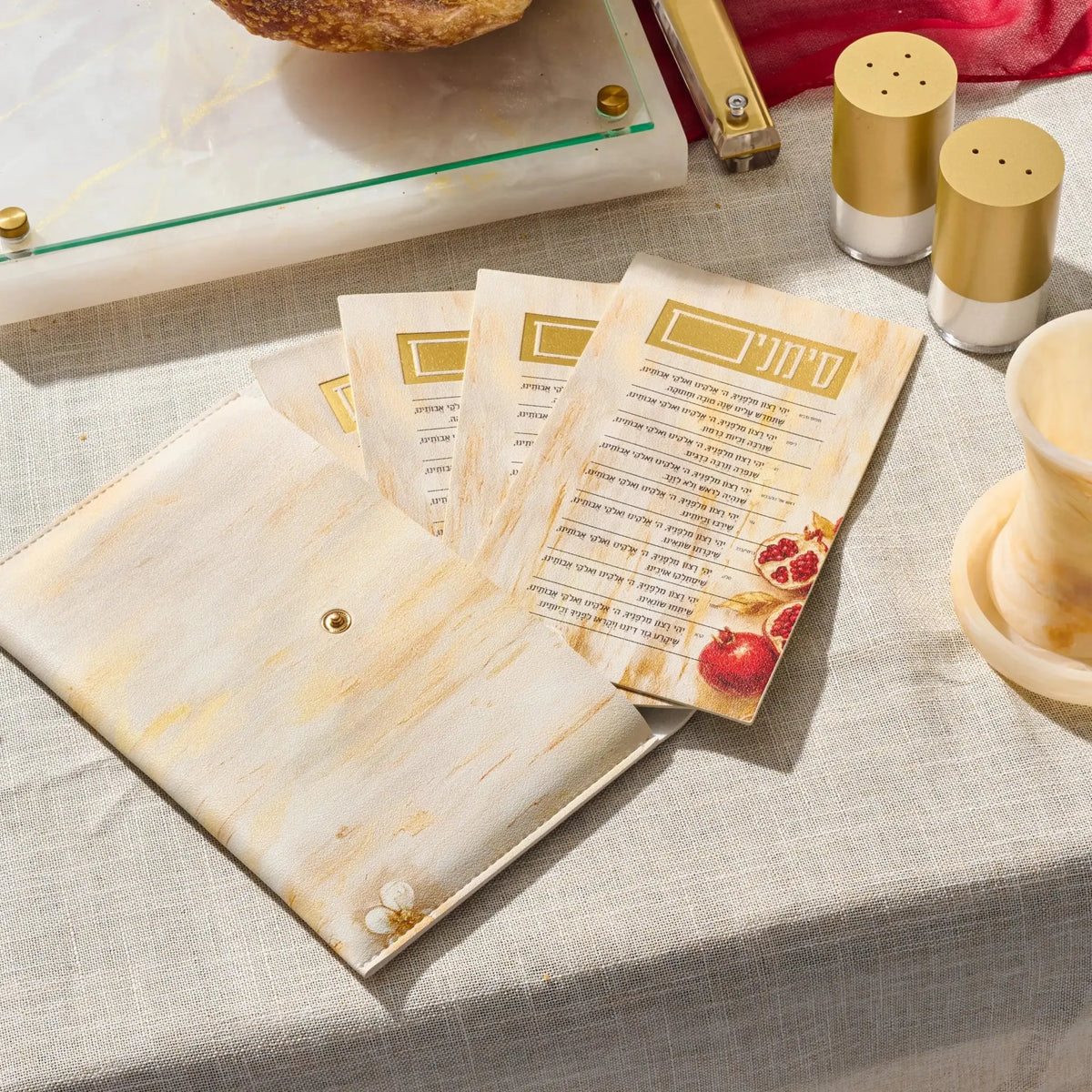
Before eating each of the simanim, the appropriate bracha is said on the food itself — borei pri ha'etz on the apple, for example — followed by the short Yehi Ratzon prayer for that siman, each a play on the food's name. A printed simanim card puts every bracha and Yehi Ratzon blessing at each guest's fingertips, so no one is passing a single machzor around the Rosh Hashanah table mid-meal.
What is a simanim card?
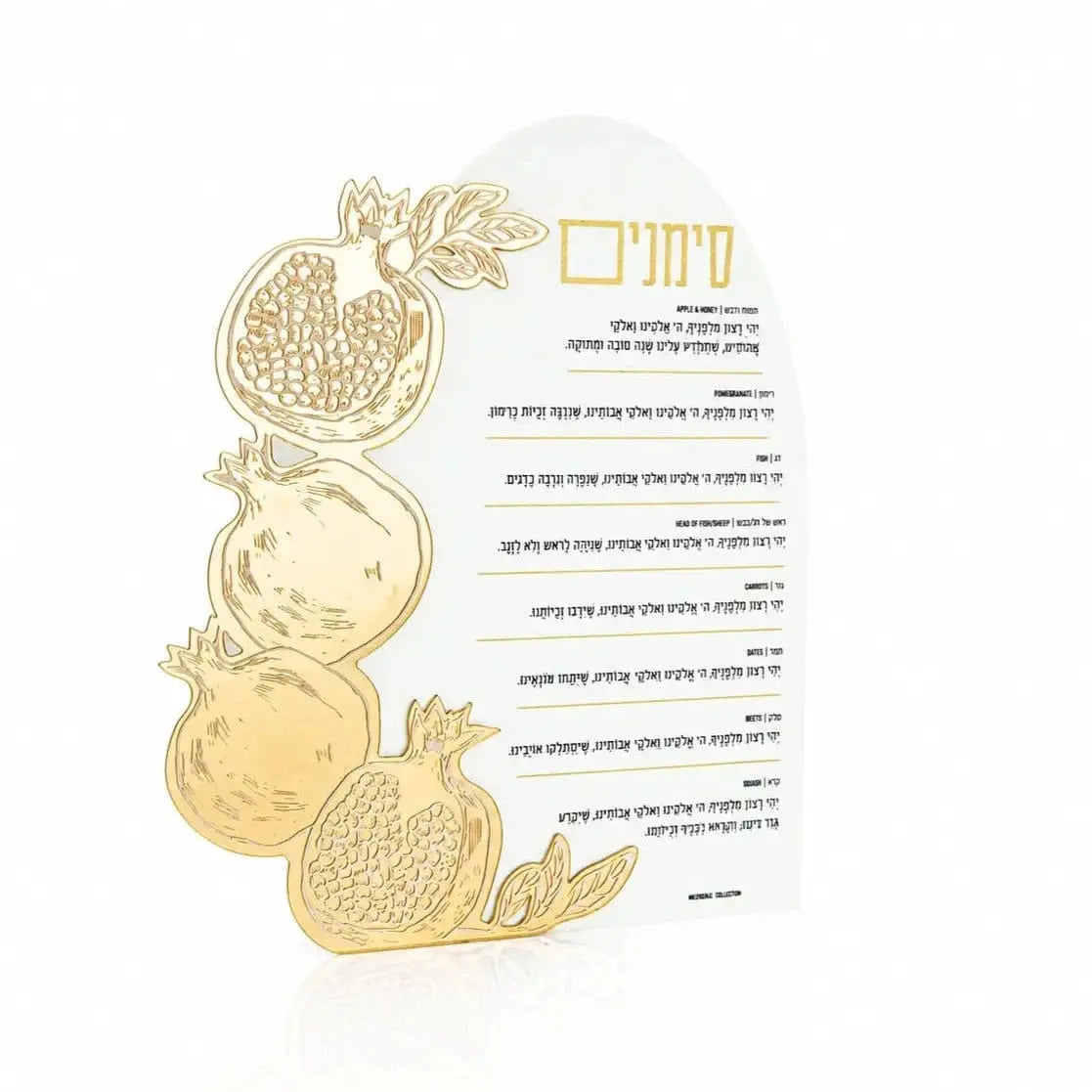
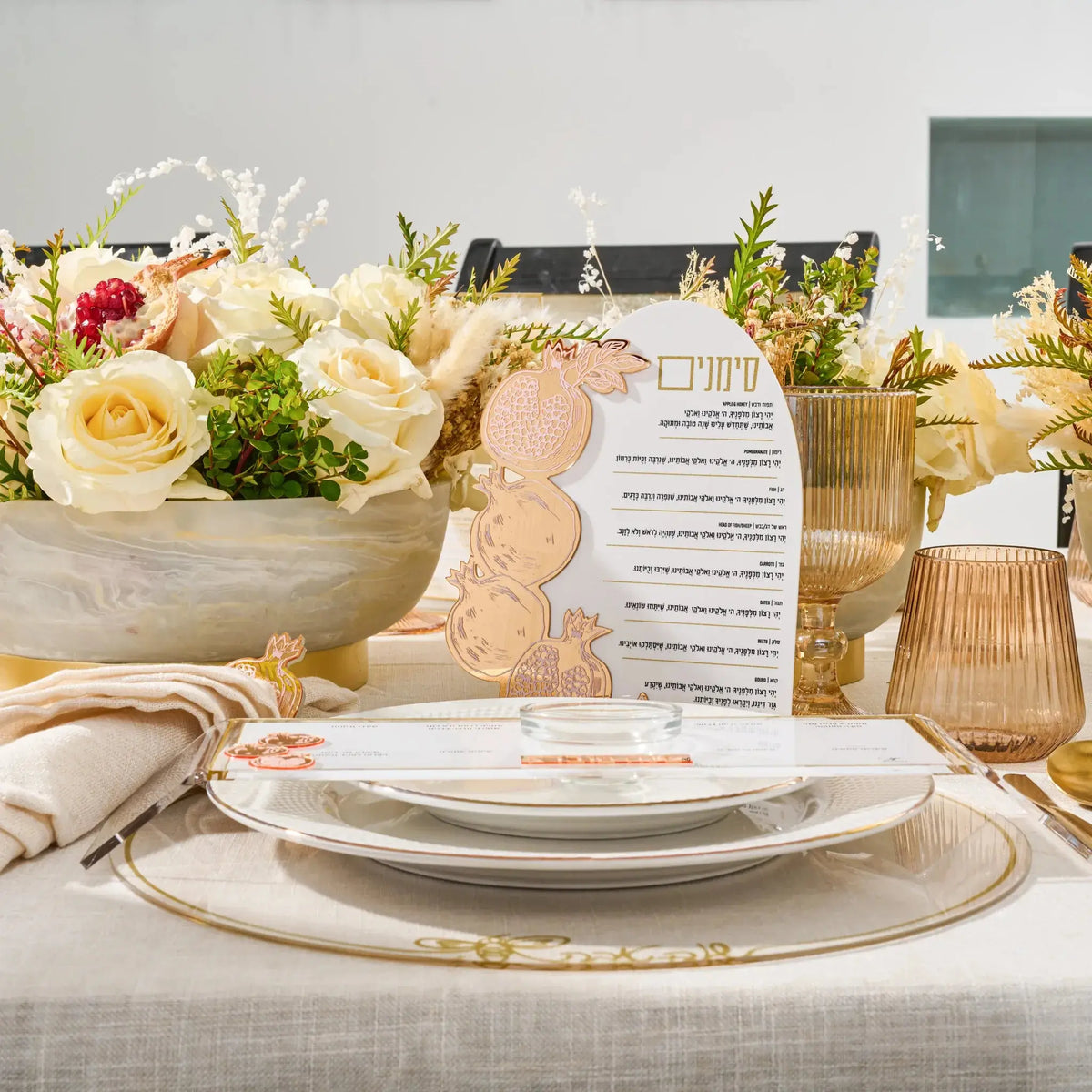
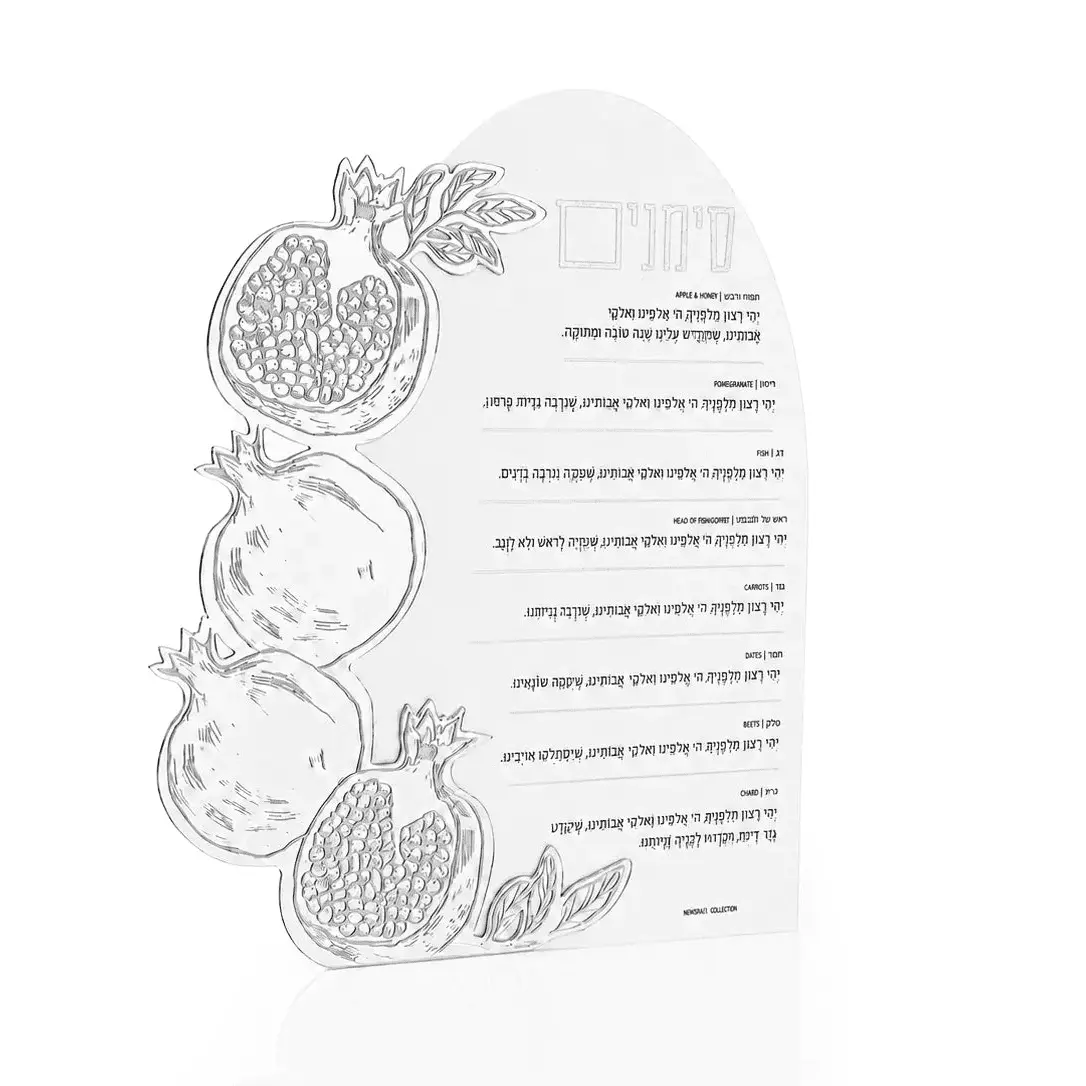
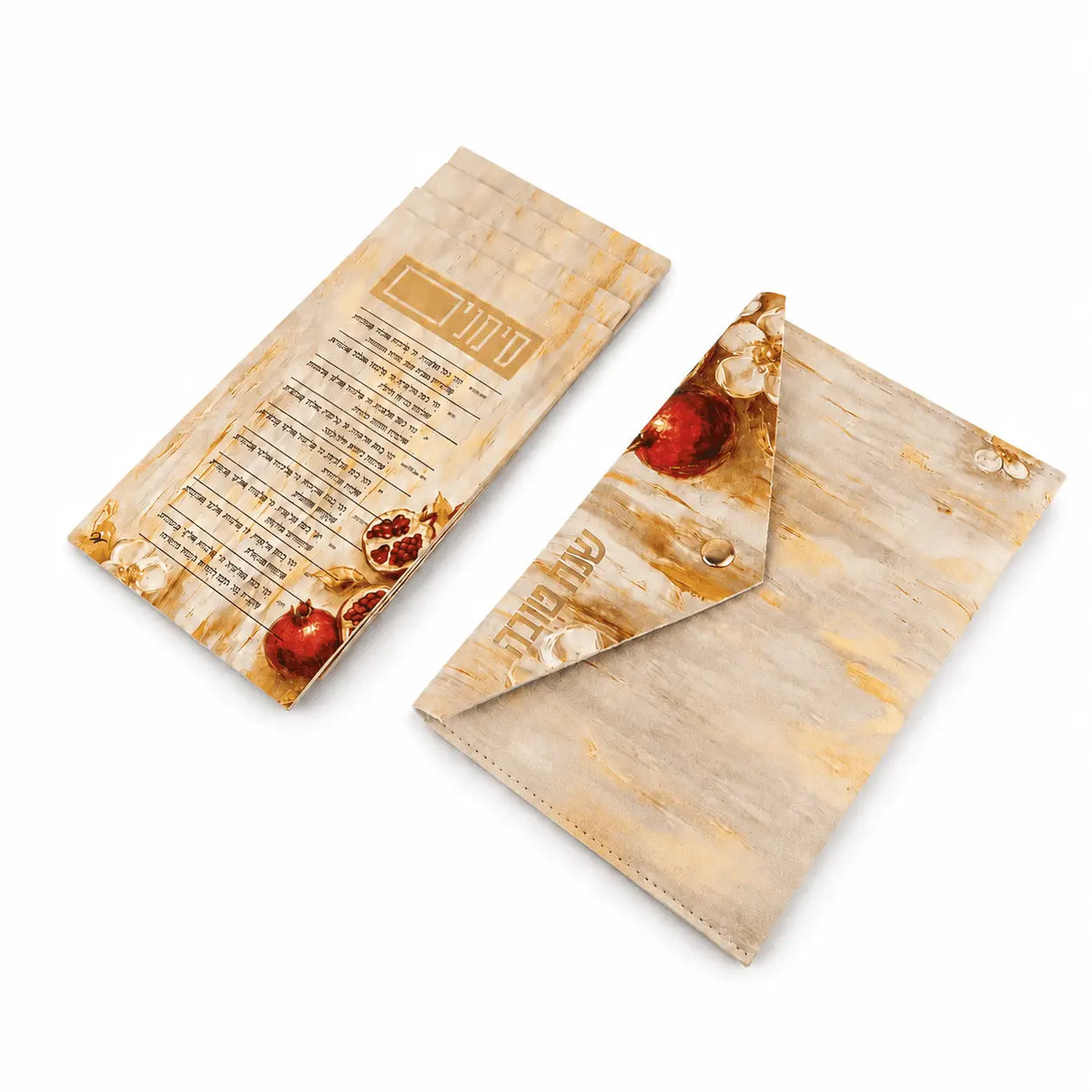
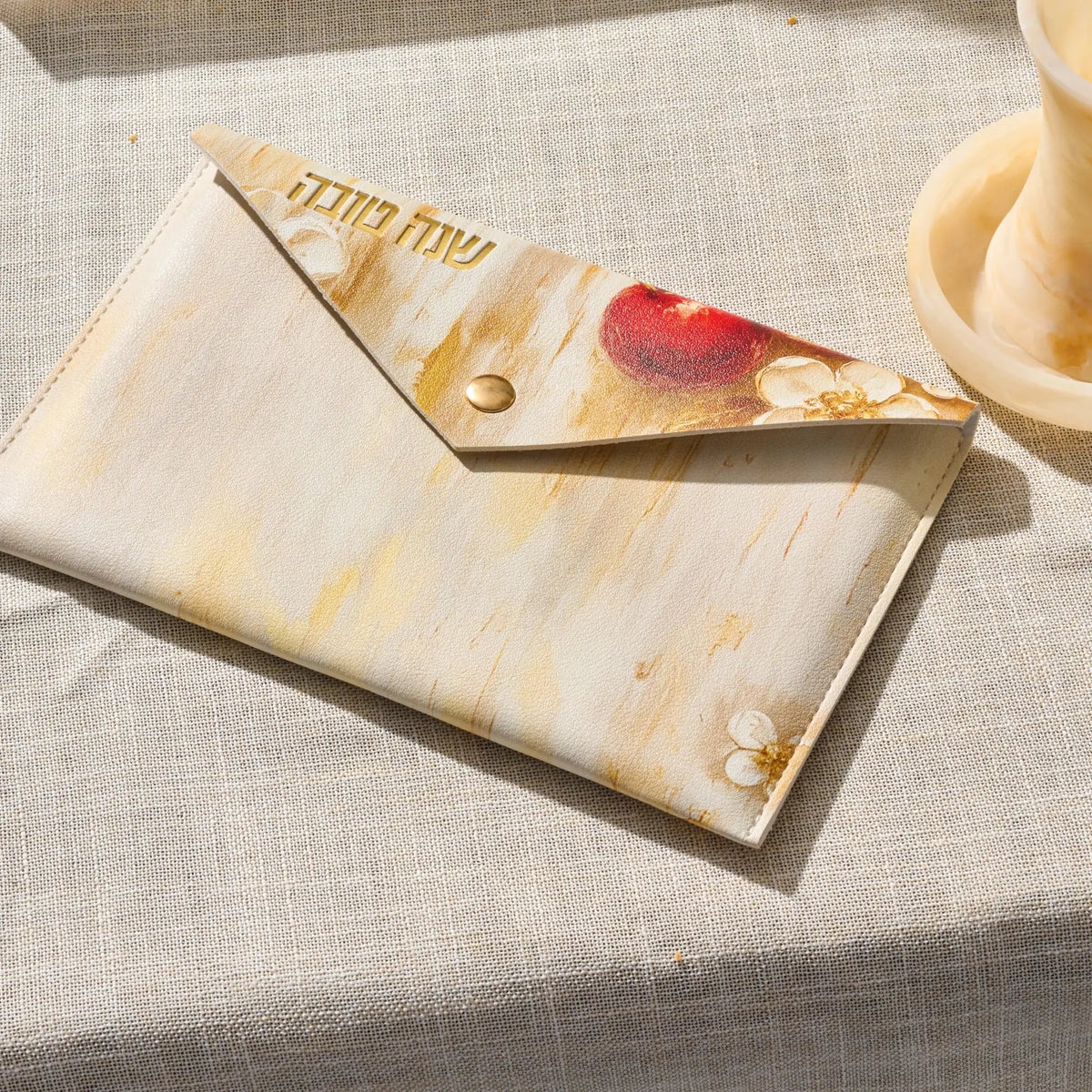
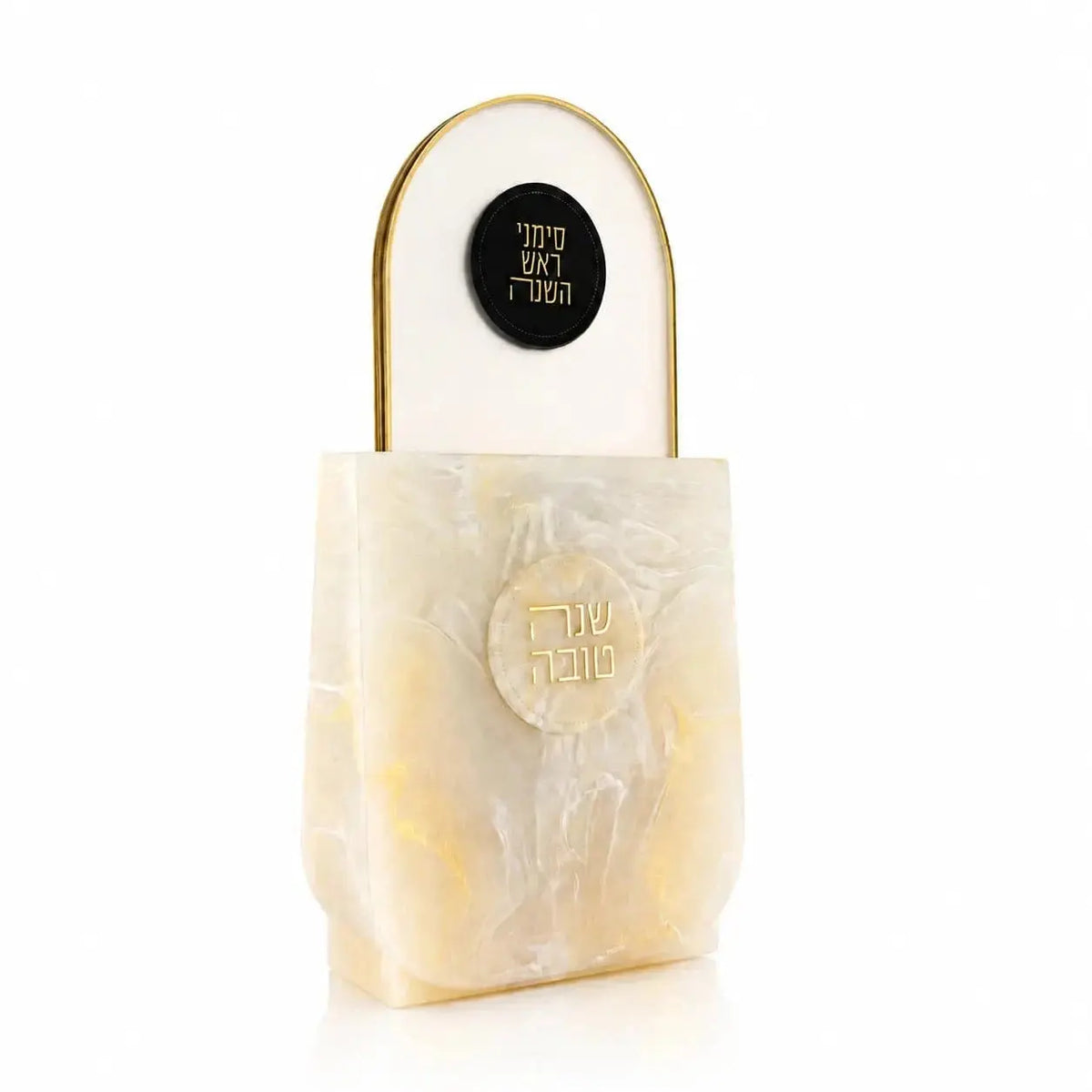
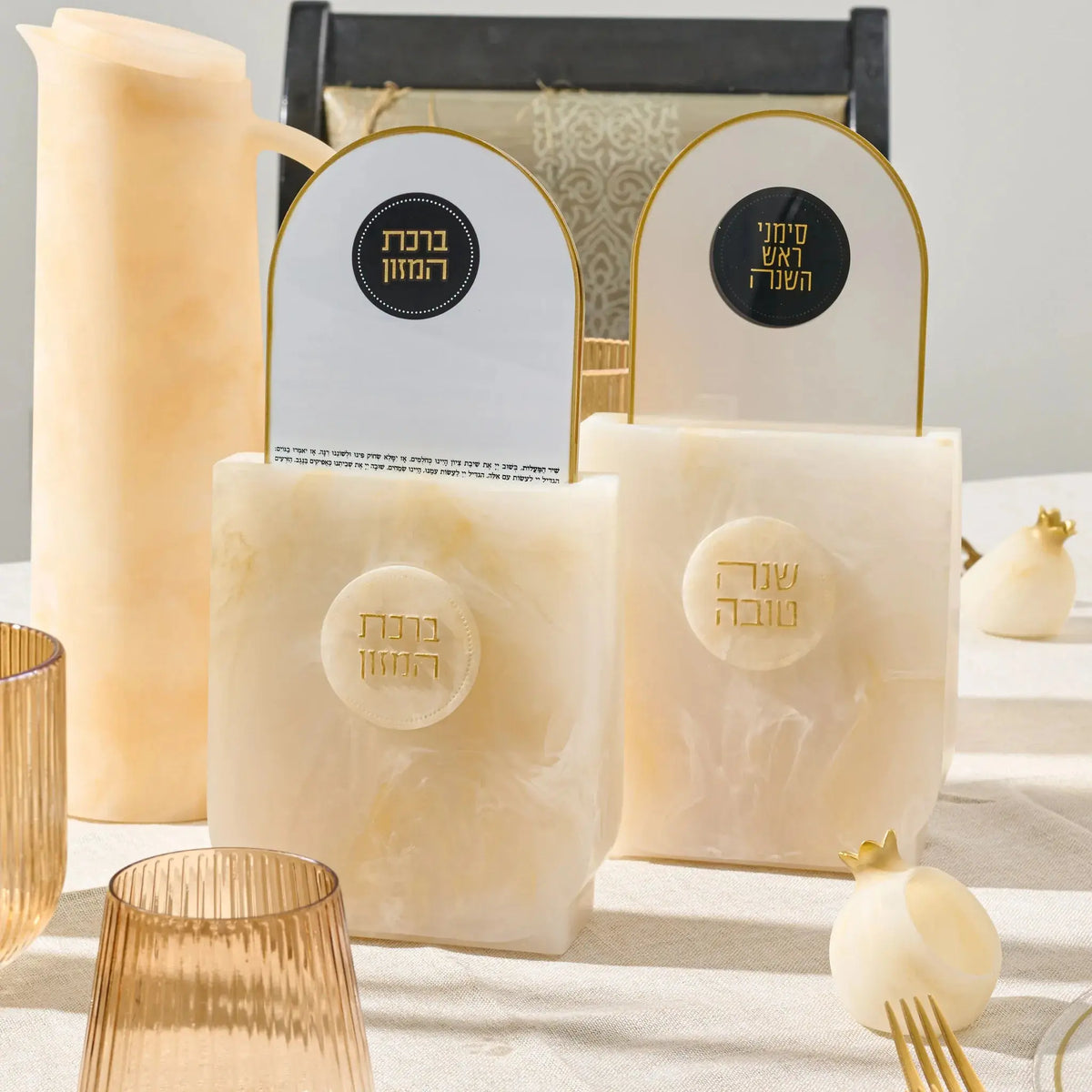
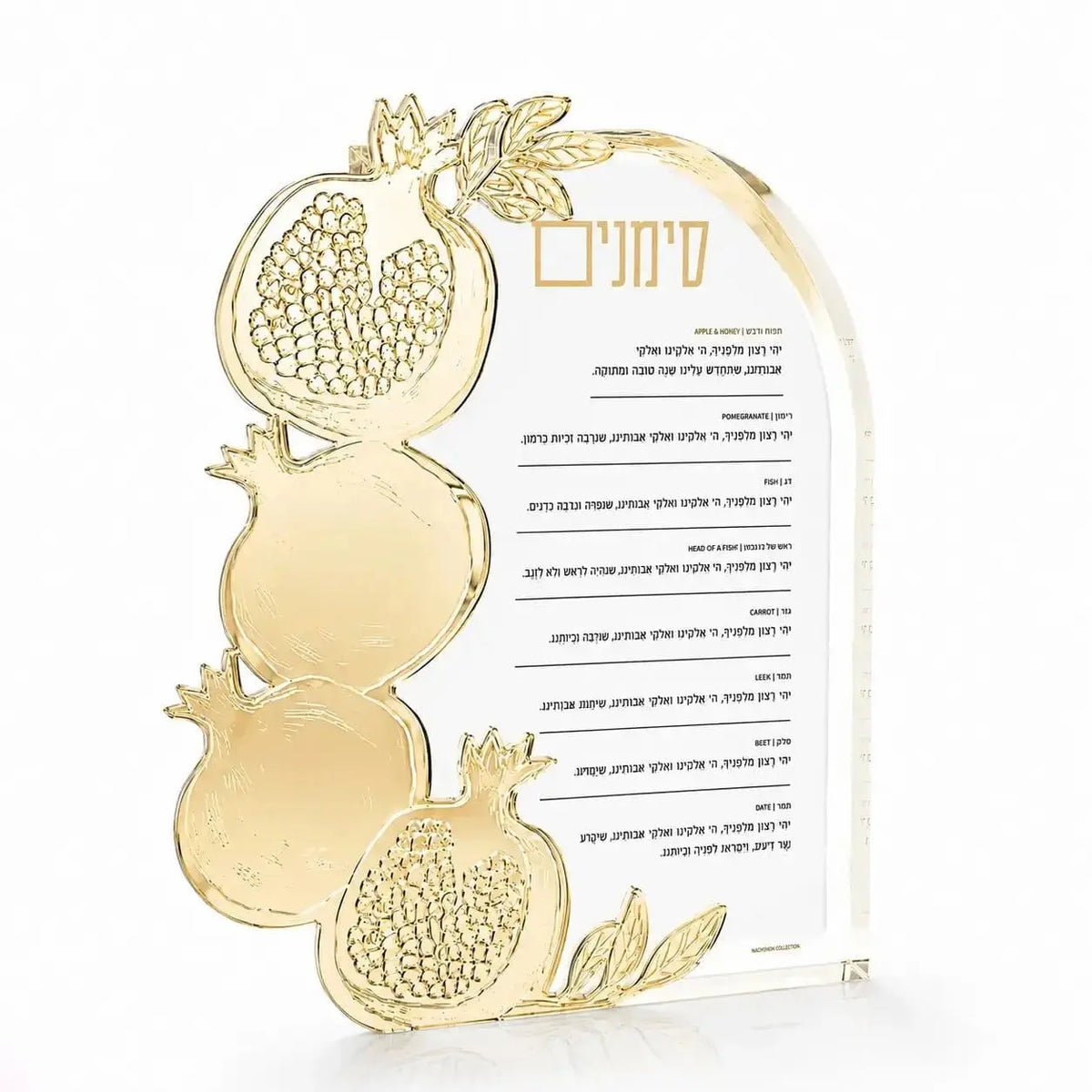
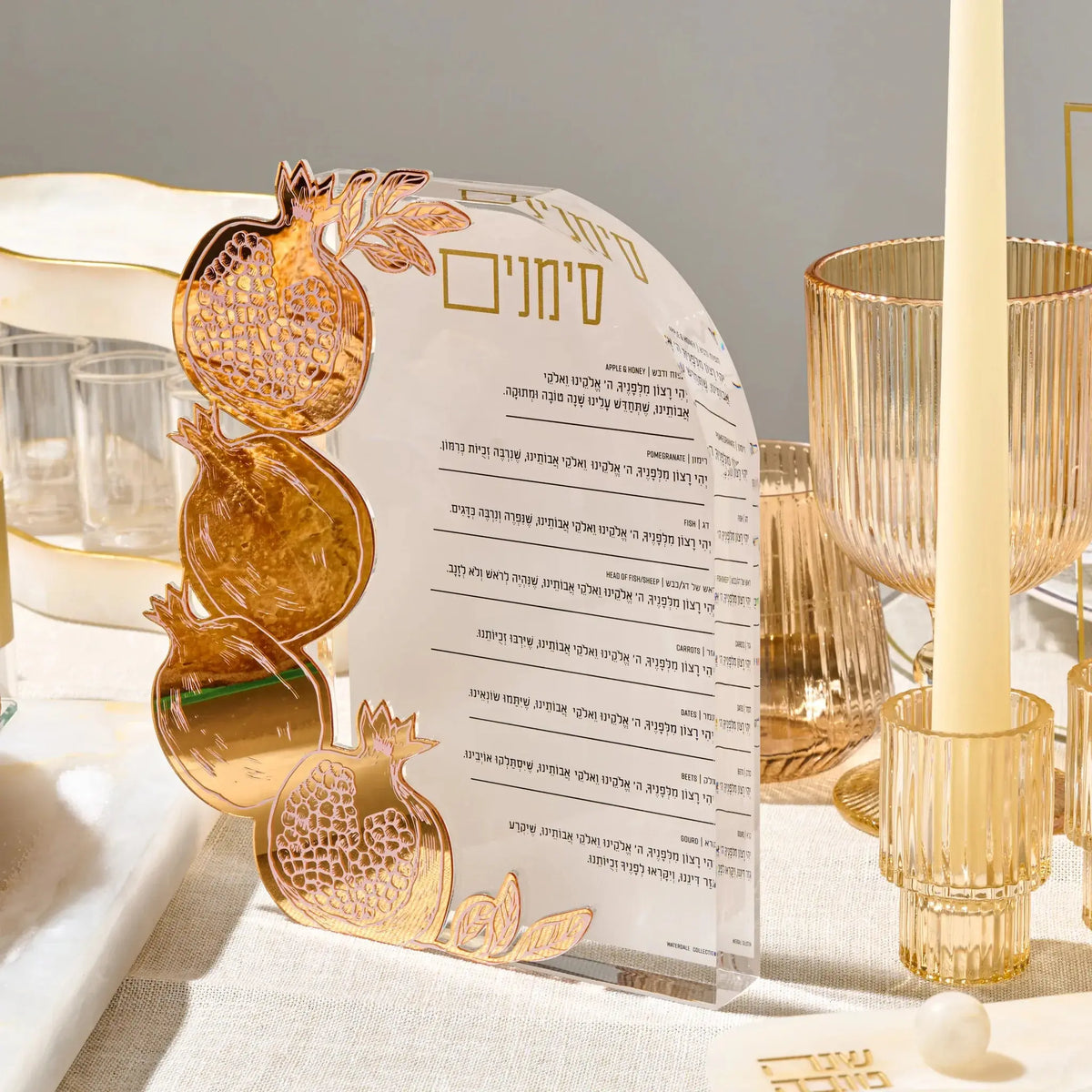
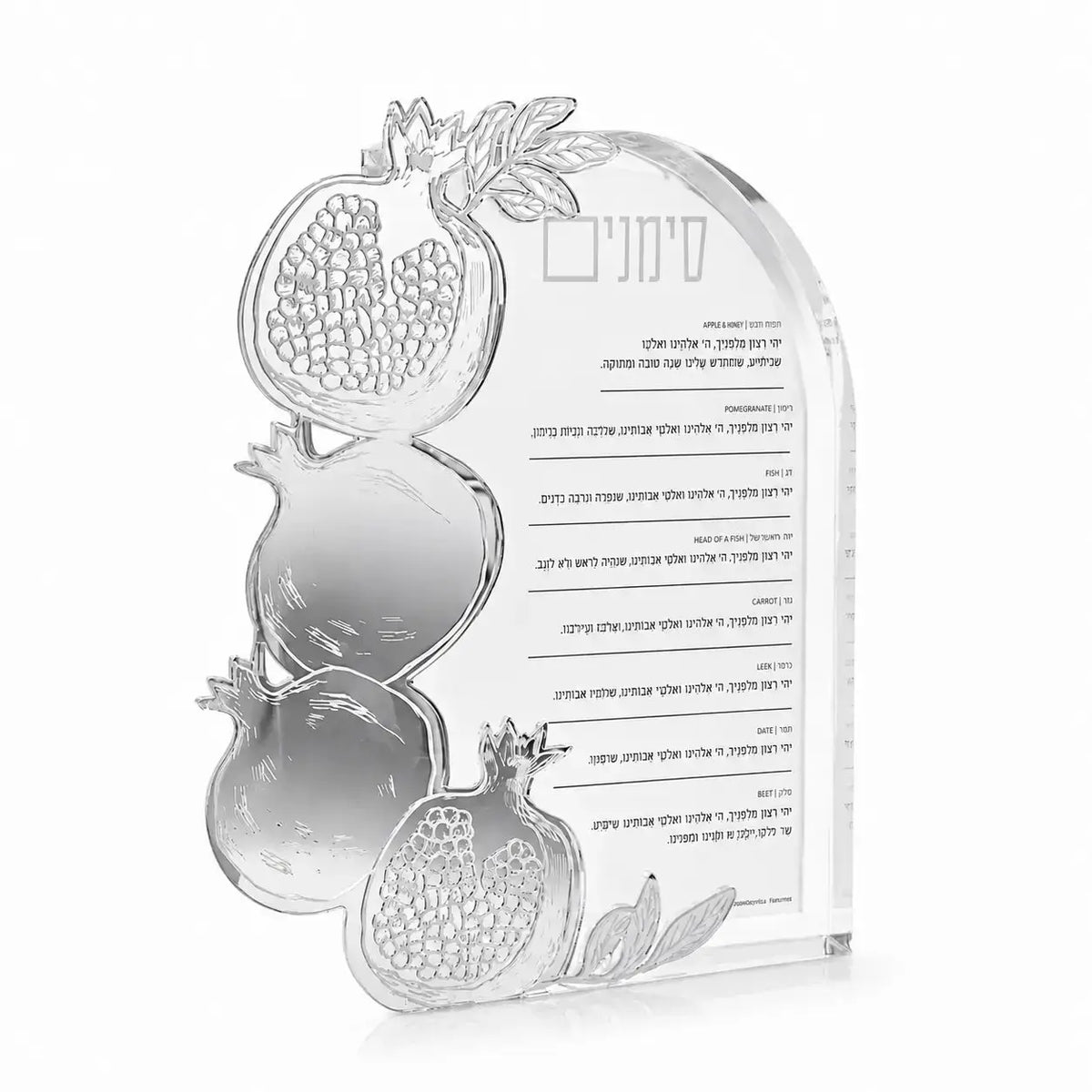
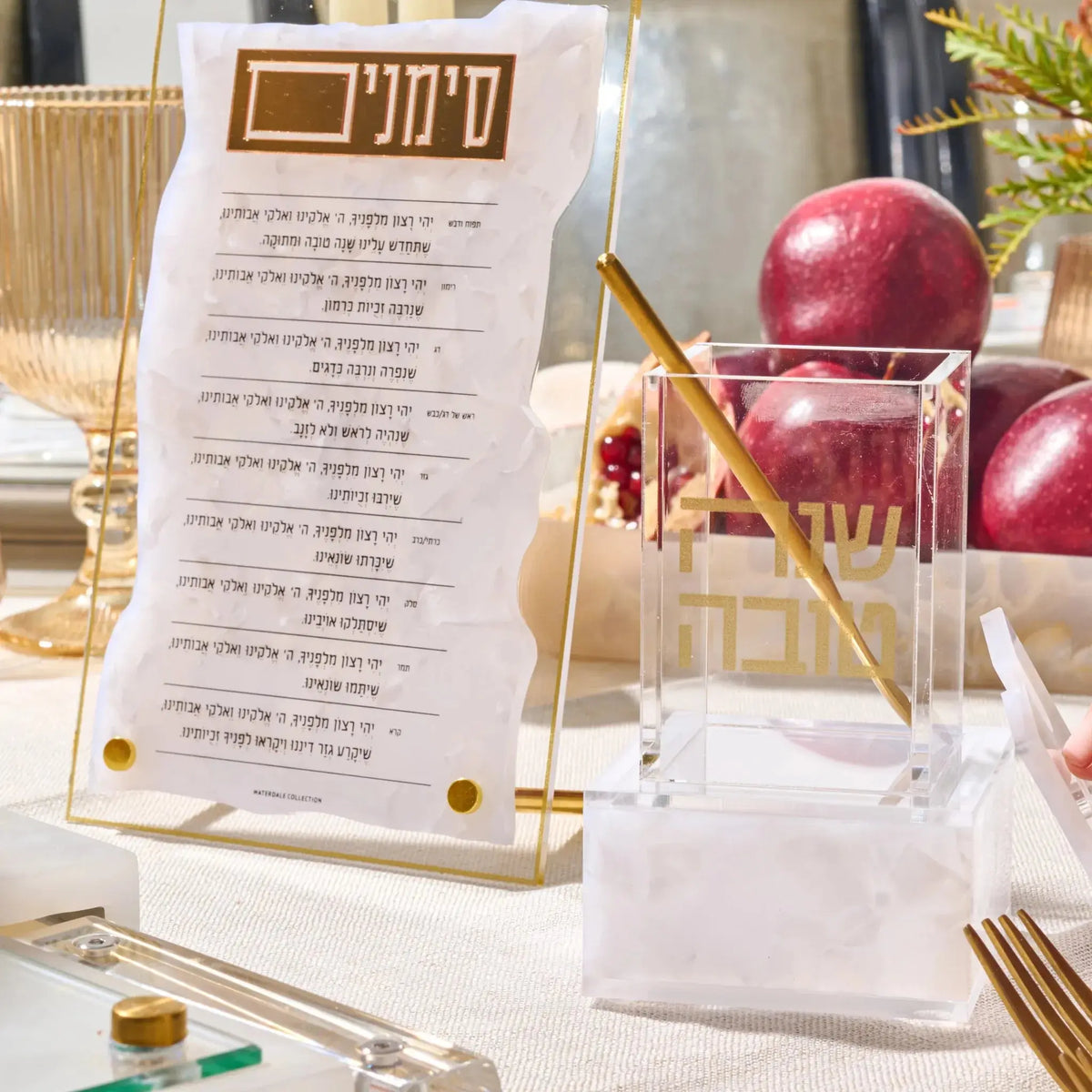
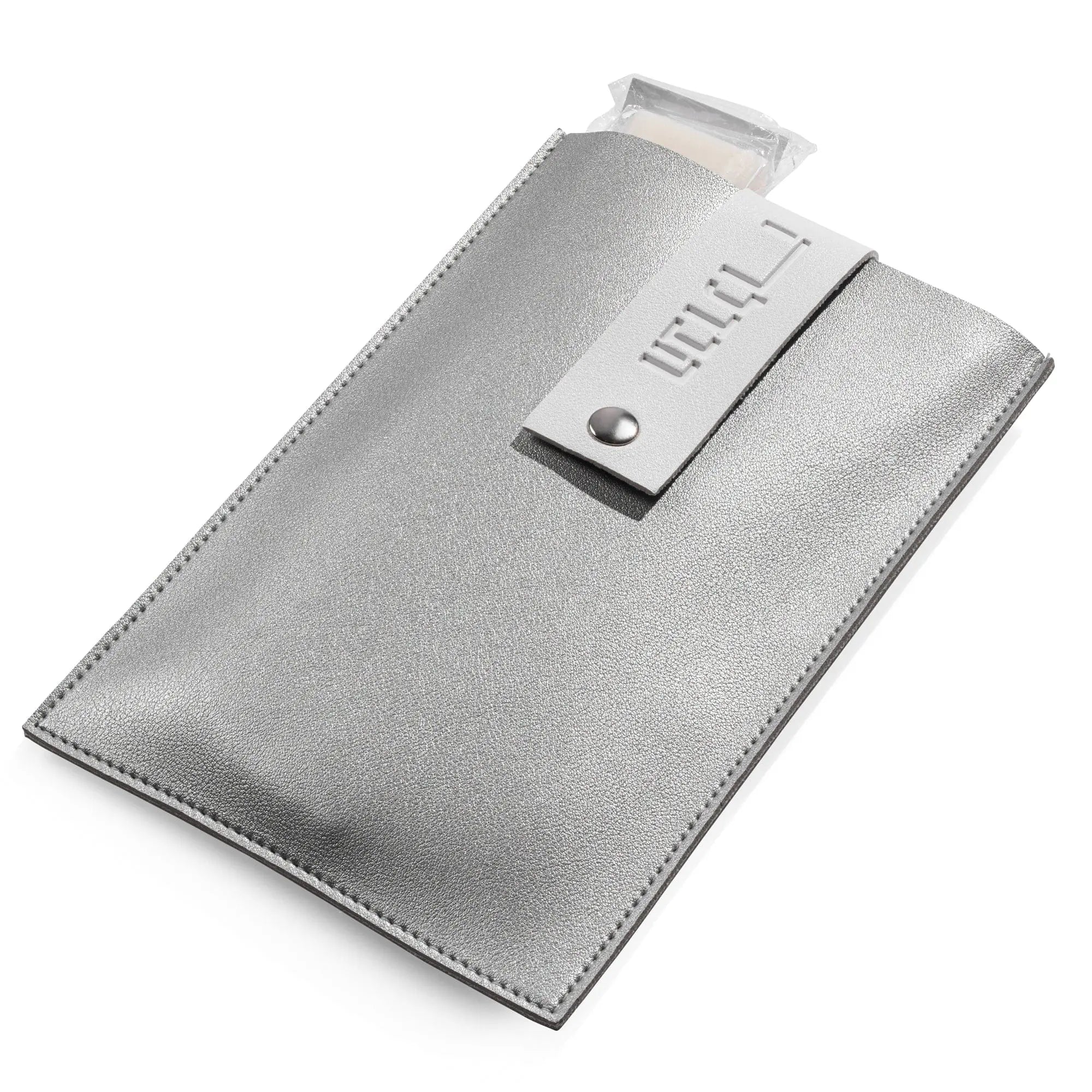
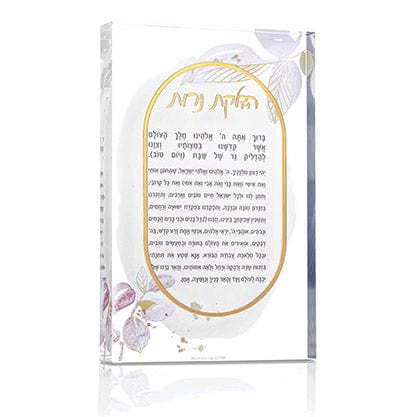
A simanim card is a designed card printed with each of the Rosh Hashanah symbolic foods, its Yehi Ratzon text, and the brachos, set at each place setting or beside the simanim tray. The Rosh Hashana 2026 collection includes the classic arch simanim card, classic pomegranate simanim card, painted pomegranate simanim card, and a leather simanim card and pouch set — Rosh Hashanah decor that returns to your table every year.
Why do we blow the shofar on Rosh Hashanah?
Sounding the shofar is the central mitzvah of Rosh Hashanah — the Torah calls the day Yom Teruah, a day of shofar blasts. The shofar's cry is a wake-up call to teshuvah (repentance), proclaims Hashem's kingship, and recalls the ram offered in place of Yitzchak at the Akeidah. The widespread custom is to hear 100 blasts on each day of the holiday, sounded in patterns of tekiah, shevarim, and teruah.
Is the shofar blown when Rosh Hashanah falls on Shabbos?
No — when the first day of Rosh Hashanah coincides with Shabbos, as it does in 2026, the shofar is not blown that day. The Sages instituted this as a safeguard against carrying a shofar in the public domain on Shabbos. Instead, the full set of blasts is heard on the second day of Yom Tov, and tashlich is likewise commonly deferred to the second day in such years.
What is tashlich, and when is it said in 2026?
Tashlich is the prayer said beside a body of water — ideally one with fish — symbolically casting our sins into the depths, based on the verse in Michah: You will cast (tashlich) all their sins into the depths of the sea. It's normally said on the first afternoon of Rosh Hashanah, but since the first day falls on Shabbos in 2026, most communities will say tashlich on Sunday, September 13. It's one of the most visually memorable rituals of the Yamim Noraim.
What do you say to wish someone a happy Jewish New Year?
The classic greetings are Shana Tova (a good year) or the fuller Shana Tova U'Metuka (a good and sweet year). On Rosh Hashanah itself many add Ketiva V'Chatima Tova — may you be written and sealed for good — and Yiddish speakers wish a Gut Yom Tov or Gut Yohr. Any of these is warmly received on cards, gift tags, and at the door before the seuda.
How early should I start shopping for Rosh Hashanah 2026?
With Rosh Hashanah 2026 beginning Friday evening, September 11 — early in the month — shopping by mid-summer gives the best selection and comfortable time for shipping and exchanges. The three-week fall Yom Tov season that follows means one early order can cover Rosh Hashanah, Yom Kippur, and Sukkos needs together. Waiting until the last two weeks sharply limits what's in stock.
Early access to new releases, limited restocks, and occasional updates.