

We're closed for Shabbos. We reopen [[opentime]]. Time until we reopen: [[countdown]]. Thanks for understanding.
Why do we eat pomegranate on Rosh Hashanah — and does it really have 613 seeds?
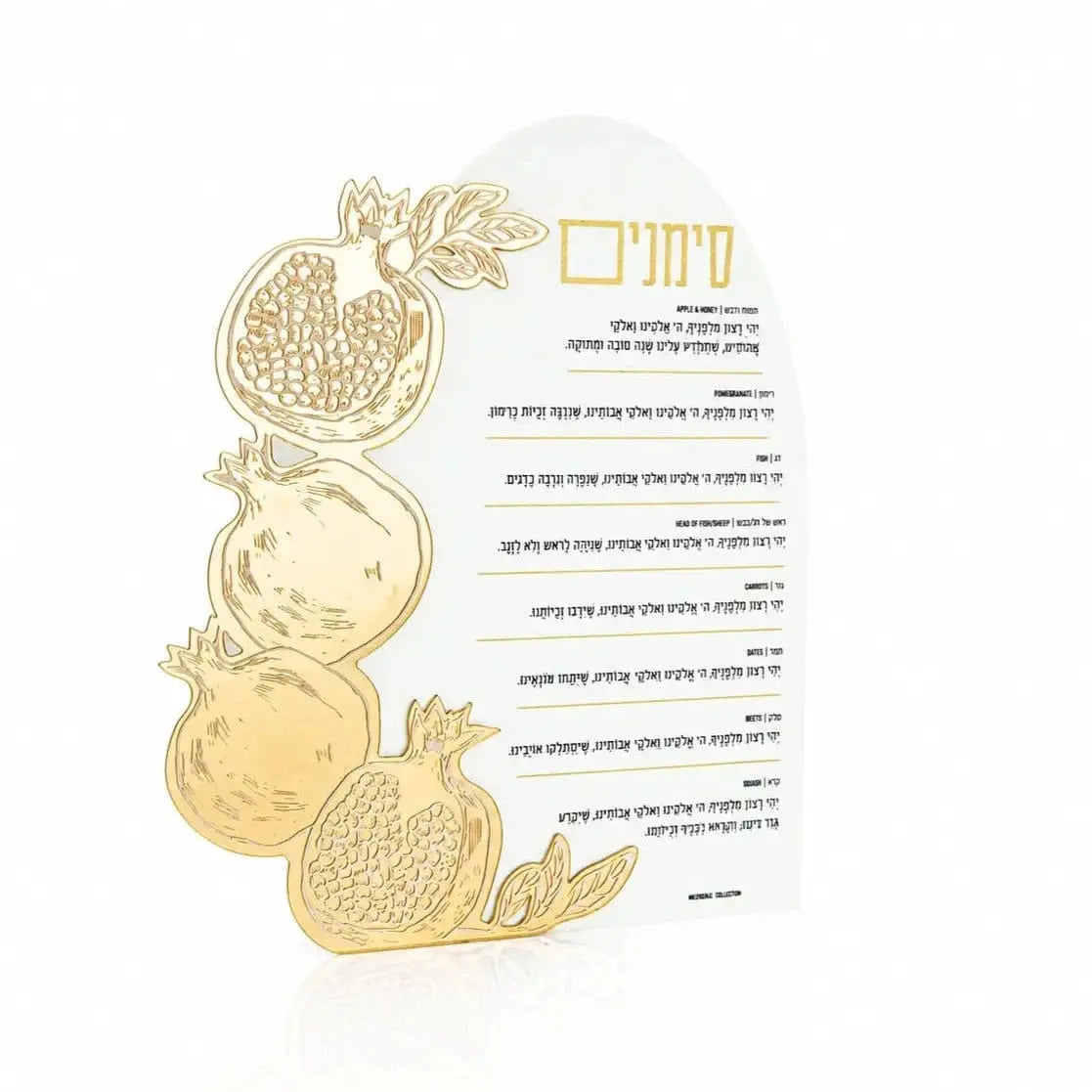
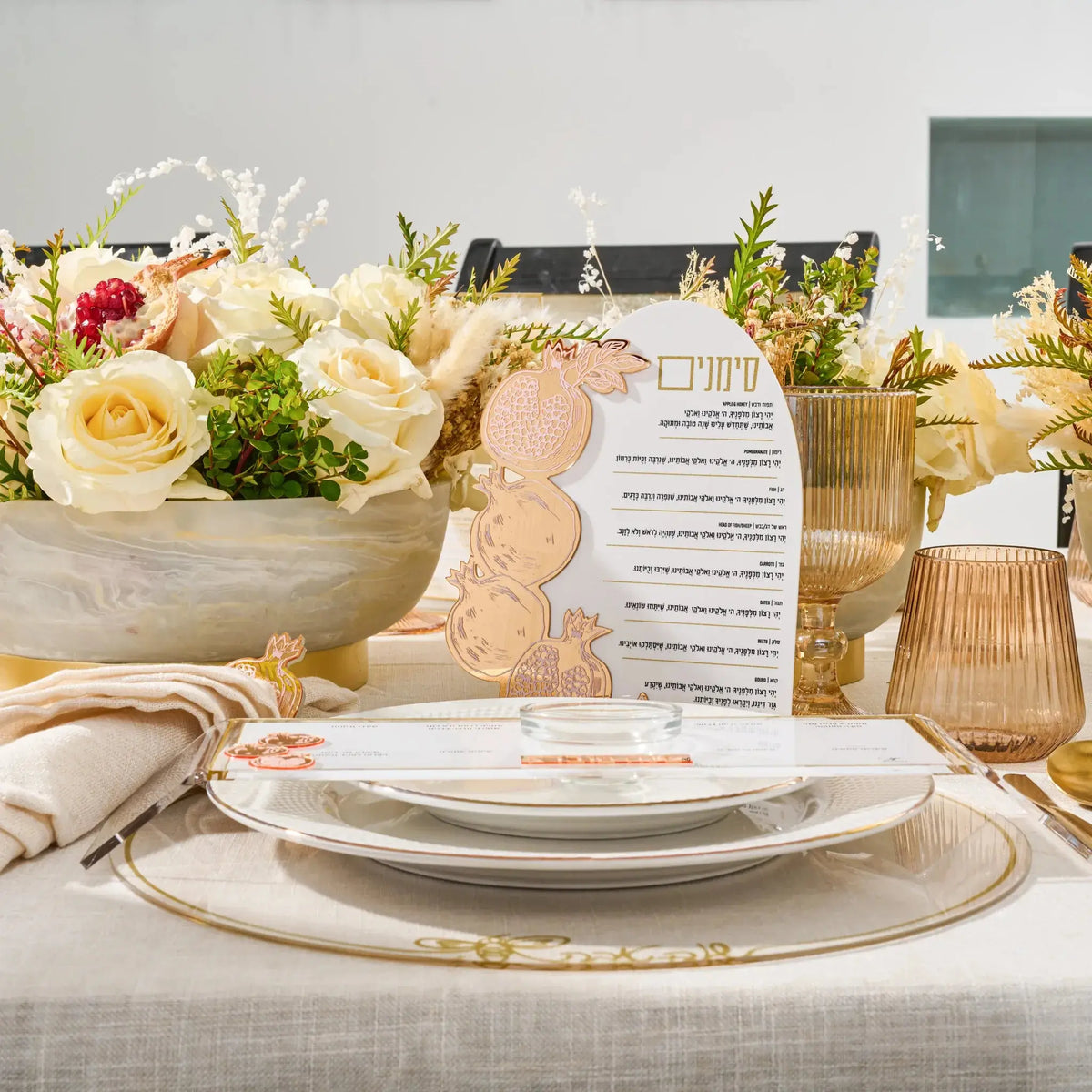
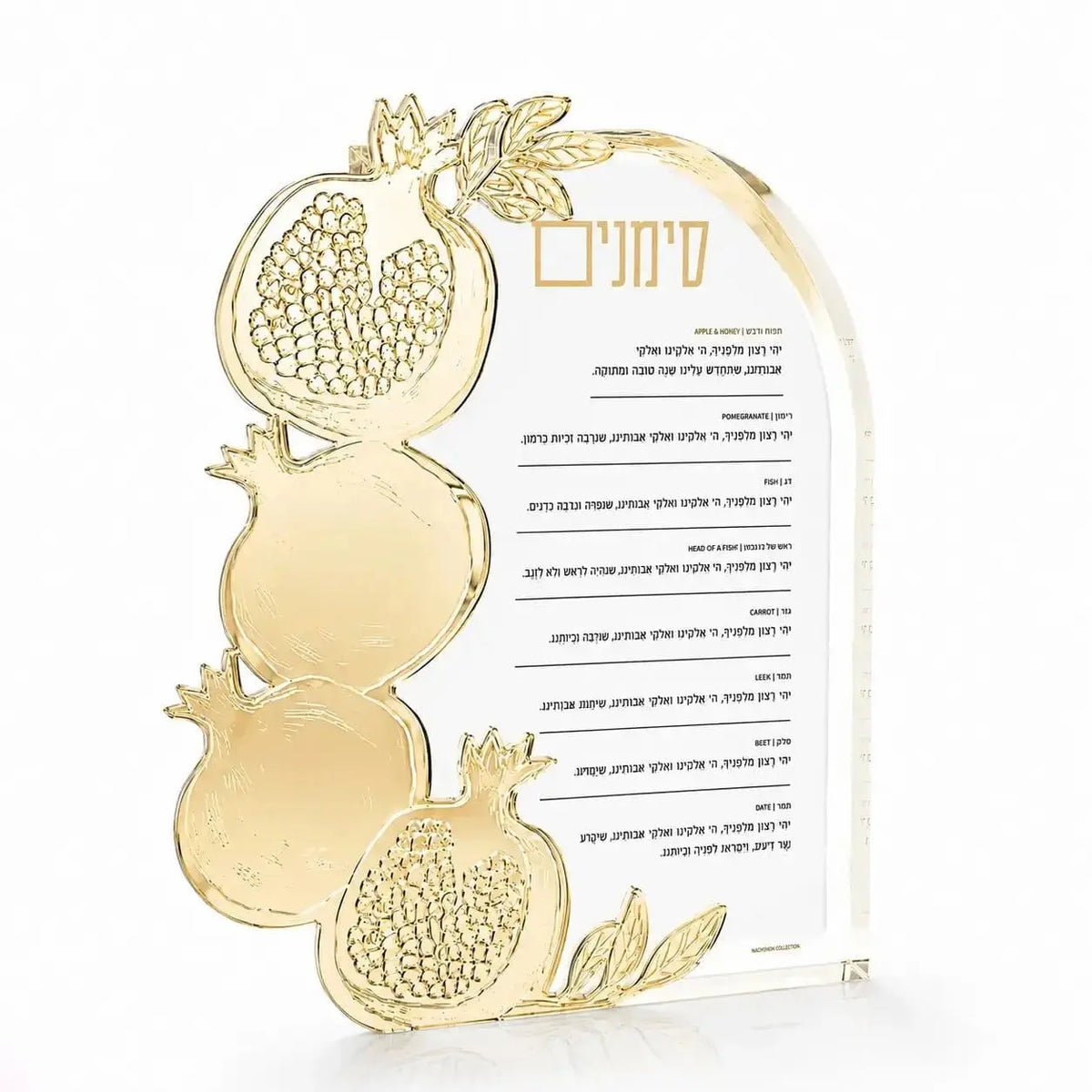
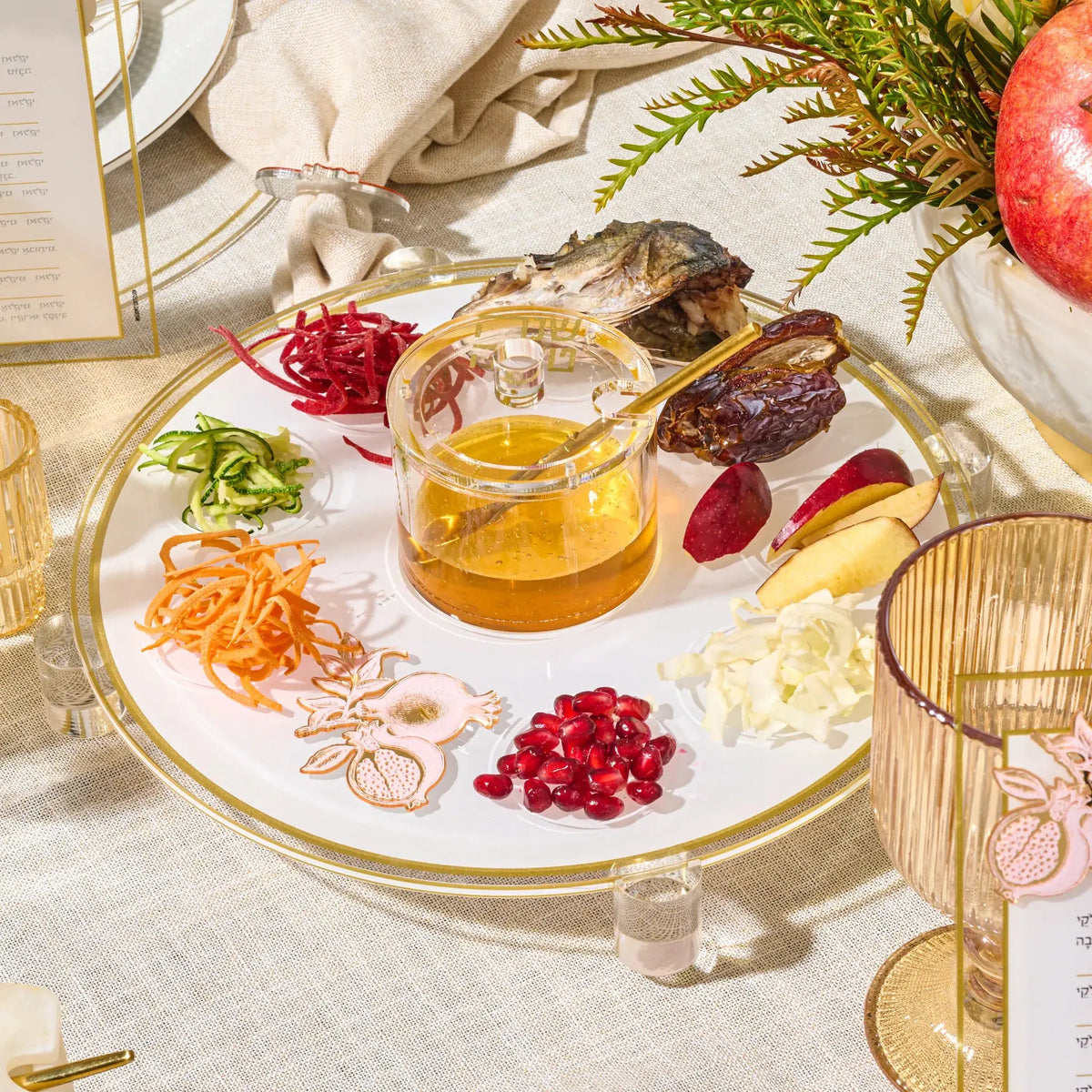
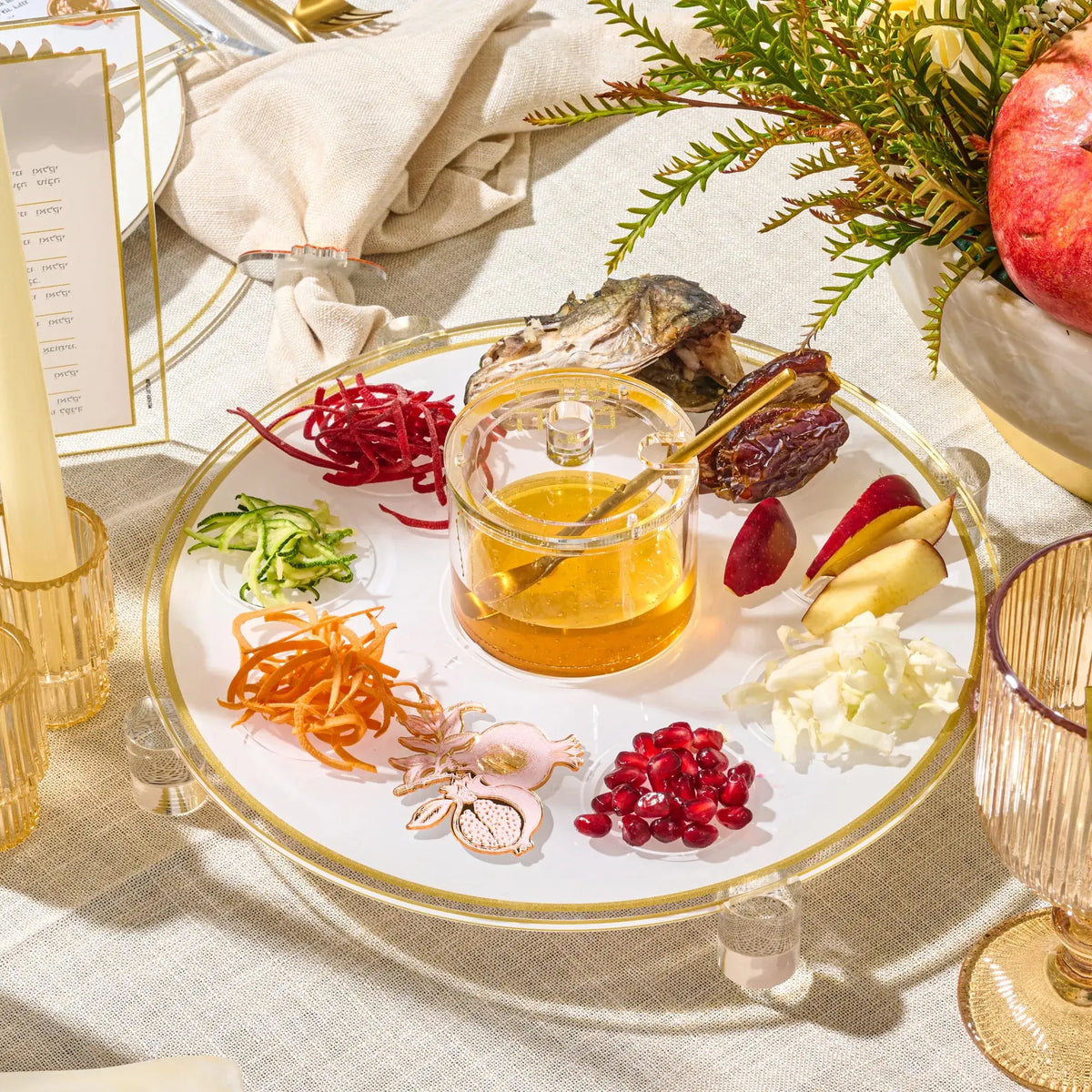
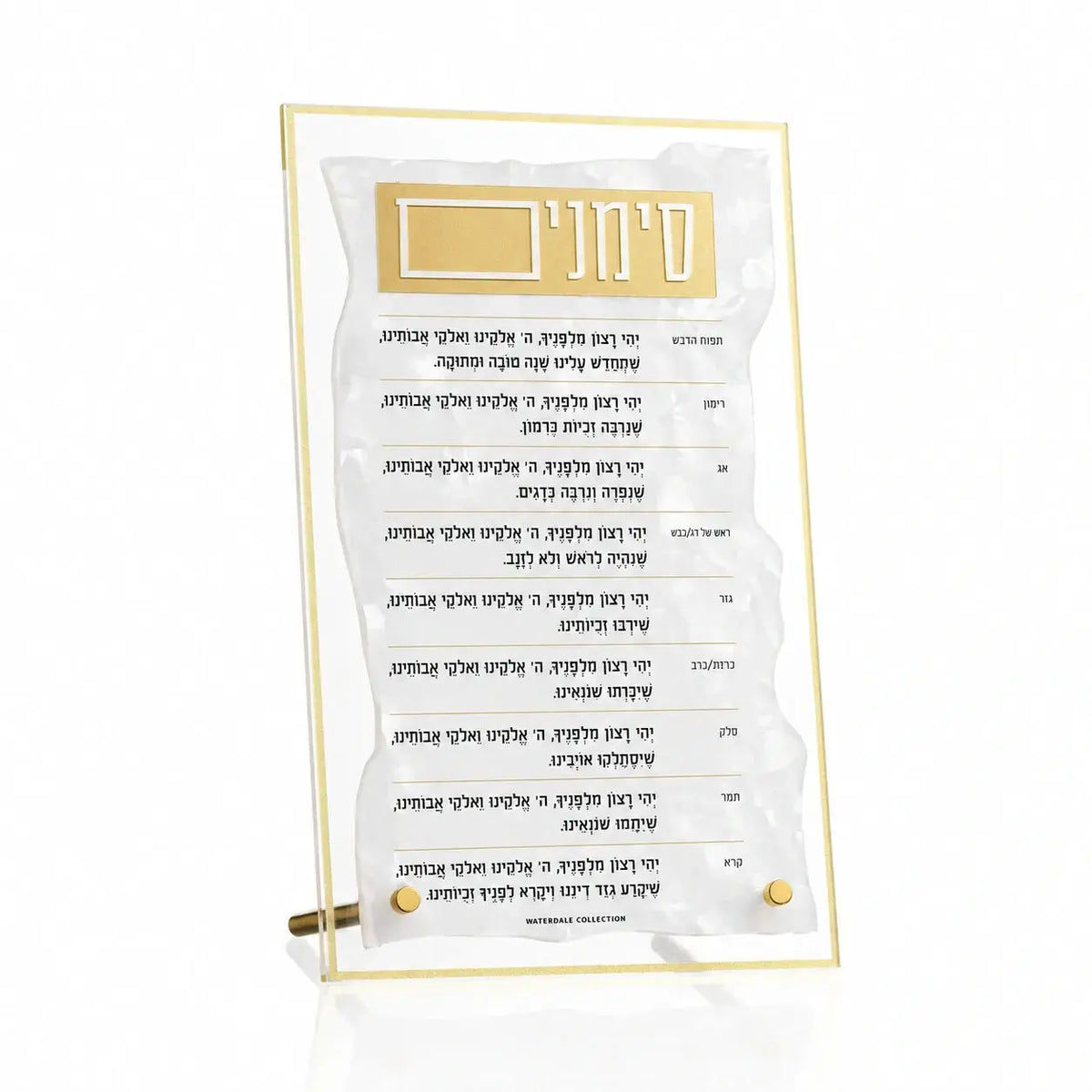
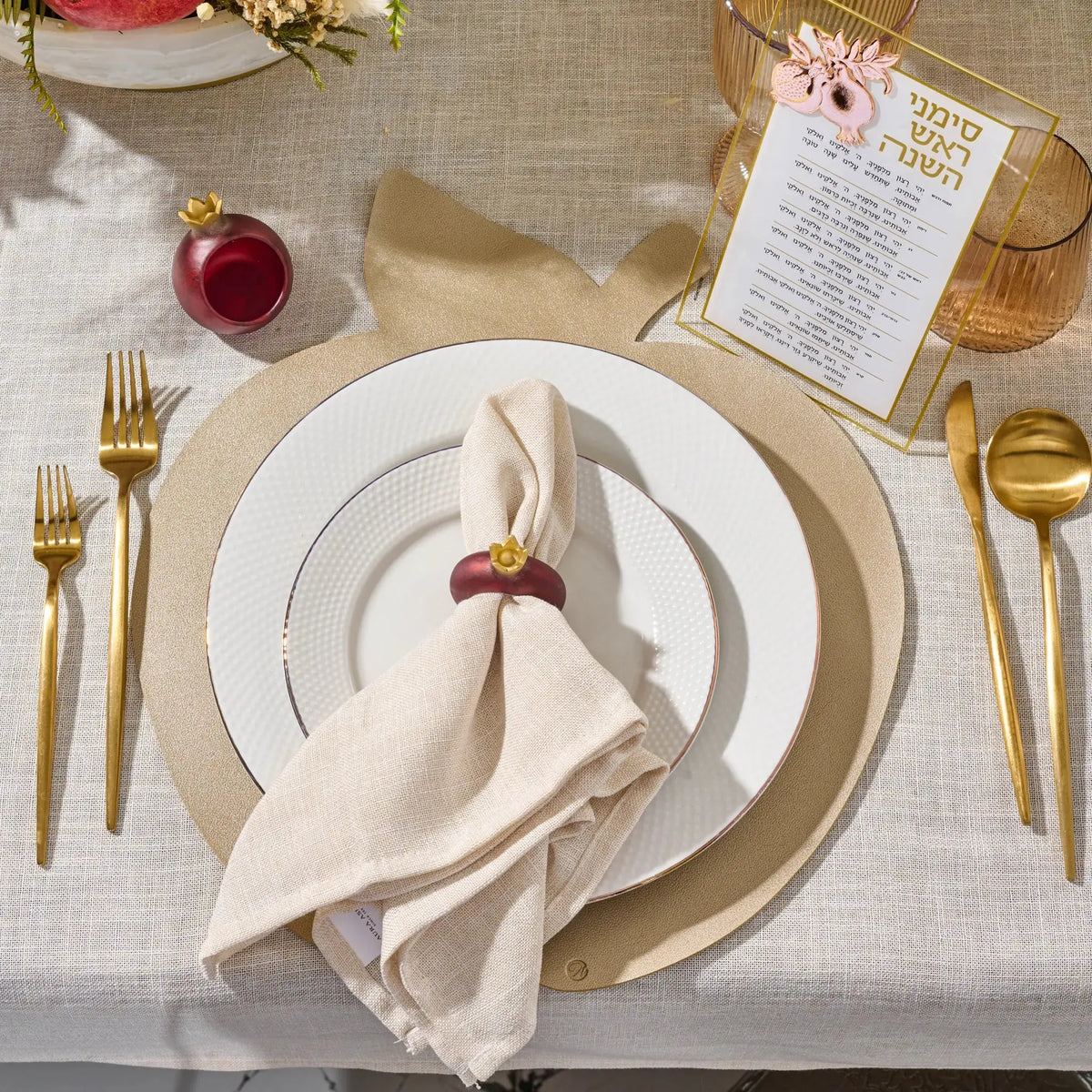
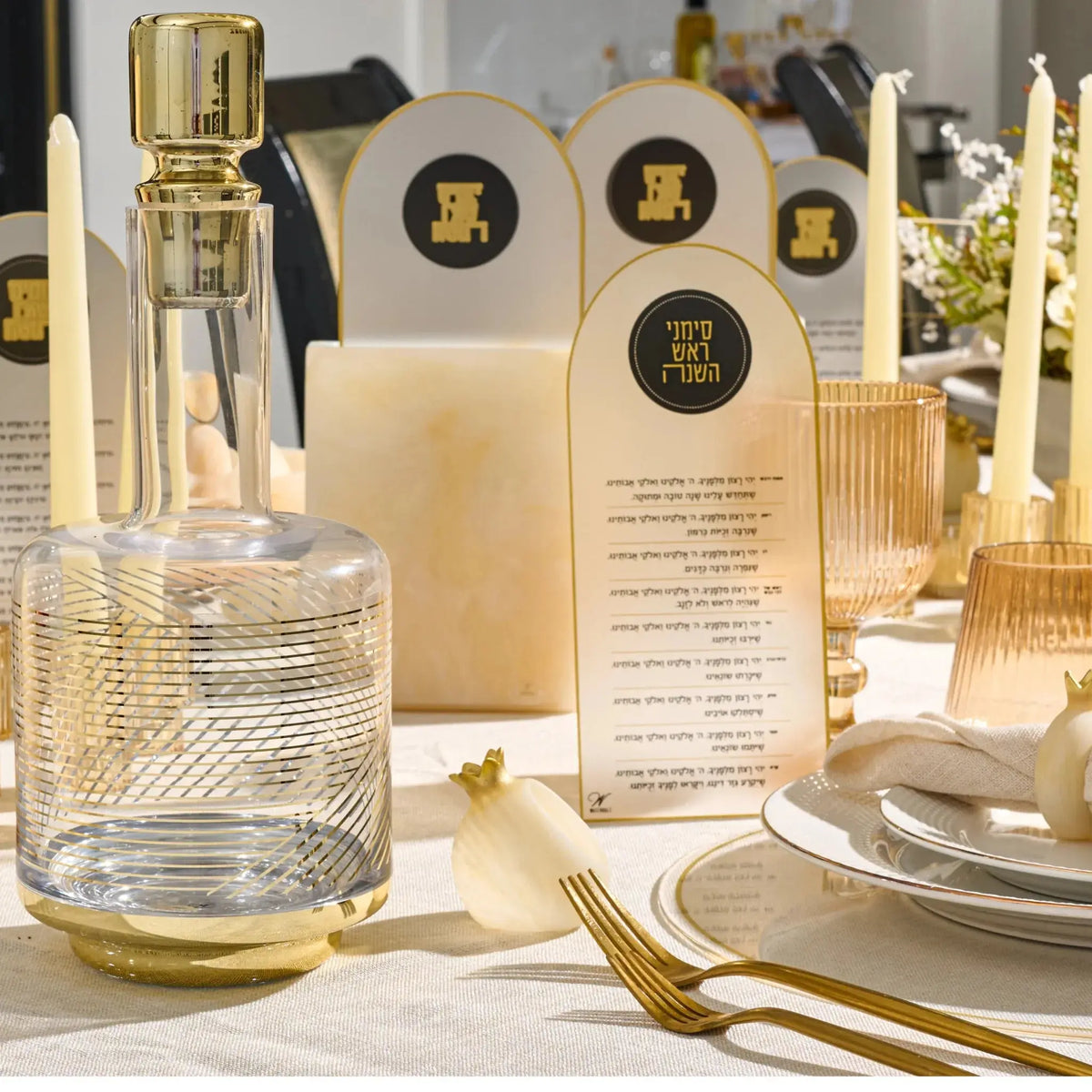
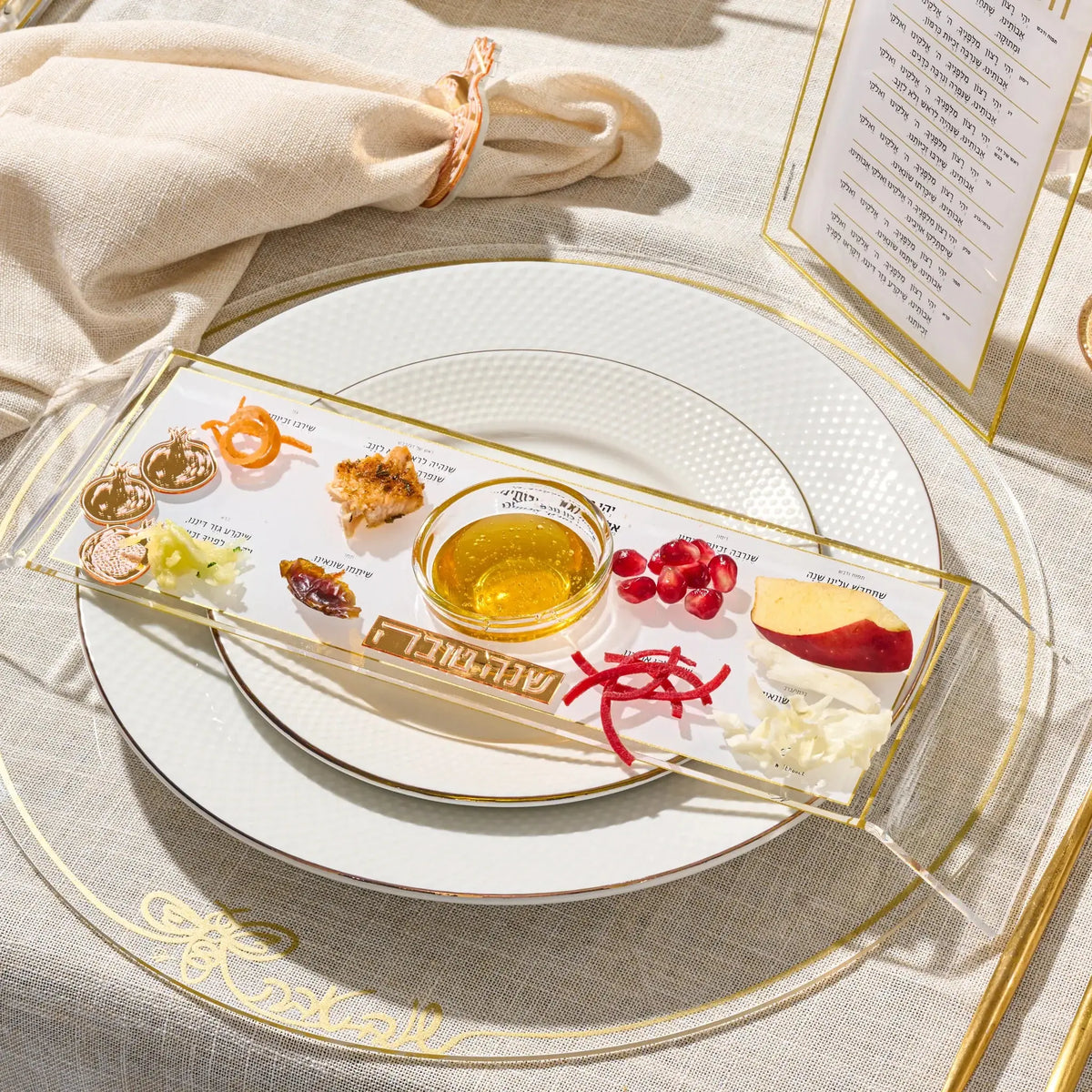
The pomegranate is eaten during the simanim with the prayer that our merits multiply like the seeds of a pomegranate. Tradition famously associates the fruit with 613 seeds, matching the 613 mitzvot — actual counts vary, but the symbolism has endured for centuries. The pomegranate (rimon) is also one of the seven species of the Land of Israel, which is why it has become the single most recognizable motif in Rosh Hashanah tableware and Judaica.
What is the difference between the Classic and Painted Pomegranate collections?
The Classic Pomegranate collection features etched, embossed, and carved pomegranate designs for a timeless, understated table, while the Painted Pomegranate collection uses hand-applied color with visible brushwork for a bolder, more artisanal look. Both build on the same Rosh Hashanah symbolism, and pieces from the two collections mix easily on one table. Choose classic for a formal, neutral tablescape and painted for a table with more warmth and color.
What is the pomegranate a symbol of in Judaism?
The pomegranate carries layered meaning: it's one of the seven species with which the Land of Israel is praised, tradition links its seeds to the 613 mitzvot, and pomegranates decorated the hem of the Kohen Gadol's robe in the Beis Hamikdash. On Rosh Hashanah it's eaten with the prayer that our merits multiply like its seeds. That depth is why the rimon remains the most enduring motif in Jewish decorative art.
What does the classic pomegranate design look like?
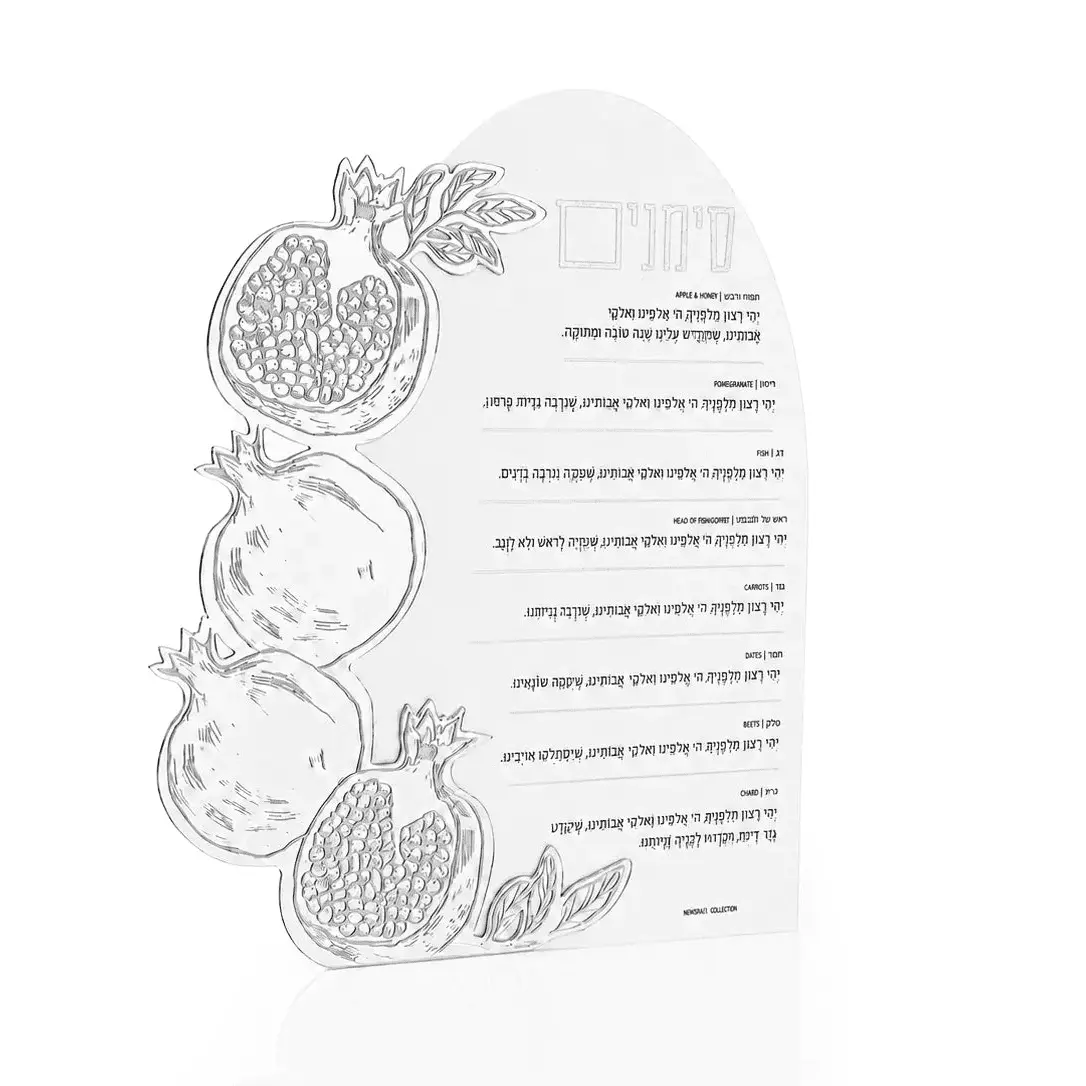
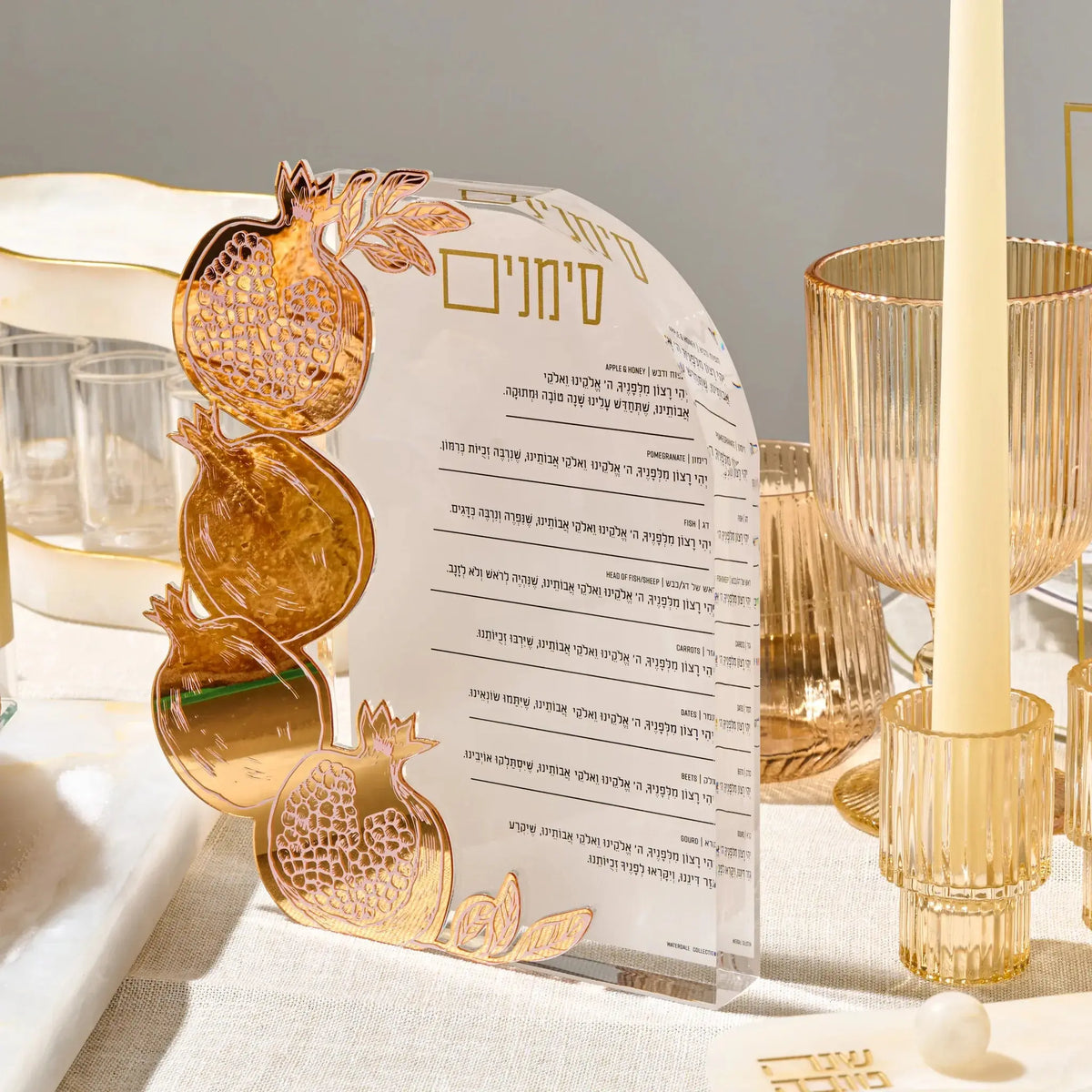
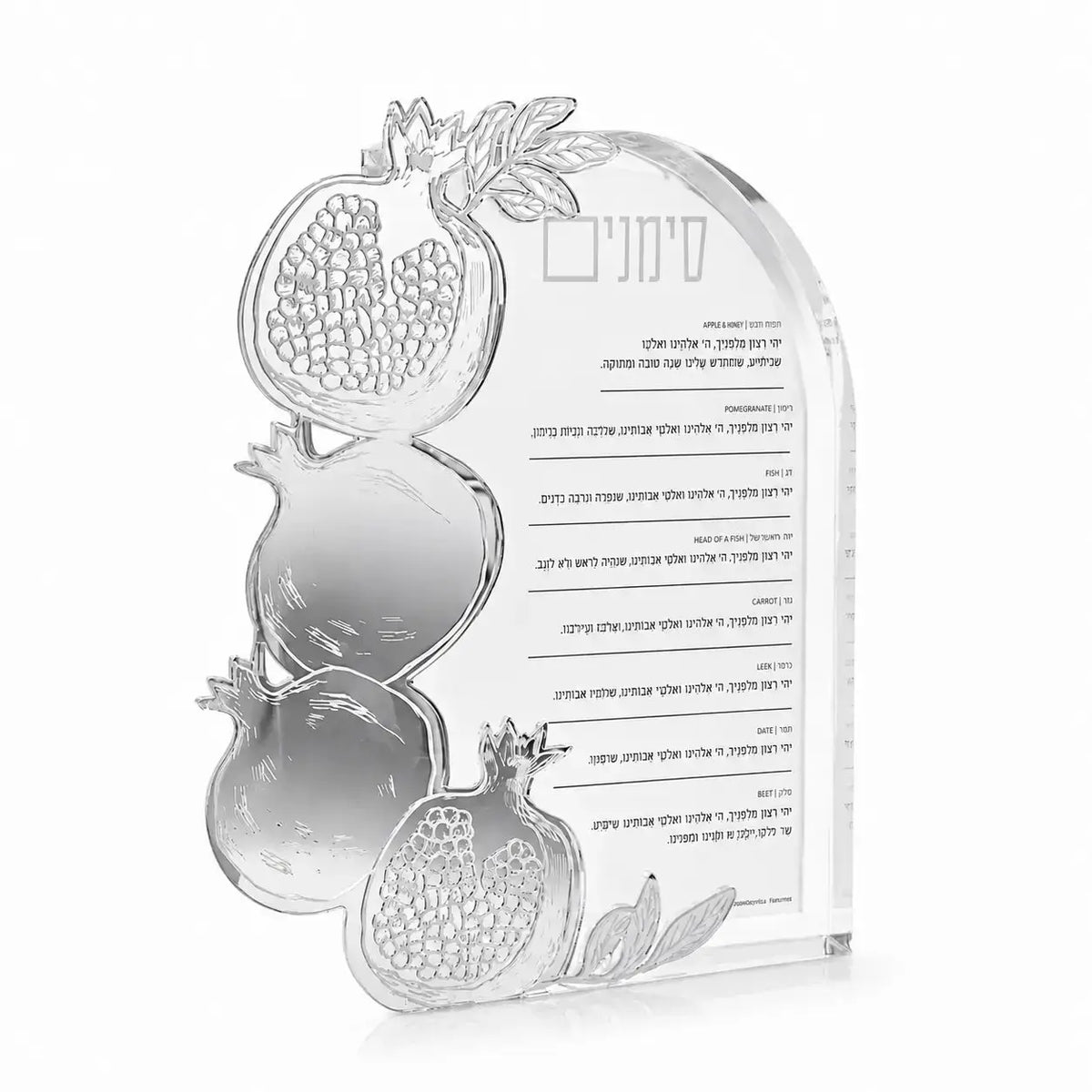
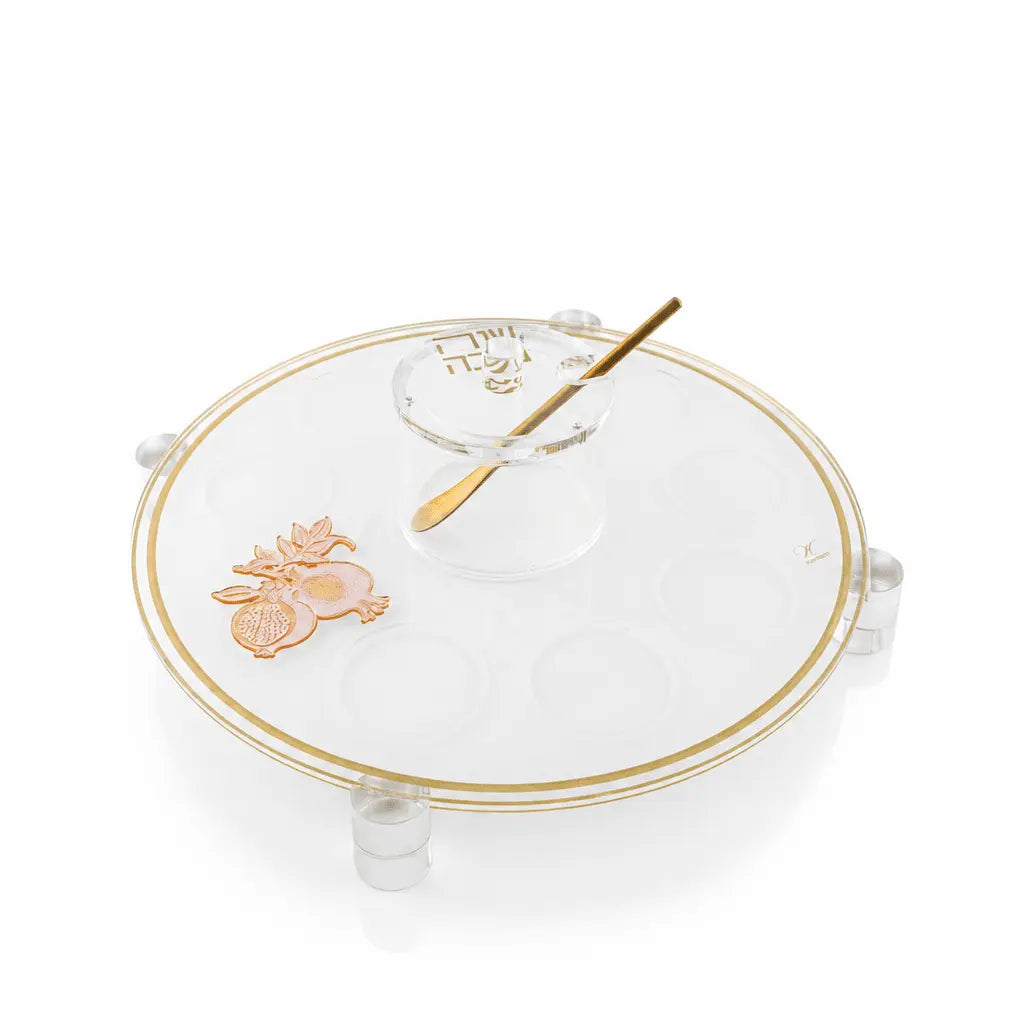
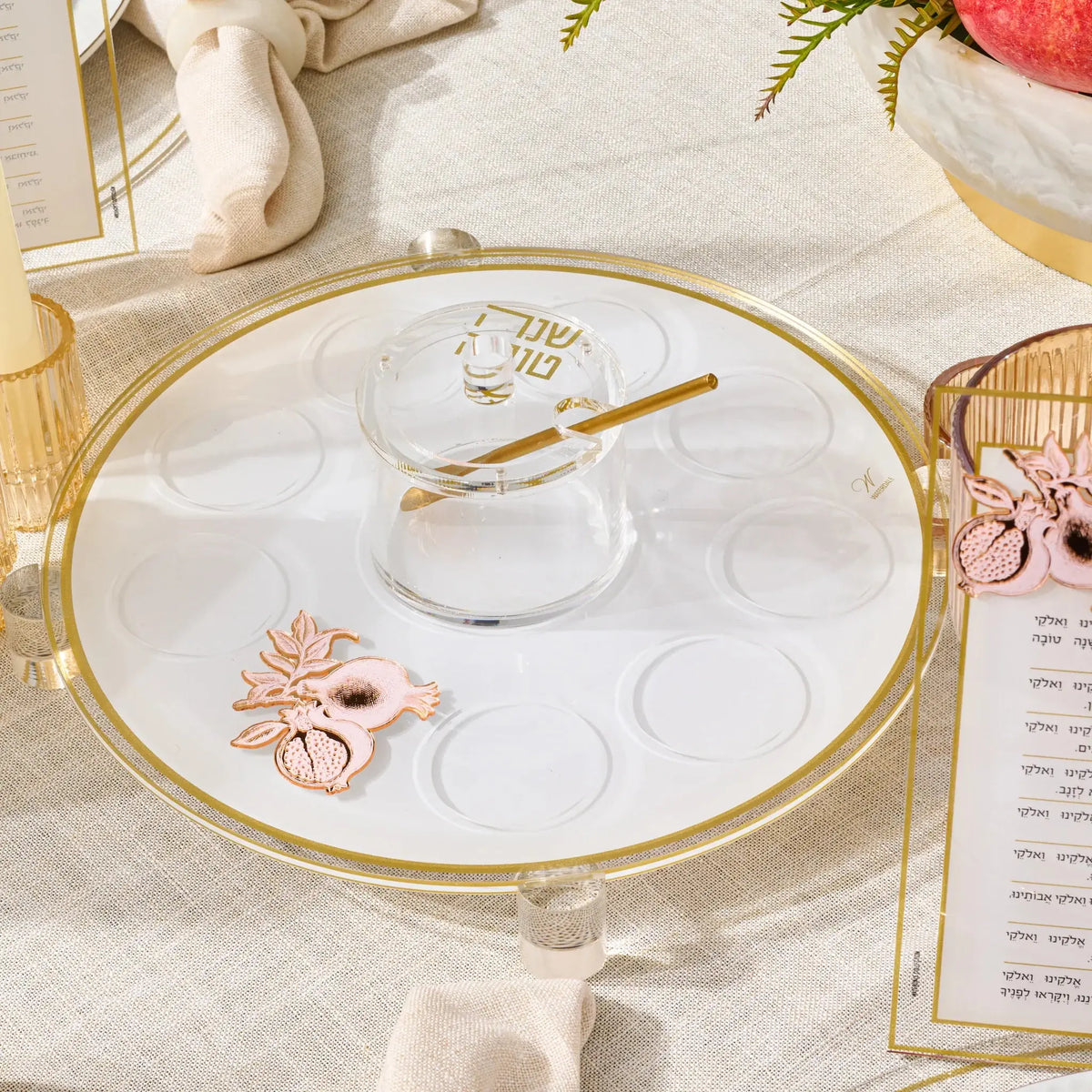
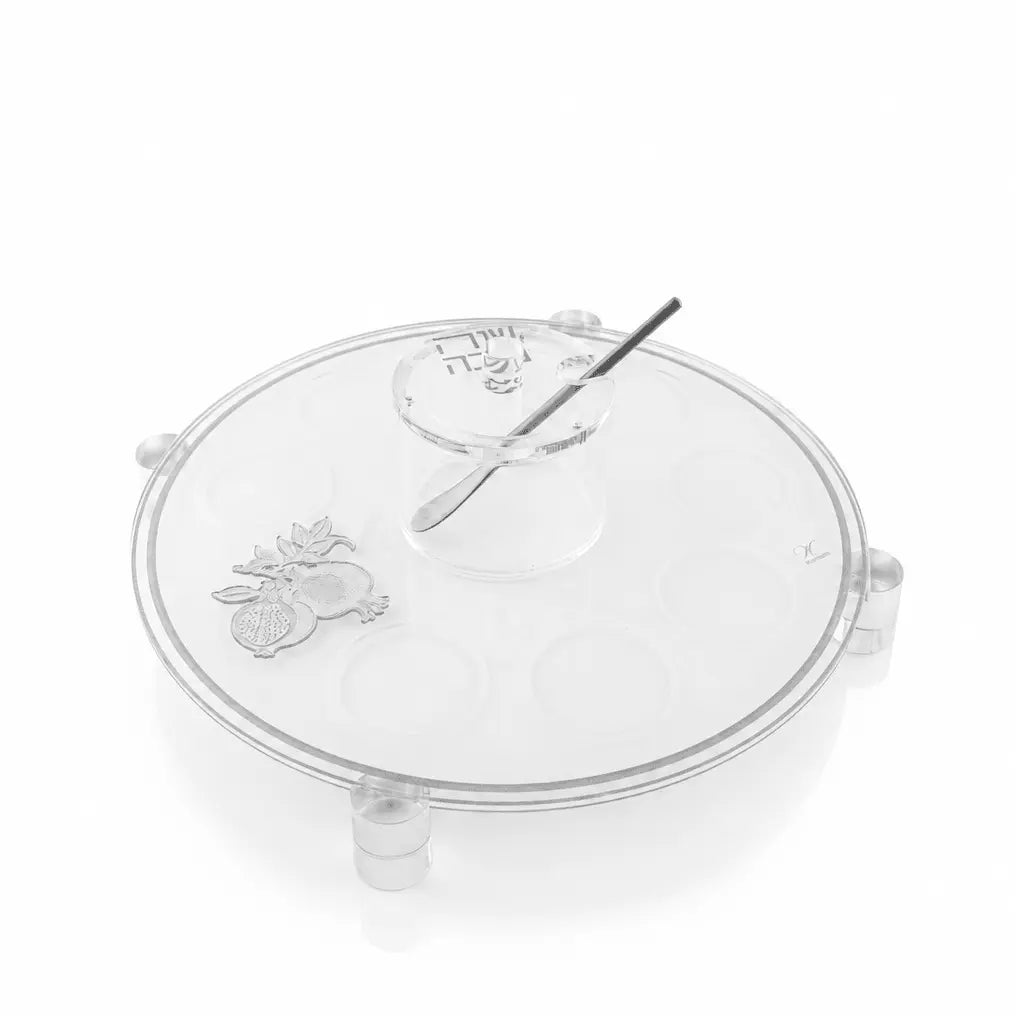
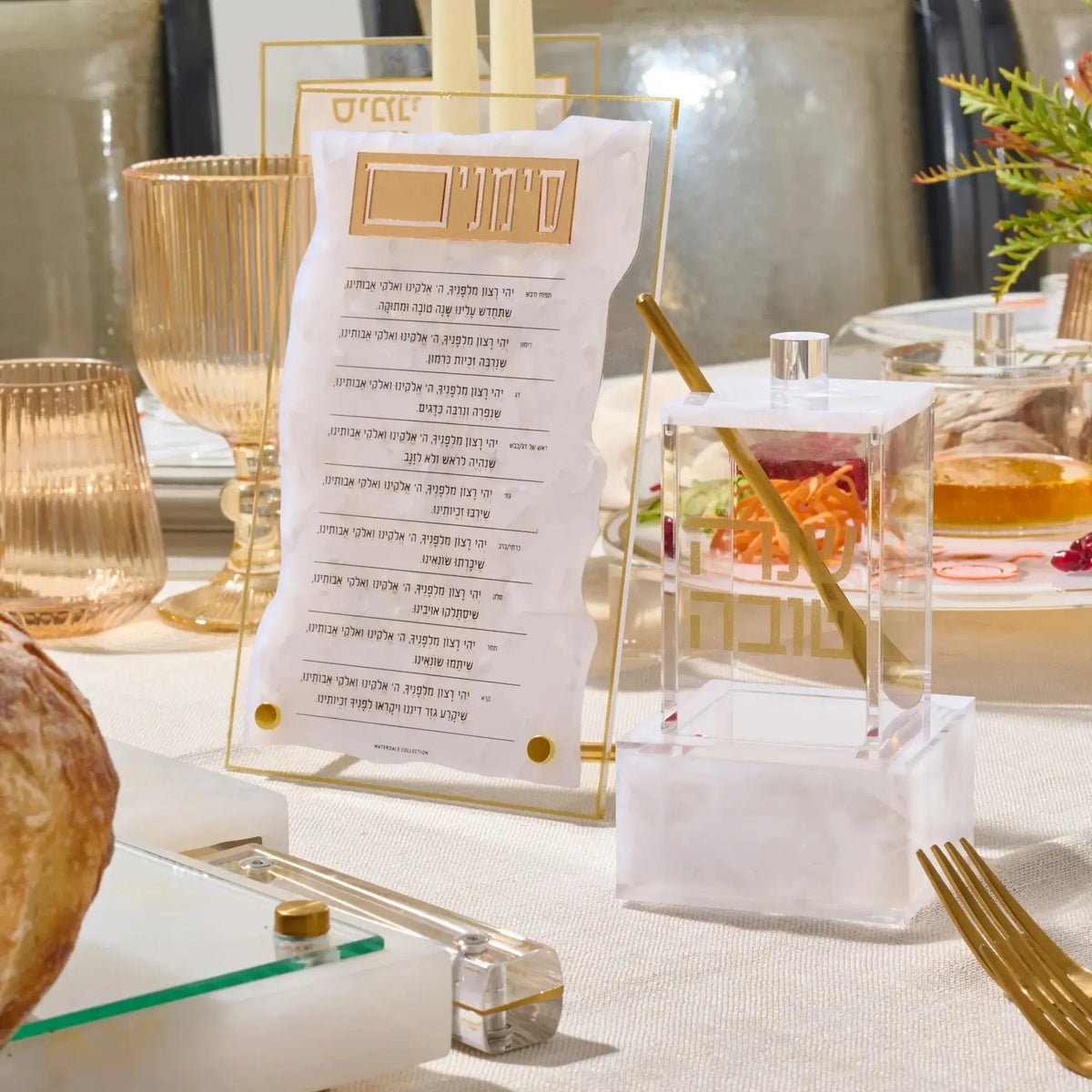
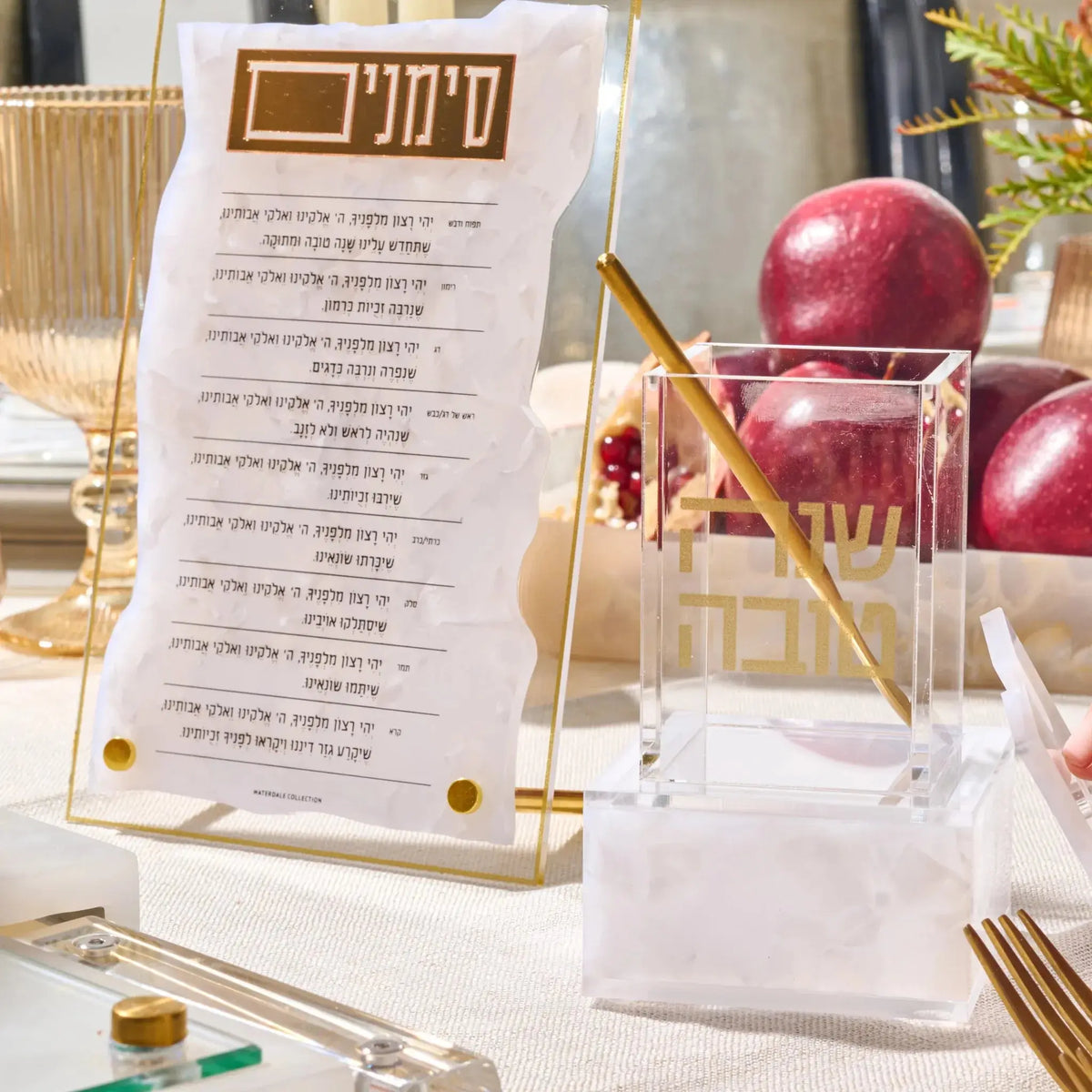
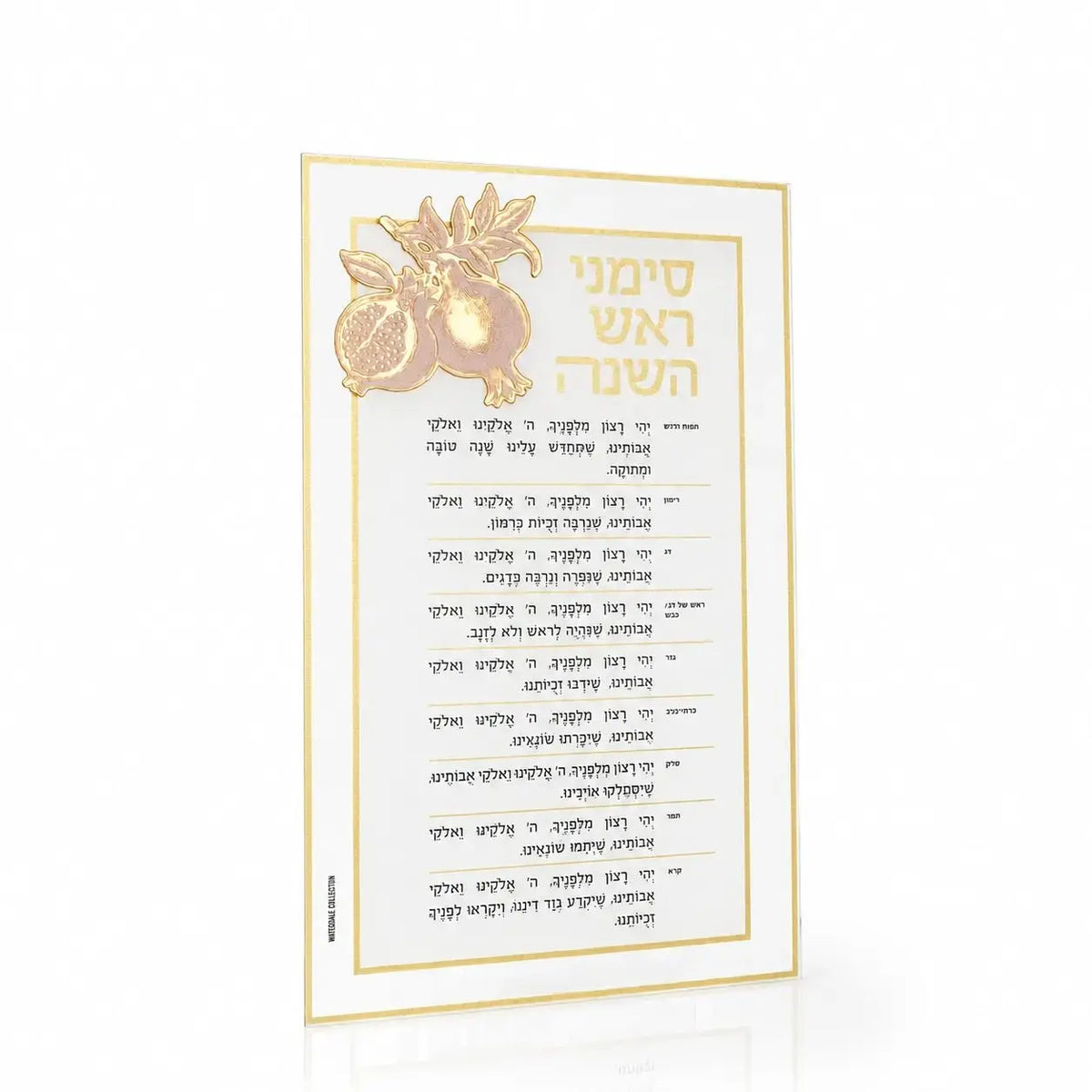
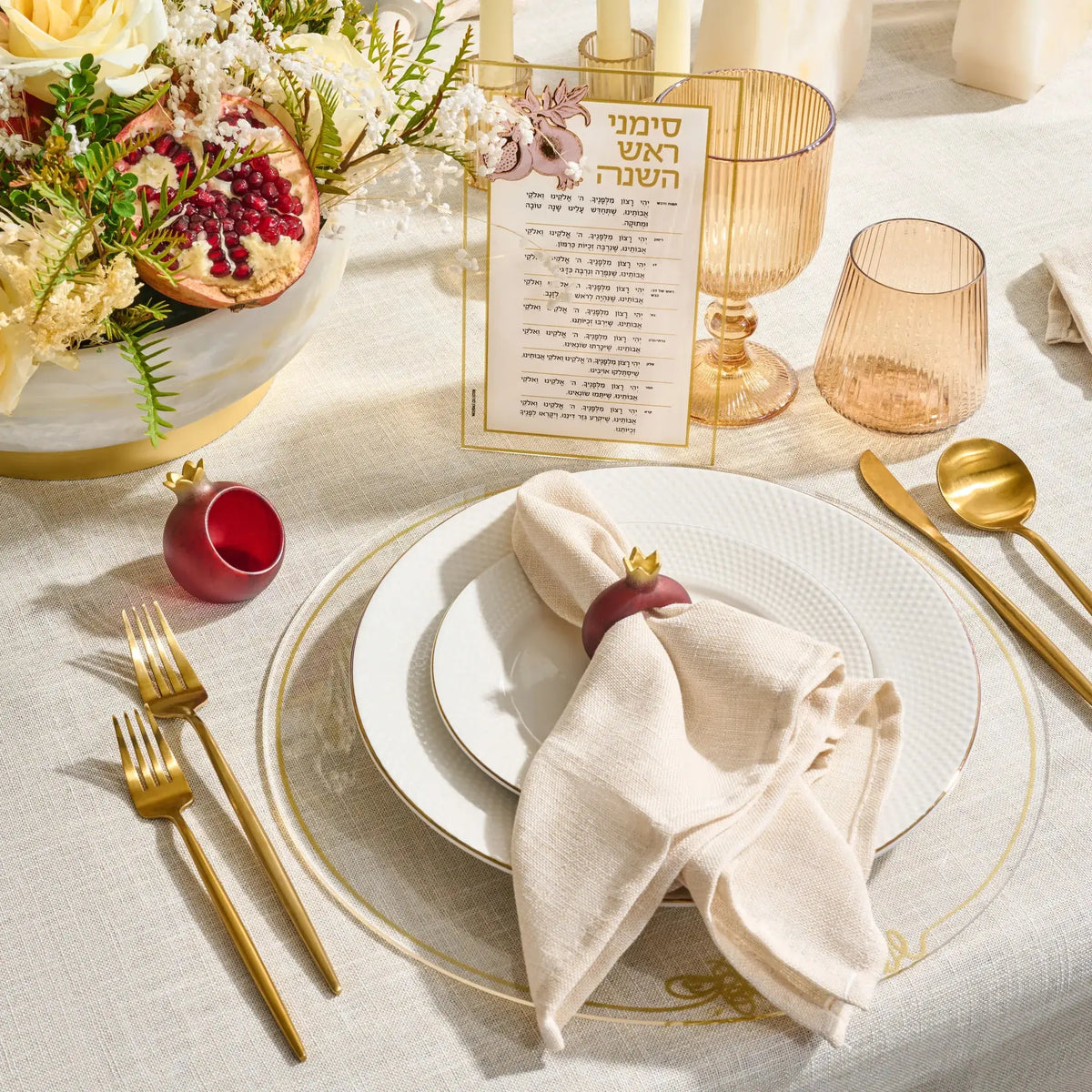
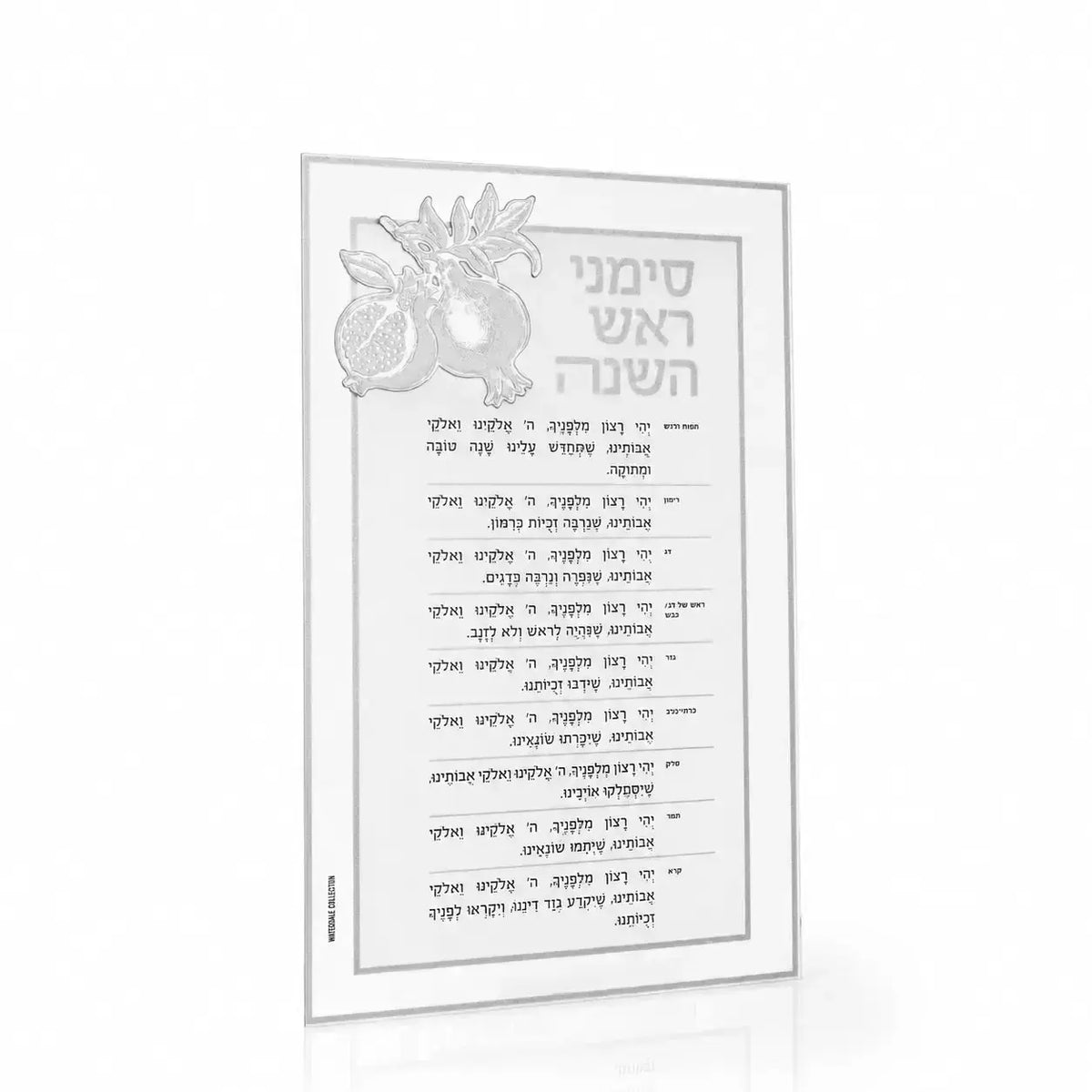
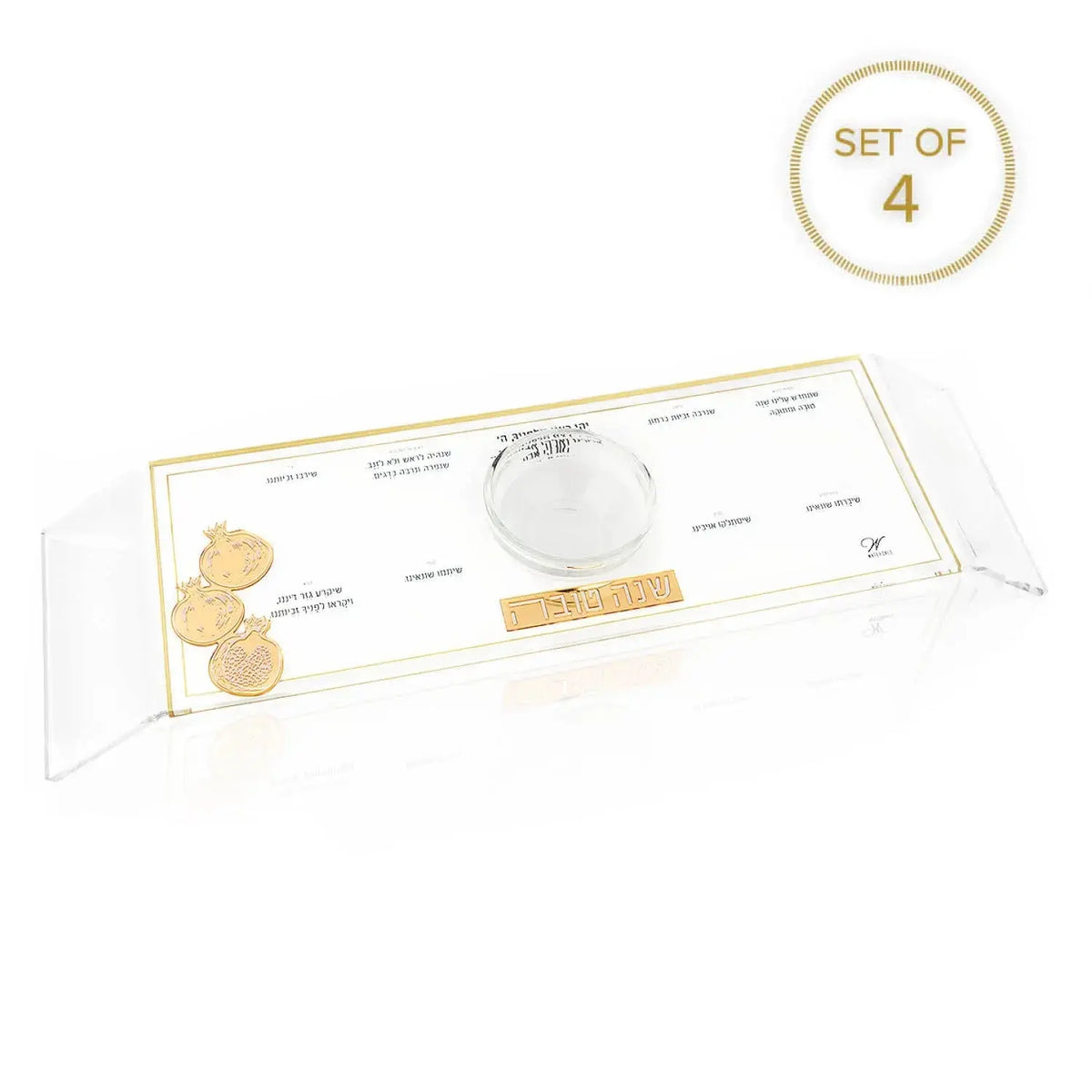
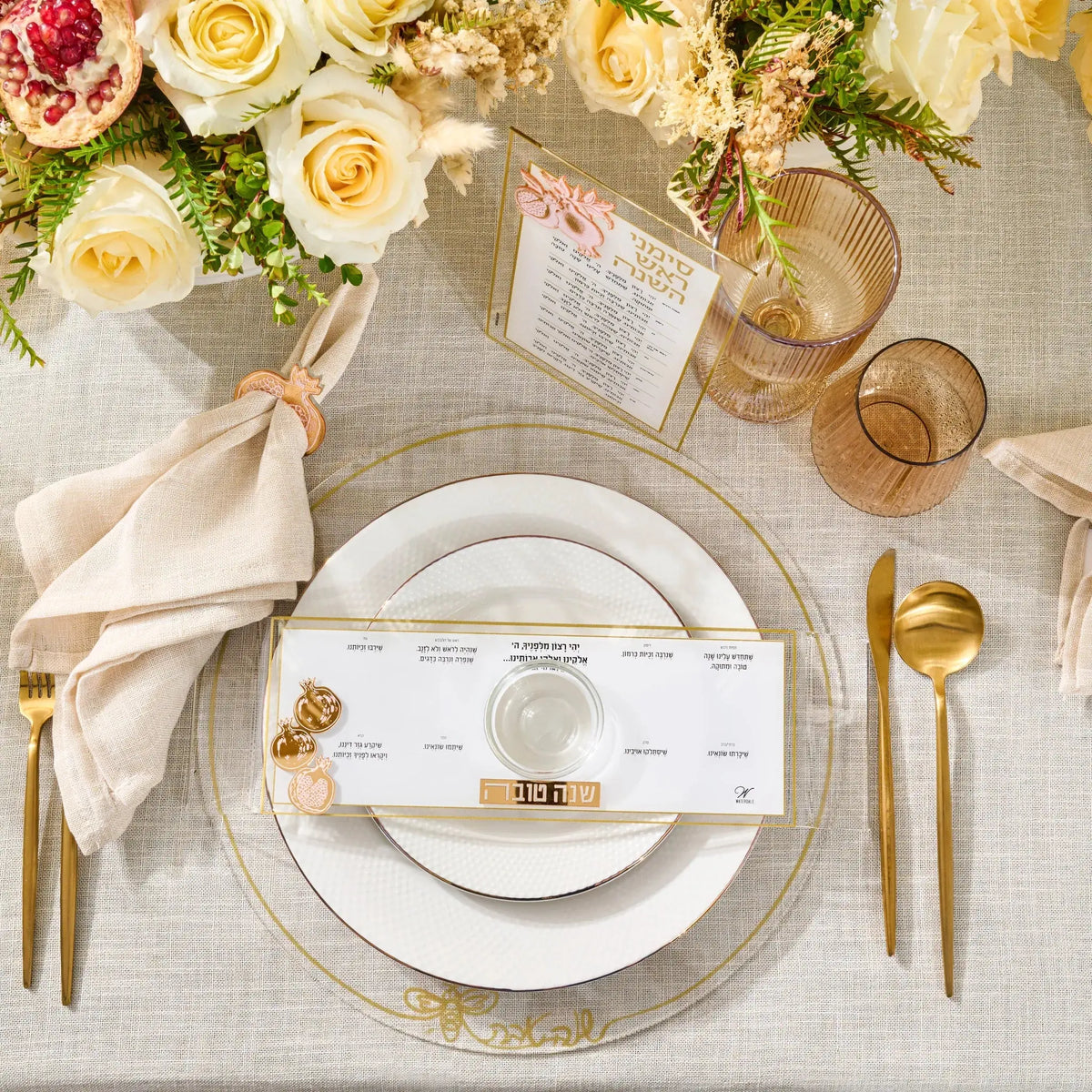
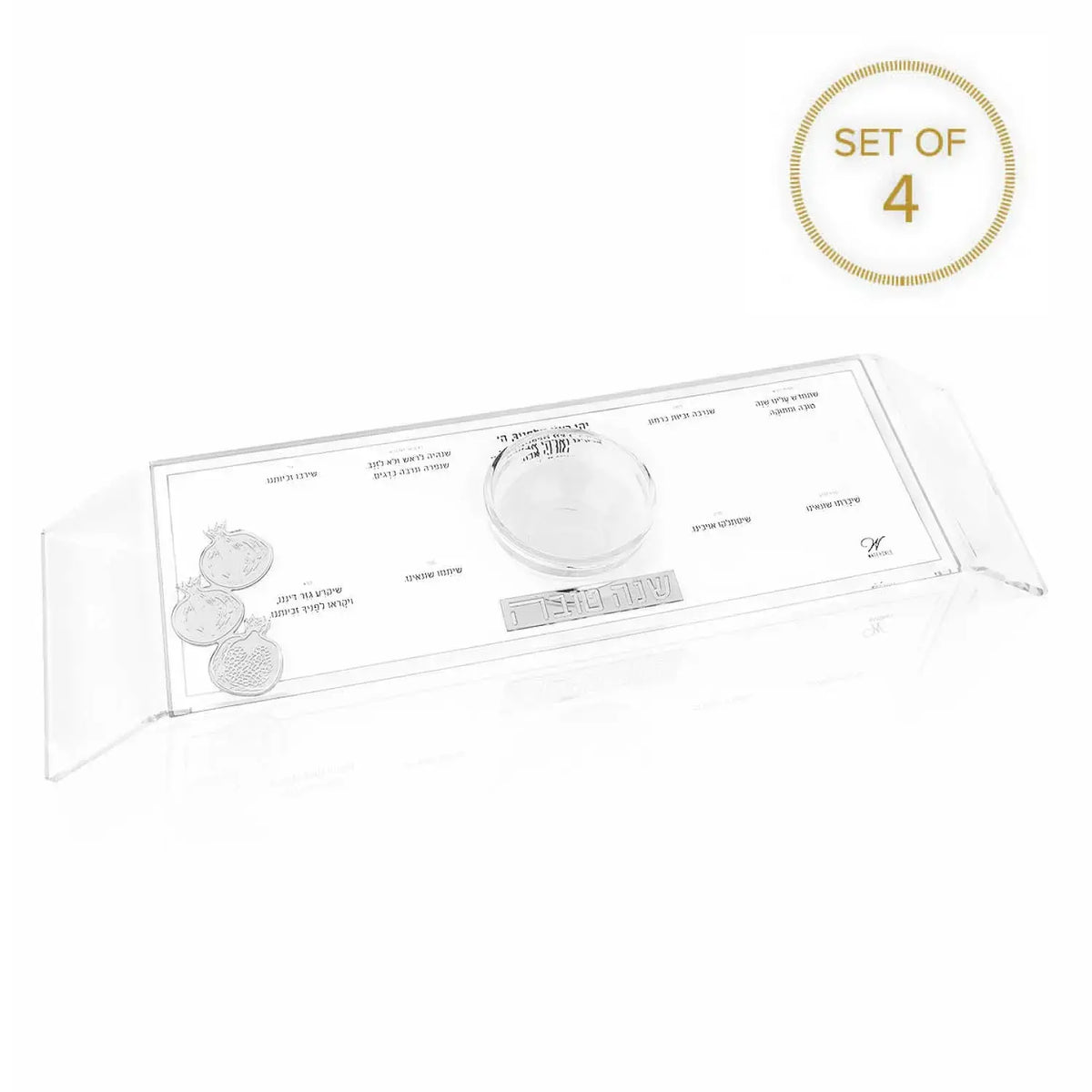
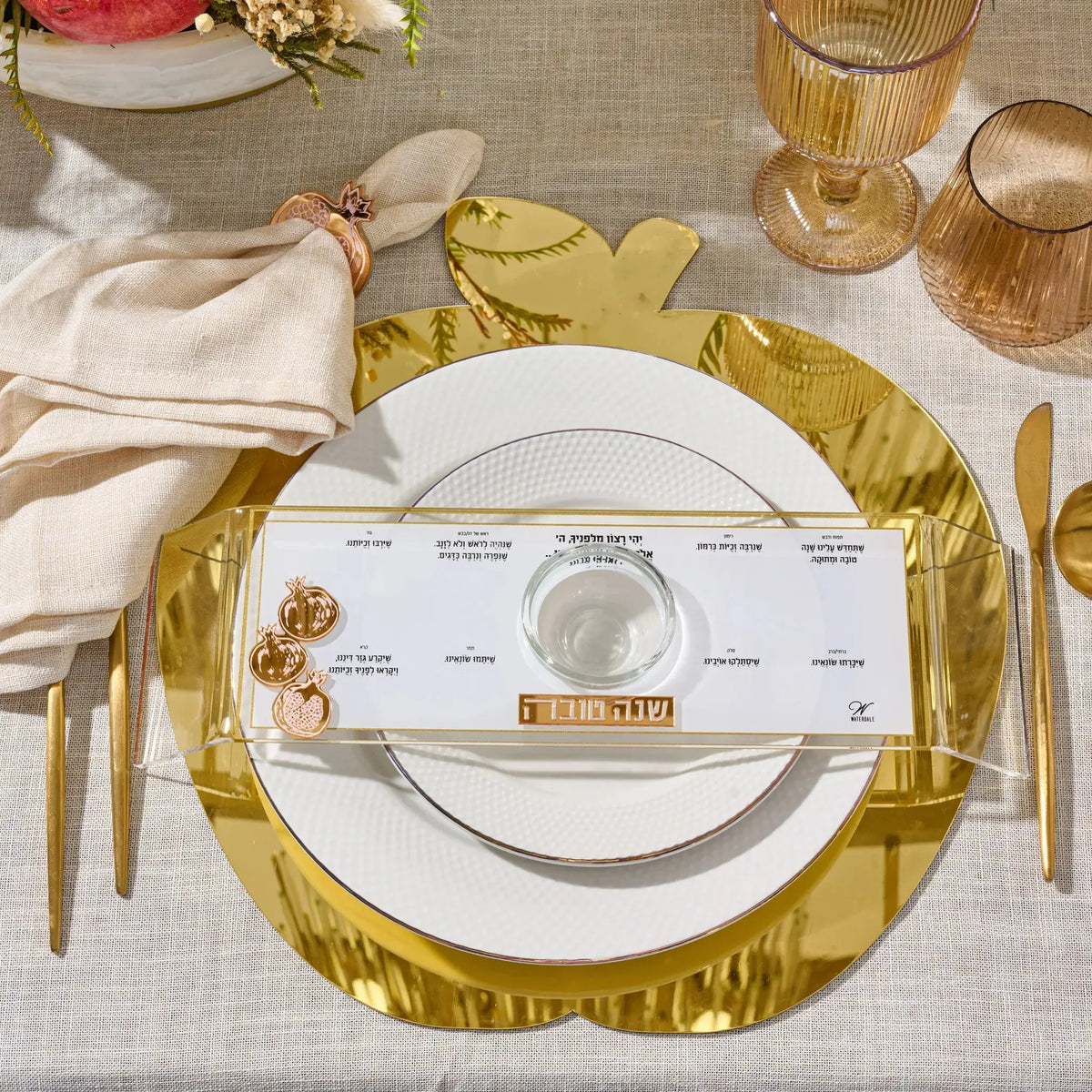
The classic treatment renders the pomegranate through etching, carving, or embossing rather than paint — a tone-on-tone, timeless look that reads elegant without being loud. It pairs with nearly any table style and won't feel dated as trends shift. It's the choice for households that want the symbolism with understatement.
Which pieces come in the classic pomegranate design?
The collection spans honey dishes, serving trays, Kiddush cups, and decorative accents in glass, metal, and ceramic — enough range to build a fully coordinated Rosh Hashanah table from this one design family. Because the motif repeats across item types, pieces added in later years match what you already own. It's a natural collection to build gradually.
Can pomegranate tableware be used beyond Rosh Hashanah?
Very much so — the pomegranate is also celebrated on Sukkos as one of the seven species, and its elegant look suits Shabbos tables and year-round entertaining. Many households leave their pomegranate pieces out on display rather than packing them away after Tishrei. That versatility is a big part of the design's lasting popularity.
How do I care for etched glass and ceramic pomegranate pieces?
Hand-wash etched and carved pieces with a soft cloth — repeated dishwasher cycles and abrasive sponges dull the fine detail that makes the design. Store with soft padding between items so raised patterns don't scratch neighboring pieces. Treated gently, etched glass keeps its crispness for decades.
Early access to new releases, limited restocks, and occasional updates.