


We're closed for Shabbos. We reopen [[opentime]]. Time until we reopen: [[countdown]]. Thanks for understanding.
Why do we dip an apple in honey on Rosh Hashanah?
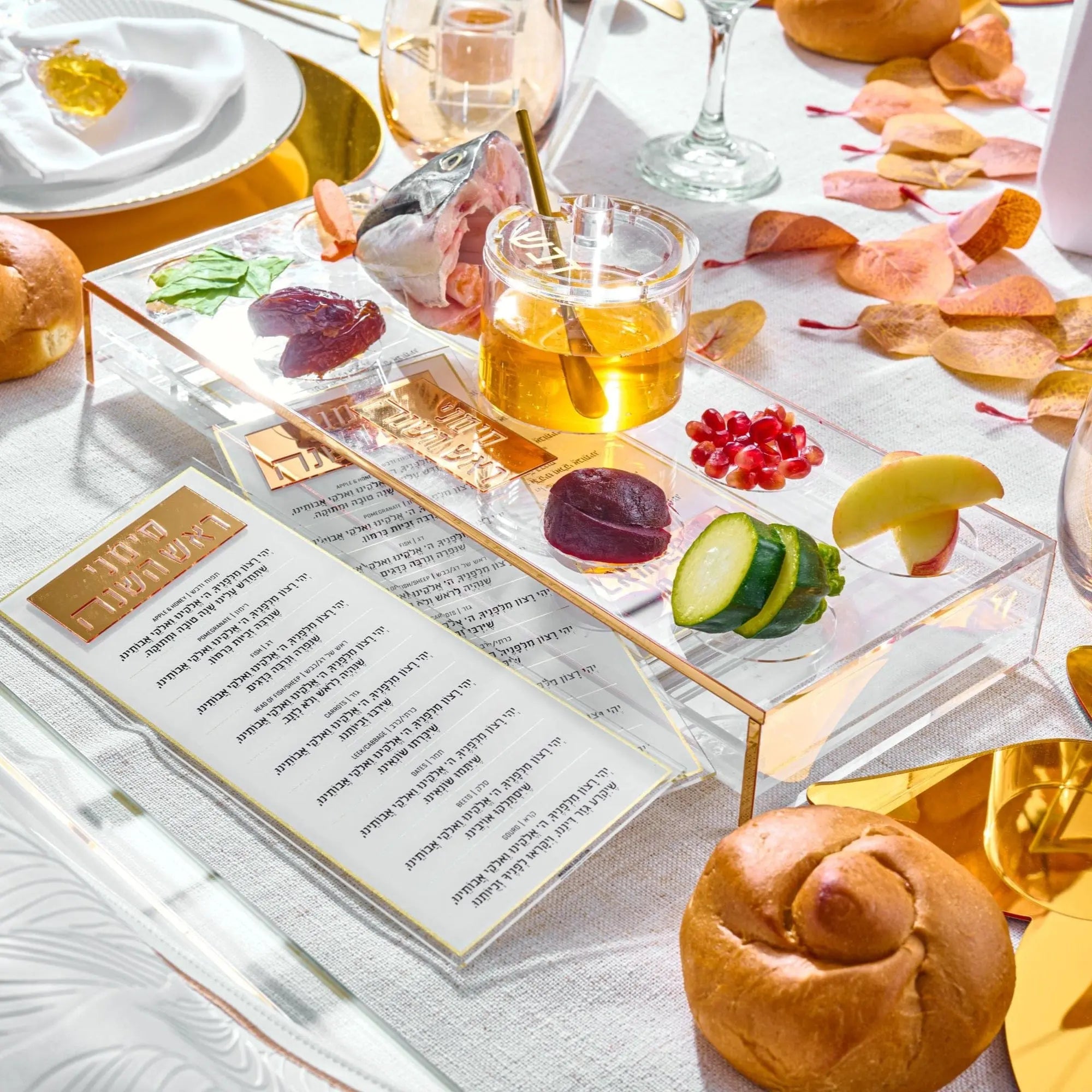
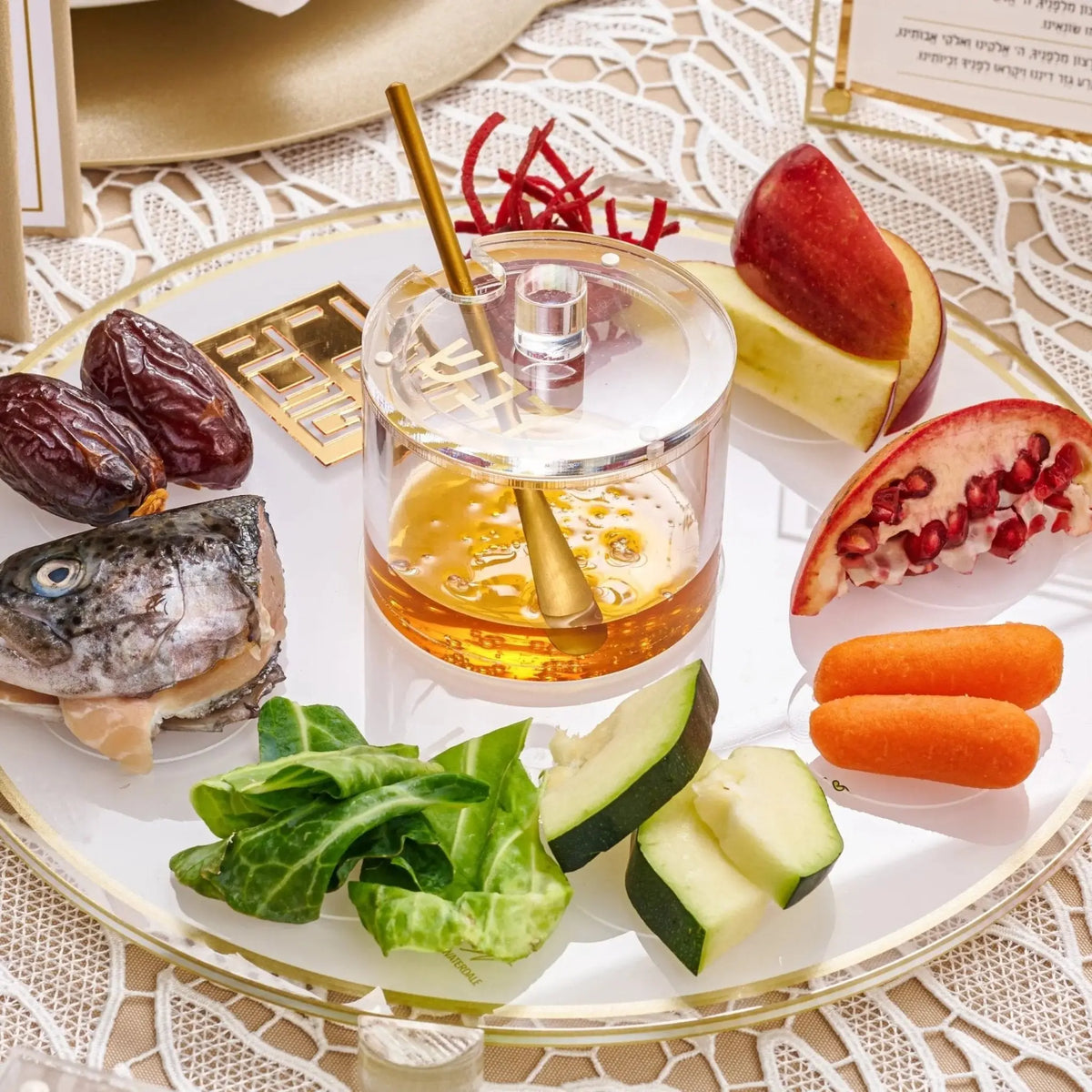
Dipping an apple in honey is the most famous of the Rosh Hashanah simanim — the symbolic foods eaten on the night of the Jewish New Year. The Talmud teaches that eating symbolic foods at the start of the year is a siman tov, a good omen, and the apple's natural sweetness doubled by honey expresses our prayer for a shanah tovah u'metukah, a good and sweet new year. That's why a dedicated honey dish sits at the center of nearly every Rosh Hashanah table.
What are the simanim — the symbolic foods eaten on Rosh Hashanah?
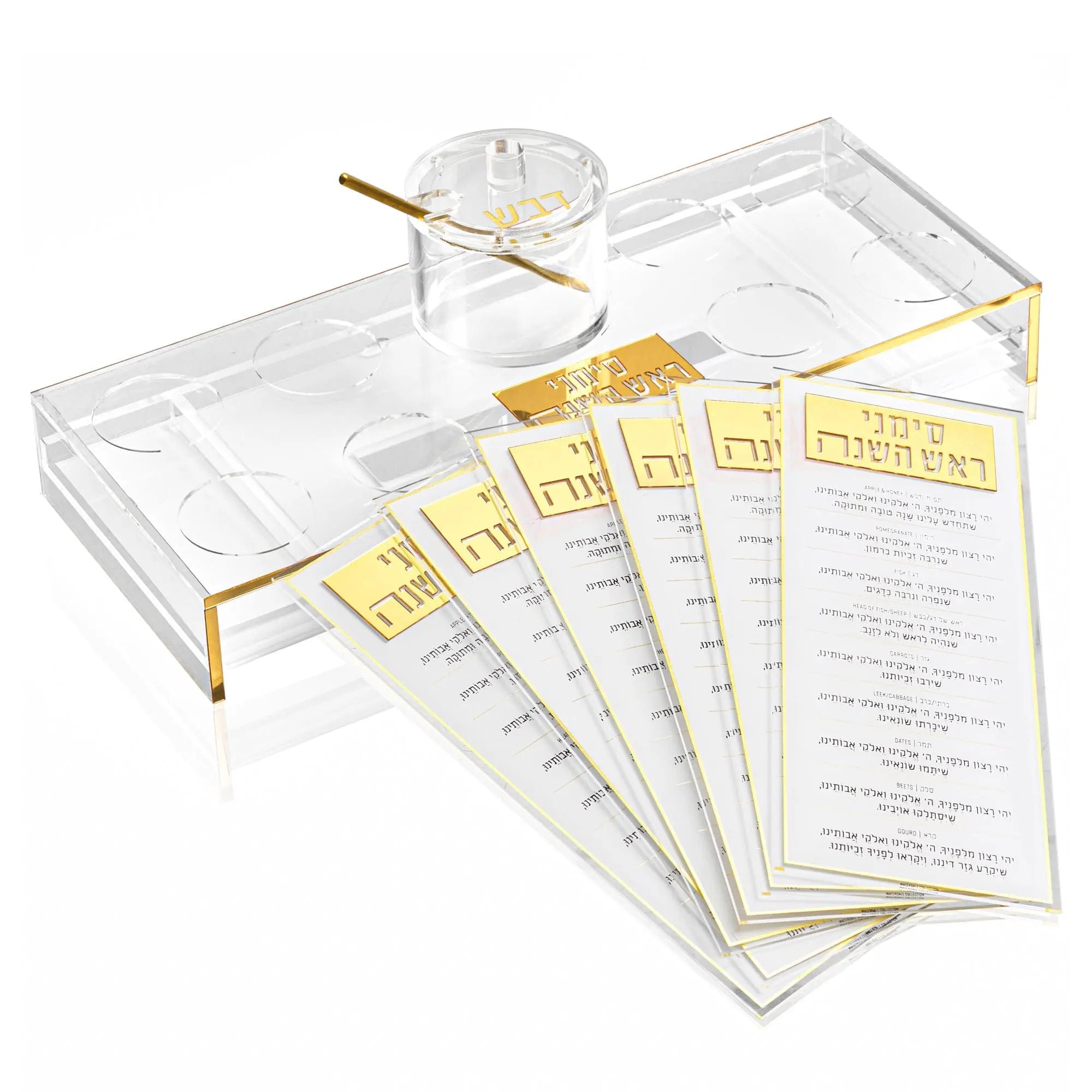
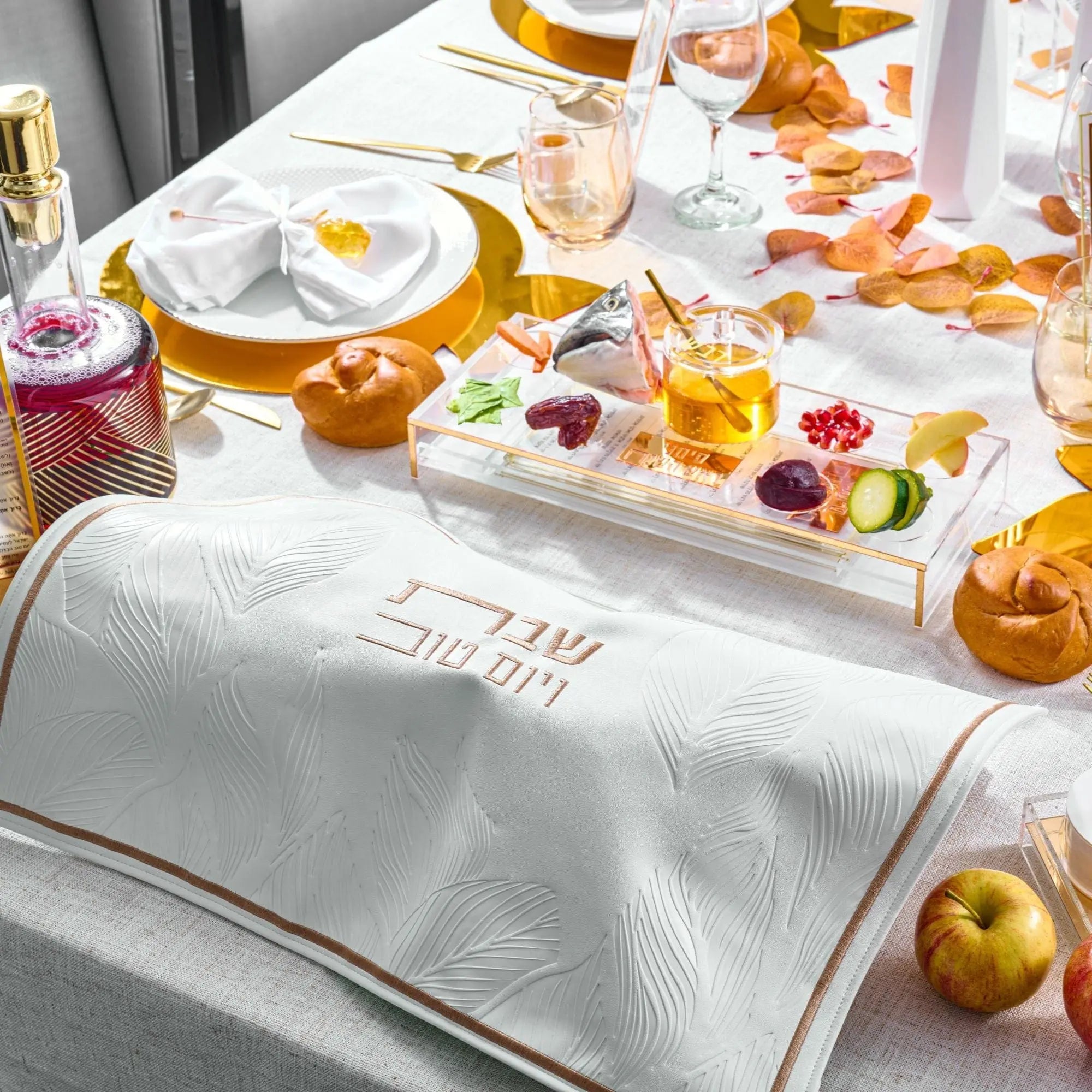
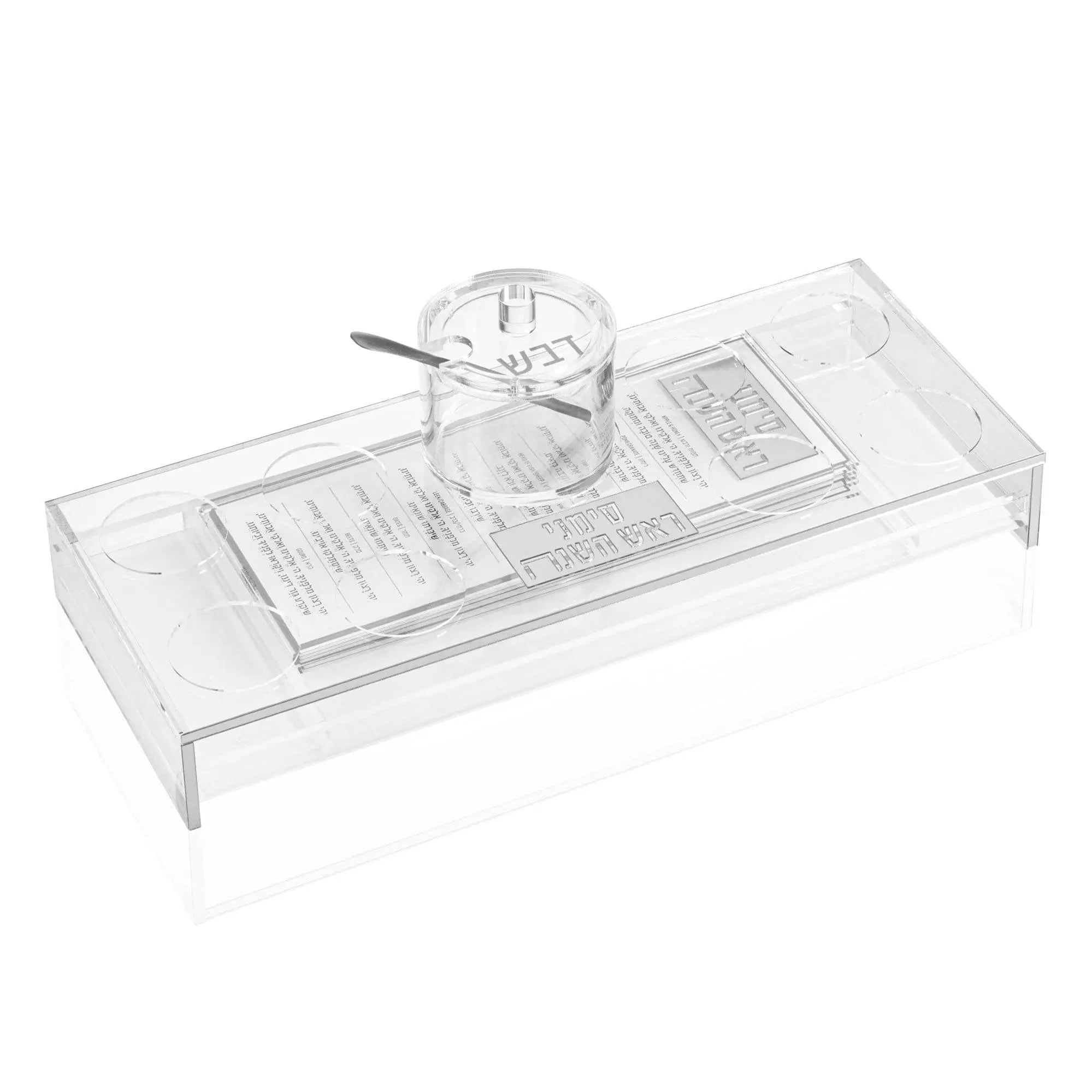
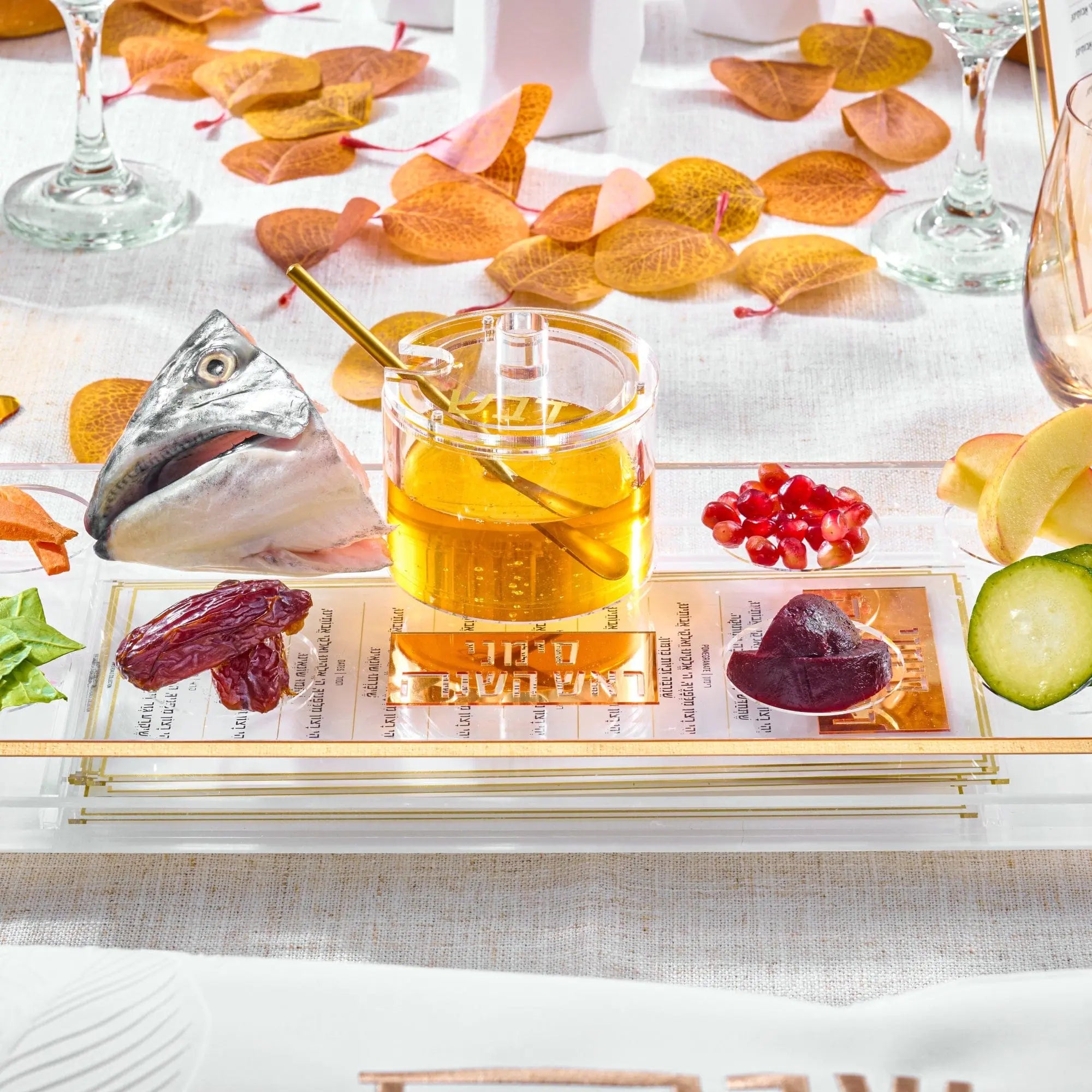
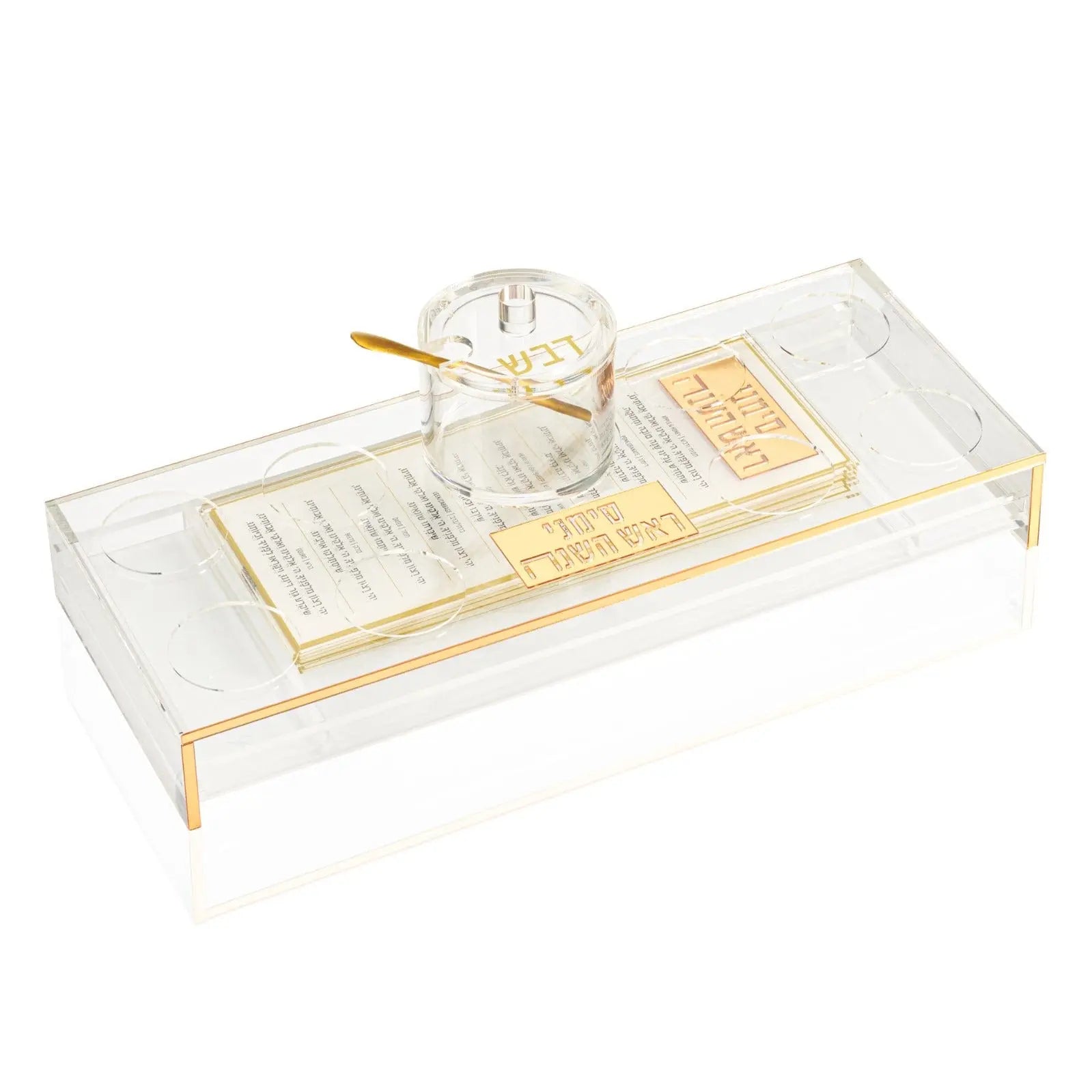
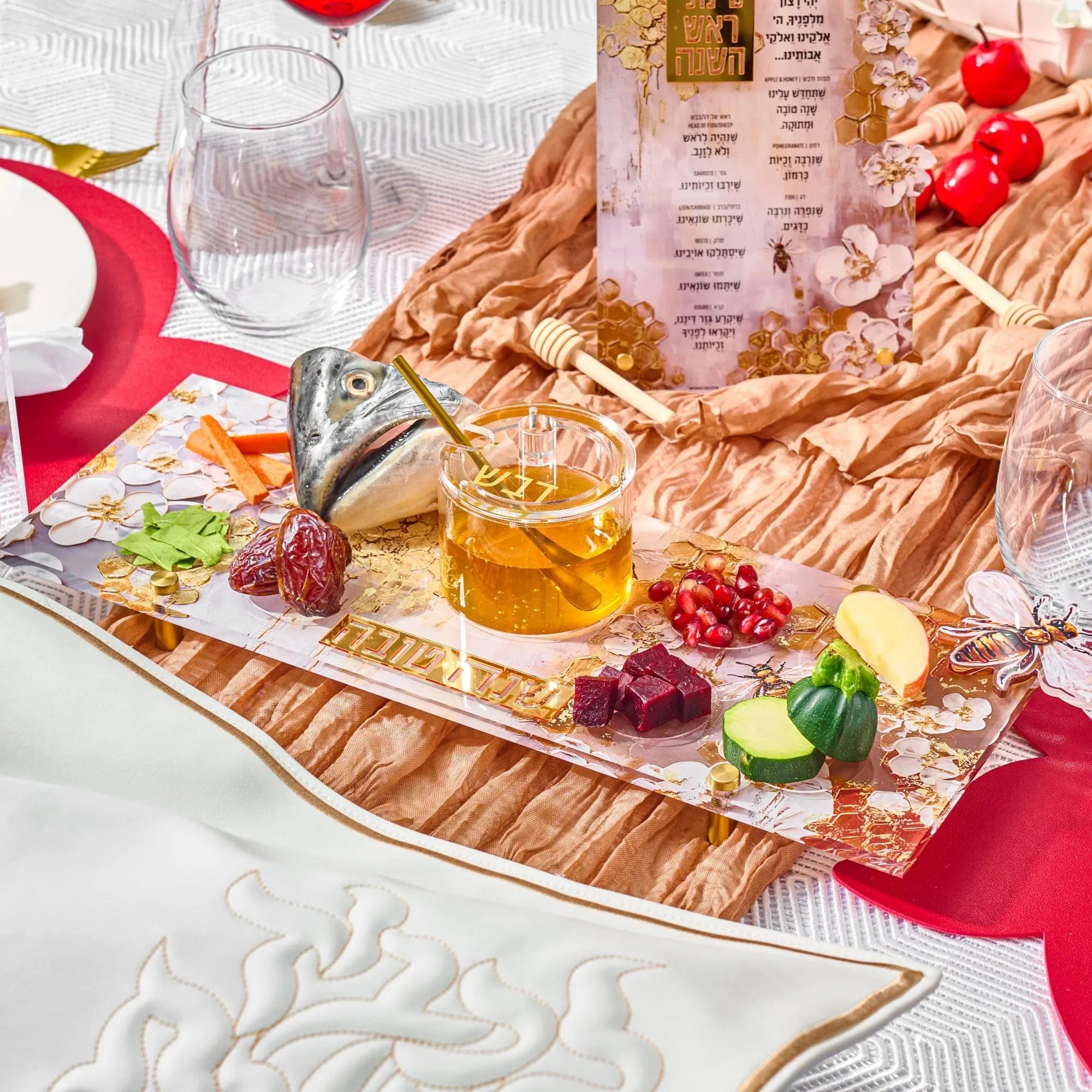
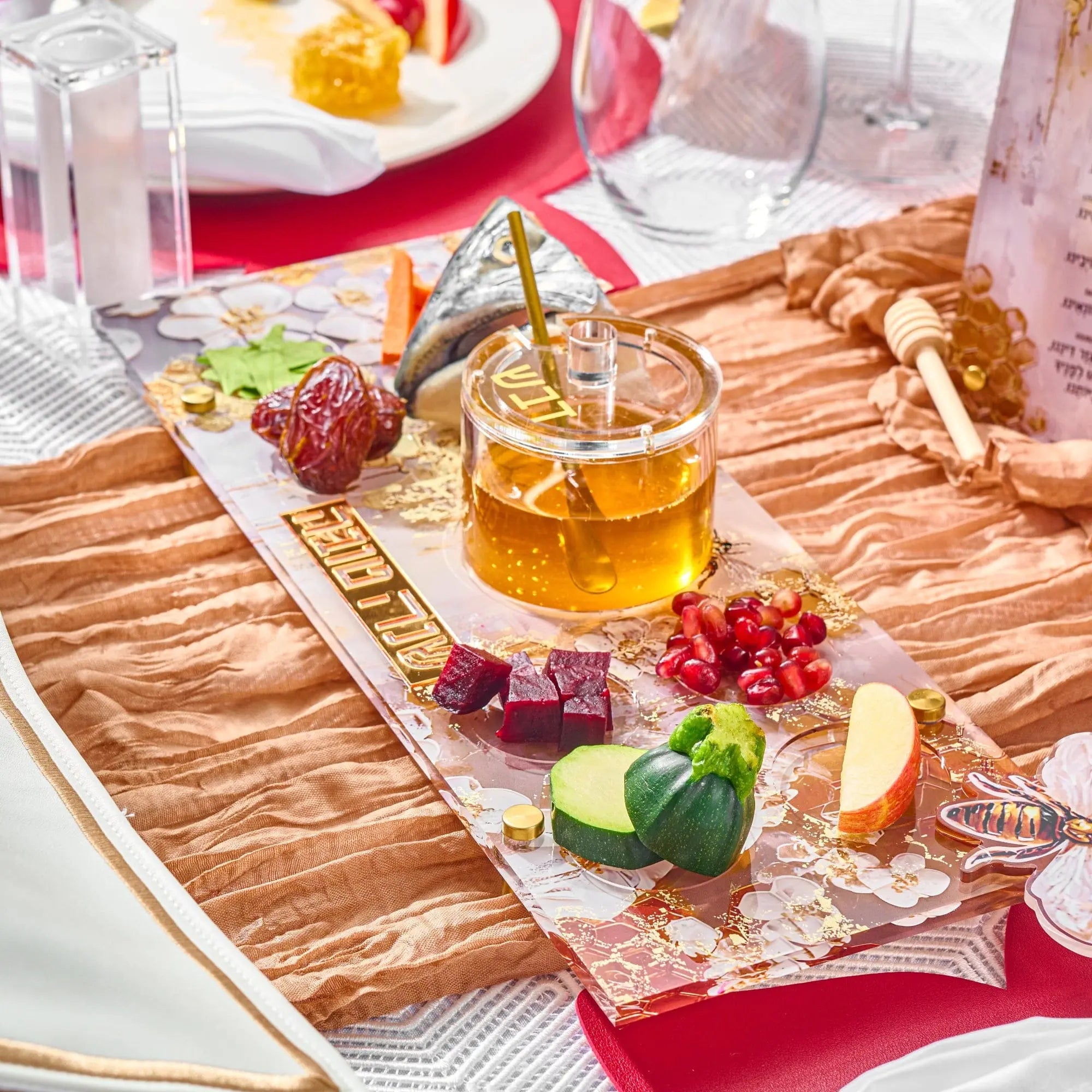
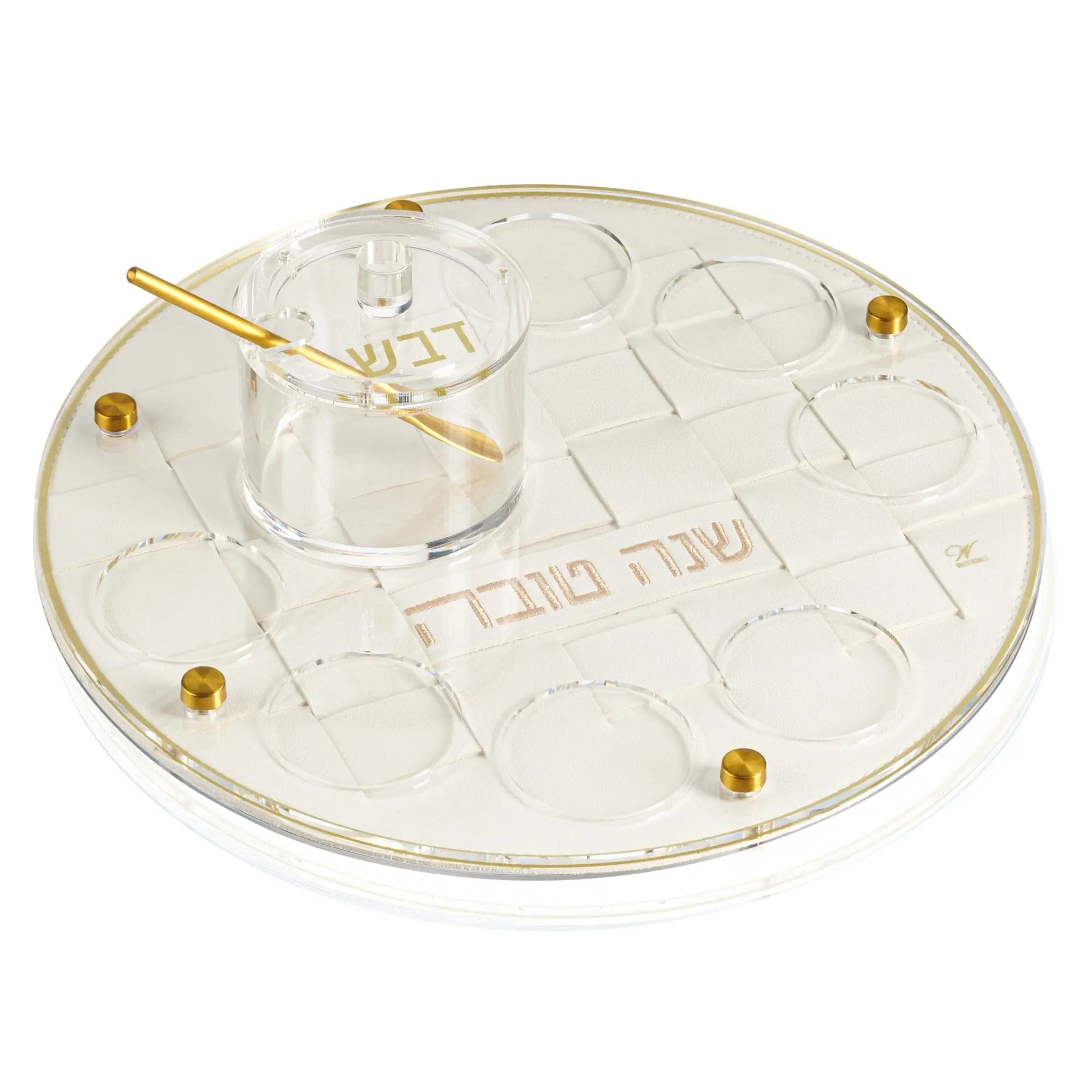
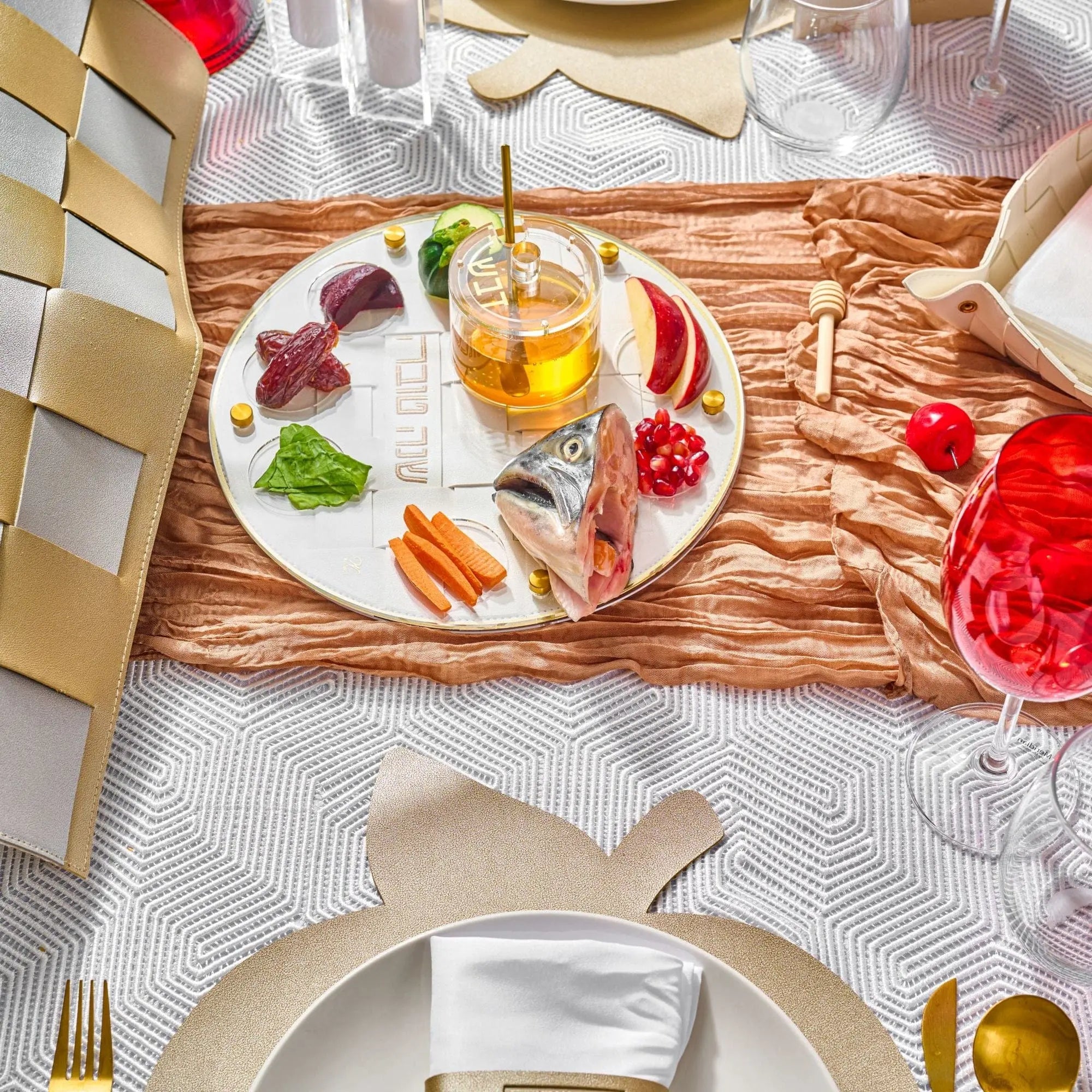
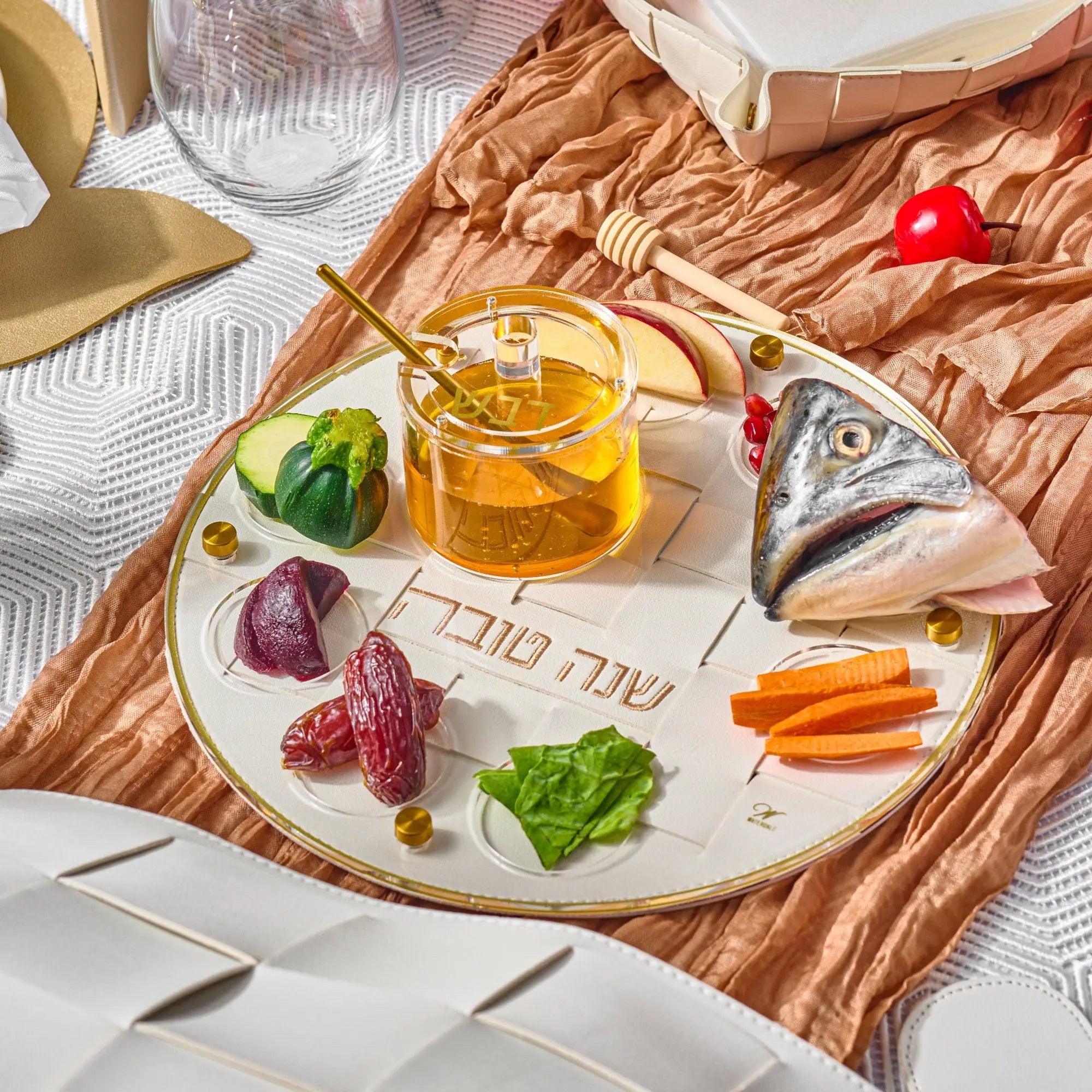
The classic simanim listed in the Talmud include apple dipped in honey, pomegranate, dates, gourd (kara), fenugreek or black-eyed peas (rubia), leeks (karti), and beets (silka), and many tables add a fish head or ram's head. Each food is eaten with a short Yehi Ratzon prayer that plays on its Hebrew or Aramaic name — a wish for merit, blessing, and protection in the new year. A simanim tray with separate compartments keeps all the foods organized so the seder flows smoothly at a full table.
What order are the simanim eaten in on Rosh Hashanah night?
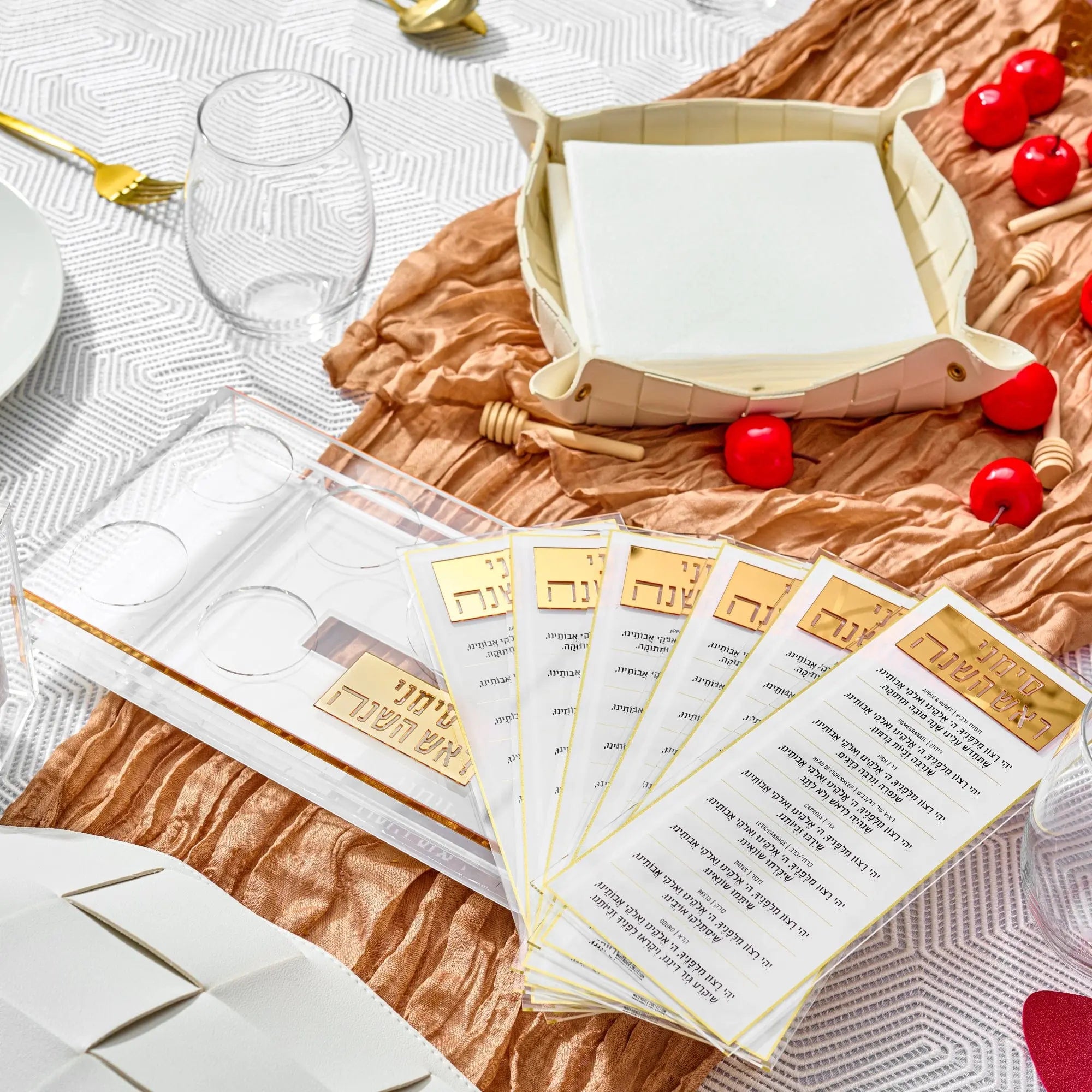
The simanim are eaten at the start of the evening meal, after Kiddush and hamotzi on the round challah. The exact order varies by custom: many Ashkenazi families begin with the apple in honey, while the traditional Sephardic seder typically opens with dates before moving through the other foods. Since there is no single universal order, most families simply follow the sequence printed on their simanim cards or in their machzor.
Do Ashkenazim and Sephardim have different simanim customs?
Yes. The full simanim seder with its many symbolic foods has deep roots in Sephardic and Edut Mizrach practice, while Ashkenazi custom historically centered on the apple dipped in honey — though today many Ashkenazi families conduct the fuller seder as well. The wording of the Yehi Ratzon prayers and the order of the foods can differ slightly between traditions. Simanim cards and trays that include all the foods work for either custom, so any family can follow along.
Why do we eat a new fruit on the second night of Rosh Hashanah?
Because of a halachic question over whether the Shehecheyanu blessing should be repeated on the second night of Yom Tov, the widespread custom is to place a new fruit — one not yet tasted that season, often a pomegranate or an exotic fruit — on the table during candle-lighting and Kiddush so the blessing clearly applies. The new fruit is then eaten at the start of the meal. Many families give it its own small dish or a dedicated spot on the simanim tray.
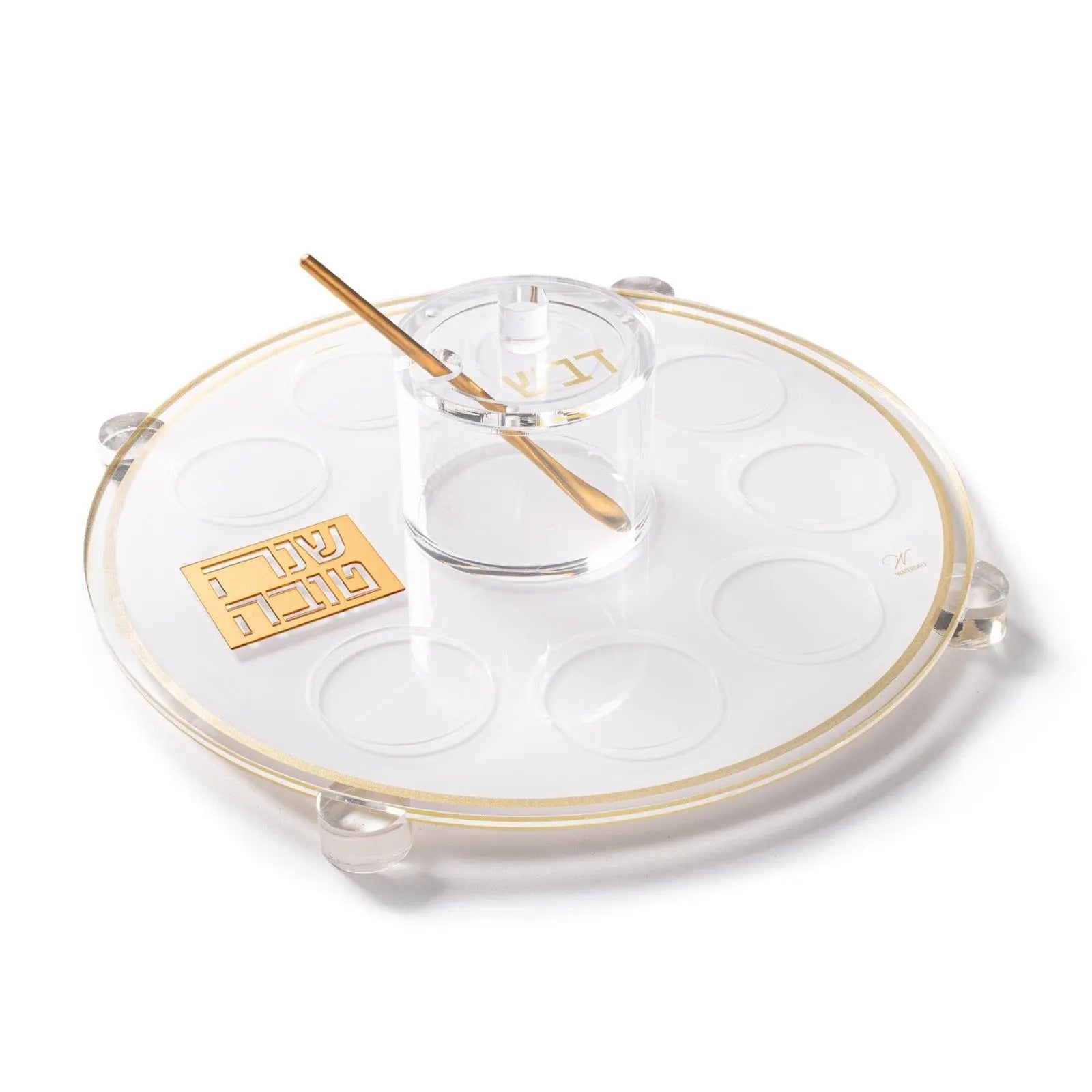
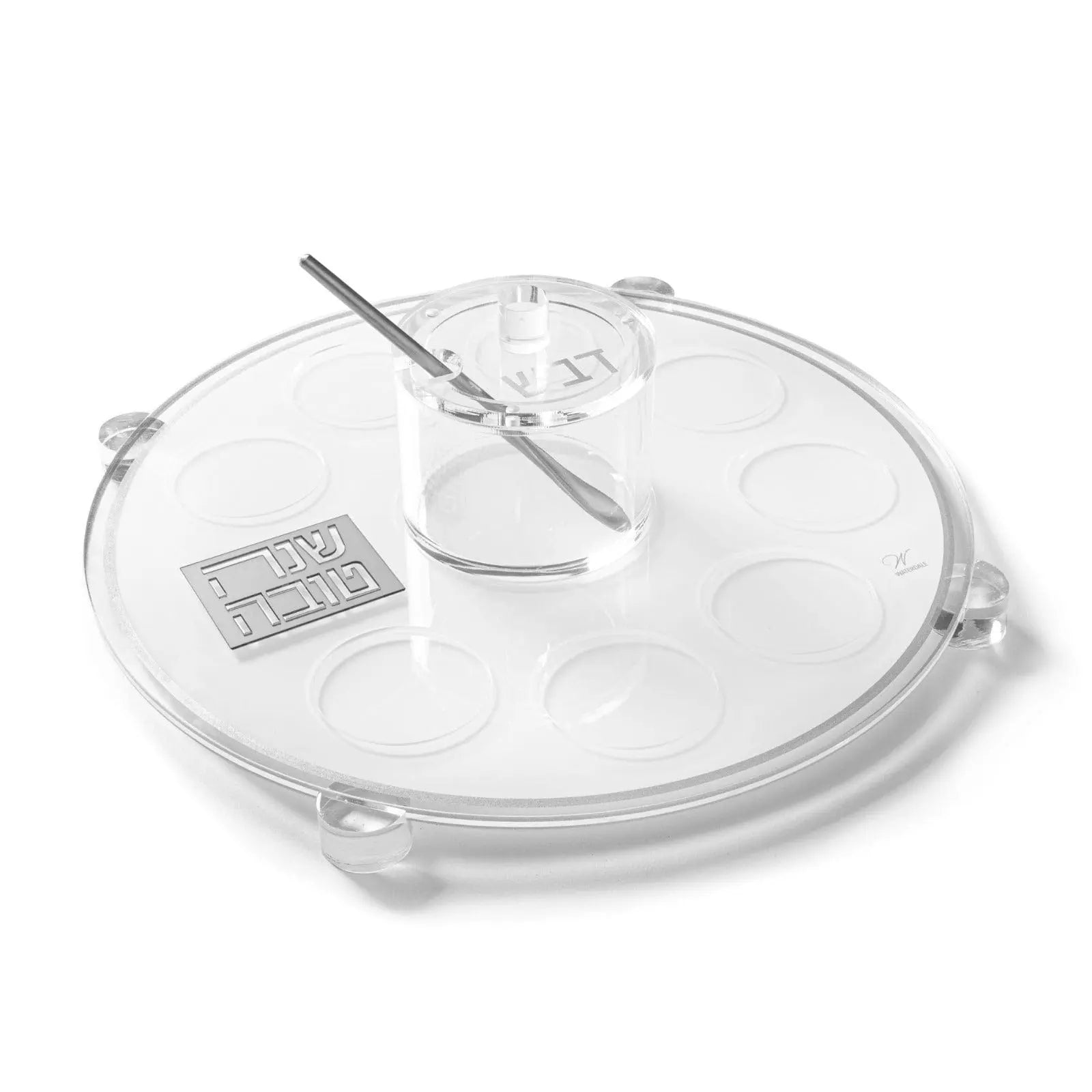
What goes in each compartment of a simanim tray or simanim seder plate?
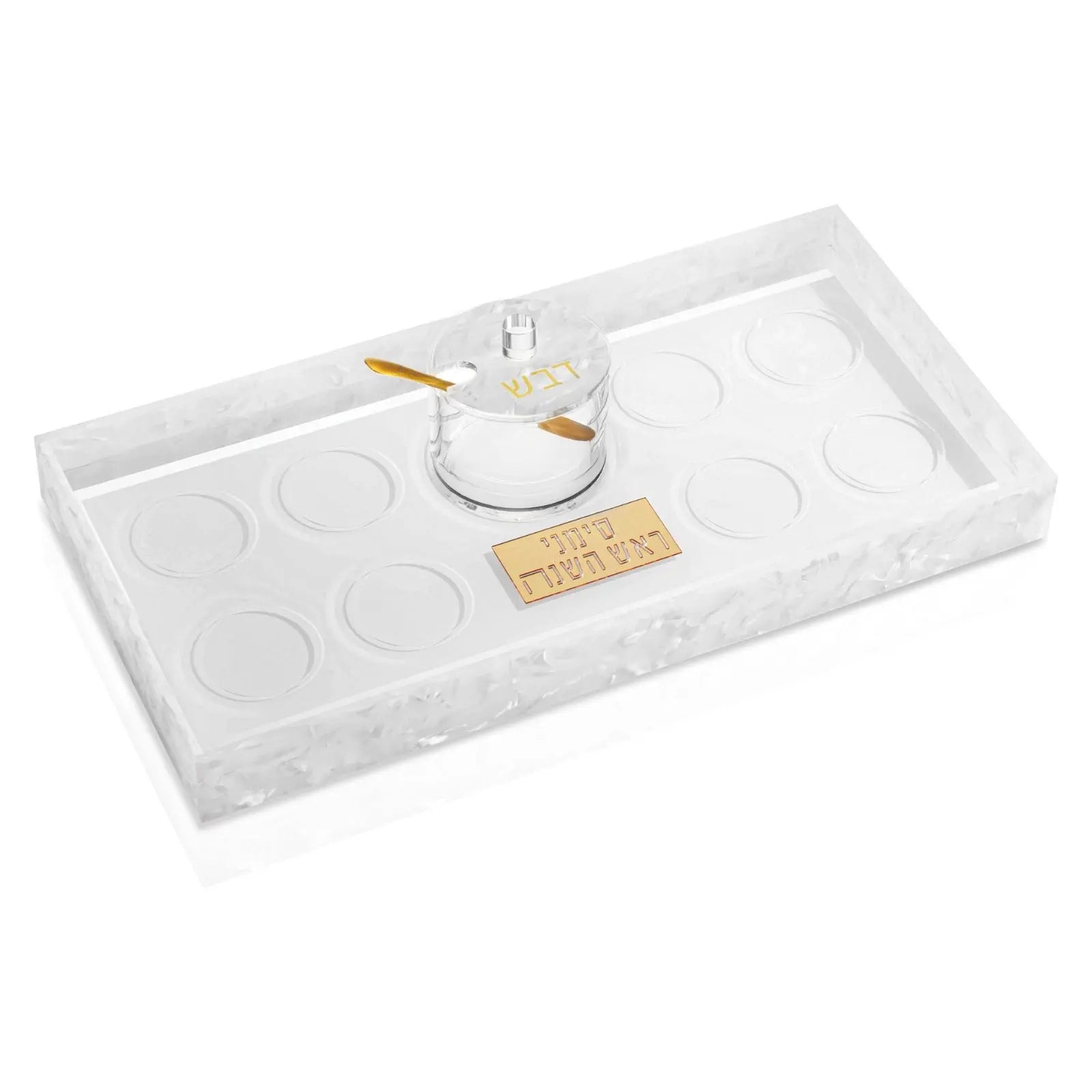
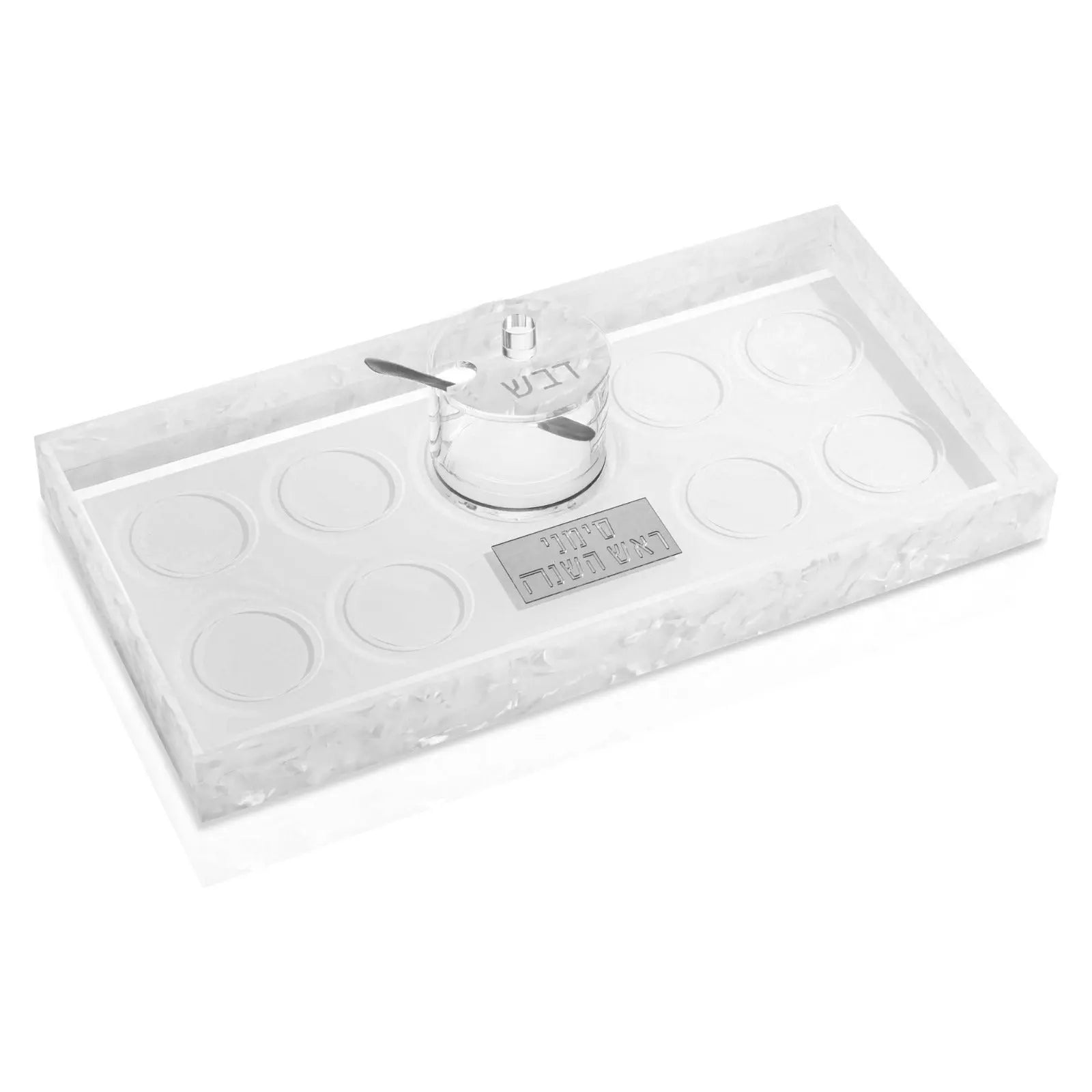
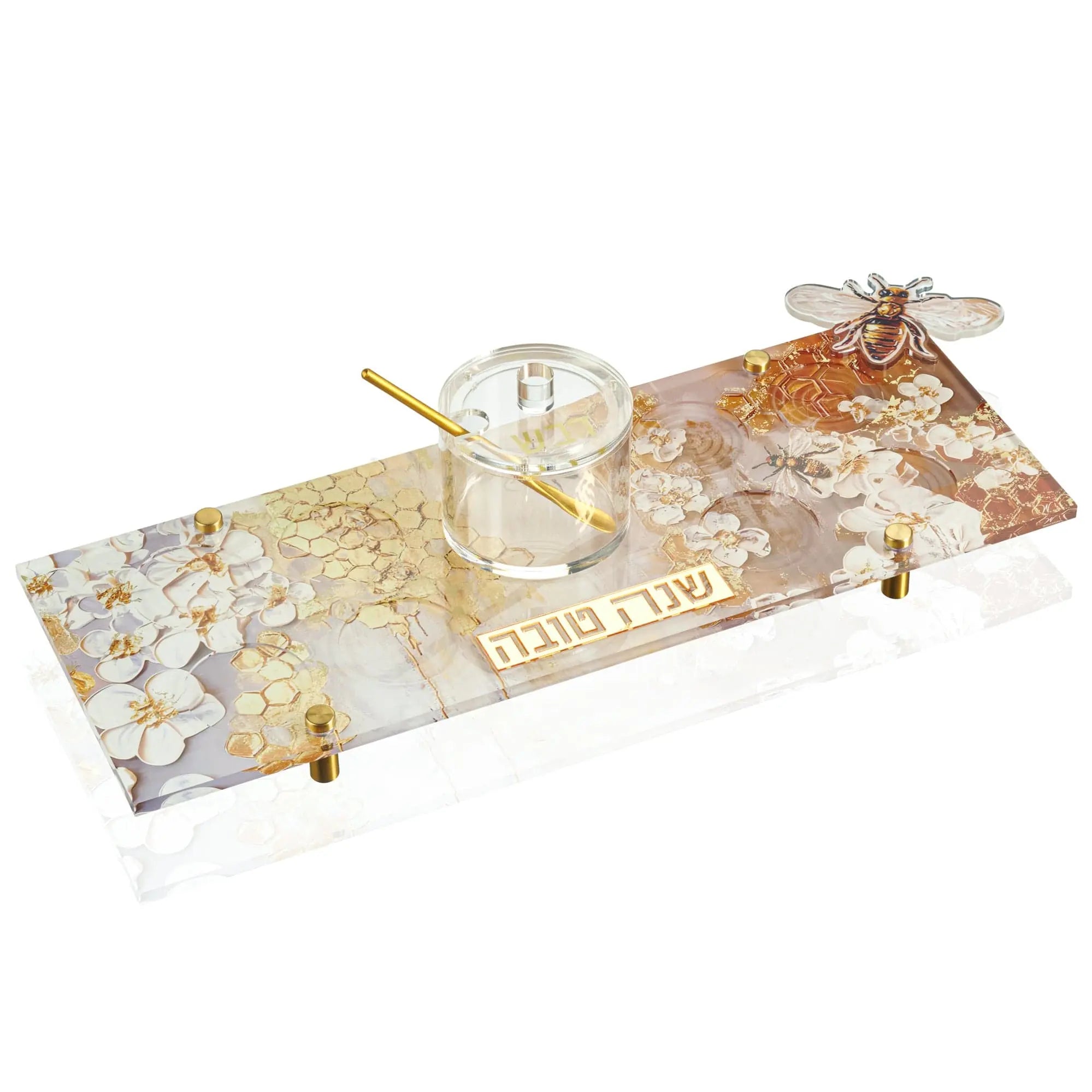
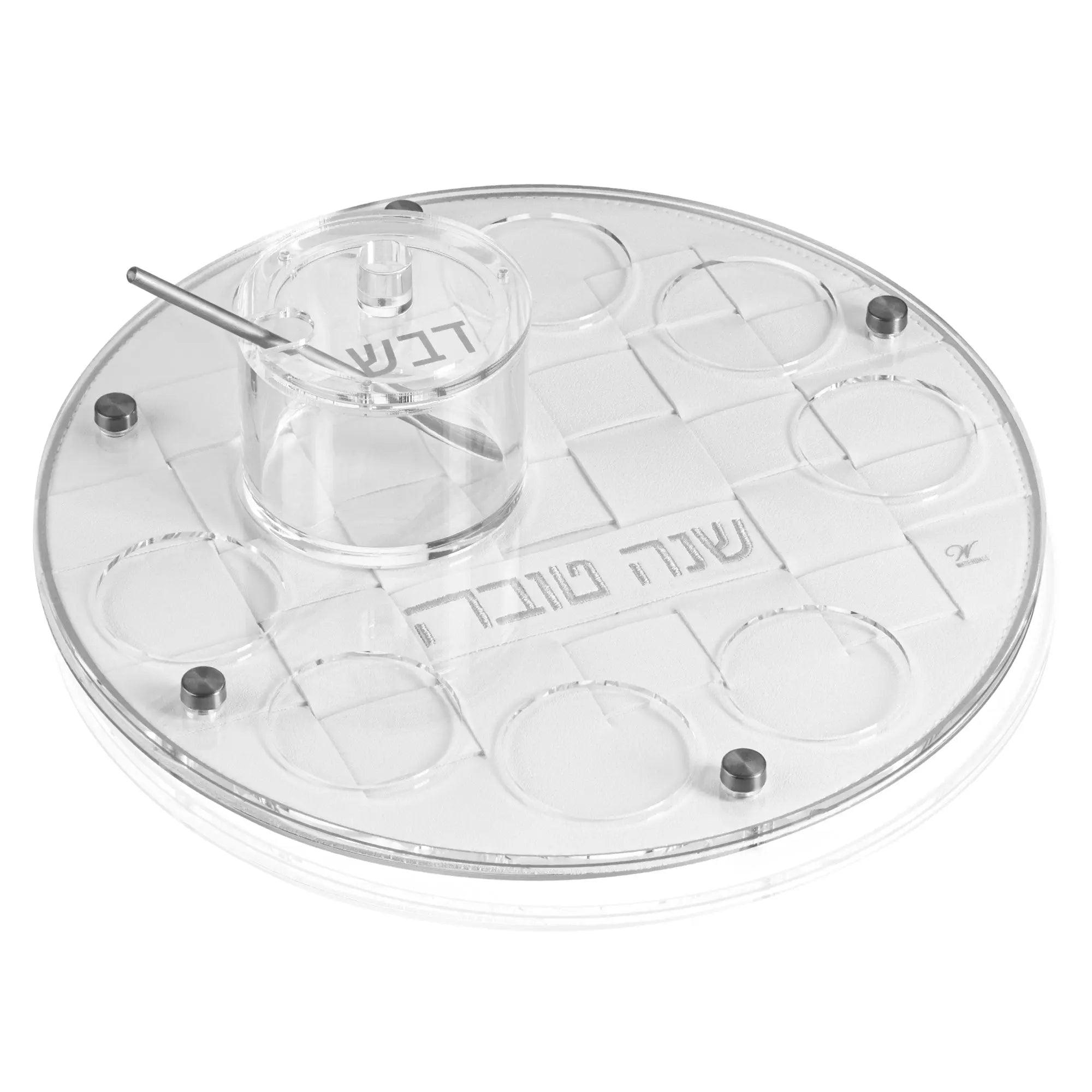
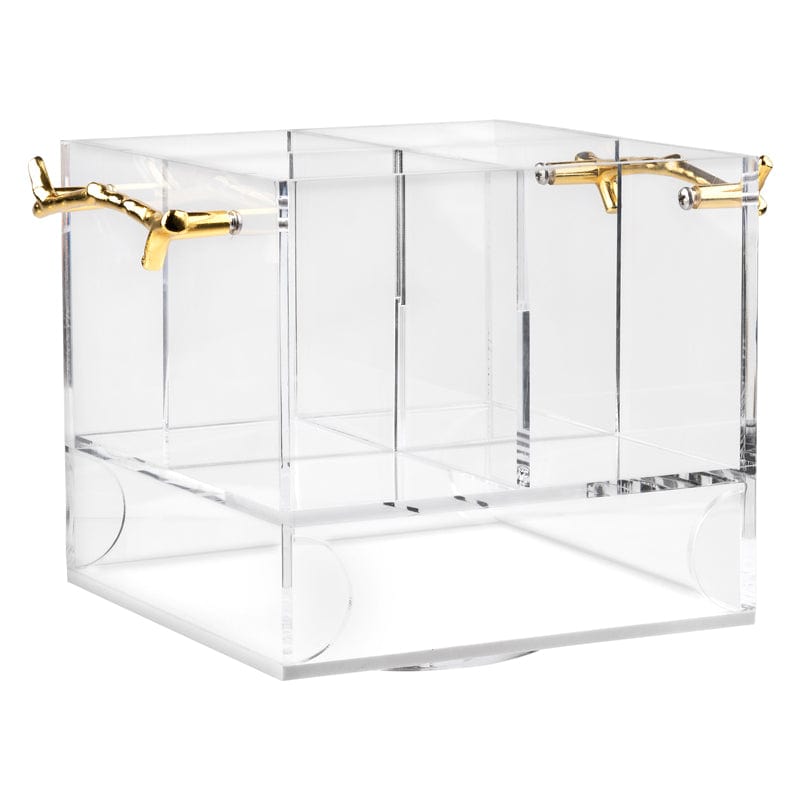
A simanim tray typically has six to nine compartments for the traditional foods: apple with honey, pomegranate, dates, gourd, rubia (fenugreek or black-eyed peas), leek, and beets, often with a larger section for a fish head or ram's head. Families who keep a shorter list of simanim simply leave a compartment or two empty. Extra compartments also leave room for family-specific or regional simanim.
Why do some families put a fish head or ram's head on the Rosh Hashanah table?
The head is eaten with the prayer that we be like a head and not a tail — leaders in the year ahead rather than followers. A ram's head carries the added meaning of recalling the ram of the Akeidah, while many families use a fish head instead, and some omit it altogether. Trays with a larger dedicated compartment make it easy to include this siman without crowding the others.
Which simanim tray material is best — glass, wood, marble, or lucite?
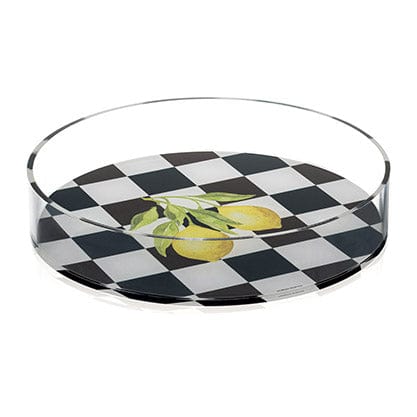
There's no halachic requirement for the material, so it comes down to style and care: glass and lucite wipe clean easily and show off the foods' colors, while wood and marble bring a heavier, more formal presence to the Yom Tov table. Dishwasher safety varies by material, so check care instructions before buying. Choose whatever coordinates with your Rosh Hashanah tableware, since the tray usually sits at the center of the table.
Can a simanim tray be used as a serving tray the rest of the year?
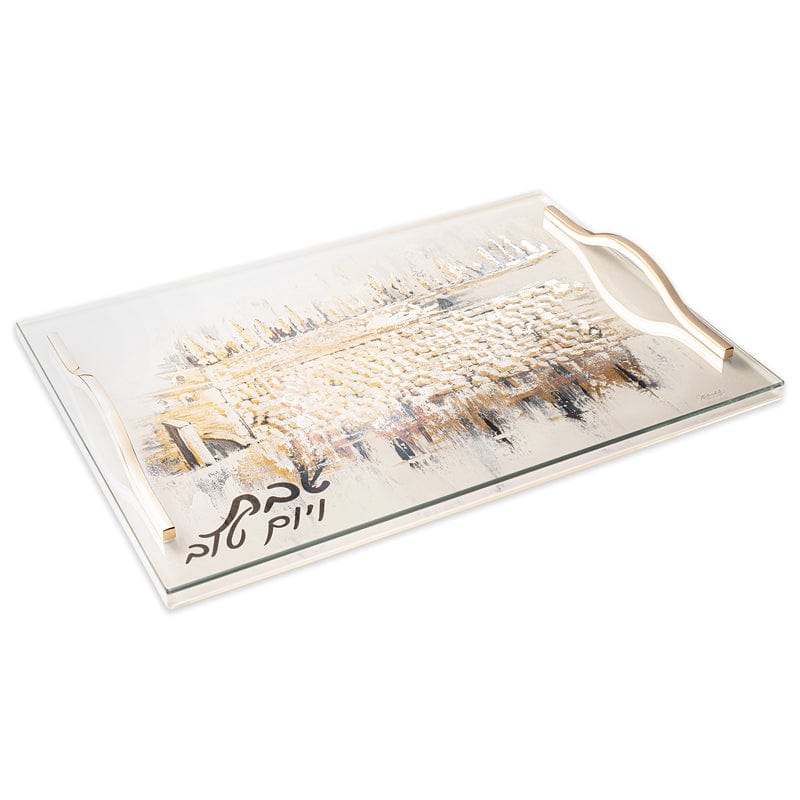
Yes — most simanim trays double beautifully as serving pieces for appetizers, dips, or candy at Shabbos meals and other occasions year-round. Some families prefer to reserve theirs exclusively for Rosh Hashanah to preserve its condition and keep the association special, while others enjoy the regular use. Either approach is common, and there's no requirement to keep it exclusive.
Early access to new releases, limited restocks, and occasional updates.