We're closed for Shabbos. We reopen [[opentime]]. Time until we reopen: [[countdown]]. Thanks for understanding.
Sign up for restock notifications
| BUY | GET |
|---|---|
| 8-14 | 10% OFF |
| 15+ | 15% OFF |
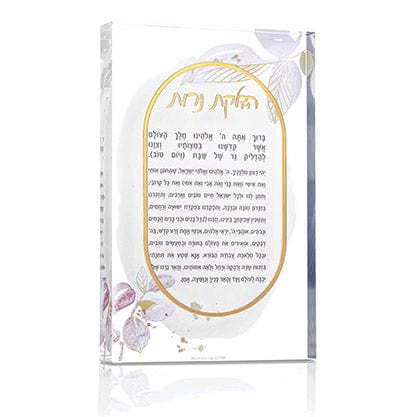
Zelda's painting of an apple in honey is printed on crystal clear Lucite with a metallic gold addition, making the Painted Gold Simanim Card by Zelda from the Waterdale Collection look almost like an original artwork.
It displays the yehi ratzon (יהי רצון) text for each of the simanim (סימנים) — apple dipped in honey, pomegranate, head of the fish, and the other symbolic foods of the Jewish New Year — in either nusach Ashkenaz / Sefard or Edut Mizrach.
Set one at each place, or add a Lucite base to stand it upright as a centerpiece. The card is wipeable, honey-proof, and waterproof to make it a beautiful and practical Rosh Hashanah gift.
Hand-painted Judaica is created by an artist applying color directly onto glass, ceramic, or metal, layering paint and then firing or sealing the piece to set the design. Because each piece is painted by hand rather than printed, small natural variations are part of its character — no two are exactly alike. It's a long-standing artisan tradition in Judaica, especially for Rosh Hashanah and Yom Tov tableware.
Hand-painted pieces should be hand-washed: dishwasher heat, water pressure, and detergent can fade or chip a painted design over repeated cycles. A gentle wipe with a soft, damp cloth is usually all they need between uses. Sealants vary from piece to piece, so it's worth checking the specific care instructions on each item.
Pomegranates, apples, honeybees, and honeycomb dominate painted Rosh Hashanah tableware, each tied to the holiday's symbols: the apple and honey for a sweet new year, the pomegranate for merits as numerous as its seeds. Gold accents and floral borders frequently frame the central design. These motifs are so established that they serve as instant visual shorthand for the Jewish New Year.
Hand-painted designs are applied brushstroke by brushstroke, giving each piece dimension, texture, and subtle individual variation, while printed or transfer designs are mechanically applied and perfectly uniform across every piece. Hand-painted pieces are priced higher for the labor involved and are often treated as collectible or heirloom items. Printed designs offer a similar look at a friendlier price point with piece-to-piece consistency.
Many buyers find them well worth the premium: the dimensional, artisanal look can't be replicated by printing, each piece is genuinely one of a kind, and painted pieces tend to become the items families treasure and hand down. If budget is the priority, printed designs deliver the same holiday motifs with uniform results. The right choice depends on whether you're buying a table accent or a future heirloom.
Wrap each hand-painted piece individually in soft cloth or tissue paper so the painted surface doesn't rub against other items during the eleven months it's packed away. The original box, if you kept it, offers the best protection. Avoid stacking painted pieces directly on one another — that's the most common cause of worn designs.
Early access to new releases, limited restocks, and occasional updates.