


















Understanding the Modern Shabbat Table Challenge
The contemporary Jewish home presents a genuine design dilemma. Many families cherish the spiritual significance of Shabbat observance, yet struggle to find tabletop pieces that feel authentically modern while honoring tradition. Mass-produced ritual items often feel dated or kitsch. Vintage or antique Judaica may clash with minimalist interiors. And compromising on either authenticity or aesthetics leaves the table feeling disconnected from the home's overall aesthetic.
We've listened to our customers describe this exact tension repeatedly: they want Friday night to feel special and meaningful, not like stepping into a different era. The solution isn't abandoning beautiful ritual objects. It's reimagining them through a contemporary design lens, where form serves function and every piece reflects the homeowner's personal style.
This guide shares what we've learned from designing and curating modern Shabbat table accessories for thousands of homes. Whether you're setting your first sophisticated Shabbat table or refreshing an established tradition, these insights will help you create a space that feels genuinely yours.
What Sets Premium Shabbat Accessories Apart
Premium Shabbat accessories differ from standard offerings in three fundamental ways: material integrity, intentional design, and functional durability.
The material matters because Shabbat pieces live in daily ritual. A kiddush cup gets used weekly. A challah cover touches bread regularly. A candlestick holder experiences heat and handling. We source premium lucite and leather because these materials age beautifully, resist discoloration from wine or wax, and maintain their clarity and suppleness year after year. Budget alternatives yellow, crack, or become brittle.
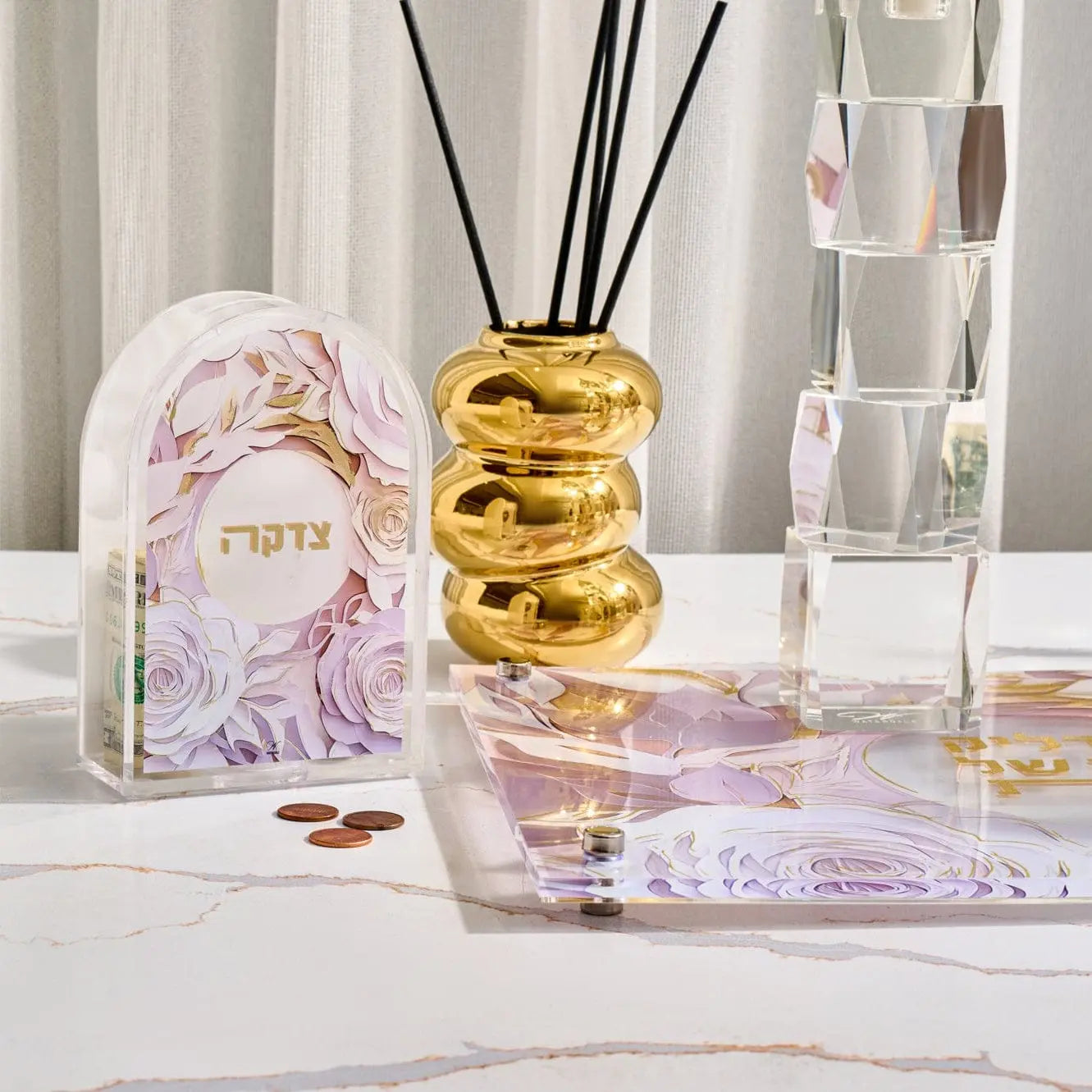
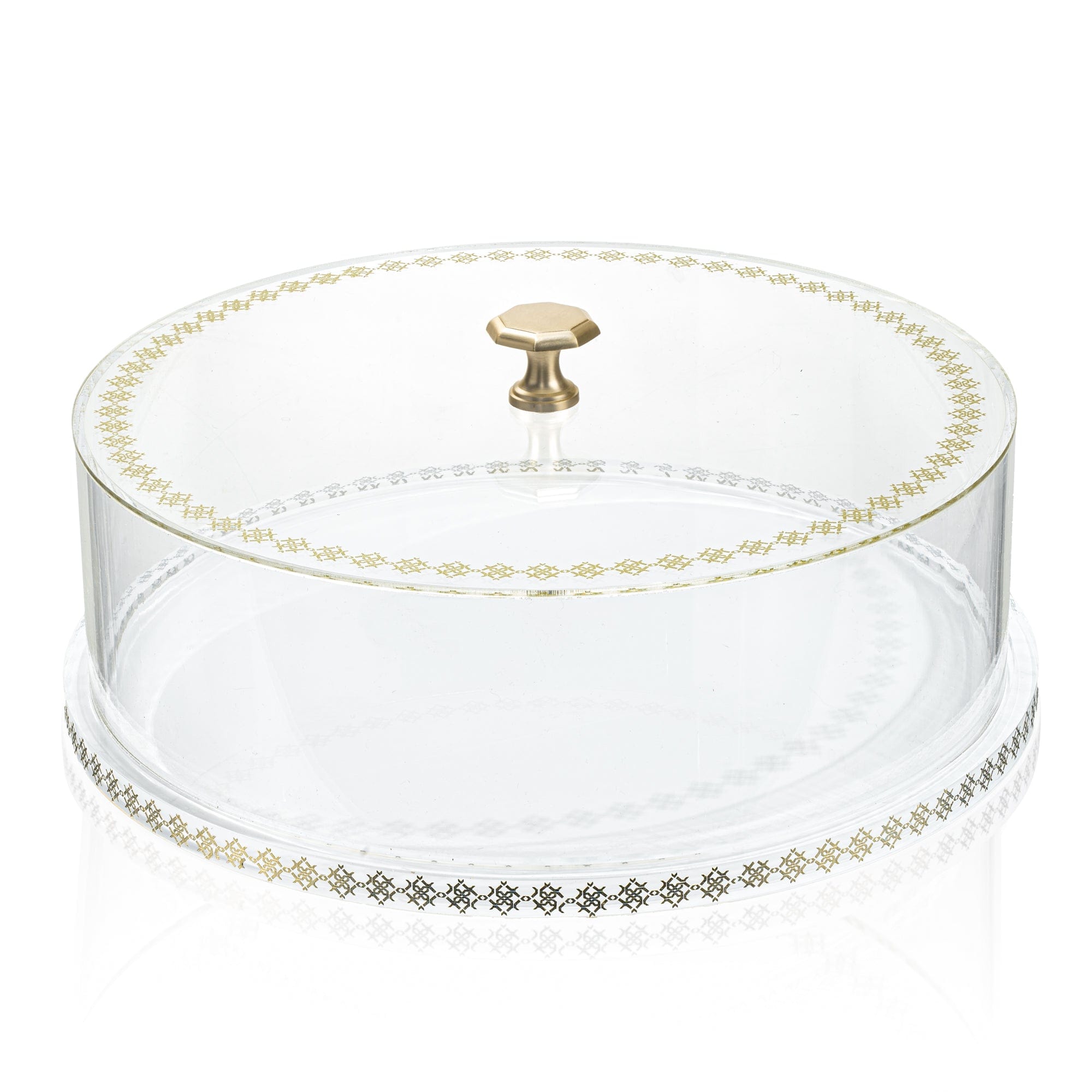
Intentional design means each piece solves a specific problem. Our lucite serving pieces, for example, allow table settings to remain visually open and uncluttered while still defining functional zones. The transparency reads modern, not formal. Leather accents ground a table with warmth without competing with your dishware or linens. This isn't decoration for decoration's sake.
Functional durability separates pieces you'll love using from objects that become burdensome. A well-designed challah cover stays secure without looking fussy. A properly proportioned kiddush cup feels substantial without being unwieldy. Our accessories are built for actual use by actual families, not shelf display.
Our Curated Selection of Lucite Serving Pieces
Lucite has become the material of choice for our modern Judaica serving pieces, and for good reason. Its optical properties create visual lightness while its structural integrity ensures pieces withstand years of weekly use.
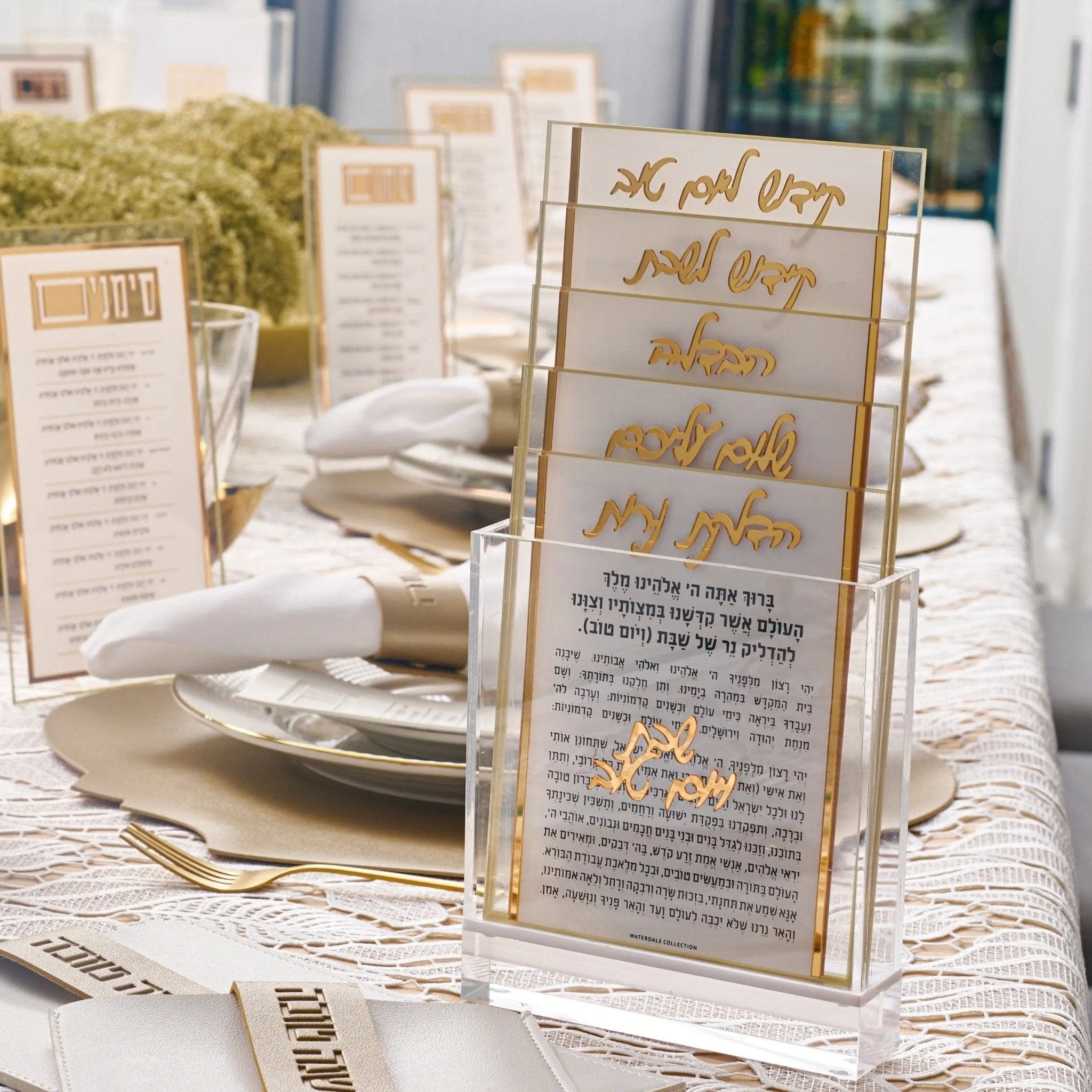
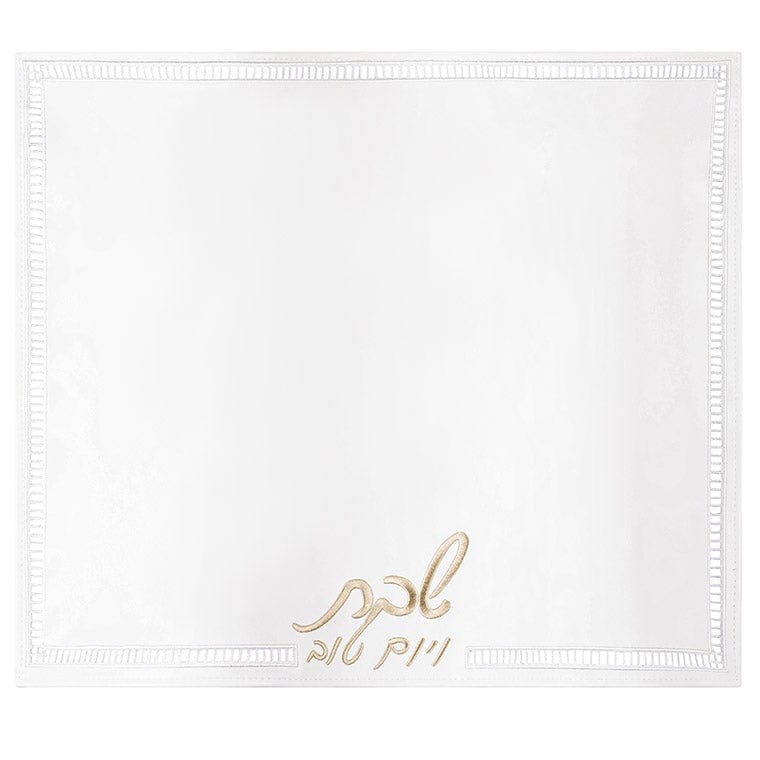
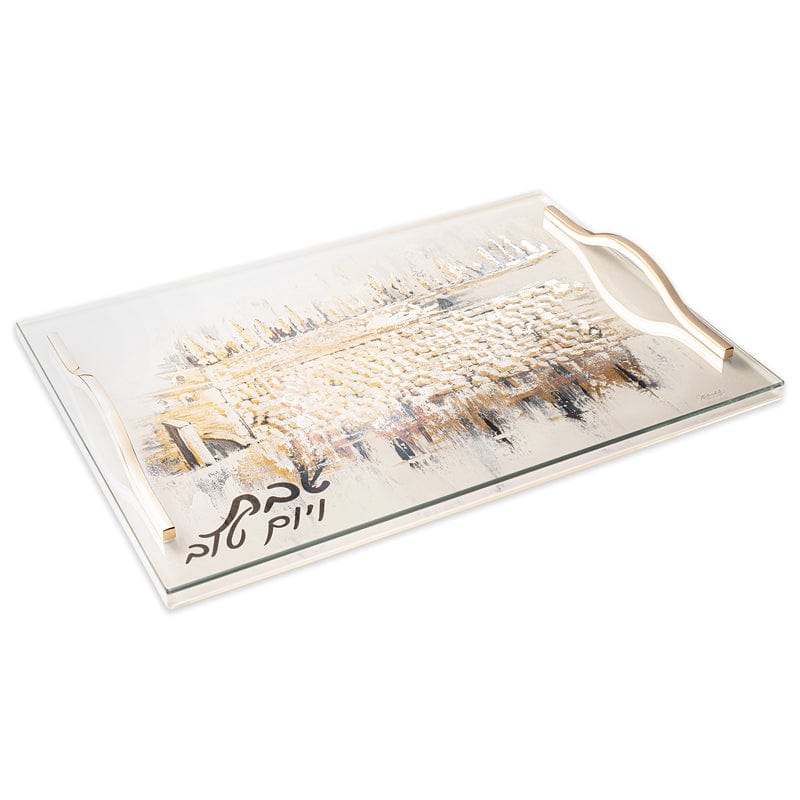
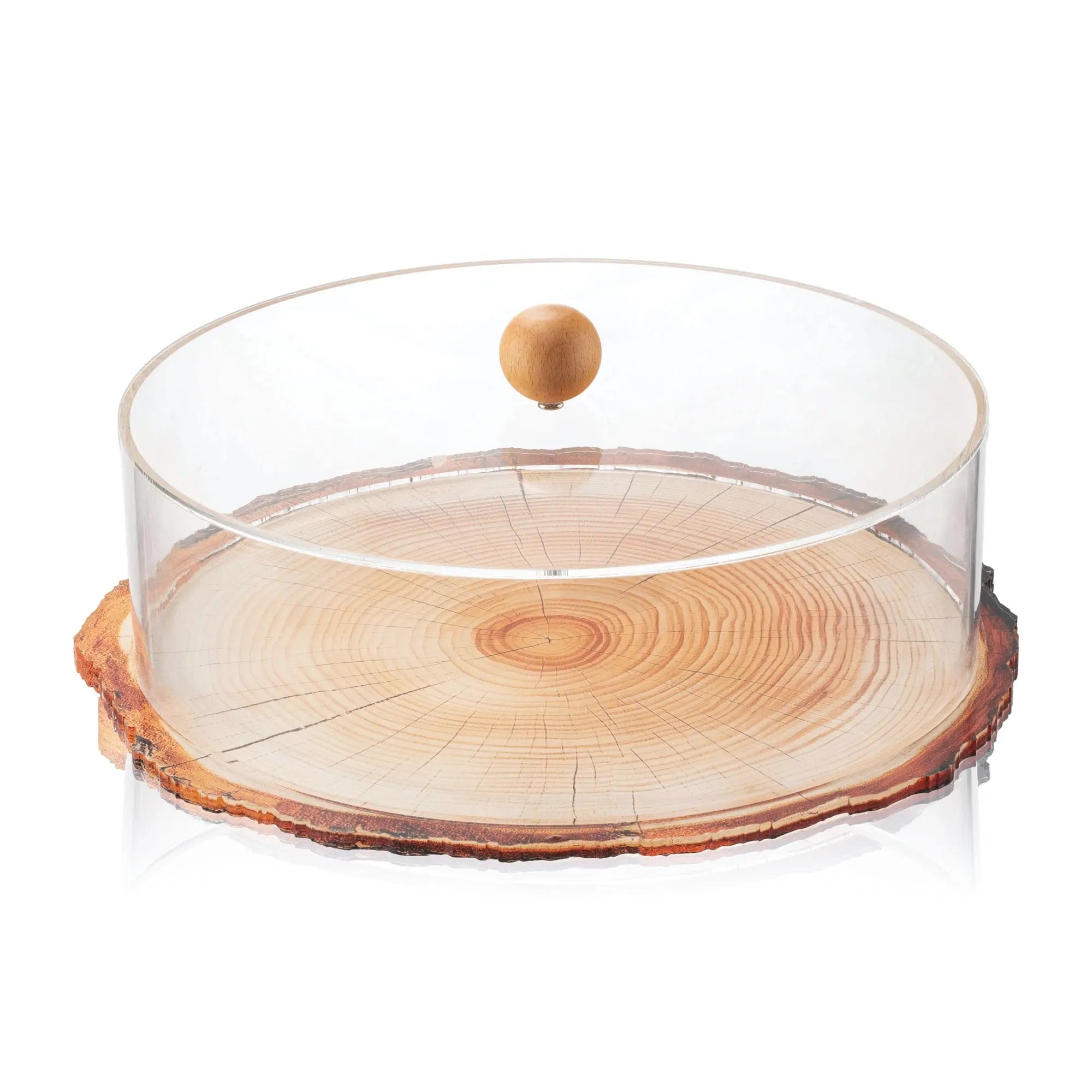
Our lucite collection includes serving boards, challah covers, and wine carafes, each designed with proportion and functionality as primary drivers. A lucite challah board, for instance, elevates the bread without creating a visual barrier between diners. The material's transparency means the challah itself becomes the visual anchor. Similarly, our lucite serving pieces for table settings work with rather than against your existing tableware.
What makes lucite exceptional for Shabbat use specifically: it handles heat resistance without warping, resists staining from ceremonial wine, and cleans easily without requiring special care. Unlike acrylic, quality lucite maintains optical clarity indefinitely. We source cast lucite, not injection-molded, because the material density ensures longevity.
A practical example: one of our customers replaced a traditional sterling silver kiddush cup with a clear lucite alternative. The new piece integrated seamlessly with her modern dining room. More importantly, her children became more engaged with the ritual because the transparent cup let them see the wine's color and watch the blessing unfold without the formal barrier a metal cup creates.
Our lucite serving collection ranges from minimal geometric forms to sculptural pieces with subtle contours. The variety ensures you'll find pieces that complement your home's aesthetic without requiring a complete table overhaul.
Leather-Accented Tabletop Essentials for Contemporary Homes
Leather brings tactile warmth to a modern Shabbat table in ways that pure minimalism sometimes struggles to achieve. We integrate leather accents into functional pieces: challah covers with leather trim, serving boards with leather handles, place card holders with subtle leather details.
The advantage of leather lies in its humanizing quality. Leather develops patina and character over time, which aligns beautifully with the Shabbat cycle itself. A table that evolves throughout the year feels more connected to lived experience than one that remains pristine and untouched.
Our leather accessories serve specific functional purposes. A challah cover with leather handles becomes genuinely easier to manage when passing around the table. Leather-trimmed serving boards provide subtle definition to the table layout. Place card holders with leather bases stay secure on linens without slipping.

We select leather for durability and appearance. Full-grain leather develops a richer patina than corrected alternatives. We use vegetable tanning processes where possible, ensuring the leather ages gracefully rather than degrading. This matters because Shabbat pieces accumulate meaningful use. The scuffs and character marks tell your family's story. For those who prefer natural warmth, a wooden napkin holder offers similar aging character with organic texture.
For customers concerned about material sensitivities or preferences, we maintain pure lucite alternatives for every leather-accented piece. The goal is creating a table that works for your family's specific needs and values.
Customizable Shabbat Collections for Personal Expression
One size truly doesn't fit all when it comes to personal ritual spaces. Your Shabbat table should reflect your family's particular blend of tradition and aesthetic preference. We offer customization options across our collections, from choosing materials and colors for serveware pieces to engraving personal details or family names.
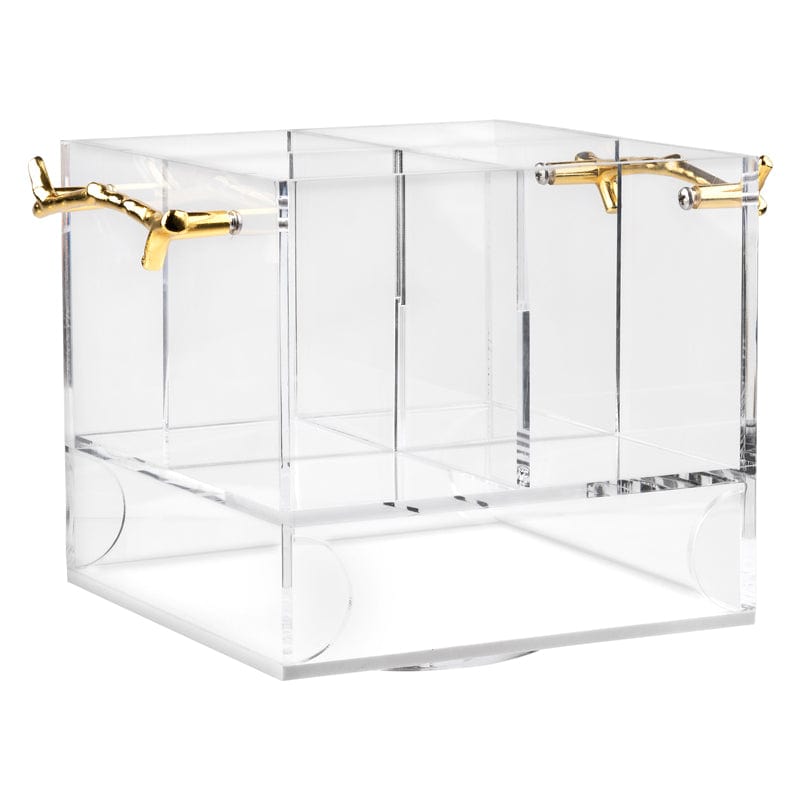
Customization serves both practical and spiritual purposes. A family monogram on a challah cover makes the piece unmistakably yours. Personalized Havdalah sets become heirloom-quality objects worth passing to the next generation. Custom engravings on wine cups commemorate specific celebrations or milestones. A classic silverware caddy with engraved family initials adds organization with personal meaning.
The practical benefit of customization: when pieces feel personal rather than generic, they integrate more naturally into your home's design language. A commissioned piece in your preferred color and material combination doesn't require compromise or adaptation. Napkin rings with subtle engraving or custom finishes offer an accessible entry point to personalized tabletop design. It arrives ready to function as intended.
Our customization process begins with understanding what matters most to your family. Some customers prioritize visual integration with existing decor. Others emphasize sentimental meaning through personalization. A custom napkin holder can deliver both—functional elegance with personal significance. Many want both. We work through these priorities to create pieces that serve your specific vision, not a standardized template.
Examples of meaningful customization we've created: a family's names incorporated into a communal challah cover for multi-generational Shabbat gatherings, graduated sets of kiddush cups for children growing into adult role participation, custom caddies for organized flatware presentation, and corporate pieces featuring company values alongside Jewish tradition for organization Shabbat celebrations.
Customizable options allow you to build a Shabbat table that feels authentically connected to your life, not borrowed from someone else's aesthetic choices.
Comparing Design Approaches in Modern Judaica
Modern Judaica design generally follows three distinct philosophies: minimalist reduction, contemporary sculptural, and heritage-informed contemporary. Understanding these approaches helps clarify which direction resonates with your home and values.
Minimalist reduction strips Judaica to its functional essentials. A kiddush cup becomes a simple cylindrical form. A candlestick holder becomes a geometric base. This approach works beautifully in spare, modern interiors. The risk: excessive reduction sometimes strips away the emotional resonance that makes ritual meaningful. A cup that's purely functional can feel cold.
Contemporary sculptural design embraces artistic expression. Pieces become conversation starters with dramatic forms and unexpected materials. This approach adds visual interest and personality. The challenge: sculptural pieces sometimes read more as art objects than functional tableware, and they can visually dominate a table rather than supporting the gathering.
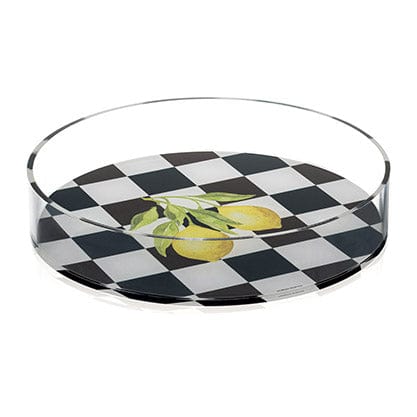
Heritage-informed contemporary design, our preferred approach, begins with traditional forms and reimagines them through contemporary materials and proportions. A challah cover honors the traditional concept while executing it through modern lucite and clean lines. Lucite trays exemplify this approach—classic serving forms elevated through transparent, modern materials. A kiddush cup maintains ceremonial weight while eliminating ornamental excess. This balanced approach preserves the ritual object's emotional integrity while ensuring it genuinely belongs in a contemporary home.
Each philosophy has merit depending on your specific context. What matters is intentionality. Choose an approach because it aligns with your values and home aesthetic, not because it's trendy or because you feel obligated to a particular design movement.
How Our Craftsmanship Solves Common Design Problems
Years of creating modern Shabbat pieces have revealed recurring design challenges that most manufacturers ignore. We've engineered solutions directly into our pieces.
Proportion issues: Many traditional Judaica pieces feel oversized in contemporary homes with open floor plans and minimalist layouts. We've carefully calibrated dimensions so pieces command appropriate attention without dominating the table. A modern candlestick holder, for instance, stands at a height that balances presence with sight lines across the table.
Material sustainability: Shabbat pieces accumulate intensive use over decades. We've selected lucite and leather specifically because these materials endure this use pattern without degradation. A kiddush cup needs to survive weekly wine exposure without staining or clouding. Our lucite formulations resist both.
Functional awkwardness: We've identified where traditional designs create practical friction. A challah cover that doesn't stay put when passing around the table disrupts the ritual flow. Our redesigned covers use subtle weight distribution and material choices that keep them secure without fussy closures or straps.

Visual integration: Your Shabbat accessories need to complement existing tableware and linens rather than create jarring contrast. The transparency of lucite, for example, allows pieces to recede visually when needed while still functioning as ritual objects. Napkin holders in clear lucite achieve this balance perfectly—they organize without visual intrusion. This solves the common problem of religious items feeling incongruous in secular design-forward homes.
Inherited meaning collision: Many customers inherit Shabbat pieces that don't match their personal aesthetic. Rather than discarding meaningful objects, we've created pieces that work alongside inherited items, allowing gradual aesthetic evolution rather than wholesale replacement.
Each of these solutions emerged from real customer conversations about what wasn't working at their tables. We designed specifically to address those friction points.
Creating Cohesive Table Settings with Our Accessories
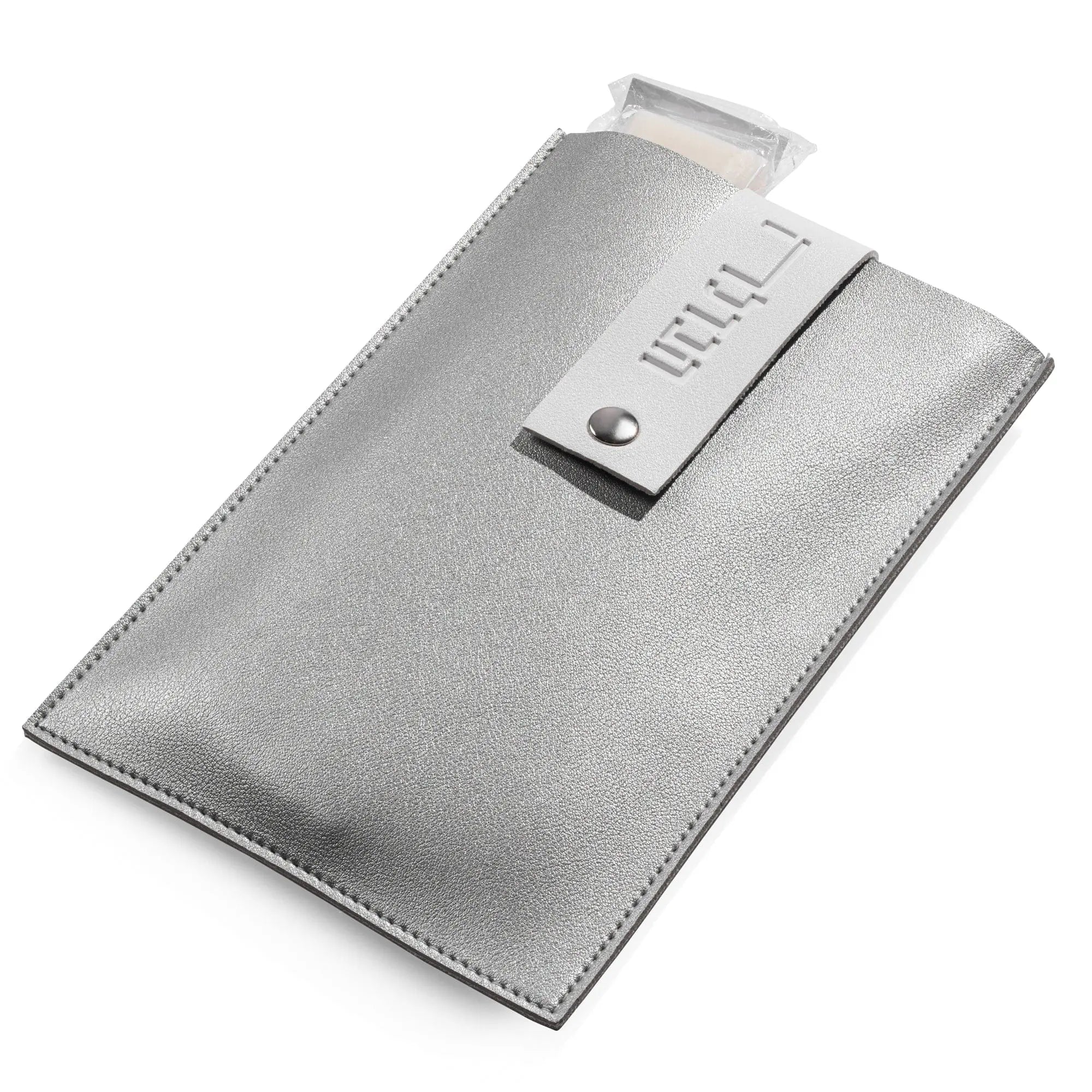
A beautiful Shabbat table emerges from intentional layering, not random accumulation. Think about your table in zones: the bread zone, the wine zone, the water and washing zone, and the decorative focal points. A refined match holder belongs in the candle zone, keeping lighting essentials elegantly accessible.
Start by selecting one anchor piece, typically a Judaica tableware item that sets your aesthetic direction. If you choose a sculptural lucite challah cover, let that inform your other selections. Pair it with similarly minimalist accessories rather than ornate pieces. This creates visual coherence.
Next, consider material consistency. If your challah cover is lucite and your serving pieces are leather-accented, these materials should appear across your table in roughly equal visual weight. A table where every piece is lucite feels cold. A table where materials scatter randomly feels chaotic. Intentional distribution creates sophistication.
Height variation prevents a table from feeling flat. Place your candlestick holders at varying elevations. Position your challah cover on a subtle stand. Create visual interest through dimensional play, not through accumulating numerous small objects.
The role of negative space matters tremendously in contemporary design. A minimalist table with carefully chosen pieces and generous white space reads more sophisticated than a cluttered table where every inch carries visual weight. Resist the impulse to fill every gap.
Color consideration depends on your existing palette. Some of our customers work exclusively in clear lucite and natural leather tones, creating a monochromatic aesthetic. Others introduce subtle color through linens and serving pieces while keeping Judaica accessories neutral. Both approaches work beautifully when executed intentionally.
Practical tip: arrange your pieces physically on the table before committing to final placement. Stand back and observe how they interact. Make adjustments until the composition feels balanced and purposeful.
Corporate and Gifting Applications for Shabbat Pieces
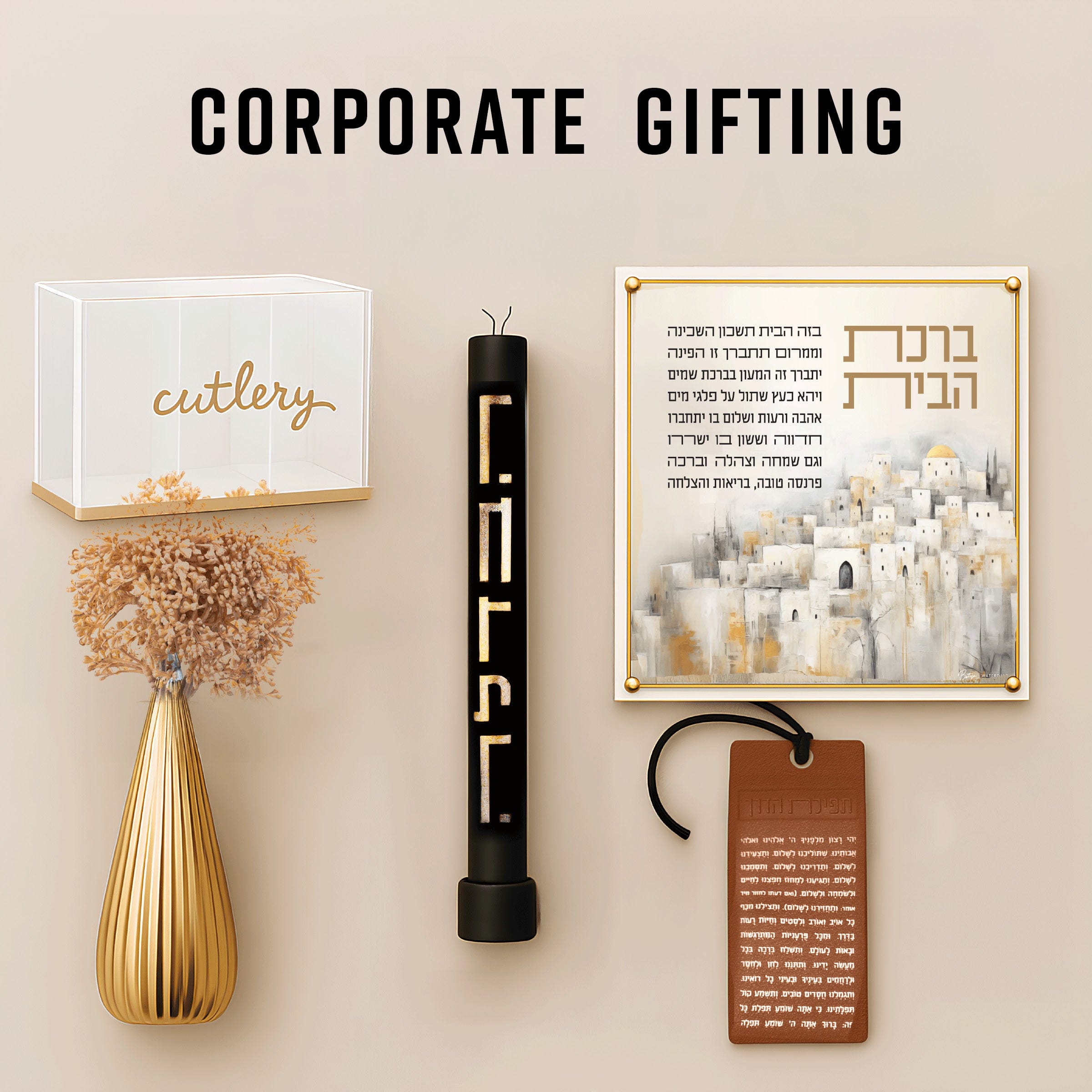
Beyond personal household use, modern Shabbat accessories serve important corporate and institutional gifting purposes. We've created pieces specifically designed for organizational contexts where Shabbat observance represents community values.
Corporate Shabbat celebrations have become increasingly common in organizations seeking to honor diverse religious observances and strengthen team culture. Custom Judaica tableware pieces featuring company branding or values statements create memorable experiences that feel respectful rather than performative.
We've designed corporate sets for law firms hosting Shabbat events, tech companies acknowledging Jewish heritage months, nonprofit organizations celebrating donor appreciation through Shabbat gatherings, and Jewish organizations seeking elevated ritual experiences for board meetings or professional development retreats.
Gifting modern Shabbat pieces marks meaningful lifecycle events: engagements, marriages, home purchases, births, and milestones within Jewish education or community leadership. Unlike generic gifts, thoughtfully chosen Shabbat accessories acknowledge the recipient's religious identity while respecting their personal aesthetic preferences.
Our customization services prove invaluable for corporate contexts. Engraved Havdalah sets commemorate specific organizational moments. Custom place card holders for Shabbat dinner events integrate company identity seamlessly. Personalized wine cups for board members transform functional pieces into keepsakes.
The gifting advantage of our pieces: they serve actual ceremonial purposes while functioning as design-forward home accessories. Unlike purely decorative Judaica, our pieces get used and appreciated regularly. A beautiful kiddush cup becomes part of someone's beloved weekly ritual, creating emotional resonance that far exceeds the monetary value of the gift.
Why Waterdale Collection Is the Definitive Choice

Selecting where to source your modern Shabbat accessories represents a meaningful decision. You're choosing not just pieces, but a design philosophy and quality standard that will shape your family's ritual space for years.
We built Waterdale Collection specifically because the market lacked alternatives that honored both contemporary design sensibilities and authentic Jewish observance. We began by refusing to accept the false choice between traditional authenticity and modern aesthetic. Every piece in our collection exists because we identified a specific need in the modern Jewish home and engineered a solution.
Our material expertise distinguishes us fundamentally. We don't simply buy finished products and resell them. We source raw materials, work with skilled craftspeople, and maintain rigorous quality standards throughout production. This vertical integration means we control every variable affecting how pieces function and age. When a customer reports that their lucite serving board has maintained perfect clarity after fifteen years of weekly use, that's not coincidental. It's the result of specification decisions made at the material sourcing stage.
Our design philosophy prioritizes utility alongside aesthetics. We observe how customers actually use their tables, identify friction points, and solve them through thoughtful engineering. A candlestick holder that doesn't wobble on a linen tablecloth. A wine carafe that pours smoothly without dripping. A Netilas Yadayim set that functions practically while remaining visually refined. These functional elegance combinations don't emerge accidentally.
Our customization capabilities represent another defining advantage. You're not choosing from a fixed inventory shaped by someone else's assumptions about what modern Jewish households want. You're commissioning pieces designed specifically around your family's needs, aesthetic preferences, and personal values.
The depth of our customer relationships matters enormously. We don't view purchases as transactions. We maintain ongoing relationships with customers who reach out with questions, seek advice on expanding their collections, or want to refresh their tables as their homes evolve. This relational approach means our recommendations come from genuine understanding of your specific context, not from inventory management imperatives.
Finally, our unwavering commitment to authenticity sets us apart. Every design decision reflects deep respect for Jewish tradition combined with uncompromising commitment to contemporary design excellence. We never sacrifice functional integrity for trend-chasing. We never reduce ritual significance for the sake of minimalist aesthetics. This balance is what makes our pieces feel genuinely modern without feeling spiritually hollow.
Styling Guide: Bringing Your Modern Shabbat Vision to Life
Creating your modern Shabbat table begins with honest assessment of your aesthetic preferences and household needs. Take time to answer these foundational questions before making selections.
Define your aesthetic direction: Examine your home's overall design language. Do you gravitate toward Scandinavian minimalism? Contemporary maximalism with collected pieces? Warm modernism with natural materials? Your Shabbat table should extend your existing aesthetic rather than introduce disconnected elements. Pull inspiration images from spaces that resonate with you.
Assess your functional context: How does your household actually gather for Shabbat? A family with young children needs pieces that withstand enthusiastic handling differently than a couple whose Shabbat experience involves intimate quiet dinners. A household hosting extended family gatherings needs different scale and durability considerations than a smaller unit. Let these realities drive your selections.
Consider your material affinities: Do you love the warmth of wood and leather? The clean lines of metal and glass? The contemporary feel of lucite? Which combinations of materials make you feel at home? Your Shabbat accessories should feel like natural extensions of your personal material preferences, not obligations to a particular design movement.
Start with a single anchor piece: Rather than attempting to assemble a complete table at once, begin with one piece that captures your vision. Maybe it's a sculptural lucite challah cover. Perhaps it's a beautiful set of leather-accented place card holders. Build outward from this anchor, ensuring each addition complements rather than competes with your starting piece.
Layer thoughtfully: Add pieces gradually rather than all at once. After selecting your anchor, wait a few weeks. Live with it. Observe how it functions and how you feel about it. Add a second piece. This gradual approach prevents impulse purchases that don't align with your evolving vision.
Test combinations before committing: When considering new pieces, arrange them on your table with pieces you already own. Stand back. Observe them from multiple angles and under different lighting. Make adjustments. This physical testing prevents the disconnect between conceptual vision and actual table experience.
Incorporate personal meaning deliberately: Decide which pieces will carry personalization or customization. Perhaps your primary challah cover features your family name, while serving accessories remain neutral. Maybe your wine cups are engraved with a meaningful date or phrase. Personalization deepens emotional connection without requiring every piece to carry custom details.
Balance consistency with evolution: Your Shabbat table should feel intentional and coherent, not frozen in time. Introduce new pieces periodically. Let your collection evolve as your family grows, your aesthetic preferences clarify, and your home develops. A well-designed foundational collection accommodates graceful expansion and evolution.
The modern Shabbat table represents a beautiful intersection where ancient ritual meets contemporary life. When you select pieces with intention, quality, and personal meaning, you create a space that honors both dimensions authentically. Your Friday nights become gatherings that feel genuinely yours, shaped by your values, reflected in your aesthetic, and enriched by beautiful functional objects designed specifically for this sacred time.
We're here to support this vision. Our collection exists to help you create a Shabbat table that feels genuinely modern while honoring the profound significance of the tradition you're observing. When you're ready to bring your vision to life, we'd be honored to help you select pieces that will serve your family for generations.
Shop Now