


















1. Lucite Ketubahs: The Premium Display Solution
Your ketubah is more than a marriage contract. It's a piece of art that captures one of life's most meaningful moments, and it deserves a display that honors both its significance and your home's aesthetic. Many couples struggle with how to showcase this precious document in a way that feels current and intentional rather than relegated to a closet or forgotten frame.
We've helped countless couples discover display solutions that blend traditional reverence with modern design. Whether your home leans minimalist, eclectic, or statement-making, there's an approach that will make your ketubah a focal point worthy of its importance.
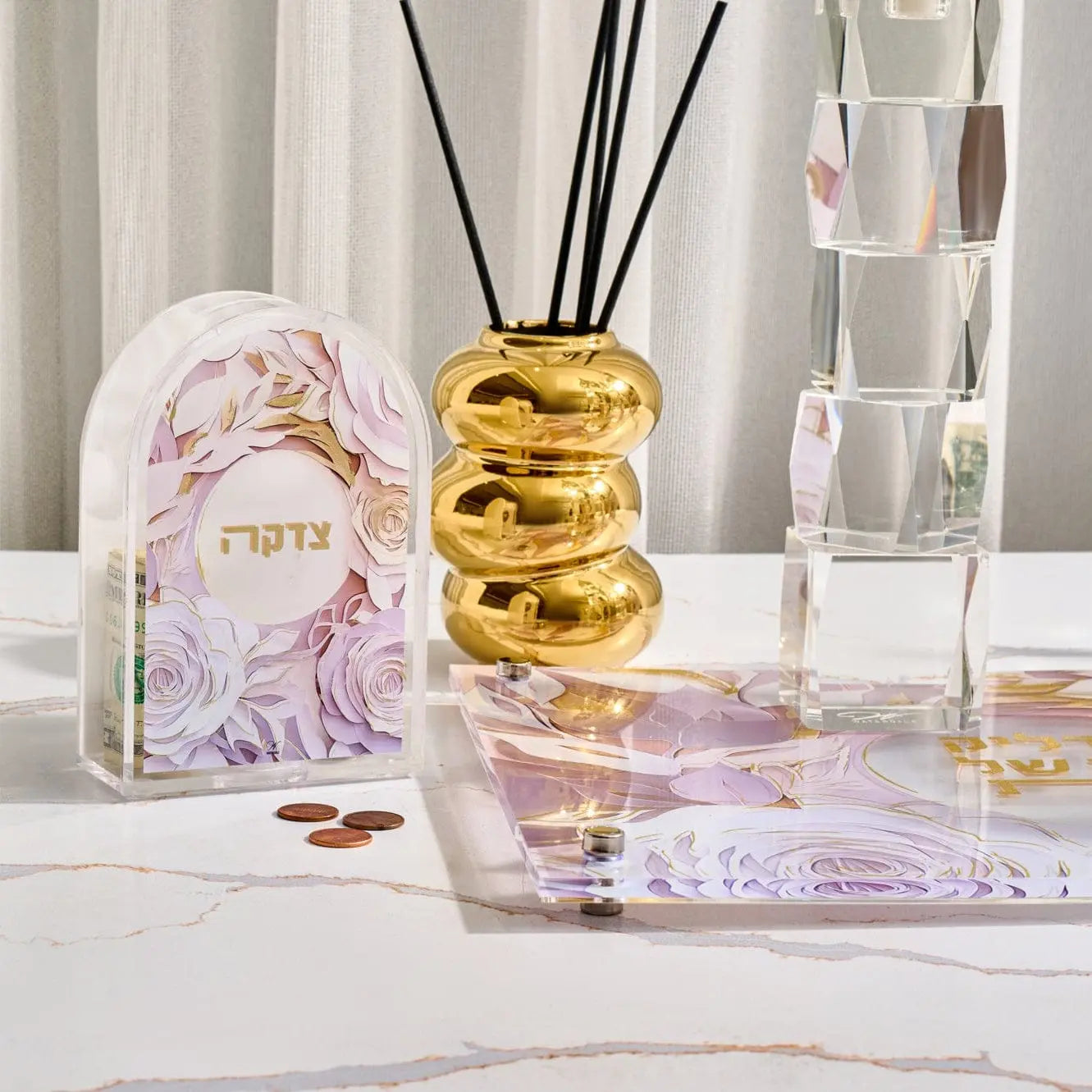
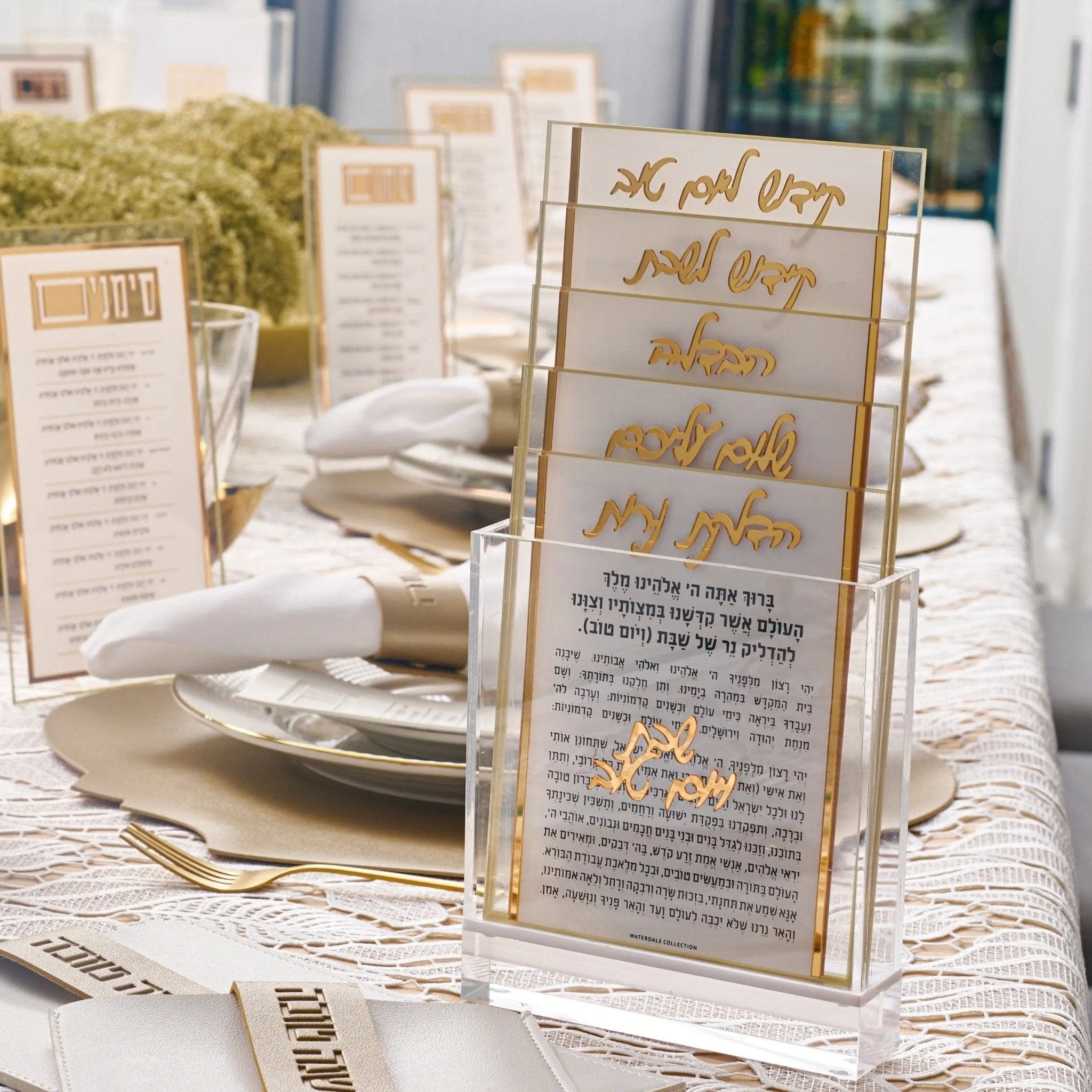
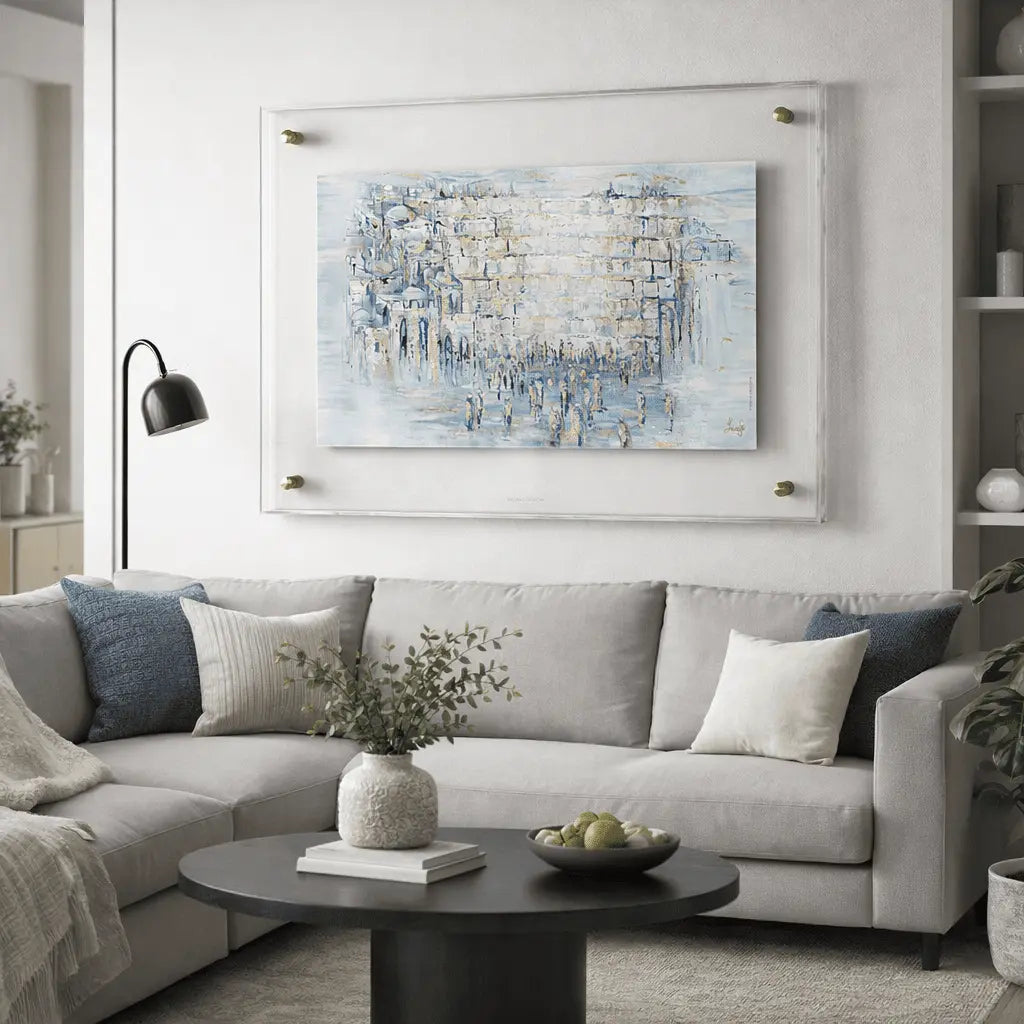
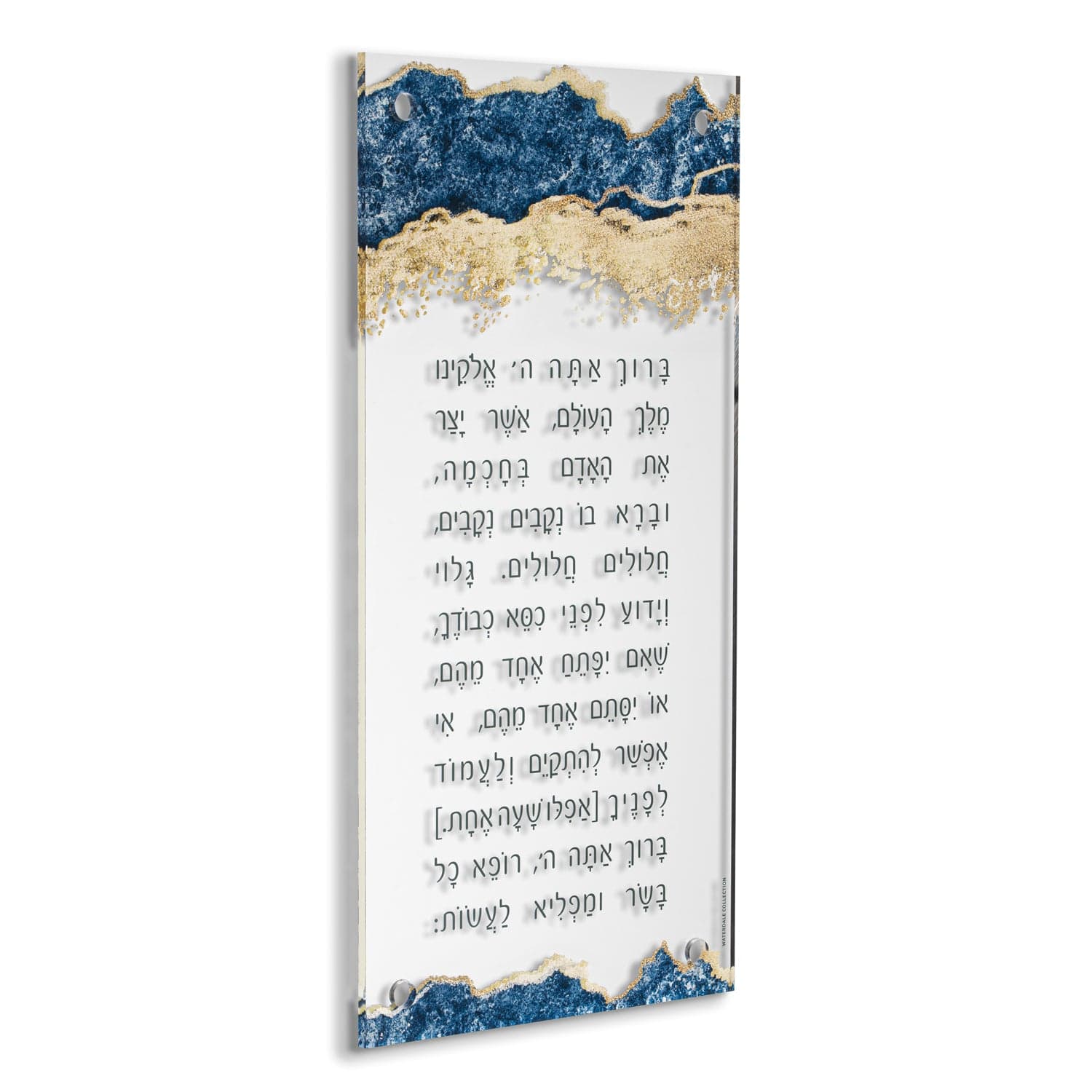
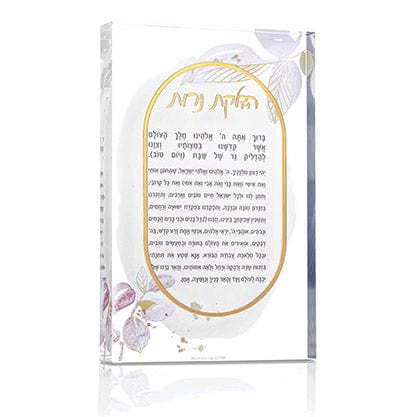
Lucite represents a design revolution for ketubah presentation. Unlike paper ketubahs that fade, yellow, or require protective glass, our lucite ritual items offer durability without sacrificing beauty. The material's crystal-clear transparency lets the artwork breathe while the structural integrity ensures your ketubah remains pristine for generations.
When you select a lucite ketubah, you're choosing a piece that stands on its own architecturally. The material catches light differently depending on the time of day and angle of view, creating subtle depth that flat framed documents simply cannot achieve. This optical quality transforms even simple designs into pieces with visual complexity and elegance.
What sets lucite apart:
- UV-resistant clarity prevents yellowing or fading
- Lightweight yet substantial enough to feel like an investment piece
- Works equally well mounted on walls or displayed on stands
- Requires no glass covering, simplifying the presentation
- Naturally contemporary without feeling cold or sterile
The tactile quality matters too. Lucite has a warmth that acrylic and plastic cannot replicate, and guests often comment on how different it feels from traditional ketubah frames they've seen. If you're looking for a material that honors tradition while embracing modern design sensibilities, lucite is the clear winner.
Next step: Explore custom lucite print wall art options that can incorporate your ketubah design directly into the material for a seamless, integrated look.
2. Gallery Wall Arrangements with Ritual Documents
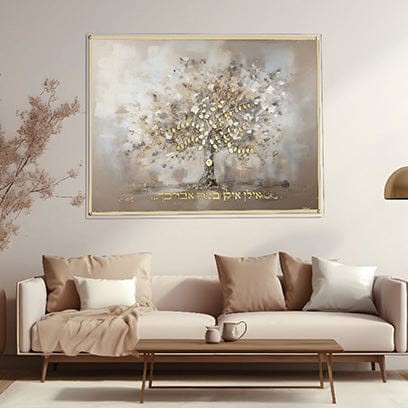
A gallery wall gives your ketubah context within a broader collection of meaningful pieces. Rather than isolating it as a standalone item, you're creating a visual narrative about your family's Jewish practice and values. This approach works particularly well for homes that already feature art throughout their living spaces.
The key to successful gallery wall design is balancing scale and negative space. Your ketubah should anchor the arrangement without overwhelming surrounding pieces. Pair it with complementary items like a Hebrew blessing, wedding day photography, or other Judaica wall art that reflects your observance. Many couples find this creates a more cohesive, intentional-feeling wall than a ketubah standing alone.
Consider the visual weight of each frame. If your ketubah is large or features bold colors, flank it with simpler pieces in neutral tones. Conversely, a minimalist ketubah can anchor a wall with more varied imagery around it. The spacing between pieces matters equally. Aim for 2-3 inches between frames for a modern gallery look, or tighter clusters for a more eclectic feel.
Arrangement tips:

- Sketch your layout on paper or use painter's tape before hanging
- Choose frames with consistent finishes (all wood, all metal) for cohesion
- Include a mix of piece sizes to avoid visual monotony
- Ensure the ketubah remains at eye level, typically 57-60 inches from floor to center
This approach transforms your ketubah from an isolated artifact into part of an ongoing conversation about your home and identity. It signals to visitors that Jewish practice and art are woven into your everyday life, not compartmentalized for special occasions.
3. Floating Frame Presentations for Minimalist Spaces
If your aesthetic runs clean and uncluttered, a floating frame keeps your ketubah front and center without the visual weight of traditional framing. Floating frames create the illusion that your ketubah is suspended within glass or lucite, with no visible mounting hardware. This technique suits contemporary, Scandinavian, or industrial design sensibilities perfectly.
Minimalist spaces benefit from the breathing room floating frames provide. The piece appears to float against the wall, which actually draws more attention to it than a conventional frame would. The negative space becomes part of the composition rather than something to fill. For smaller ketubahs or delicate designs, this restraint can be remarkably powerful.
The material choice matters significantly in minimalist settings. We recommend pairing floating frames with walls in soft neutrals (warm whites, greiges, pale grays) to let the ketubah design be the only visual element competing for attention. If your ketubah features vibrant colors or intricate calligraphy, even a minimal floating frame provides enough structure to support the complexity.
Minimalist display guidelines:
- Keep surrounding wall clear of other artwork within a 2-foot radius
- Choose frame colors that match or disappear into your wall
- Ensure proper lighting that highlights the ketubah without creating glare
- Consider the wall's texture; smooth surfaces work best for maximum impact
The elegance of this approach lies in its simplicity. You're not trying to dress up the ketubah with additional elements. Instead, you're creating architectural space specifically designed to honor it. This restraint often feels more respectful and sophisticated than busier display methods.
4. Ledge and Shelf Styling for Your Ketubah
Not every ketubah needs to be wall-mounted. A ledge or shelf display offers flexibility, easier rearrangement, and the opportunity to layer your ketubah with other meaningful objects. This approach works exceptionally well for accent walls, floating shelves, or even mantelpieces. You can adjust the styling seasonally or as your collection grows.
When displaying on a ledge, think of your ketubah as the anchor point around which other pieces orbit. This might include a small Kiddush cup, a framed photo from your wedding, a candle, or a piece of sculptural Judaica. The key is intentionality: each item should have a reason for being there, whether functional or deeply personal.
Proportions matter on shelves more than in wall galleries. A oversized ketubah on a narrow ledge looks awkward, while one that's appropriately scaled creates visual harmony. Layering heights helps too. Position your ketubah slightly forward if it's thin, or use a small stand to angle it 10-15 degrees for better visibility and visual interest. Behind it, place lighter or smaller objects that won't compete.
Ledge styling principles:

- Group odd numbers of objects (three or five pieces) for visual appeal
- Vary heights to create a dynamic composition
- Leave at least 30% of shelf space empty to avoid clutter
- Rotate seasonal pieces to refresh the display without major changes
- Use the ledge as a living display that evolves with your year's observances
This approach suits people who enjoy mixing function with aesthetics. Your ketubah becomes part of a curated collection rather than a static wall artifact, inviting interaction and conversation. Guests naturally notice shelves more than walls, making this an excellent choice if you want your ketubah to be a conversation starter.
5. Backlit Display Cases for Statement Impact
For couples who want their ketubah to be genuinely commanding, backlighting transforms it into a sculptural piece that glows with intentionality. A backlit case doesn't just display your ketubah; it emphasizes its importance and creates an almost sacred quality. This works particularly well for lucite ketubahs, which transmit light beautifully.
Backlighting changes how people perceive the artwork. The same ketubah that looks elegant in daylight becomes almost luminous when lit from behind. The effect is especially striking in the evenings. Warm white LED lighting (2700-3000K) maintains intimacy and complements Jewish home aesthetics, while cooler tones can feel clinical.
The case itself should be unobtrusive. We prefer sleek metal or minimalist wood frames that let the light and ketubah design dominate. The mounting should be clean and invisible if possible. If you're working with a professional installer, they can conceal wiring and create a seamless aesthetic. Even DIY solutions using stick-on LED strips behind a lucite ketubah can yield professional-looking results.
Backlit display considerations:
- Install on a wall without competing artwork or patterns
- Use dimmer switches to adjust mood and energy consumption
- Position the case away from windows to maximize the lighting effect
- Ensure electrical outlets are hidden or integrated into your design
- Select lighting color temperature that complements your ketubah's palette
This presentation style makes an unequivocal statement: your ketubah is precious and deserves special treatment. It's ideal for open-concept homes where the ketubah can serve as a focal point visible from multiple rooms. The glowing effect also photographs beautifully, which matters if your home is featured in design publications or on social media.
6. Pairing Ketubahs with Complementary Judaica Decor
Your ketubah doesn't exist in isolation within your home. Pairing it thoughtfully with other Judaica decor creates visual and spiritual coherence. This approach requires more intention than simply surrounding it with unrelated art, but the payoff is a space that feels authentically yours.
Consider the themes present in your ketubah's design. If it features botanical motifs, perhaps pair it with a modern Kiddush cup featuring similar organic elements. If the calligraphy is bold and contemporary, complement it with clean-lined Shabbat candle holders. These connections create visual echoes that feel planned rather than arbitrary. The goal is a space where every piece reinforces the others' presence.
Many couples find success displaying their ketubah alongside pieces that mark other life transitions. A Havdalah set, wedding photograph, birth announcement framed beautifully, or Bar/Bat Mitzvah invitation can all coexist meaningfully with your ketubah. Together, they tell the story of your family's Jewish journey and identity.
The color palette becomes crucial when layering multiple pieces. If your ketubah uses rich jewel tones, surrounding pieces in metallics (gold, silver, bronze) will feel harmonious. Neutrals like cream, gray, or white allow more colorful ketubahs to shine without visual competition. The materials should also coordinate; pairing a lucite ketubah with lucite or ceramic Judaica items creates aesthetic unity.

Complementary pairing ideas:
- Ketubah + modern Kiddush cup + Havdalah candle holder
- Ketubah + Hebrew blessing + wedding photograph
- Ketubah + Shabbat candlesticks + Judaica art print
- Ketubah + sculptural piece + family heirloom item
This layered approach transforms your display from a single artifact into a meaningful collection. Visitors see not just a ketubah, but evidence of a life lived intentionally within Jewish tradition and contemporary aesthetics.
7. Customizable Document Frames for Personal Touches
The beauty of modern ketubah display is the ability to customize every element to reflect your personal story. Beyond the ketubah itself, customizable frames let you add inscriptions, incorporate additional text, or even integrate photos. This level of personalization transforms a standard display into something uniquely yours.
Many couples choose to add their wedding date, names, or a meaningful Hebrew phrase to the frame itself. Others incorporate small design elements that complement the ketubah artwork. If you're working with a designer or frame shop, these custom touches can be subtle enough to feel sophisticated rather than overwrought. The goal is enhancement, not distraction.
Our customizable document frames accept options ranging from simple engraving to more complex design integration. You might add a thin gold or silver line around the ketubah, incorporate a personal symbol, or even create a two-part frame that combines the ketubah with a wedding vow renewal text or family blessing. The options are genuinely limited only by your imagination and budget.
Consider also how customization evolves with time. Some couples add an anniversary date after each significant year. Others create a frame that can accommodate future additions as their family grows. This forward-thinking approach means your display grows more meaningful rather than remaining frozen in a single moment.
Customization possibilities:
- Engraved date or names on the frame
- Hebrew text relating to marriage or partnership
- Family symbol or crest integration
- Multi-part frames combining ketubah with additional documents
- Modular designs allowing future updates
The most successful custom displays are those that feel personal without overwhelming the ketubah itself. Your ketubah's artistry should remain the visual anchor, with customizations providing subtle reinforcement of your story. This balance requires thoughtful restraint, but when executed well, it creates a display that's both contemporary and timeless.
---
Your ketubah deserves more than a closet or a generic frame. We believe the display you choose should be as intentional and beautiful as the document itself. Whether you gravitate toward the modern elegance of lucite, the artistic depth of a gallery wall, the restraint of floating frames, or the drama of backlighting, each approach offers a distinct way to honor this meaningful piece.
We recommend starting with lucite as your material foundation if you haven't already. The durability, optical quality, and contemporary aesthetic of lucite outperform traditional framing in nearly every way. Combine it with one of the display approaches outlined above, add thoughtful complementary Judaica pieces, and you've created a ketubah presentation that will remain beautiful and meaningful for decades to come. That's not just a display; it's a legacy.
Shop Now