
















Classic Apple Simanim Card



We're closed for Shabbos. We reopen [[opentime]]. Time until we reopen: [[countdown]]. Thanks for understanding.

Sign up for restock notifications
| BUY | GET |
|---|---|
| 8-14 | 10% OFF |
| 15+ | 15% OFF |
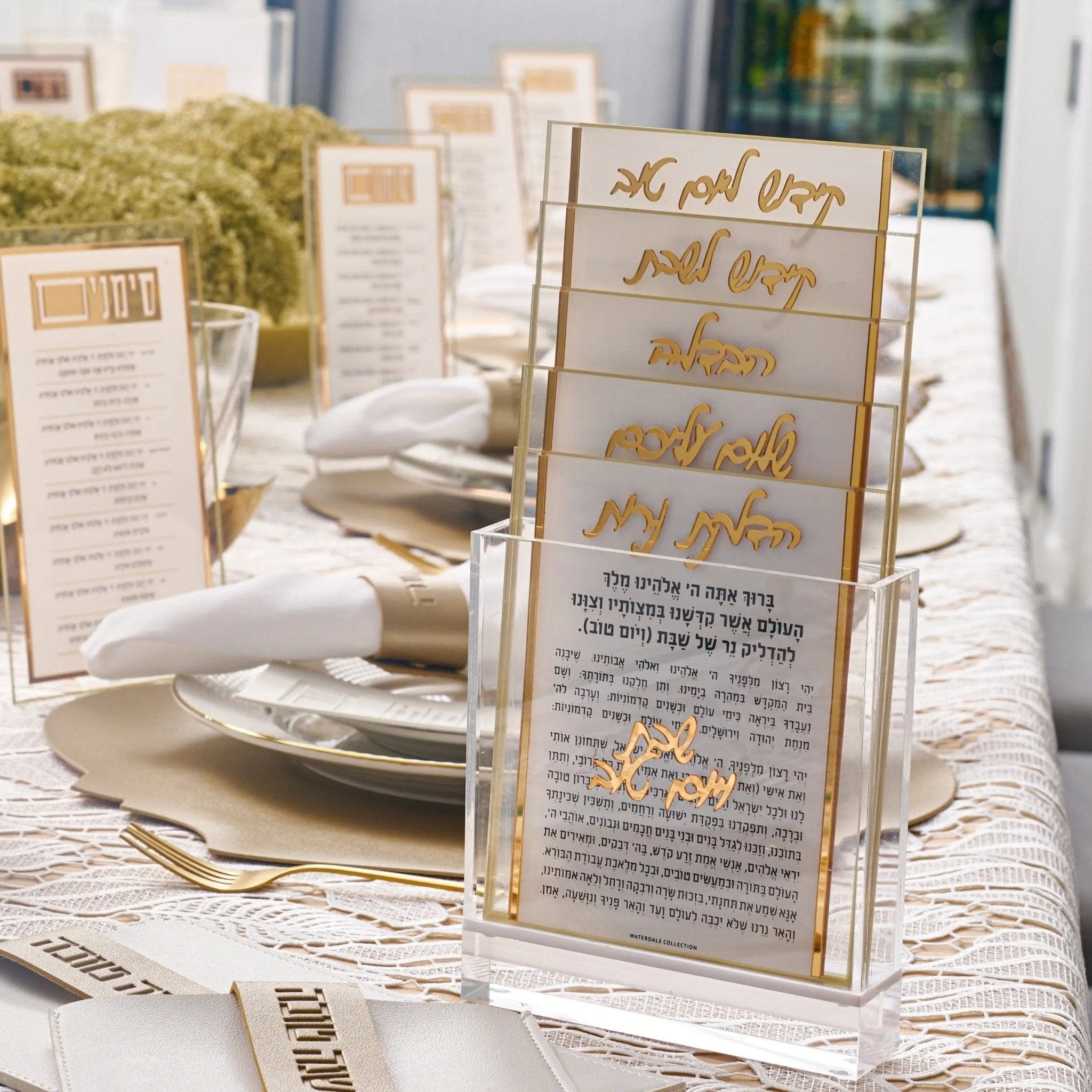
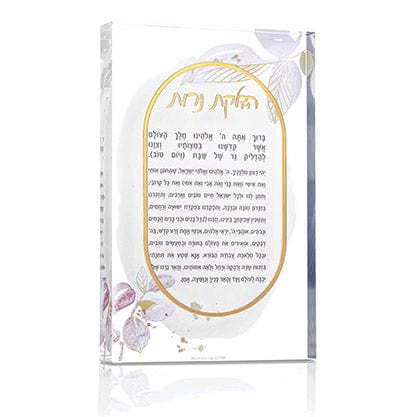
The Classic Apple Simanim Card from the Waterdale Collection is cut to an apple shape in frosted Lucite, displaying the Rosh Hashanah (ראש השנה) simanim blessings with a fresh, festive twist.
It measures 6" x 7" and carries the yehi ratzon (יהי רצון) for each of the simanim (סימנים), from apple dipped in honey to pomegranate and dates – in nusach Ashkenaz / Sefard.
Add a Lucite base to stand it upright as a centerpiece, or lay it flat at each seat. The Lucite card is wipeable, honey-proof, and waterproof.
Available in gold and silver to match your Rosh Hashanah tablescape, it makes a classy Jewish New Year gift. Engrave it through the Personalization option for a lasting piece of Judaica.

Shana Tova means good year, and it is the standard Rosh Hashanah greeting. The fuller form, L'shana tova tikaseivu, expresses the wish that the person be inscribed for a good year. It is used from before Rosh Hashanah through the Aseres Yemei Teshuva, and appears across Rosh Hashanah Judaica from napkin wraps to Simanim cards. See it styled across all eight Rosh Hashanah tablescapes.
No, and matching them exactly usually flattens the setting. A charger is meant to frame the plate, so a contrast in tone or finish is what makes the layering visible. A thin-border charger is the safest choice against patterned dinnerware, since it defines the edge without adding a competing pattern.
Lucite is a brand name for a particular grade of acrylic, so every Lucite piece is acrylic, though not every acrylic piece is Lucite. In practice the term Lucite signals a heavier, optically clearer material with cleaner edges than budget acrylic. Both are cared for the same way.
Wash with warm water and mild soap using a soft microfiber cloth — never paper towel or an abrasive sponge, which is what causes the fine hazing you see on older acrylic. Dry with a clean microfiber cloth, and store pieces separated by soft cloth rather than stacked directly on each other.
A bread tray on the Shabbos or Yom Tov table holds the challah or rolls after the bracha hamotzi is made. Using a tray makes it easy to pass around the challah so everyone at the table can get their piece.
The challah board is traditionally set at the place of whoever is making Hamotzi, usually the head of the table, positioned so the challah can be uncovered and cut without the need for rearranging any place settings.
Early access to new releases, limited restocks, and occasional updates.